Day Trips From Mértola Worth the Detour
Fifteen minutes from Mértola, an abandoned mine looks like another planet. Forty minutes away, Serpa guards the Alentejo's best cheese. An hour south, you can zipline from Portugal to Spain. Mértola isn't just a destination, it's a launchpad for full days of exploration.
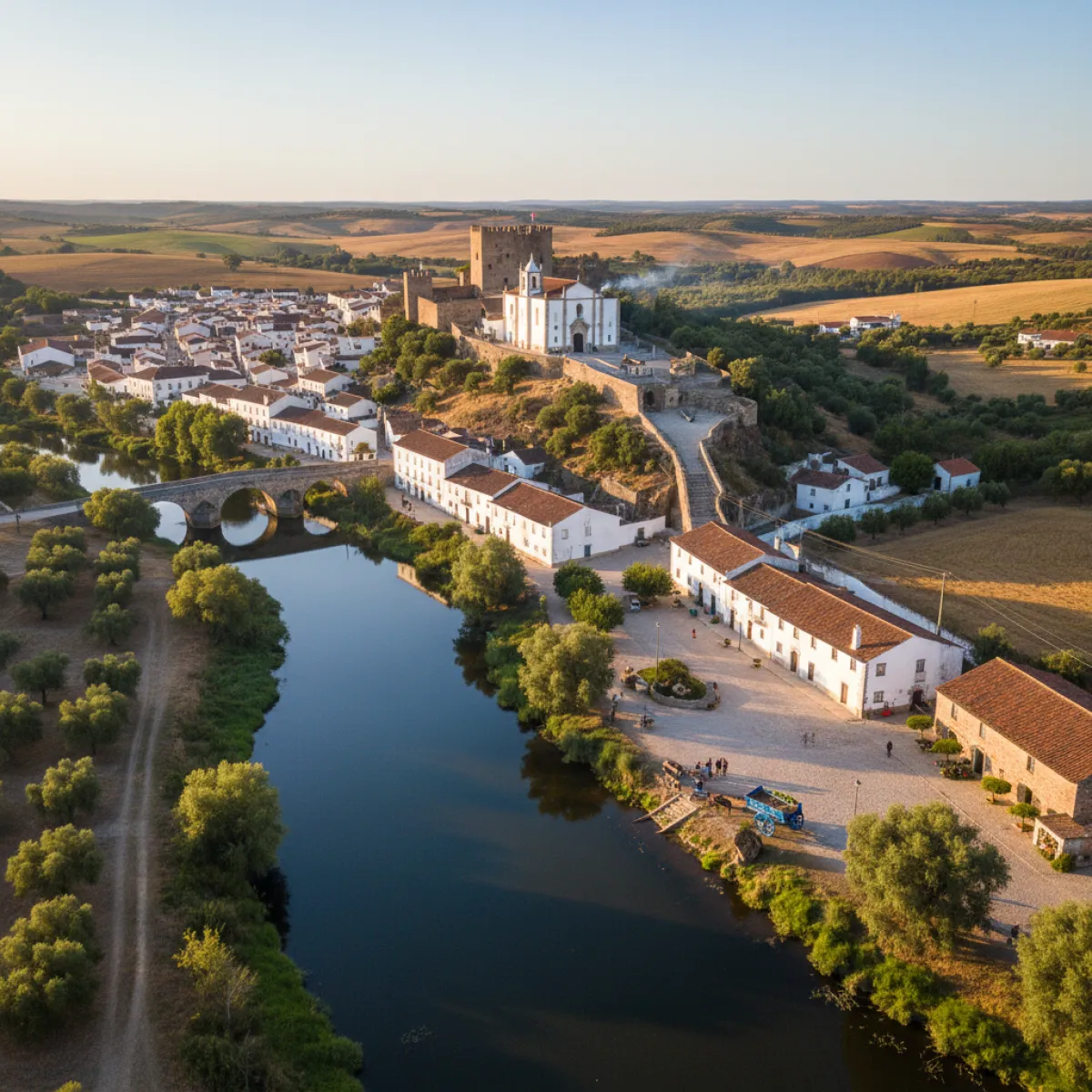
Mértola has a way of making you stay longer than you planned. The castle, the Guadiana River curving below, the narrow streets with their whitewashed walls, it all adds up to a place that doesn't let go easily. But if you've already walked every alley and met every stray cat, it's time to use Mértola as a base and explore outward. The roads are good, traffic is essentially nonexistent, and every half hour of driving brings you somewhere worth stopping for.
Mina de São Domingos: The Ghost Mine 15 Minutes Away
This is the most obvious day trip, and honestly the most striking. The São Domingos Mine sits about 15 kilometers east of Mértola, and it's one of those places that makes you pull over and stare. The copper and pyrite mine was active from Roman times until 1966, when the British company running it packed up and left behind an entire village built around work that no longer existed.
What you find today is a landscape that looks like it belongs on another planet. Acidic waters have created a reddish lagoon that you'll photograph whether you mean to or not. The miners' quarters keep their original layout, rows of low houses, the old cinema building, the football pitch. A small museum tells the story of the mining community. Don't expect flashy multimedia installations: it's simple, direct, and all the better for it.
In summer, the river beach at Mina de São Domingos is the local gathering spot. The water is clean (don't confuse it with the acidic lagoon), shade exists if you arrive early, and there's a bar serving bifanas and cold beer. Get there before 11am on July and August weekends, or risk fighting for towel space.
Serpa: Cheese, Walls, and Portugal's Best Olive Oil
Forty minutes northwest and you reach Serpa, one of the Alentejo's most beautiful towns that rarely makes it onto tourist itineraries. Not because it doesn't deserve to, because the Alentejo is vast and most people stop at Évora. Their loss.
Serpa means near-intact medieval walls, an aqueduct that enters the town dramatically, and the cheese. Serpa cheese, made with thistle rennet instead of animal-based coagulant, is one of southern Portugal's great food experiences. Don't buy it at the first shop you see, go to the municipal market, taste before you buy, and take home one that's properly aged. It will get your hands messy. That's the point.
For lunch, look for restaurants inside the walls serving ensopado de borrego (lamb stew) or migas with pork. I won't invent specific names, when you arrive, ask anyone on the street. In Serpa, everyone has an opinion about where to eat best, and they're usually right.
If you like olive oil, and if you don't, Alentejo oil might convert you, the area around Serpa produces some of Portugal's finest. Several mills offer visits and tastings, especially between November and January during harvest season.
Alcoutim: Europe's Most Peaceful Border
Head south along the IC27 and then secondary roads, and in about an hour you reach Alcoutim. The town sits on the bank of the Guadiana, staring across at Sanlúcar de Guadiana on the Spanish side. The distance between countries? About 200 meters of river.
Alcoutim is small, very small, and that's exactly why it works as a day trip. There's the castle (a few euros entry, check locally for current prices), with a view over the river and Spain that earns every step you climb. There's the river beach, which in summer is a genuine oasis. And there's the cross-border zipline, which sends you from Portugal to Spain in under a minute, suspended above the Guadiana. It's not for everyone, but if you have a sense of adventure and a stomach for heights, it's a story you'll tell.
The road from Mértola to Alcoutim through the interior is beautiful in a way that doesn't need big adjectives. Cork oaks, rockrose scrub, the river appearing and disappearing around bends. Bring water and fill your tank before leaving, petrol stations are not abundant.
Castro Verde: Steppe Birds and the Church You Don't Expect
Fifty minutes west, Castro Verde is the heart of the Baixo Alentejo's cereal steppe and one of the best birdwatching spots in Portugal. If you care about great bustards, little bustards, and lesser kestrels, the Vale Gonçalinho Environmental Education Centre is your starting point. Even if you're not a birder, watching a great bustard take flight, that enormous, improbable bird heaving itself into the air, stays with you.
But the real reason to visit Castro Verde, if you had to pick one, is the Basílica Real. From outside, it looks like a standard Alentejo church. Inside, eighteenth-century azulejos cover every inch of wall space with scenes from the Battle of Ourique. It's a baroque excess you don't expect to find in the middle of the plain, and that contrast is exactly what makes it work.
Lunch in Castro Verde is unpretentious. Tascas in town serve Alentejo black pork the way it should be, slow, well-seasoned, no gimmicks. Pair it with Alentejo bread and regional wine.
Pulo do Lobo: The Waterfall Nobody Sees
This one's for walkers. Pulo do Lobo is the Guadiana's largest waterfall, inside the Parque Natural do Vale do Guadiana, about 20 kilometers north of Mértola. The name translates to "wolf's leap", legend says a wolf could jump from one bank to the other at the narrowest point, and when you see the gorge the water squeezes through, you'll understand why.
Access is via a dirt road (passable for normal cars, but take it slow) followed by a short walking trail. In spring, with the river full, the falls are impressive. In the dry summer months, the flow drops, but the gorge geology remains fascinating. Wear proper shoes, bring a hat, and carry at least a liter of water per person.
There are no cafés or shops. This is raw nature, no filters, no infrastructure. Save your coffee break for the drive back to Mértola.
Back in Mértola After Dark
After a day on the road, Mértola receives you with its usual calm. If your trip was to Serpa or Castro Verde, you'll probably make it back in time to watch the sunset over the Guadiana from the castle walls. If you went to Alcoutim, you'll likely arrive hungry, which is a good time to see what the town offers after dark.
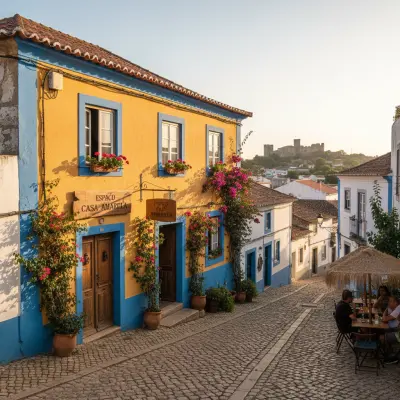
For a different kind of evening, Espaço Casa Amarela is the sort of place that justifies staying an extra night. Fado in the Alentejo isn't the same as Lisbon fado, it's rawer, more intimate, and the small space makes all the difference.
For Those Who Want to Go Further
If you have two or three days and a car, Mértola also works as a launching pad for more ambitious explorations. Portalegre, in the Upper Alentejo, is about two and a half hours north, but if you have the time and appetite for the drive, it rewards the effort, especially if you follow an itinerary that skips the tourist traps. We've written about how to spend a real weekend in Portalegre without the clichés or the queues. Once there, the neighborhoods worth walking are a solid starting point for understanding the city on foot, before you sit down to eat where the locals actually eat.
Practical Notes
Mértola is an excellent day-trip base, but you need a car. Public transport in the Baixo Alentejo exists, but schedules are limited enough to make these day trips impractical. If you arrived by train to Beja, rent a car there.
- Mina de São Domingos: 15 km, ~15 min drive
- Serpa: 60 km, ~40 min
- Alcoutim: 70 km, ~1h
- Castro Verde: 60 km, ~50 min
- Pulo do Lobo: 20 km, ~30 min (includes dirt road)
Fuel: fill up in Mértola before heading out. There are stations in Serpa and Castro Verde, but between towns options are scarce.
Best season: spring (March to May) for green landscapes and waterfalls with real water. Summer for river beaches, but with temperatures that exceed 40°C, leave early, return late, and rest during the hottest hours. Autumn for harvest season and new olive oil. Winter is quiet, and some tourist services may be closed, check locally.
One last thing: Mértola isn't just a destination, it's a starting point. And the places surrounding it deserve as much of your time as the town that already won you over.