Visit
€
Praia Fluvial da Portagem
Portalegre
Blue Flag, real sand, an honest snack bar and a 200 metre wide Tagus you can swim without hesitating. 80 km from Portalegre city in the Gavião municipality, Praia Fluvial do Alamal is the best river beach in the district, if you arrive prepared.
First, a geography correction. Praia Fluvial do Alamal is not in the city of Portalegre. It sits in the municipality of Gavião, in the northern tip of the Portalegre district, roughly 80 km by road from the district capital. Travellers who land in Portalegre expecting an evening swim in the Tagus will be disappointed. Those who plan the day properly, full tank of petrol, sandwiches packed, will end up at one of the best river beaches in the Portuguese interior.
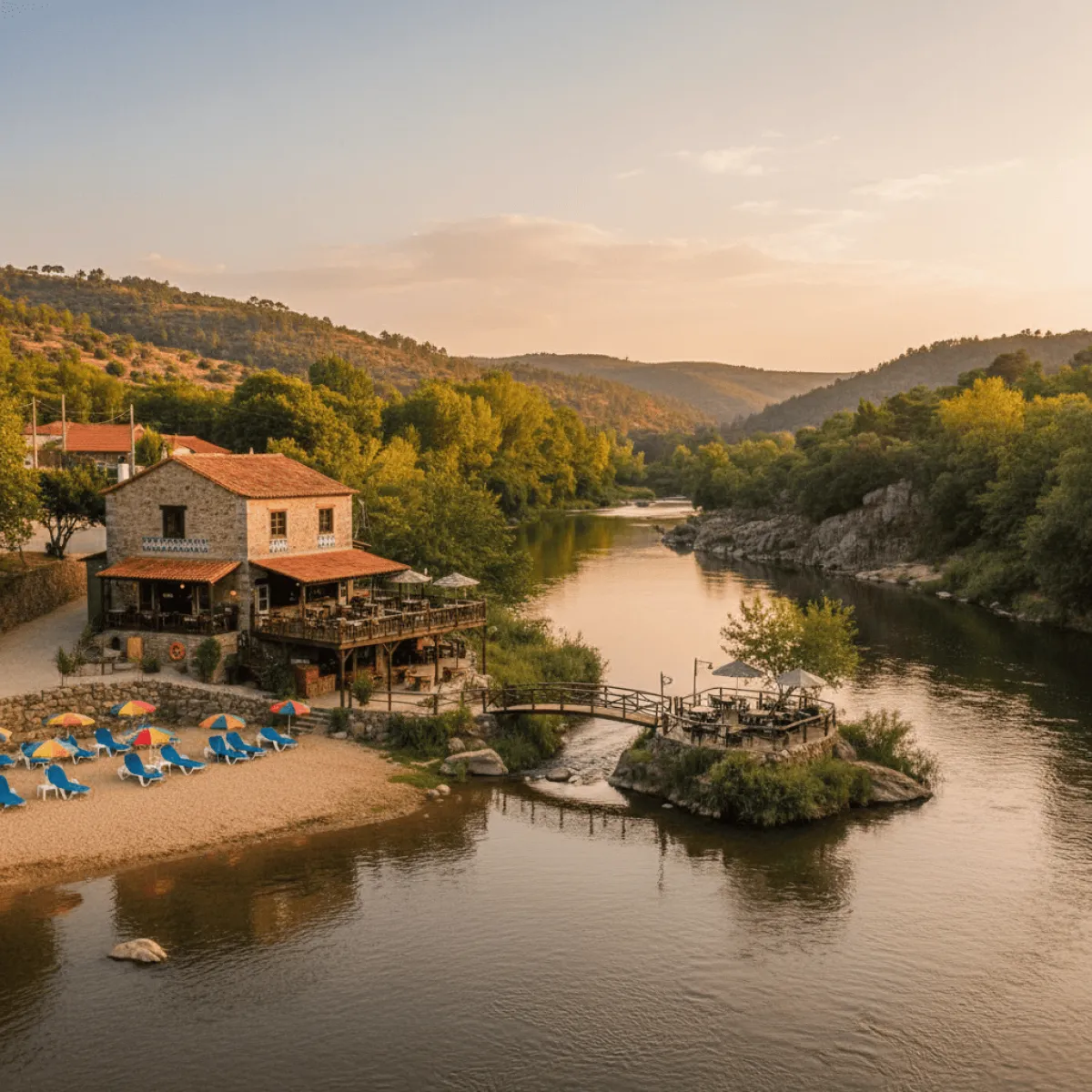
Alamal lies on the left bank of the Tagus, inside the Quinta do Alamal estate, postal code 6040-060, Gavião. It holds a Blue Flag, which in Portugal means monitored water quality and reliable basic infrastructure. It is one of those places where the river widens, slows down, and stops looking like a river. It starts looking like a natural swimming pool 200 metres across.
From Portalegre, the most direct route is the A23 motorway up to Gavião, then the EN118 to the well signposted Alamal turnoff. Plan for an hour and a half, more if you stop in Crato or Alter do Chão on the way, and you should. From Lisbon it is two hours via the A1 and A23. There is no useful public transport. Without a car, forget it.
If you are coming from the Algarve or Lisbon for a river beach weekend, it makes complete sense to combine Alamal with a night in Portalegre city. For that I recommend the Rossio Hotel if you want to stay in the historic centre, or Dona Maria GuestHouse for something smaller and warmer. Use our Portalegre weekend guide to avoid the few tourist traps still operating around there.
It is a river beach with real sand, brought in and maintained by the municipality, with a swimming area marked by buoys and a lifeguard during the official season. The water of the Tagus here is cleaner than most people assume. This is still the upper-middle stretch of the river, well before Vila Velha de Ródão and far from the industrial pollution downstream. You can swim without hesitation.
The complex includes a lawn area for towels, a picnic park with tables and barbecue grills, a campsite, a snack bar, changing rooms, toilets, and the Alamal Water Sports Centre. The centre rents canoes, kayaks and stand up paddleboards and organises Tagus descents. It is the kind of spot that works equally well for a family with small children and for a group of twenty somethings who want to paddle down to Belver and hitch a ride back.
Entry is free. The car park is large and also free. In wallet terms Alamal sits at "€". You only spend money if you rent a canoe or eat at the snack bar, and not much beyond that. Changing rooms and lifeguard hours follow the official bathing season, normally from June to mid September. Outside that window you can still walk onto the beach (there are no gates) but with no support services.
The snack bar is honest, not gourmet. Expect roast pork sandwiches, steak rolls, industrial ice cream, cold beers, soft drinks. It is not where you go to eat well. It is where you go so you do not have to leave the beach to have lunch. My advice: bring a cooler with food from home, use the picnic park (arrive before 11 to grab a shaded table), and save the snack bar for end of day beers.
The Water Sports Centre is the reason Alamal deserves more than an afternoon. The canoe descent down to the Belver Dam, with stops at near empty beaches along the way, is one of the best summer experiences in the Portuguese interior. Book ahead by phone, +351 241 631 221, especially on July and August weekends. The descent takes most of the day. Bring factor 50 sunscreen, flip flops you do not mind soaking, and one water bottle per person big enough to last three hours.
Peak summer (July and August, weekends): packed, loud, campsite full of tents, snack bar in queues. If you like the buzz, go. If you want quiet, run.
June and mid September: the sweet spot. Water already warm, crowds thinned out, lifeguard still on duty, snack bar still open. This is when I keep going back.
May and late September: a gamble. Water colder than it looks, infrastructure either opening up or shutting down, but a weekday can give you the beach almost to yourself.
Autumn and winter: still worth a riverside walk, photography, or a picnic under the olive trees. Do not expect more.
If you are using Alamal as the highlight of a weekend, do both. Morning and early afternoon at the river, dinner and the evening in Portalegre. The city is an hour by car and has more going on than first appears. For a walk through the neighbourhoods that genuinely deserve your time, follow our Portalegre on foot guide. For dinner where locals actually eat, far from the centre tourist traps, our food guide handles that. And if you land on the right May weekend, the Portalegre JazzFest gives you a perfect excuse to extend the stay.
One last thing. Alamal is not for travellers chasing luxury beach clubs, served sunloungers and cocktails. It is a proper Portuguese river beach, with families grilling sardines, kids leaping off the pontoons, and a wide calm Tagus that owes nobody an explanation. Go, pack serious ice in the cooler, and stay until the sun drops behind the eucalyptus trees on the opposite bank. That is the whole point.