Visit
€
Monte do Calvário
Gouveia
An open-air lapidarium tucked next to the Abel Manta Museum: millstones, Manueline windows, anthropomorphic graves and the 1779 Saint Lázaro fountain. Twenty quiet minutes that reset how you see the rest of Gouveia.
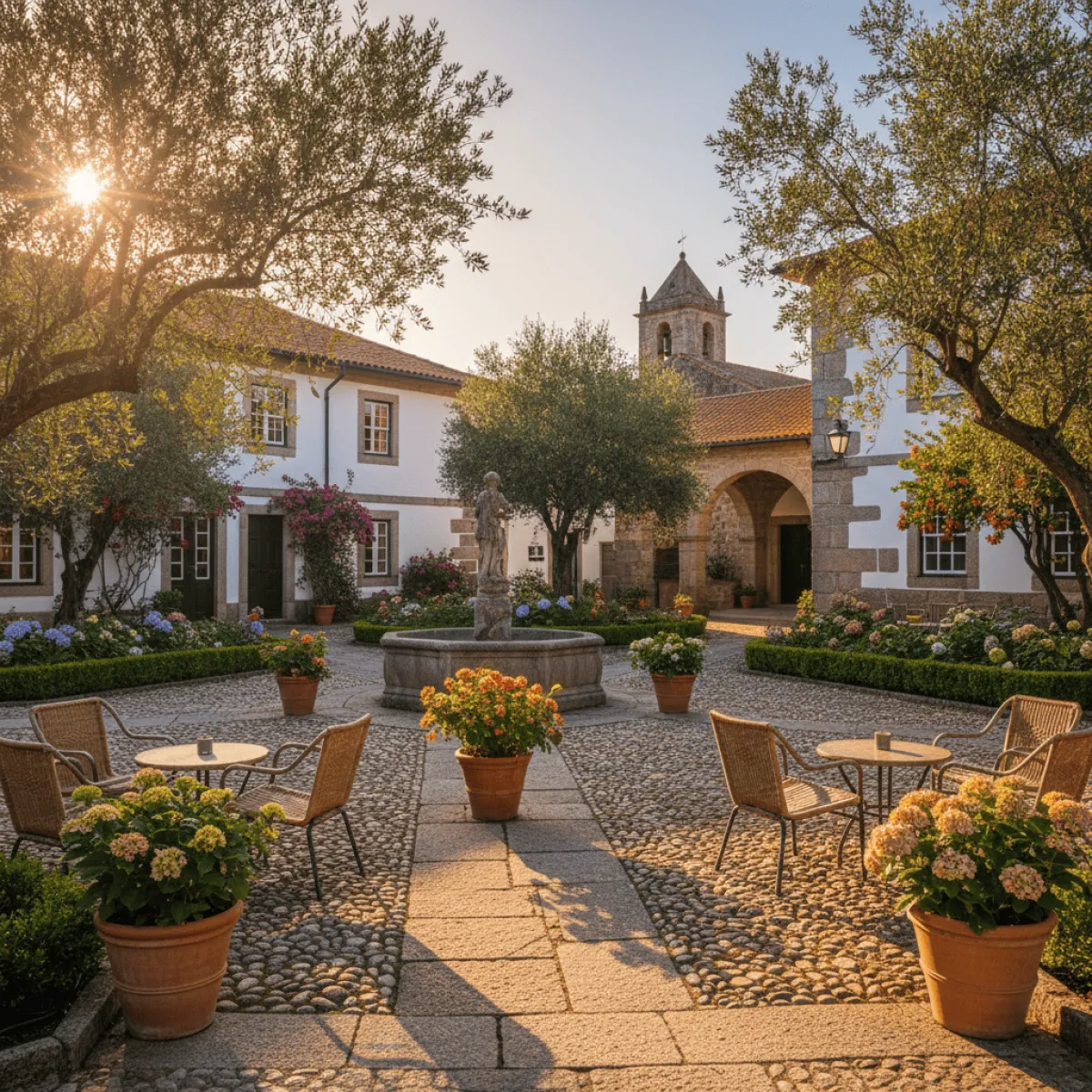
The Jardim do Pátio do Museu sits next to the Abel Manta Museum on Rua Mestre Abel Manta, right in the historic centre of Gouveia. This is not a picnic park or a botanical garden. It is a small enclosed courtyard where someone had the sense to gather stones with history and let them breathe outdoors. Five minutes is enough for a quick look. An hour is reasonable if you actually read the inscriptions. Both visits make sense.
Calling it a garden is generous. It is closer to an open-air lapidarium, with some greenery framing pieces that drifted around town for years before ending up here. There are millstones from old olive and grain mills, the big circular kind that still show the wear of decades grinding seed. There are Manueline windows with stone rope-work twisted around the frames, salvaged from buildings that no longer exist or were renovated without ceremony. There are anthropomorphic graves carved straight into rock in the shape of a human body, plus medieval tomb slabs that used to live somewhere else in the serra before being relocated here.
The most clearly dated piece is the Saint Lázaro fountain, from 1779. It is labelled, the date is carved in, and it is exactly the kind of object visitors miss when they walk in glued to a phone. Stop, read the date, and remember you are looking at water that ran before Portugal had a constitution.
You are in the centre of Gouveia, a short walk from the town hall and the main church. If you drive, leave the car in one of the central car parks and walk: the town is small and the inner streets are narrow. If you come by public transport, there are bus links from Guarda, Coimbra and Viseu, and the Gouveia train station (Beira Alta line) is a few kilometres from the centre, with taxis usually available.
The address is Rua Mestre Abel Manta, 6290 Gouveia. The garden works as an annex of the museum, so entry is free during the museum's opening hours. Since published hours and a phone number are not reliably listed, check directly with the Gouveia tourist office before you plan around it, especially off season or on a Sunday.
Go slowly. This is not a place for a panoramic photo and a quick exit. The interesting pieces are at eye level or below, and some inscriptions only make sense if you crouch. Wear comfortable shoes: the paving is uneven, and thin heels will catch between the stones.
Early morning or late afternoon, especially in spring and autumn. In summer the sun beats hard on the stone and the place becomes uncomfortable around midday. In winter Gouveia freezes, and an open courtyard is not where you want to linger. If you are in the serra in May, when the meadows go properly wild with flower, this is a quick stop that fits between hikes. Our Gouveia in May guide covers the rest of that day.
Gouveia has a nice problem: it is surrounded by spectacular nature, which means its built heritage often plays second fiddle. Everyone heads to the Parque Ecológico, climbs Monte do Calvário for the view, or spends a Sunday at the Jardim Público Lopes da Costa. The Pátio do Museu falls outside that obvious circuit, which is exactly why it stays calm. There is rarely a queue, almost never any noise, and most days you will be alone with the millstones and the fountain.
The value here comes down to three concrete things. First, the 1779 fountain: few places in Gouveia show the continuity of water as urban infrastructure with such a clear date. Second, the anthropomorphic graves: they are rare to see this close, and they give a very physical sense of how people were buried in the early Middle Ages. Third, the Manueline windows: they are fragments, but they prove Gouveia had noble houses in the early sixteenth century, with stonemasons capable of working in the court style of the time.
The courtyard alone will not fill a morning. Combine it with the museum itself (Abel Manta's work deserves time, and the twentieth-century Portuguese painting collection is better than you would expect from a town this size), a walk through the historic centre, and lunch at one of the local tasquinhas. For a full day out from Gouveia, our five day trips guide sets up what comes next. If you stay into the evening, see the Gouveia after dark guide.
Do not come to Gouveia only for the Pátio do Museu. But if you are already in town, give it twenty or thirty minutes. It is free, it is quick, and it is the kind of stop that quietly changes how you read the rest of the place afterwards. The stones have been there for centuries. The street noise drops the moment you walk in. And you leave with a fuller version of Gouveia than if you had walked past.