Gouveia in May: When Serra da Estrela Blooms Wild
In May, the plateaus around Gouveia burst with yellow gorse, wild daffodils, and mountain orchids that few people ever see. A three-day route through trails, flowered villages, and altitude meadows in Serra da Estrela, far from the crowds and free of charge.
There's a narrow window, maybe three weeks between late April and mid-May, when Serra da Estrela stops being that austere landscape of granite and dead gorse that most visitors associate with it. In May, the plateaus around Gouveia erupt in a riot of color that few people expect from a mountain range that spends half the year under fog and the other half baking in the sun. And it's precisely because it's unexpected that it's worth the trip.
Why May changes everything in Gouveia
Most people who visit Serra da Estrela come in winter for the snow (or what's left of it) or in summer for the natural swimming pools. May is the orphan month, ignored by tourist guides and travel agencies. And yet, it's when the mountain is at its best.
In the fields around Gouveia, starting in early May, heather begins coloring the hillsides in shades of pink and lilac. Foxglove appears, those tall, vertical bell-shaped flowers that look like they were drawn by a botanical illustrator, along forest paths. The gorse, which for months was nothing but dry, spiny bushes, explodes in intense yellow, so dense you can smell its sweet scent from a hundred meters away. And in the higher meadows, where snow melted just weeks earlier, wild daffodils and mountain orchids that exist nowhere else emerge from the ground.
We're not talking about manicured gardens or municipal flowerbeds. This is wild, raw flora, and that's precisely what makes it spectacular. No tickets, no queues. Just lace up your boots and walk.
The route: three days of floral hikes
Day 1, Gouveia and its immediate surroundings
Start by climbing Monte do Calvário, the most accessible viewpoint in Gouveia. The climb is short, about twenty minutes on foot from the center, and in early May the slopes are covered in flowering gorse. From the top, you get a complete view of the Mondego valley and the plateaus you'll be exploring over the following days. Go early, before ten in the morning, when the light is good for photography and the heat hasn't kicked in yet.
After coming down, visit the Serra da Estrela Botanical Garden on the outskirts of Gouveia. It's one of the few places where you can see endemic mountain species identified and catalogued, useful for recognizing them later on the trails. There's a small entrance fee (check locally for current prices).
Have lunch in Gouveia itself. Don't expect gourmet restaurants, this is mountain country. Look for fresh Serra cheese (May is the end of the season, catch the last of it), cured meats, and rye bread. O Júlio, in the central area, is a local reference for honest mountain food. If you prefer something lighter, there are cafés on the main square with sunny terraces.
Day 2, The upper plateau and altitude meadows
Day two is for going higher. Leave Gouveia via the N232 toward Torre and stop around Curral do Vento, at roughly 1,200 meters. Here, the altitude meadows are at peak bloom in May: wild daffodils (Narcissus bulbocodium, those small, yellow, trumpet-shaped ones), wild orchids, and carpets of mountain thyme that scent the air.
You don't need a marked trail, the meadows stretch for hundreds of hectares and you can walk freely. But if you prefer structure, the PR4 walking route from Gouveia (Rota dos Pastores) passes through some of the best flowering areas. It's about 12 km, moderate difficulty, with elevation gain that you'll feel in your legs but nothing requiring special fitness.
Bring water and food. There are no cafés or restaurants on the upper plateau. A picnic with cheese, chouriço, and bread is the perfect lunch, and probably the most beautiful meal you'll have in Portugal, sitting in a flower-covered meadow at 1,200 meters with the entire valley at your feet.
If the mountain flora sparks your curiosity about other regional blooms, it's worth reading about cherry blossom season in Fundão. The cherry trees bloom earlier, March and April, but if you catch the tail end, the drive from Gouveia takes just over an hour.
Day 3, Mondego Valley and flowered villages
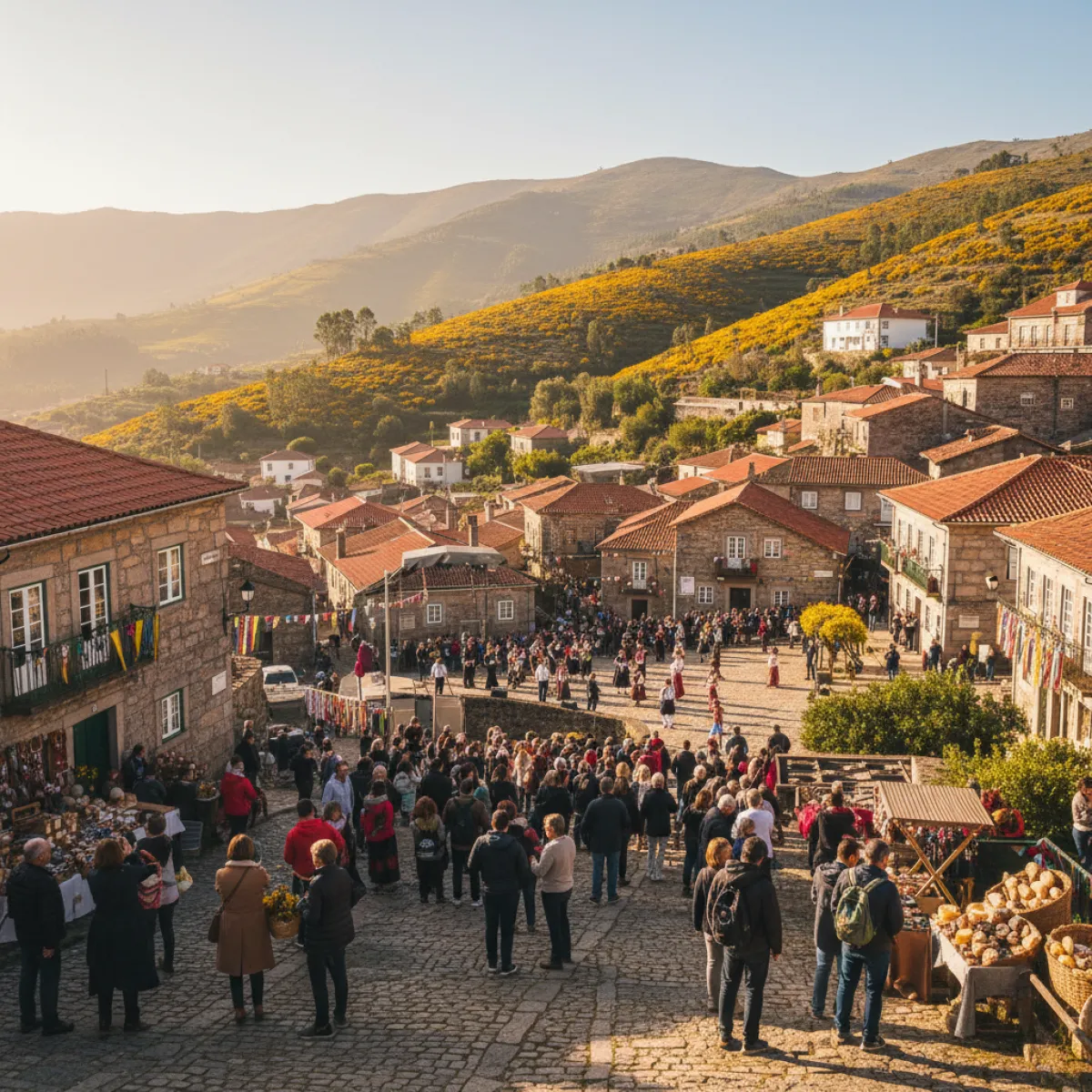
On the third day, head down into the valley. The villages around Gouveia, Folgosinho, Arcozelo da Serra, Vila Nova de Tazem, are draped in roses, wisteria, and geraniums cascading over granite facades in May. This isn't wild flora; these are domestic gardens, but the visual effect is extraordinary: narrow streets, stone walls, and waterfalls of flowers everywhere you look.
Folgosinho deserves at least an hour. It's a mountain village with real character, granite houses, a medieval castle (ruins, but impressive ones), and views across the valley that justify the detour. In May, the wisteria in the courtyards is at its peak. There are one or two restaurants in the village where the roast kid goat, the signature dish of the area, is done well.
If you have extra time and want to explore the serra beyond flowers, the Snow Wells trail guide for Manteigas opens an entirely different chapter of the mountain, more rugged, more geological, equally fascinating. Manteigas is about 40 minutes from Gouveia by mountain road.
When to go (and when not to)
The ideal window is the first two weeks of May. Before that, the altitude flowers haven't opened yet; after that, the June heat starts drying everything out. Gorse blooming is the most reliable, it happens every year without fail. Wild orchids and daffodils are more temperamental and depend on rainfall in the preceding months.
Avoid long weekends if you can. Gouveia is small and its few restaurants fill up quickly. During the week, you'll have the trails almost entirely to yourself.
The weather in May on the mountain is unpredictable. You can have radiant sunshine in the valley and thick fog on the plateau, all in the same day. Always carry a windbreaker and an extra layer, even if you leave Gouveia in short sleeves.
Where to stay
Gouveia doesn't have a vast hotel scene, forget resorts or boutique hotels. Your options are rural tourism houses and small guesthouses. Look for accommodation in Gouveia or Folgosinho on Booking or contact local properties directly. Expect to pay €50 to €80 per night for a double room with breakfast, outside peak season.
If you'd prefer a base with more services, Seia is 20 minutes away and has more options. But you lose the charm of waking up in a mountain town and stepping out onto the trails on foot.
Getting there
Driving is the only practical option. Gouveia is about 3 hours from Lisbon via the A1 and then IC6, or 2 hours from Porto via the A25. There are Rede Expressos buses, but they're infrequent and useless for exploring the trails.
If you're driving and want to combine this with other explorations in the region, the one-day road trip from Covilhã to the Schist Villages is an excellent complement, it's on the other side of the mountain and shows an entirely different landscape.
What to bring
- Hiking boots (altitude trails are uneven and can be muddy in May)
- Sunscreen (the altitude is deceptive, you burn faster than on the coast)
- Binoculars if you're into birdwatching, May is nesting season and the serra has interesting species, including Bonelli's eagle
- A macro lens if you photograph, the mountain's wild orchids are tiny and deserve close-ups
- Plenty of water, there are no reliable water sources on altitude trails
An honest note
This isn't a route for people looking for Keukenhof-level spectacle or Instagrammable lavender fields. The Serra da Estrela bloom is subtle, scattered, and requires walking. You won't find arranged flowerbeds or information panels at every turn. What you will find is a living, raw mountain doing what it's been doing for thousands of years without needing an audience. And in May, doing it with a beauty that most people never see, simply because they don't know it exists.
Gouveia is the right gateway. Small enough to avoid crowds, well-positioned to access both the valley and the plateau, and home to people who are still genuinely surprised when someone comes from far away to see flowers. Which is, come to think of it, one of the best reasons to go.