Where to Eat Açorda Alentejana in Portalegre: 4 Tascas
Four family-run tascas in Portalegre that make açorda alentejana properly, with pennyroyal from the Serra de São Mamede, Alentejo bread, and backyard eggs. Honest opinions, prices around seven euros, and the mistakes you'll make if you don't read this first.
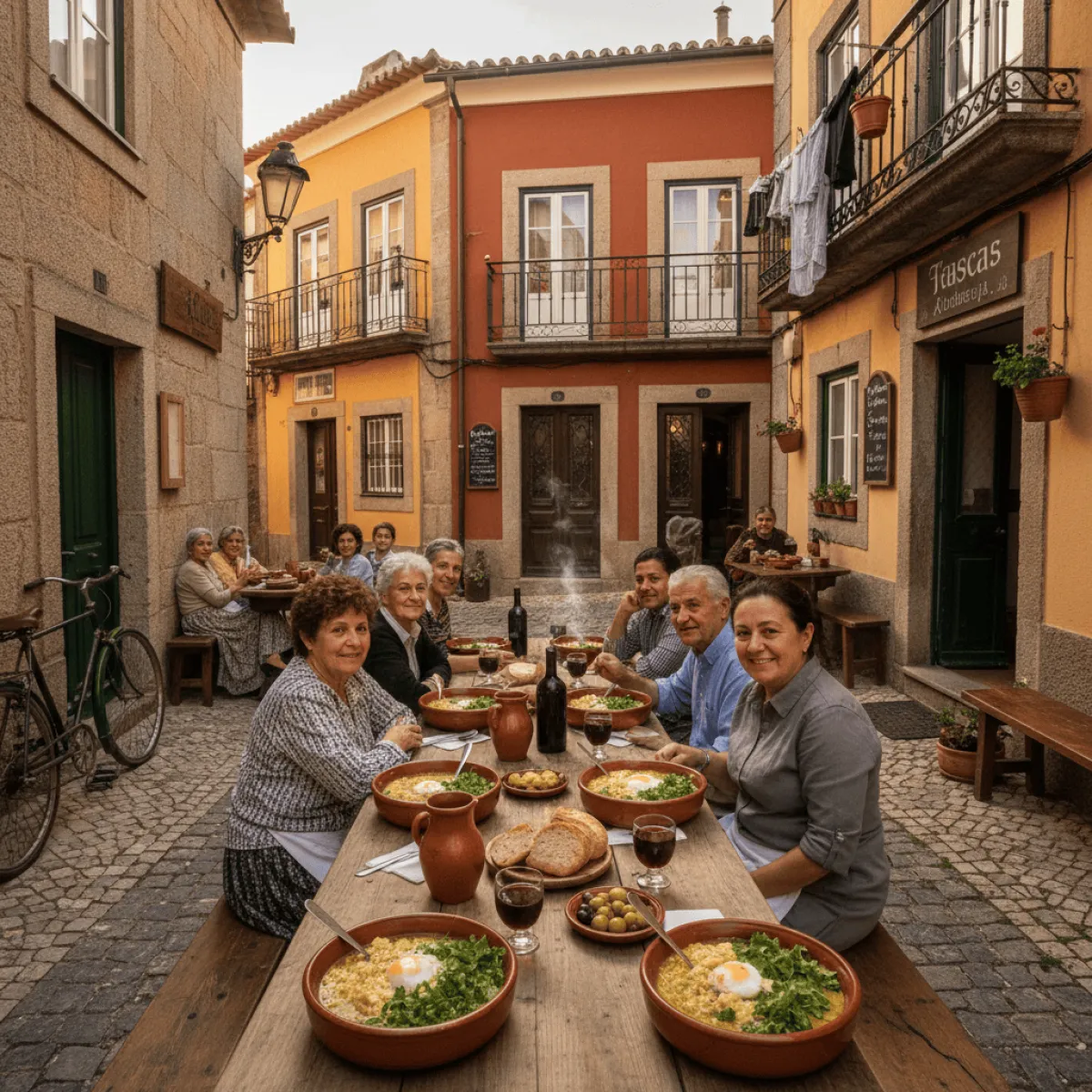
I have a theory I defend with the stubbornness of someone who has eaten bad açorda: açorda alentejana is not a soup. Anyone who serves it in a soup bowl, with a soup spoon, and calls it soup has missed the point. It is a broth of pennyroyal, garlic crushed in a mortar, generous olive oil, day-old bread to thicken, and a poached egg floating like a promise. It comes in a tureen. You eat it with a spoon, yes, but also with bread, almost with your fingers, with the patience of someone who knows the dish goes cold fast and that letting açorda cool is a crime against humanity.
In Portalegre, this notion is alive and well. It is not a city that surrenders to modernised cooking. The tascas resist, the cooks still make açorda with pennyroyal picked by their own sister, and prices haven't yet reached Lisbon levels. Good news: you can still eat real açorda alentejana in Portalegre for under eight euros. Bad news: not every house does it properly.
This guide is the result of a personal obsession: combing through Portalegre tasca by tasca looking for the definitive açorda. I didn't find one. I found four different versions, all defensible, all with personality. If you want a broader look at the city's food scene, read this guide to where locals actually eat in Portalegre before planning your weekend. Here, we are talking only about açorda. And about the people who make it with love.
First, an impassioned defence of açorda
If you have never tried açorda alentejana, forget everything you know about other açordas. There is no seafood, no meat, nothing beyond water, salt, garlic, coriander or pennyroyal (depending on the house and the season), olive oil, bread, and egg. It is the most stripped-down cooking Portugal knows how to do. And when it is made properly, it is one of the most comforting things you will ever taste.
The Portalegre version is more rural than the one you find in Évora or Beja. There is more pennyroyal (the wild mint that grows in the damp parts of the Serra de São Mamede) and less coriander. The garlic is pounded, not sliced. The olive oil comes from the region, often from small producers. The egg is from a backyard chicken. If the tasca uses battery eggs, you notice immediately: the yolk falls apart without that creamy texture that defines a good açorda.
Eating açorda in Portalegre is also eating a landscape. The Serra de São Mamede produces the pennyroyal, the old olive groves give the oil, the village hens lay the eggs. There is no dish more tied to its territory. Which is why it matters to eat it where it's made seriously, not where it's made for tourists.
The four tascas (with honest opinions)
1. Tasca do Lopes, the classic
This is the first place I recommend to anyone arriving in Portalegre for the first time. No frills, no tourist decoration, no menu in English. Formica tables, paper tablecloths, a TV tuned to whatever channel nobody is watching. The açorda arrives in a tureen meant to be shared at the table, even if you are alone. You will have leftovers. That is how it should be.
What sets it apart: the pennyroyal. They get it fresh daily, and you can tell. The first spoonful has that camphor-like aroma of wild mint. The egg is poached in boiling water just before serving, never on the side. Ask for extra bread, you will want it.
What it costs: around seven euros for the portion. House wine, regional red, around two euros a glass. Don't expect refinements. Expect to be treated as though you were eating at an aunt's house.
2. O Tarro, the more technical version
If Lopes is açorda as it was made fifty years ago, this is a slightly more polished version. It isn't fine dining, far from it, but there is an attention to detail that shows: the bread is better chosen, the serving temperature is controlled, the egg is always perfect. It costs a euro or two more than average.
Will you eat better here? Depends on what you value. Lopes's açorda has more rural character, this one has more consistency. I go to both, depending on my mood. I recommend this one when you have company trying açorda for the first time and you want a version without rough edges.
What else to order: the cação fish soup, if it's on the board that day. And don't skip the lamb ensopado if it's a winter menu. Book a table at the weekend, especially Sunday lunch, or you will end up at the door.
3. Solar do Forcado, the grandmother's açorda
This is the house where açorda comes with history. The lady who cooks has been there for decades, and it shows in the consistency of the plate. It isn't the prettiest tasca, it isn't the most central, and the service can be brusque if it's busy. But the açorda is one of the most honest in the city.
What I love here: the way the bread breaks down. It doesn't become mush, it doesn't stay in hard chunks, it lands at that middle point where every spoonful has texture but melts in the mouth. That is only achieved with decades of practice and with good bread. The Alentejo bread they use comes from a local bakery, and you can tell by the airy crumb and the slight sourness.
Go midweek, at lunch. At weekends it fills with families and service slows. Expect around eight euros for the portion, plus drinks.
4. Adega do Cantador, the late option
The other three close early. This one serves later, which is a rarity in Portalegre, where traditional dinner ends at nine thirty. If you arrive in the city at the end of the day and want açorda for dinner, it is practically the only option.
Their version is lighter, less bread, more broth. Some prefer it. I think it loses a bit of the rural character, but it has its merit: it sits better before sleep than a denser açorda that weighs on you until morning. Order also the Nisa cheese, which they usually have, and a glass of wine from the Serra de São Mamede.
When to go, how to get there, where to sleep
Açorda season is all year, but pennyroyal is most aromatic in spring and early summer. In high summer, with forty-degree heat, you may prefer something else. In January, with damp cold, açorda saves your life. October and November are, for me, the ideal months: heat is gone, pennyroyal is still good, and the tascas are less crowded than in summer.
By car, Portalegre is easy: A6 to Estremoz, then the N18. From Lisbon, three hours in normal conditions. By train, more complicated, but the journey from Entroncamento to Portalegre has its charm. The station is far from the centre, count on a taxi or a bus.
For sleeping, I almost always use the Rossio Hotel, which sits in a strategic position for walking to any of the four tascas. It is the best base in the city if your trip is gastronomic and you want to get back without complications after a lunch with wine.
What to do between meals
Eating açorda at lunch leaves you without energy for long walks, but Portalegre has things you can do slowly, things that digest well alongside bread and egg. My suggestion for the afternoon of an açorda day: visit the Tapestry Manufacture. It is one of the country's cultural rarities, and it is right there, within easy reach. I dug into the details in this guide to the tapestry experience at the Castelo-Branco Palace: you will come away with a different understanding of what this city represents.
If you prefer a busier afternoon, there is the museum marathon for three euros, which takes you to three different spaces for the price of a coffee. It's the best cultural value for money I know of in Portugal.
For those who would rather walk to digest, I wrote this guide to the Portalegre neighbourhoods worth discovering on foot. The climbs will burn off some of what you ate. The views are worth the effort.
Mistakes you will make (and how to avoid them)
First mistake: ordering açorda at a touristy terrace. Portalegre doesn't really have tourist terraces, but it has cafés that serve daily specials. If you see a menu with photos of the dishes, run. Good açorda doesn't photograph well. Good açorda looks like yellowish mush with something yellow floating in it. If it's pretty, it was plated for the photo, not for eating.
Second mistake: mixing the egg in too early. The point is to leave it intact, eat around it, and break the yolk only halfway through the meal. When the yolk bursts, the dish changes. It gets creamier, richer. Whoever stirs everything at the start loses half the experience.
Third mistake: not asking for bread on the side. The açorda already has bread in it, yes, but Alentejo bread is for wiping the plate at the end. Without extra bread, you will miss it.
Fourth mistake: ordering white wine. Pennyroyal açorda holds up to red. A light regional red, nothing too heavy. A wine from the Serra de São Mamede or a simple Borba. The waiters know what works. Ask.
A possible weekend
Friday night arrival, light dinner at Cantador. Saturday morning, coffee at one of the spots on the main square. Lunch at Lopes or Tarro. Afternoon at the tapestries or the museums. A more serious dinner if you are still hungry. Sunday morning, market if there is one, or a walk through the upper neighbourhoods. Lunch at Solar do Forcado to close on a high note.
If you want a more detailed version of this weekend, with timings and rainy-day alternatives, I wrote this guide to a real weekend in Portalegre, free of tourist traps. It pairs well with this one about the tascas: use the weekend guide for structure, this one for the meals.
Final word
Portalegre doesn't sell itself. It doesn't have Évora's glamour or Marvão's postcard perfection. It has a mountain range behind it, closed factories, and a kitchen that survives because the people who cook in it still believe in it. Açorda alentejana is central to that identity. Eating it done well is one of the best reasons to come here.
Four tascas, four versions, four lunches. Go to one, go to all four, but go. And when you come back, write to me with your favourite. I still maintain it's Lopes's. But I am open to arguments, if you bring them with appetite.