Walking Wellington's Lines: The Forts of Torres Vedras
In 1810, Napoleon's army reached the hills north of Torres Vedras and simply could not get through. Today you can walk the forts that saved Lisbon, starting with the imposing Forte de São Vicente.
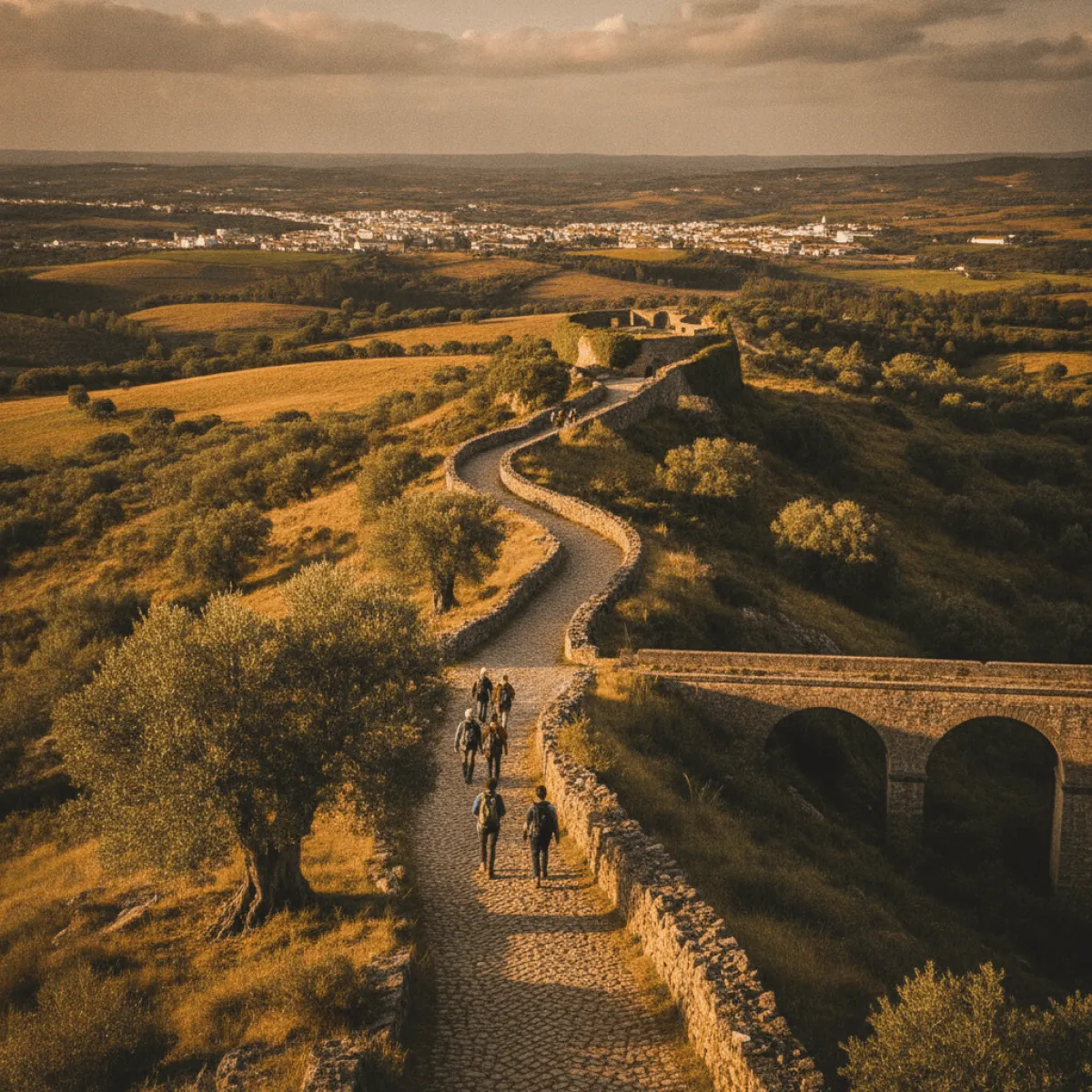
In 1810, the most feared man in Europe was stopped right here. Not in a capital, not on a textbook battlefield, but on the scrubby, olive-dotted hills north of Torres Vedras, in front of something nobody saw coming: a wall of forts that Napoleon's army simply could not get through. Marshal Masséna looked at those hills, realised he had been outmanoeuvred by months of secret labour, and sat there rotting through the winter until hunger sent him home. The Lines of Torres Vedras are, without exaggeration, the reason Lisbon never fell. And today you can walk them in a weekend, with decent boots and zero military knowledge.
What annoys me is that almost nobody comes for this. They come for Carnival, they come for the wine, and the forts just sit up there, waiting. Let's fix that.
What the Lines actually were
Forget the image of one continuous wall like the Great Wall of China. The Lines of Torres were a system: more than 150 redoubts and forts scattered across strategic hills between the Atlantic and the River Tagus, linked by military roads, gun batteries and valleys deliberately flooded to bog down French artillery. They were built in secret between 1809 and 1810 on the orders of Arthur Wellesley, the future Duke of Wellington, with the engineering led by Lieutenant Colonel Richard Fletcher and thousands of Portuguese labourers who moved earth by hand for months.
The idea was brutally simple: let Masséna's army advance through inland Portugal, destroy everything that could feed it along the way (scorched earth), then wait behind an impossible barrier a few kilometres from Lisbon. When the French arrived in autumn 1810, it was a shock. They probed the defences at Sobral, tested them, and gave up. They spent the winter starving in a ravaged countryside and retreated in March 1811. With no great battle. Geography, discipline and patience won.
Start at the Forte de São Vicente
If you only have time for one thing, make it this. The Forte de São Vicente, right at the edge of Torres Vedras, was the central knot of the first defensive line and the most imposing of the lot: three linked redoubts, ditches, parapets, and a view that explains everything in a fraction of a second. You climb up, look around, and immediately understand why Wellington's engineers chose this hill. It commands the valley, the town, and the roads coming down from the north. Anyone approaching was exposed.
It has been restored and signposted, it forms part of the Historical Route of the Lines of Torres, and access to the outdoor spaces is usually free. Interpretive panels save you the trouble of imagining. Set aside an hour to ninety minutes to walk it slowly. Go early morning or late afternoon: low raking light across the ditches and stone parapets is when the place earns its drama. Check the interpretation centre's hours locally before you go, as they change with the season.
The viewpoints the engineers already knew
Here's the part I love: the spots Wellington chose for military reasons are exactly the ones we now seek out for much lazier reasons, the view. Whoever held the high ground held everything, and two hundred years later those high points are still the best places to read the landscape.
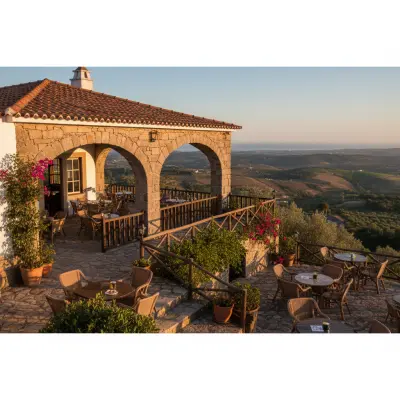
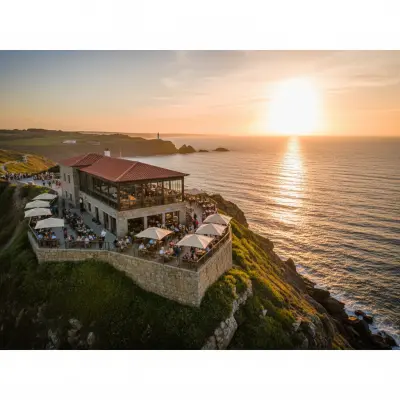
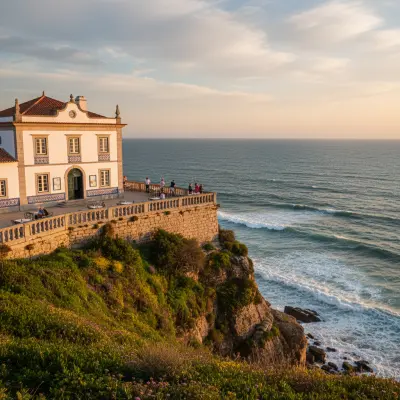
The Miradouro do Varatojo is my first recommendation for framing the geography of the Lines. From here you read the Sizandro valley and the ripple of hills where the redoubts were planted, and the logic of defence in depth clicks into place. Facing the sea, it is worth the drive out to the Miradouro da Ponta da Vigia on the Atlantic cliff: this was where the western flank of the defences ended, anchored on the ocean so no one could slip around by the coast. To close the day with the most composed view over the town and its rooftops, climb to the Miradouro de Nossa Senhora da Boa Viagem. It is no fort, but it gives you the panorama the commanders would have killed for.
A walking itinerary that makes sense
The Historical Route of the Lines of Torres covers six municipalities, from Mafra and Torres Vedras to Vila Franca de Xira, and it carries its own waymarking. Trying to do all of it at once is a recipe for frustration. My advice: concentrate on the Torres Vedras stretch and neighbouring Sobral de Monte Agraço, which together tell the full story.
Day 1: Torres Vedras
- Morning: Forte de São Vicente, taken slowly. Bring water, there is no café at the top.
- Mid-morning: drop down to the Miradouro do Varatojo to read the valley.
- Lunch in town. Torres Vedras does honest, unpretentious cooking: order fish if you see it fresh, and finish with a slice of pão de ló sponge cake, which they take seriously here.
- Afternoon: the coast, with the Miradouro da Ponta da Vigia, then back via the Miradouro de Nossa Senhora da Boa Viagem at sunset.
Day 2: Sobral de Monte Agraço
About half an hour away by car, the Forte do Alqueidão was the forward command post for the entire first line, on the highest point, and it was here the French hit hardest in October 1810. There is a Lines of Torres interpretation centre in the municipality worth visiting before you climb to the fort, because it gives context to everything you are about to see. The walk up to Alqueidão is the moment you understand, in your legs, what it meant to attack these positions uphill. Check hours and access locally.
When to go and what to wear
Spring and autumn are unbeatable. In summer, the heat on the open high ground is treacherous and there is no shade at the forts; if you come in July or August, go at sunrise or sunset and carry more water than you think you need. Winter has its historical charm, it was a winter that beat Masséna after all, but the dirt tracks turn heavy after rain. Boots with grip, not city trainers. The redoubts are packed earth, loose stone and tall grass, not paved promenades.
On cost, this is one of Portugal's cheapest stories: the outdoor areas of the forts are generally free to enter, and the landscape charges no ticket. Budget instead for a good lunch and the fuel between points, because without a car the logistics between forts get complicated fast.
Getting there and getting around
Torres Vedras sits about 50 km north of Lisbon, easily reached via the A8. There are regular bus links from the capital, but the blunt truth is that the Lines were designed to spread across distant hills and that hasn't changed: to connect São Vicente, the viewpoints and Alqueidão without losing the day to waiting, a car is almost essential. If you don't drive, you can comfortably do the Torres Vedras core on foot from the centre and leave Alqueidão for another time.
Stretching the story beyond the forts
The Lines didn't run on stone and cannon alone, they ran on water. The Sizandro valley was part of the defensive system, with flooded zones to halt the enemy advance, and today that same river offers a far more peaceful way to know it: a paddle down the Sizandro by kayak gives you the water-level perspective Wellington's engineers studied with maps and theodolites. It is a delicious contrast: in the morning you climb a fort to picture the war, in the afternoon you row the river that helped win it.
If you like walking and have the legs for more kilometres, there is another reading of the territory on the West Coast Camino through Torres Vedras. It is a different layer over the same landscape: where soldiers once defended, pilgrims now pass, and the trails sometimes overlap.
Where this fits in the West and greater Lisbon
Torres Vedras is not an island. It is part of a region where history and tradition go hand in hand, and it pays to frame it. To understand the cultural thread running from here into the capital, our read on Lisbon's culture and neighbourhoods sets the backdrop for a territory these forts literally saved. To the west, nearby Sintra offers a different kind of fortification and fantasy, and our guide to the corners of Sintra is the perfect counterpoint to the military bareness of the Lines. And if you come at the right time of year, the sweet-making tradition of nearby Mafra is worth a detour: see our Easter sweets of Mafra guide, because after climbing forts nobody turns down sugar.
What to take away
The Lines of Torres Vedras are one of those stories that change how you look at an apparently ordinary landscape. That scrubby hilltop? It was a redoubt. That marshy valley? A calculated trap. That bend in the road that seems pointless? A military road. Walk São Vicente slowly, climb a viewpoint at the end of the day, let the geography itself tell the story, and you'll see that few places in Portugal say so much with so little fuss. Napoleon stopped here. Next time someone tells you Torres Vedras is just Carnival and wine, send them up a fort.