Walking Valença: An Architectural Route Through the Old Town
A walking route through the Coroada and the Magistral, stopping at the Vauban bastions, Rua Apolinário da Fonseca, the Largo de São Estêvão, and lunch booked at Fatum. Two to three hours, best done before ten in the morning, ahead of the Galician coach buses.
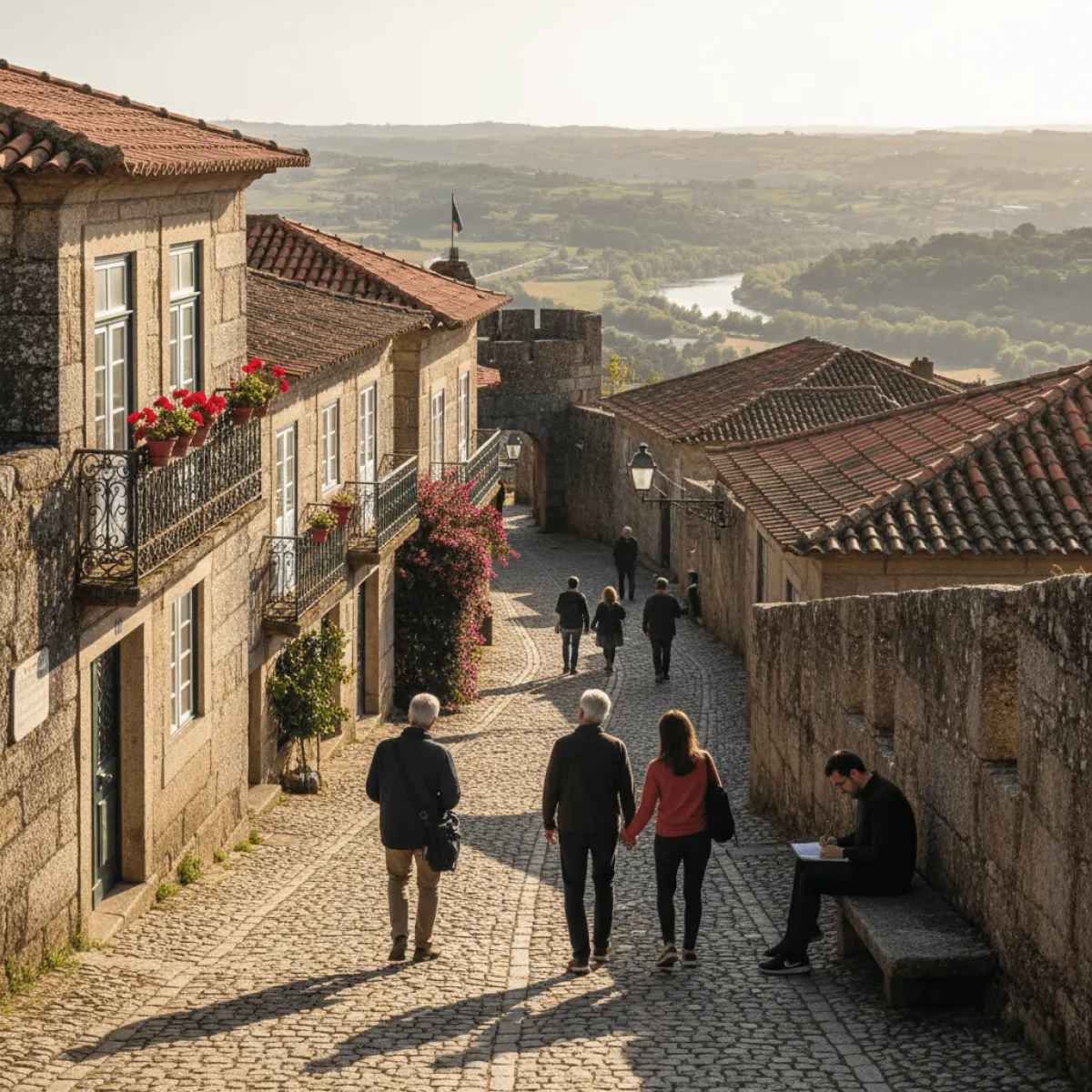
There is a moment, after passing through the Porta do Sol and before reaching the Largo do Trem, when you finally get what Valença actually is: not a fortress with a town inside it, but a whole town that decided, three hundred years ago, to live inside a fortress. The distinction is not semantic. It is architectural, social, and it still shapes how you walk around the place today.
This route, which I do every time friends visit the Minho for the first time, takes between two and three hours at a relaxed pace. It can be done in forty-five minutes if your friend is the kind of person who walks past Vauban architecture and says "cute". I recommend the slow version. I also recommend starting before ten in the morning, because after that the Galician coach buses dump several hundred people onto the linen-tablecloth strip and the magic evaporates.
Start with the Coroada, not the Magistral
Valença has two fortresses, nested inside each other like military matryoshka dolls. The bigger one, to the south, is the Coroada, built from the seventeenth century onwards to protect the Magistral, the older medieval fortification to the north, perched over the Minho river. Most visitors enter through the Porta do Sol, in the Coroada, sprint across it, and head straight to the Magistral looking for cheap towels and linen. This is a mistake.
Begin with the Coroada. Park in the free outdoor lot next to Avenida Espanha (rarely full before ten) and enter through the Porta do Sol. The first stones you see, to your left, are what remains of the riflemen's barracks. To your right, a small grassed square where, on any given May morning, an older gentleman in a flat cap is walking his dog. He is not a prop. He is human geography.
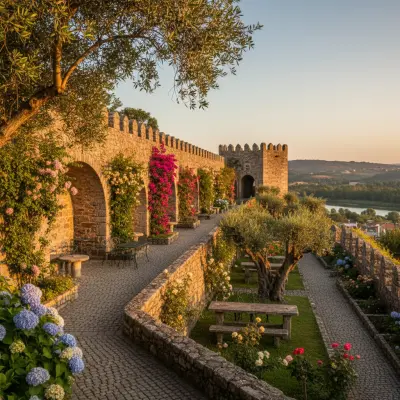
The gardens of the Valença fortress start here, scattered in patches across the bastions. They are functional gardens, in a military sense: they were designed so the garrison could grow vegetables during a long siege. Today they have hydrangeas, box hedges, and excellent stone benches for sitting and staring at Galicia, which is literally across the road, four hundred metres away.
The Vauban detail nobody points out
Look at the tips of the bastions. They are not square. They are diamond-shaped, with rounded ear-pieces protecting the gorges. This is bastioned fortification à la Vauban, Louis XIV's military engineer, and in Valença it is applied with a precision few places in Portugal match. Elvas has more scale. Almeida has more symmetry. Valença has the best dialogue between fortification and topography: the town sits on a rocky spur over the river, and the bastions tighten or splay according to what the hill allows.
If you want to understand this seriously, and not just in tourist mode, do the guided fortress walk in Valença do Minho. It costs little, lasts about an hour and a half, and the guide takes you to corners of the walls you would never find alone. It is not the kind of guided visit where you learn dates. It is the kind where you learn to read a wall the way you read a sentence.
Crossing into the Magistral: the Porta da Gaviarra
The crossing from the Coroada to the Magistral runs through a narrow corridor between two ravelins, with a bridge over the moat, and lands at the Porta da Gaviarra. It is the most cinematic spot on the route. In May, with purple wisteria spilling down the walls, it is rude to any landscape painter.
The Magistral, inside, is a working town. It has residents (fewer every year, sadly: tourist pressure is emptying the houses), it has the headquarters of the Galician linen and tablecloth trade, it has three or four restaurants that survive on lunch traffic, and it has, hidden among all this, a serious quantity of eighteenth-century civic architecture that deserves attention.
Rua Apolinário da Fonseca: the right axis
There are two main streets inside the Magistral. Rua José Rodrigues is the commercial one, lined with linen stalls, and it has its place, but it is not where you go to look at buildings. Turn right as soon as you enter through the Porta da Gaviarra and follow Rua Apolinário da Fonseca. Two-storey granite houses, oversized gates opening into inner courtyards, wrought-iron balconies, family coats of arms above doorways. Some have been restored. Others are collapsing with elegance.
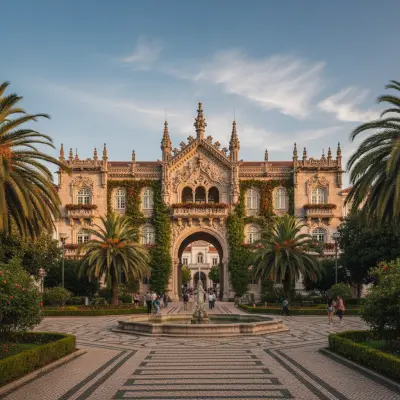
The Valença municipal garden sits outside the Magistral, downhill towards the train station. It is not on this route if you are a purist, but if you have time, take the detour: it is where the actual locals (the ones who do not work in tourism) spend their afternoons. Benches turned into conversation. A pair of kids cycling. This is the Valença that continues to exist after the last Galician coach leaves at six in the evening.
The parish church and the Largo de São Estêvão
Halfway through the Magistral, sloping gently down, you reach Largo de São Estêvão. The parish church is here. From outside it is austere granite. Inside, gilded woodwork in the heavy Minho baroque style, more loaded than what you see in Lisbon, more rooted in the soil. Worth going in. It is usually open between nine and noon, and from three in the afternoon. Check locally, because the schedule depends on whether mass is being celebrated.
The square itself is probably the best place in Valença to grasp the town as a whole. Sit on a bench. Look at the buildings. To the left, an eighteenth-century house with latticed bay windows. In front of you, the church facade. To the right, the Casa do Eirado, with its coat of arms. Behind you, an alley dropping towards the north wall, with a view of Tui across the Minho.
Tui in the distance: the detail that changes everything
Tui is not background. It is functional. Valença exists as a fortress because Tui exists as a fortress, and for centuries the border between the two kingdoms was one of the most militarised in Iberia. The two cathedrals, the Portuguese and the Spanish, look at each other across the river with a wariness that now survives only in stone.
If you want to walk across to Tui (and I recommend it), continue to the Porta do Meio, descend along Calçada da Gaviarra, and cross the International Bridge. About twenty minutes on foot, with a stunning view back at the river and the fortification you have just walked.
Where to have lunch (and where not to)
I will be direct. Inside the Magistral, most restaurants live off transit tourism. They are not bad, but they are not interesting either. Acceptable bacalhau à Brás, predictable francesinha, and Lisbon prices.
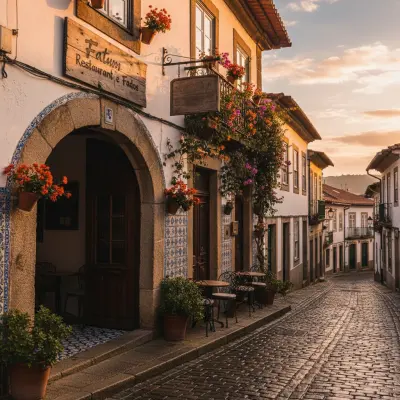
The exception, for me, and the reason I plan this route around lunch inside the walls, is Fatum, the restaurant and fado house. This is not the kind of place where you wander in wearing shorts and ask for the daily special. It is a serious restaurant, with careful cooking, Minho wines that are not just supermarket alvarinho, and live fado on Friday and Saturday nights. For lunch, ask for the kid (cabrito) if it is on the menu, or the confit cod. Book a table. Seriously. Especially on weekends.
If you want something more casual, get a roast pork sandwich at one of the small taverns on Rua José Rodrigues, but pick the one whose tables are occupied by older locals rather than groups of tourists with matching backpacks. The signal is infallible.
The north wall and the picnic option
After lunch, climb to the north wall of the Magistral. There is a sentry path that takes around fifteen minutes to walk, with continuous views over the Minho. Some sections have no railing, so hold the kids by the hand.
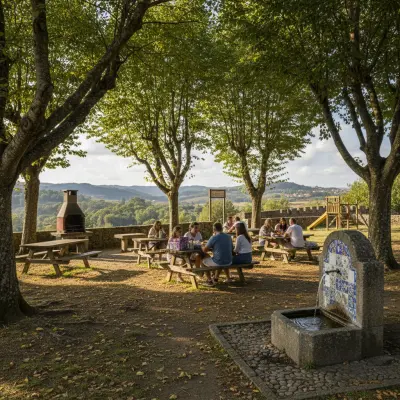
If you want a break outside the fortress, and you have a car or are willing to walk fifteen minutes downhill, the Parque de Merendas Senhora da Cabeça is where Valença families gather to grill on Sundays. Stone tables, oak shade, and a small chapel up some stone steps. Crowded in May. Empty in November, and better that way.
What to buy (if you really must)
The towels. Let us talk about the towels. Valença is famous, on the Galician side, for cheap towels and linens. Ninety percent of what is on display along Rua José Rodrigues is imported. Made in Bangladesh, repackaged with Minho-themed motifs. It is not Minho linen. It is Valença linen, in the sense that you bought it in Valença.
If you want actual Portuguese linen, there are two or three small shops, away from the main street, that still sell local or regional production. Ask. Prices are three times higher. Quality is twenty times higher. Do the maths.
Pairing Valença with Barcelos: why and how
Valença on its own is half a day. To fill a weekend, pair it with Barcelos, about an hour south by car down the A3. Barcelos has the Thursday market, the rooster (obviously), and cafés. To prepare for that part of the trip, read our Barcelos café guide, which explains where to drink a decent espresso and where to drink hot water with a burnt aftertaste.
If you are going in May, and travelling with kids, there are two further reads I would recommend: the Festa das Cruzes in Barcelos, the biggest religious and popular festival in the region at this time of year, and Barcelos with kids, with practical suggestions for travellers carrying nappy bags.
Costs, hours, the small print
Entering the fortress is free. No ticket, no checkpoint. The fortress is a town, and the streets are public. The gardens, the wall, the bastions, all open.
Parking is free in the outdoor lot near Avenida Espanha. There are paid spots inside the Coroada, but in May they fill early.
The Celta train links Vigo and Porto and stops in Valença. It is the most civilised way to arrive, especially if you are coming from Porto: about an hour, with a view over the river valley. Check timetables on Comboios de Portugal before booking.
When to come back
I have been back to Valença in every season. In January, with mist rising off the Minho, it is overwhelming. In July, hot and crowded with day trippers, it is exhausting. In October, with the vineyards burning across the river, it is one of the most beautiful landscapes in Portugal.
If it is your first time, go in May or October. If it is your second, go in January. If it is your third, I no longer need to explain anything: you have already understood.