Barcelos by the Cup: A Café-by-Café Order Guide
Barcelos has at least three cafés worth more than a quick stop. From the serious espresso at Historial Caffé to the filter coffee at Grava Bike Café, an opinionated guide to where to sit and what to order.
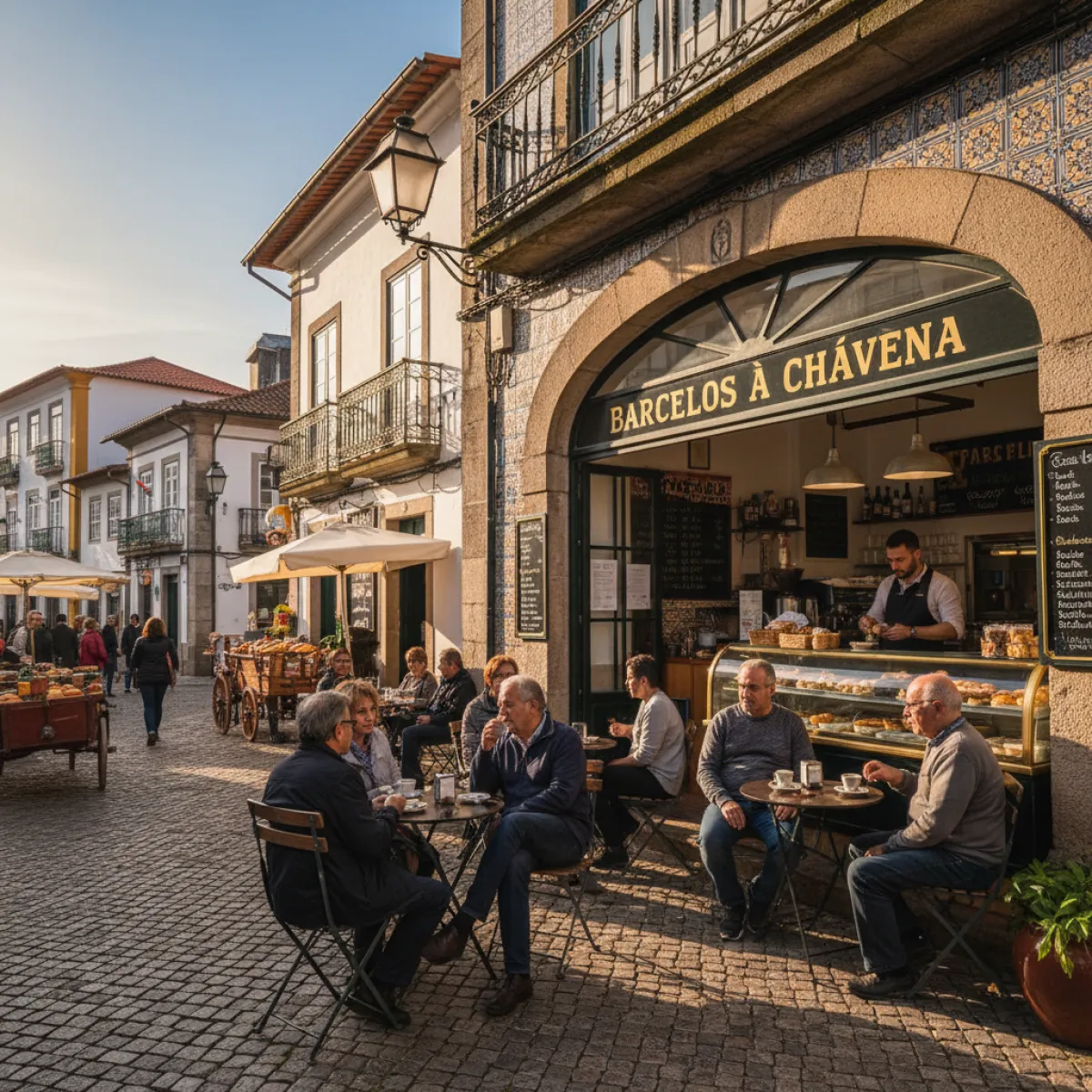
Barcelos has an odd problem for a town most people speed through on the way to Santiago or dismiss as a morning market stop: it has too many good cafés for the attention it gets. The average visitor buys a ceramic rooster, eats a slice of cake at some random terrace on Praça da República, and leaves. Their loss.
I've spent too many mornings in Barcelos testing this theory. And I can tell you that there are at least three places where it's worth sitting down, ordering with intention, and staying longer than strictly necessary. Not dozens, three, each with a personality so distinct they could belong to different towns.
Coffee as ritual, not fuel
Before we get to the spots, a note. The Minho region has a different relationship with coffee than the rest of Portugal. In Lisbon, coffee is a quick gesture, espresso at the counter, thirty seconds, move on. In the Minho, coffee is a pretext. A pretext to sit, to talk, to watch people pass. The rhythm is different. If you're coming from Lisbon with urgency, leave it in the car. If you're coming from Porto, you already know.
Barcelos, specifically, lives through its mornings. The weekly Thursday market shifts the energy of the whole town, but even on other days there's a particular cadence. Bakeries open early. The smell of corn bread, broa, escapes through doorways. And the good cafés fill up before nine.
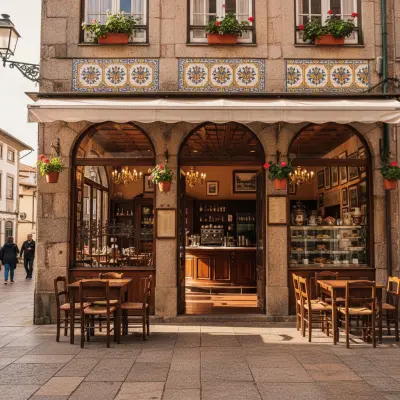
Historial Caffé: The Café Worth the Detour
I'll start with Historial Caffé because it's the easiest to underestimate. It sits in an area you'd visit for other reasons, the historic centre, the river, the medieval tower, and plenty of people walk in almost by accident. Mistake. Walk in on purpose.
The space has character. It's not your generic café with the La Cimbali machine behind the counter and industrial croissants in the display case. There's an attention to detail that shows, in the décor, in the service, in how they treat the coffee. The atmosphere is more considered than Barcelos's average, without tipping into that excess of design that makes some places prettier than they are comfortable.
What to order: coffee, full stop. Sounds reductive, but it's the definitive test. If the espresso is well-pulled, right temperature, dense crema, no excessive bitterness, you know the place takes things seriously. This one passes. If you want something sweet alongside it, ask what's fresh that day. Avoid anything that looks like it travelled by truck, choose what looks like it was made nearby.
When to go: mornings, with time. This is a café for reading the newspaper (yes, on paper, we're in the Minho), not for rushing between sights. If you happen to be here on a Thursday during market day, even better, the town's energy walks right through the door.
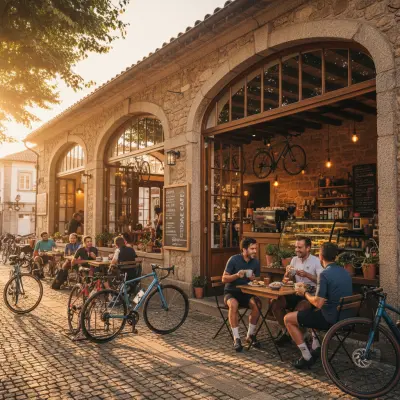
Grava Bike Café: The Outsider That Works
If Historial Caffé belongs naturally in Barcelos, Grava Bike Café is the one that shouldn't work here, but does. The concept is exactly what the name suggests: coffee and bikes. In a country where cycling culture is still growing, putting a bike café in a Minho town seems risky. And yet, it works.
You don't need to be a cyclist to come here. In fact, I suspect most regulars aren't. What draws people in is the attitude: a place that does things differently without making it a manifesto. Coffee is taken seriously, there are options beyond the classic espresso, and the atmosphere is relaxed without being careless.
What to order: try something beyond the standard espresso. If they have alternative brewing methods, filter, V60, aeropress, go for it. This is where the place distinguishes itself. A well-made filter coffee changes the perspective of anyone who thinks coffee is just that 70-cent espresso at the counter. If you prefer the classic, the espresso is solid too.
To eat, go for whatever's simplest. A homemade cake, a decent toast. This isn't a place of elaborate food, it's a place of serious coffee with good things around it.
When to go: weekend mornings, especially when the weather's good. The atmosphere shifts, lighter, more social. Weekdays work too, but Saturday morning is the sweet spot.
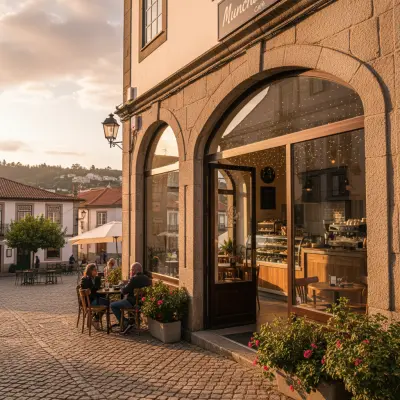
Munchies Café: The Third Way
Then there's Munchies Café, which is a different conversation. Here, coffee is part of a broader proposition, it's a place where you eat, where you stay for lunch, where the offer goes well beyond the cup. But the cup exists, and it's not to be ignored.
Munchies positions itself in a more informal, contemporary register. If Historial Caffé has one foot in the classic and Grava bets on specialty coffee culture, Munchies plays the versatility card. It's the kind of place where you walk in at ten for a coffee and end up staying for lunch because the menu looked good.
What to order: here, my advice is different. Start with the coffee, yes, but don't stop there. If you're hungry, and in Barcelos you're always hungry, the Minho air does that, explore the menu. Brunch, when available, is a solid bet. For those travelling with kids, this is probably the most practical of the three, the vibe is relaxed and the options are varied.
Speaking of families: if you're doing Barcelos with children, our honest family guide covers the essentials, including where to eat without drama.
What not to order (anywhere)
Since we're talking cafés, a moment for what you should avoid, not at these places specifically, but in general:
- Cappuccino after noon. Yes, I know, we're not in Italy. But the principle holds: hot milk and strong coffee belong to the morning, not to three in the afternoon. Order a regular coffee.
- The generic ham-and-cheese toasted sandwich that exists everywhere. If a café has something more interesting on the menu, and these three do, don't default to the default.
- Decaf at places that put effort into their espresso. It's like going to a fado house and asking them to turn it down.
Beyond the cup: context
These three cafés don't exist in a vacuum. They exist in Barcelos, which is a town with more going on than the market and the rooster. The historic centre has streets where you'll want to lose time. The Campo da Feira, when empty, is one of the finest urban spaces in the Minho. The River Cávado, seen from the Paço dos Condes, justifies ten minutes of just standing and looking.
If you want to combine the cafés with a plan, the ideal Barcelos morning goes like this: early coffee at Historial or Grava, a walk through the historic centre, lunch at Munchies or one of the local restaurants, and a free afternoon for the Pottery Museum or simply wandering.
If you come on a Thursday, the market is non-negotiable, it's one of the most genuine in the country, with zero tourist theatrics. Get there early, because after eleven it's already thinning out.
The Minho's café moment
Barcelos is a good entry point for understanding that the Minho is more than caldo verde and vinho verde. There's a coffee culture growing, slowly, like everything here, but it's real. Grava Bike Café is proof: a concept that would be completely normal in Berlin or Copenhagen, but here, in a town of 8,000 people, it takes on a different meaning.
If this idea interests you, a more contemporary Minho that hasn't lost its roots, it's worth exploring Ponte de Lima, half an hour from Barcelos. Portugal's oldest village has a calm of its own that complements Barcelos's energy nicely. In winter, Ponte de Lima wrapped in fog is another experience entirely, more intimate, more gastronomic, more inward-looking.
But that's another trip. For now, Barcelos is enough. Three cafés, three personalities, and the certainty that ordering with attention beats ordering out of habit.
Practical information
Barcelos is about 50 minutes from Porto via the A3/A11. By train, the Minho line connects Barcelos to Viana do Castelo, Braga, and Nine (with connections to Porto). The station is a ten-minute walk from the centre.
If you're arriving on foot, literally, the Central Portuguese Caminho de Santiago passes through Barcelos. And if you're in a walking mood but prefer the south, the Rota Vicentina in March is one of the best things you can do in Portugal.
For parking, avoid the centre on Thursday mornings (market day). Other days, there's free parking near the river. All three cafés are within walking distance of each other, Barcelos is a town you do on foot, and that's part of the appeal.