Festa das Cruzes in Barcelos: An Honest May Guide
Fireworks over the Cávado, petal carpets on Avenida da Liberdade, and three-euro bifanas in the food stalls: the honest guide to the Festa das Cruzes in Barcelos, first week of May. When to go, where to eat, and what is actually worth your time.
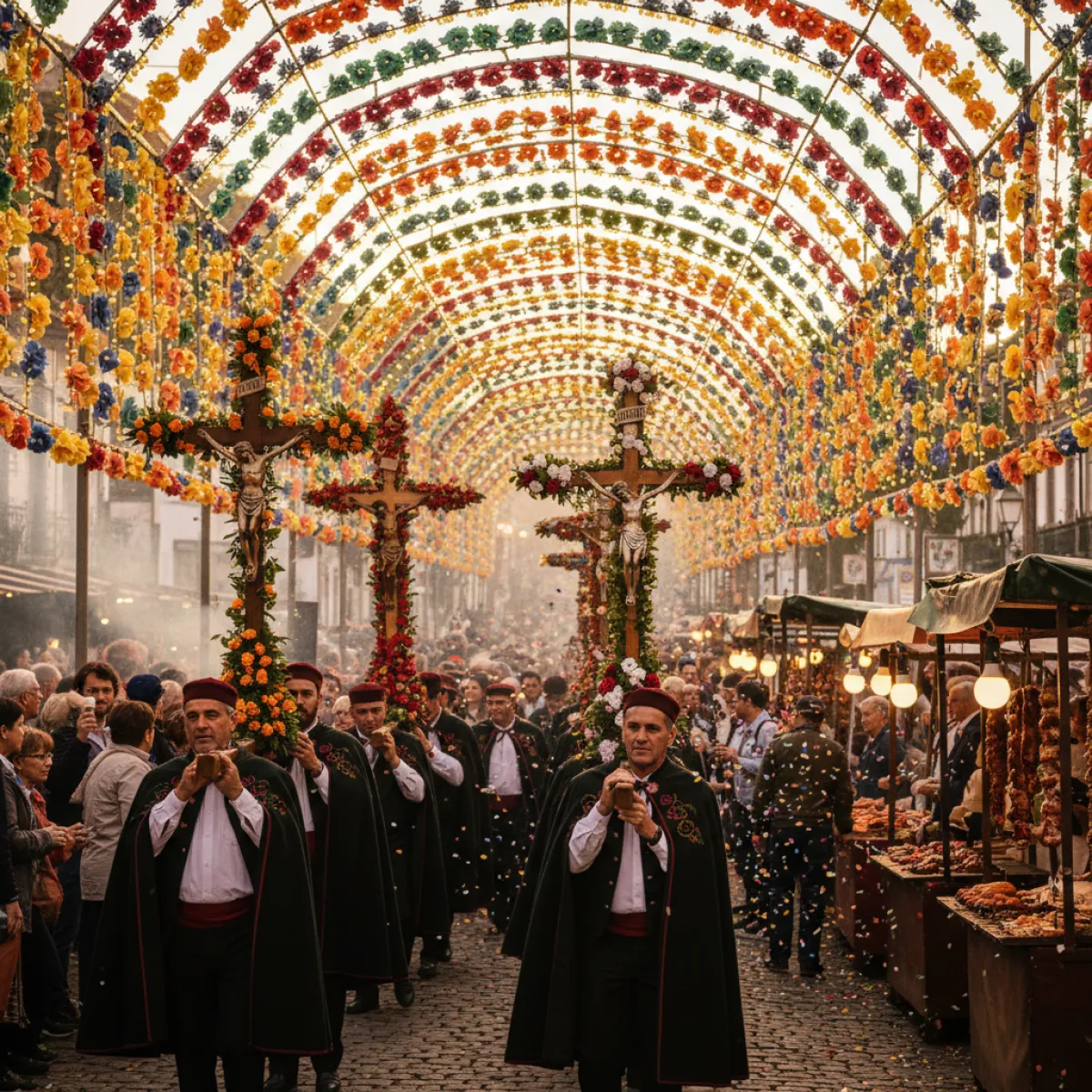
There are two days a year when Barcelos really exists: Thursday morning, when the Campo da República turns into the country's biggest weekly market, and the first week of May, when the city drags out its complicated relationship with faith, fireworks, and folk music and parades it down the Avenida da Liberdade. The Festa das Cruzes is the second one. And if you have read online that it is some timeless ancestral celebration, forget it. It is a small city festival, loud, with food stalls coughing sardine smoke into the air, teenage girls complaining to their boyfriends about new shoes, and a stage where, without irony, people dance to a keyboard player from Famalicão called Tony something.
Which is exactly why it is worth going.
Why this festival exists in the first place
The official story is the one written in the blue tile frieze inside the Templo do Senhor da Cruz: on 3 May 1504, a shoemaker called João Pires saw a cross drawn in the dirt of the old market square. He marked it with stones, came back the next day, found it erased. Marked it again. It was erased again. By the third try, the locals decided a miracle was involved and ordered a chapel built. The baroque temple that still dominates the eastern side of the Campo went up from 1701, designed by João Antunes, the same architect behind Santa Engrácia in Lisbon. Go inside for the painted ceiling and the blue and white tiles in the narthex alone. Free entry, closed during mass, check times locally because they shift week to week.
That all sounds devout. In practice, what matters today is that the city decided never to let go of the excuse. The Festa das Cruzes happens around 3 May and runs for about five days: procession, fireworks, flower carpets, popular concerts, craft fair, and several hundred food stalls. If you are coming for the first time, focus on Friday night and Saturday. That is when the city is fully on.
What actually happens (and what you can skip)
The fireworks over the river
No debate here. The peak of the festival is the firework display launched over the Cávado river, usually on Saturday night, with the medieval bridge as backdrop and the Paço dos Condes cut out in silhouette. Locals know the best vantage point is not the Barcelos side, which fills up to the gills, but Barcelinhos on the opposite bank. Walk over the old bridge two hours before, bring a blanket, plant yourself near the church of São Lourenço on the riverside path. You will hear the rockets bouncing off the water. Worth every minute of the wait.
The flower carpets
These appear on the morning of 3 May, before the procession. Residents of the central streets, particularly around Avenida da Liberdade, spend the night drawing carpets with petals, dyed sawdust, and painted rock salt. This is the part of the festival closest to the tradition cliché, and it is genuine, made by people who learned from their parents. Get there between 8 and 10 in the morning if you want to photograph the carpets before the procession walks all over them. Wear comfortable shoes. You will be on your feet a lot.
The procession
Honest opinion? If you are not particularly religious, the Cruzes procession is not the most thrilling item on the program. It is slow, it is solemn, and it features people in heavy regalia on what is usually a warm day. But it is worth catching five minutes for the choir, the brass band, and the carried statues. Position yourself at the doors of the Templo do Senhor da Cruz when the procession leaves or returns. That is the most photogenic moment, with the bishop's palace in the background.
The food stalls
The stretch of stalls set up around the Cinco Esquinas area is where most of the night is spent. Do not expect haute cuisine. Expect three-euro bifanas, grilled sardines in May (let us be honest, the good sardines are in June), caldo verde, rojões, roast kid, and francesinhas. Drink the house red vinho verde out of a plastic cup and do not complain about it.
Where to eat seriously, away from the crowd
Two mistakes distracted visitors make in Barcelos during the festival: thinking food stalls count as dinner, and assuming the central restaurants are all booked solid or shut. They are not. They are just harder to book.
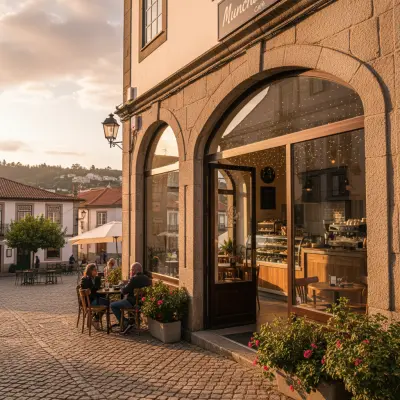
For a solid lunch between festival days, Munchies Café is my pick if you want to escape the bacalhau-with-cream-everywhere rotation and eat something lighter: a decent sandwich, a salad that is more than iceberg and watery tomato. It is where the city's remote workers end up midweek, and in May it works as a base camp for regrouping before going back into the festival.
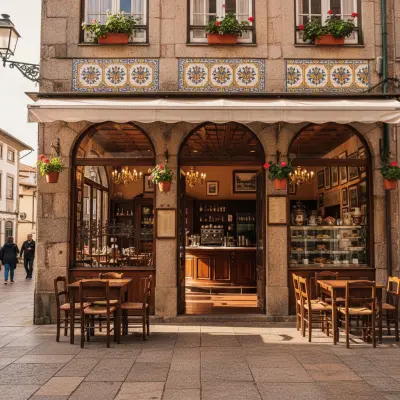
If you want somewhere more elegant for a long lunch with a view, Historial Caffé is literally the lookout over the Cávado: terrace above the river, a menu that takes itself seriously without being tiring, and that golden afternoon light that makes you feel like you are inside a travel magazine spread. Book ahead during Cruzes week, especially for Saturday.
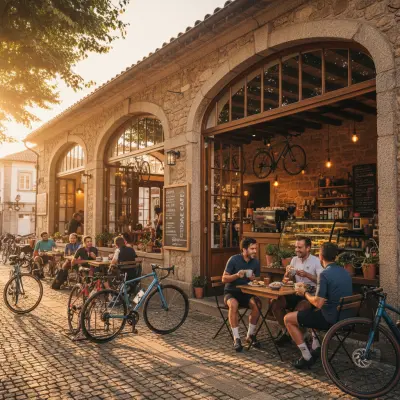
For breakfast, or for that mid-afternoon pause when you cannot take any more noise, Grava Bike Café is the refuge. It is a coffee-and-bicycle-workshop that serves coffee properly, without that scorched dark roast still common in half the country. To understand why the local coffee scene is worth your attention, read the Barcelos café guide we put together.
Where to sleep and when to book
Direct version: hotels inside Barcelos's historic centre are limited, and in May they fill up weeks ahead. If you are reading this in January or February, you can still get the Bagoeira Hotel or Art'Otel. If you are reading this in April, your best bet is to look across the river in Barcelinhos, or rural guesthouses in parishes five kilometres from the centre. Decent farmhouse stays in Vila Boa and Vila Cova run around 70-90 euros a night for a double. Always confirm parking: in town during the festival, forget about leaving a car anywhere near the centre.
On parking, the Estádio Cidade de Barcelos lot at the south end of town is the sensible choice. About a twenty-minute walk to the centre. Urban buses add frequency during the festival, but they are unpredictable when traffic is rerouted.
How to get to Barcelos
By train: the Minho line runs direct from Porto Campanhã in about 50 minutes, with tickets between 4 and 6 euros depending on the service. The station is a ten-minute walk from the Campo da República. The smartest option for a Porto day trip.
By car: A3 and A11, exit at Barcelos, follow signs for the centre. From Lisbon, count 3.5 to 4 hours.
By air: Francisco Sá Carneiro airport in Porto. From there, direct train to Barcelos via Campanhã.
What to do when you are not at the festival
A lot of visitors come only for the Festa das Cruzes and never see the rest of the city. Mistake. Barcelos is small, yes, but it has more substance than it lets on. If you treat 4 May as a recovery day, spend the morning walking the empty historic centre (it looks like a different city the day after), starting at the open-air Paço dos Condes with its weathered granite crosses, where the legend of the Barcelos rooster is supposed to have happened, and climb back up to the Templo.
On museums, I have a strong view: not all are worth the ticket. If you have two hours, choose well rather than try to see everything. For an honest breakdown, read our Barcelos museums guide.
Travelling with kids, the festival is family-friendly until around 10 pm, when the noise becomes too much for the small ones. For the rest of the day, the Barcelos with kids guide has concrete ideas for parks, terraces, and activities.
Buying crafts without falling for traps
During the festival, the craft fair is much larger than the regular Thursday market. Hundreds of stalls. Here is the filter: the real Barcelos figurada is made of clay, hand-painted, and signed by a potter from the municipality on the base. If it is unsigned, it is probably mass-produced from another district pretending to be local. The daughters and grandsons of Rosa Ramalho, Júlio Cota, and the other historic figurada names still exhibit. Always ask who made the piece. Hand-painted small roosters start at 12-15 euros. Anything below that should raise a flag.
One last practical, unromantic piece of advice
The Festa das Cruzes is not the most beautiful festival on the Portuguese calendar. It is not Porto's São João, it is not Torres Vedras Carnival, it is not the Óbidos medieval fair. It is a small-city festival, with everything that brings (real people, food without theatrics, a human rhythm) and everything that costs (irregular organization, noise, dull stretches between the good moments).
The trick is to take it for what it is: an excuse to spend three days in Barcelos in May, when the weather is already kind but the city is not yet at peak summer crowds. Combine the festival with a quiet morning walk through the empty centre, a proper sit-down lunch, and an afternoon out of town. If you like nature and are willing to stretch the trip, May is also the right window to grab a stretch of coast or, if you want a complete change of pace that spring, consider a walk on the Rota Vicentina on a nearby weekend.
In Barcelos, on 3 May, wherever you are, you will hear the brass bands rehearsing in the afternoon before the procession starts. Stop for five minutes. Do not reach for your phone. Just listen. That is the only instruction I will give you.