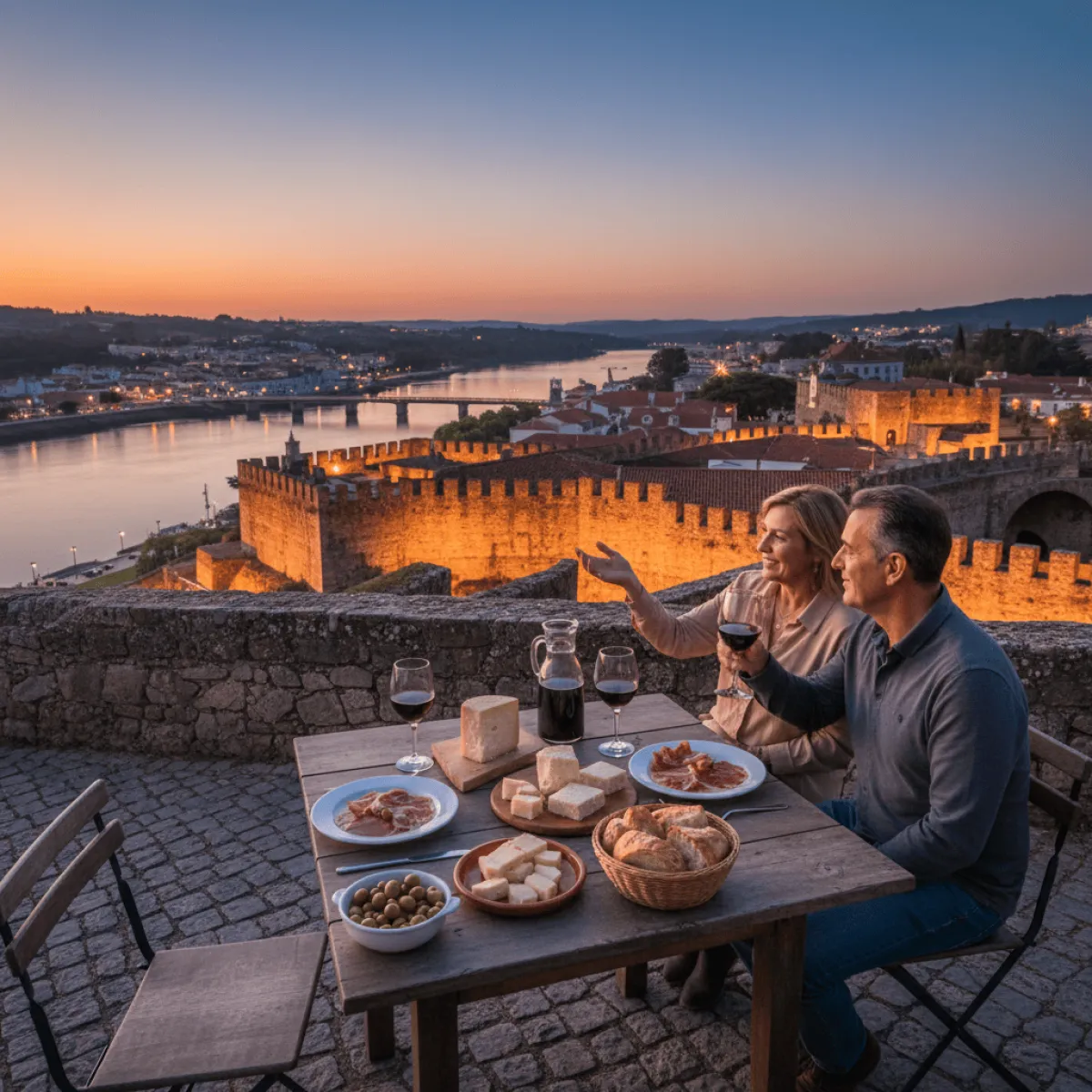
Valença After Dark: Wine and Petiscos with a Minho View
An evening inside the fortress walls of Valença, with producer vinho verde, fado at a serious house, and the bagaceira aguardente nobody told you to order. An honest guide to petiscos and dinner, without the tourist list.
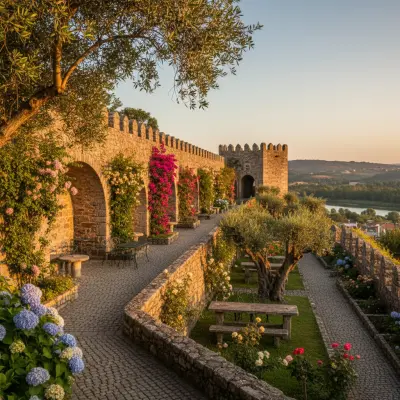
Valença is not a town you cross at speed. Walk through the Coroada gate at six in the evening, light slipping low across the granite ramparts, and the smell of cured sausage drifting out of a kitchen you cannot quite locate, and it becomes obvious fast: the fortress is not the backdrop. The fortress is the restaurant. The stone streets hold the day's heat a little longer, the lanterns flicker on, and the evening starts shaping itself between a glass of vinho verde and a small plate that arrives without being asked for.
This guide is for travelers who want to make Valença an evening, not a stop. For people who understand that petiscar is a slow verb, that the Alvarinho on this side of the Minho is cousin to the Albariño on the Galician side, and that having dinner inside a seventeenth century fortress town carries an absurdity that works in your favor. We move from aperitif to digestif, with pauses to look across the river at Tui, in Spain, and to figure out why this border town is one of the more underrated places in northern Portugal.
Before dinner: warming up inside the walls
Start early, around six in the evening. Entrance to the fortress walls and bastions is free, and the hour when the sun begins to glance off the granite is when the place becomes effortlessly photogenic. Climb up to the Baluarte do Socorro, where the Minho river draws the border with Spain, and stay twenty minutes. It is not wasted time. It is the visual aperitif that makes the first glass of wine taste better.
If this is your first time in Valença, and you want to understand what you are looking at before you start eating, consider a guided fortress walk in Valença do Minho. Local guides know the details that no plaque carries: the story of the casemates, why some stones bear stonemason marks, and what happened during the Restoration Wars. Check schedules locally, as they shift with the season.
The slower, cheaper option is to walk down Rua Mouzinho de Albuquerque to the Jardim Municipal de Valença. It is small, orderly, with iron benches and a bandstand. It will not change your life, but it is where locals sit to read the paper at the end of the day, and it gives you the rhythm of the place before you sit down at a table.
The opening glass: vinho verde, but the good kind
Let us not pretend: most vinho verde that lands on Portuguese tables is not very good. It is light, it is cold, it cuts thirst, and that is about it. In Valença, with the Minho river at the door and the Monção and Melgaço sub region fifteen minutes away by car, there is no excuse for drinking the bad stuff. Here, vinho verde means Alvarinho or Loureiro, and when properly served, cold but not frozen, it is one of the more serious whites Portugal makes.
Order by producer, not just by region. Names like Soalheiro, Anselmo Mendes, Quinta de Soalheiro, and the young Alvarinhos from the right bank show up in nearly every serious restaurant in Valença. A decent glass runs between three and five euros. A bottle between twelve and twenty five depending on the place. If you see a recent vintage Alvarinho with lees aging for under eighteen euros, order it without hesitation.
For the first round of small plates, ignore the printed menu and look at the cold counter. In Valença, as across most of the Minho, the ritual starts with acorn fed cured ham, a slice of Castelo Branco or goat cheese, thinly sliced salpicão, and country bread with olive oil. It is not a meal. It is a gesture. It costs little, takes a long while, and prepares the stomach and the conversation for what comes next.
Dinner: Fatum, and the case for fado in the north
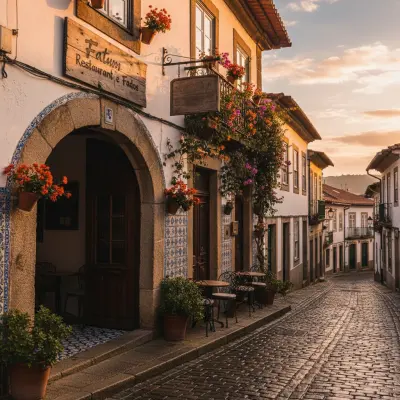
There is a stubborn idea that fado belongs to Lisbon and Coimbra. In Valença, Fatum, Restaurante e Fados handles that misunderstanding with grace. The house works as a Portuguese restaurant with fado nights, and it is precisely the kind of place that justifies coming to Valença instead of staying on the Spanish side.
The practical case: inside the walls, a menu that respects Minho cooking without falling into caricature, and a room where the fado, when it happens, is not background music. It is part of the meal. Book ahead. Do not trust walk in luck, especially from Thursday onward. Confirm locally whether there is fado on the night you choose, because schedules shift by season.
What to order: start with light starters if you are dining with fado, because the evening will be long. Bacalhau à minhota, a properly loose arroz de pato, or, if the menu offers it, a roast cabrito to share between two. Resist the temptation to order bitoque or prego, the steak sandwiches: you would walk out having had the most expensive version of a meal you could have eaten in any city in the country. Here, go regional.
Save room for dessert. Leite creme and northern conventual pastries are taken seriously in Valença, and a cinnamon dusted arroz doce with a small glass of aged aguardente is the right way to close the meal before the fado starts. Budget thirty to forty five euros per person with wine. More on a full fado night.
After dinner: walk, do not roll
The mistake nearly every visitor to Valença makes is to eat and leave. The town inside the walls at night is a different place: the Chinese clothing shops that dominate the border square during the day shut up, the buses of Spanish day shoppers head home, and what remains is the lanterns, the cats, and whoever chose to stay.
Take a slow walk through the upper part of town. Stop at a terrace on the main square and order a coffee and an aged bagaceira aguardente. There is no shame in ordering bagaceira: it is the digestif of the north, it is what locals drink, and it costs between two and four euros. If you prefer, ask for an aguardente vínica from Melgaço. Both serve the same purpose: close the stomach and open the conversation.
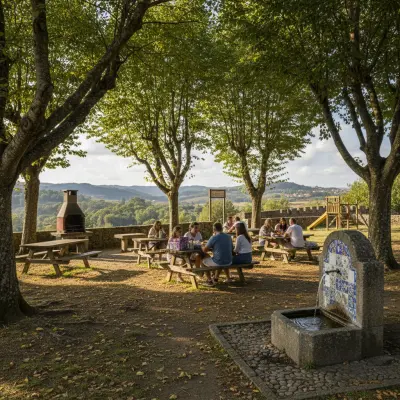
If the night is mild, and your company likes to walk, head down to the Parque de Merendas Senhora da Cabeça. By day it is family picnic and barbecue territory, but at night, outside high season, it is one of the quieter spots to listen to the river. Bring a flashlight, wear a jacket, and do not count on a bar being open: this is just landscape.
The other Valença: what most travelers miss
There is a tourist Valença, the one of border square shopping and a fast photo of the bridge to Spain. And there is the real Valença, which you only learn in three patient days. If you are spending the night in town, do yourself the favor of staying at least through the next breakfast and lunch. Cafés open early, producers' markets show up on certain days, and that is when the local economy reveals its shape.
Markets and breakfast
Breakfast in Valença is a serious chapter. Buttered toast, a small galão, a pastel de nata from the neighborhood pastry shop: this is the ritual that sets the rest of the day. Sit at a café terrace on Rua Mouzinho de Albuquerque around nine in the morning and watch the town wake up. Men in flat caps greet each other, women head to the bakery, and tourism has not yet arrived.
If you enjoy comparing nearby towns by what they serve in a cup, going café by café is a northern sport. We have already done that exercise for a neighboring town: our honest café guide to Barcelos shows the method. In Valença, apply the same ruler: always order a short bica, taste it with sugar and without, and be suspicious of any place that serves the coffee lukewarm.
Combining with other Minho stops
Valença does not stand alone. It is in a region that buzzes with religious feasts, markets, and towns worth pairing on a three to five day trip. If your calendar lines up, consider an overnight in Barcelos for the Festa das Cruzes, one of the more authentic celebrations of the Minho in May. If you are traveling with children and want to see how Barcelos works in family mode, our family guide to Barcelos is a useful companion.
Logistics without the headache
How to get there
Valença is an hour north of Porto on the A3 motorway. By train, the urban Linha do Minho line stops in Valença, with a ticket around ten euros from Porto. From Spain, you cross the road bridge and you are in Tui in five minutes: many visitors arrive that way.
Where to park
Do not try to drive in through the Coroada gate if you have not done it before. The streets inside the walls are narrow and partly pedestrian. Park in the lot just outside the main entrance, in front of the fortress, and walk in. It is free most of the time, although check signage locally on market days.
Where to sleep
The pousada inside the walls is the romantic and pricey option. There is also alojamento local in traditional houses, with much friendlier rates from sixty euros a night in low season. If you go on a weekend between May and September, book ahead: the town fills with Spanish weekenders.
When to come
- May to June: the best mix of weather, open terraces, and not yet packed.
- September to October: Alvarinho harvest, restaurants running seasonal menus, photogenic light.
- Winter: fewer tourists, heavier food, fireplaces lit. If you can handle the Minho cold, this is the best time.
- August: avoid. Or come midweek, because the border square on weekends is a stage of chaos.
Three rules to not ruin the evening
First rule: do not have dinner before eight. You will be alone in the room, the service is still in lunch mode, and you miss the best of the ritual. Northern Portuguese eat dinner late for a reason: because the evening is long.
Second rule: do not order house wine just because it is cheap. In Valença, a producer vinho verde costs barely more than the bulk pour, and the gap between the two is a canyon. Pay two euros more and have a story at the table.
Third rule: keep the phone in your pocket during fado. If you are at a house that runs fado, and the fado begins, the restaurant cuts the lights and falls silent. People who talk, people who fiddle with the camera, people who answer WhatsApp, ruin the night for everyone. It is basic etiquette, but it bears repeating.
An evening in Valença is one of those experiences that look unassuming on paper and stay in memory for years afterward. It is a fortress, a glass of Alvarinho, a soup that takes its time, a fado nobody expected to find here. It is not Lisbon. It does not want to be. That is the whole point. Give the place the time it deserves, and it pays back twice over.