Vila Viçosa: A Festival Calendar Worth Planning Around
Vila Viçosa packs a festival calendar that runs from convent pastry fairs in January to 150-year-old bull runs in September, with Renaissance reenactments and independence ceremonies at the exact palace where it all happened. Here's when to go and what to expect.
Vila Viçosa is not a one-event town. With fewer than four thousand residents, it manages to pack a calendar that runs from convent pastry fairs to bull runs, Renaissance reenactments to ceremonies marking the exact moment Portugal regained its independence. And yet, most visitors show up on a random Saturday, tour the Ducal Palace, have lunch, and leave. Without knowing they missed the best part.
This guide is for anyone who wants to plan their visit around what's actually happening. Because Vila Viçosa, the so-called Princess of Alentejo, becomes a different place when the square has people in it, when the Terreiro do Paço smells of burnt sugar or grilled sardines, when those white marble streets echo with live music instead of the usual silence of a Tuesday afternoon.
January and February: The Convent Pastry Fair
The year starts sweet. The Feira de Doçaria Conventual (Convent Pastry Fair), named after Lurdes Ramos, takes place in late January and early February in the Cloister of the Convento dos Agostinhos, right next to the Ducal Palace. The third edition, in 2026, ran from January 30 to February 1, and anyone who arrived on Friday afternoon found the town's hotels nearly sold out.
That tells you something about the event: three days dedicated entirely to convent-style pastries, with local and visiting pastry makers showcasing recipes that survived centuries behind convent walls. We're talking toucinho do céu, encharcada, bolo podre, queijinhos do céu. If you like Portuguese sweets and have never tried the Alentejo convent tradition, this fair is where to start.
Entry is free, but bring cash to buy. Prices vary by vendor, but expect to pay between 2 and 5 euros per piece for the more elaborate items. The atmosphere is relaxed, family-friendly, and people spend entire afternoons tasting and chatting with the pastry makers about techniques and ingredients.
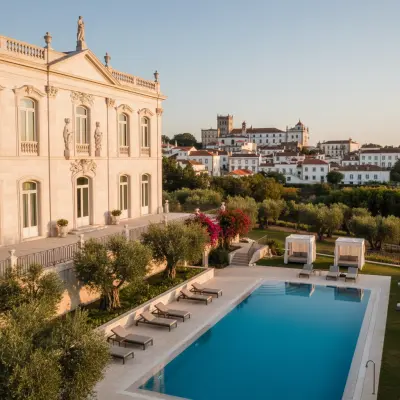
If you're coming from outside the region, book accommodation early. The Alentejo Marmòris Hotel & Spa is the most comfortable option in town, housed in a building that honors the local marble tradition. During the fair, it fills up fast.
June: The Renaissance Fair
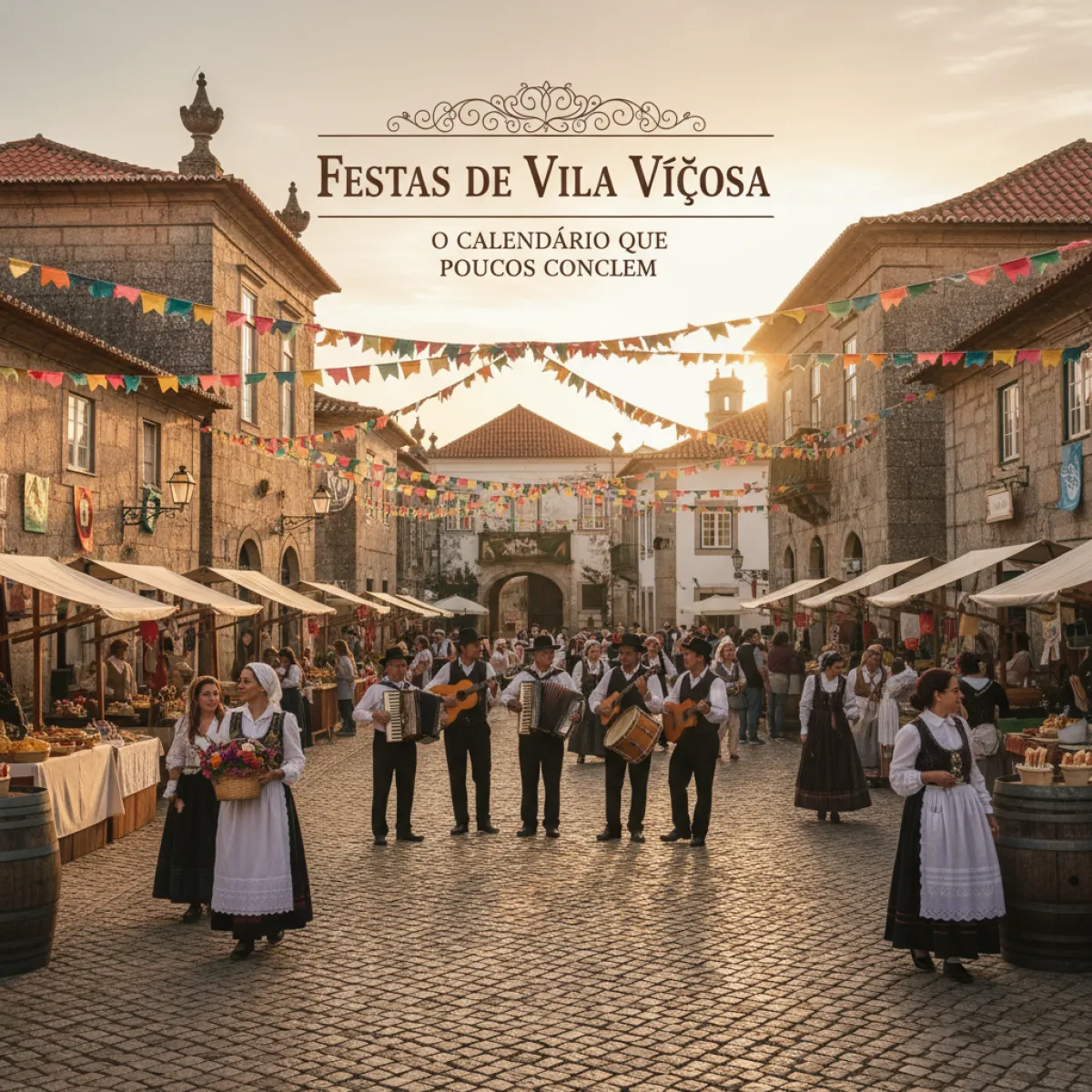
If the pastry fair is quiet and gastronomic, the Renaissance Fair is the opposite: loud, visual, theatrical. It takes place in early June, typically the first weekend, and transforms the historic center into a recreation of the 16th century.
There's a Ducal Market with artisan stalls and regional products, street performances, historical processions, early music, and costumed reenactors. The square by the Ducal Palace takes on a completely different character. The event makes perfect sense here: this is where the Dukes of Bragança established their court, and the Ducal Palace, with its marble façade and 69 windows, is one of the most impressive palaces in Portugal.
The fifth edition, in 2026, is scheduled for June 5 to 7. Entry is free. The best time to go is late afternoon, when the heat eases and the street performances come alive. In the morning, take advantage of the guided hiking trails on Serra d'Ossa, just a few kilometers away, with views across the entire region.
July and August: Summer Parish Festivals
Summer in the Alentejo is for the tough. Forty degrees in the shade, and shade isn't always available. But it's also the season of popular festivals in the surrounding parishes.
In July, Pardais celebrates its festival in honor of Santa Catarina. In August, it's Bencatel's turn, with the Festa de Santa Ana, organized by the parish council and the municipality. These are village festivals in the most genuine sense: processions, food and drink, popular music, and that kind of summer socializing that only exists in small towns.
Vila Viçosa's municipal holiday falls on August 16. If you happen to be there on that date, you'll find the town livelier than usual, with shops closed but plenty of people out and about.
A practical tip: in July and August, schedule outdoor activities for early morning or late evening. Between 2pm and 5pm, do as the locals do and stay in the shade. If you want something active, the Serra d'Ossa hiking trails work well in the early morning before the heat kicks in.
September: The Festa dos Capuchos
This is the big one. With over 150 years of history, the Festa dos Capuchos is the event that mobilizes the entire town and draws crowds from across the region. In 2026, it's scheduled for September 10 to 15.
The festival honors Nossa Senhora da Piedade and Senhor Jesus dos Aflitos, but the program goes well beyond the religious. There are concerts every night, with lineups mixing traditional Portuguese music, proudly populist pimba, and more contemporary acts. Recent editions have featured names like D.A.M.A., Jorge Guerreiro, and Maninho. There are bull runs, fireworks, and the kind of nighttime entertainment that only exists at town festivals: open-air food stalls, everyone knowing everyone, kids running around until the small hours.
The center of the action is near the Convento dos Capuchos, in the upper part of town. Concerts are outdoors and, in most editions, free to attend. Check locally for each year's specific details.
Right after, on September 18 and 19, comes FIM, the Youth Festival, aimed at a younger crowd with DJs and electronic music.
If you're traveling from far for the Capuchos, book accommodation well in advance. The Marmòris fills up, local guesthouses sell out, and even the rural estates within a 20km radius have limited availability. This is the week Vila Viçosa overflows.
December: Where History Weighs Heaviest
December in Vila Viçosa is not an ordinary month. Three dates overlap, and together they make this the most historically charged period on the town's calendar.
On December 1, the town celebrates the Restoration of Independence. In 1640, it was from here, from the Ducal Palace, that D. João IV, the 8th Duke of Bragança, accepted the crown and restored Portugal's independence from Spain. The municipality organizes ceremonies and historical reenactments worth attending. This isn't a generic commemoration: it's the commemoration at the exact place where it happened.
On December 8, the Feast of the Immaculate Conception carries a double meaning in Vila Viçosa. First, because it was here that D. João IV, in 1646, crowned the Immaculate Conception as Queen and Patroness of Portugal, placing the royal crown at the feet of the Marian image. Second, because December 8 is also the birthday (and death day) of Florbela Espanca, the great Portuguese poet born in Vila Viçosa in 1894. The Casa-Museu Florbela Espanca, on the street bearing her name, typically hosts events on this date.
If you're in the region in December, combine Vila Viçosa with a trip to the Upper Alentejo. Our Portalegre weekend guide is a good starting point, and you can add the walking tour of Portalegre's neighborhoods or find out where locals actually eat in Portalegre.
Practical Information
Vila Viçosa is in the Évora district, about two hours from Lisbon and 45 minutes from Évora. There are no practical public transport connections: you need a car. Parking in town is easy, except during the Capuchos in September.
For food, local cuisine revolves around black pork, lamb, açordas, and migas. At the town's restaurants, a full meal with wine runs between 15 and 25 euros per person. If you come in January for the pastry fair, don't leave without trying the toucinho do céu and bolo podre.
The Ducal Palace is open to the public and the guided tour is worth every cent. Check hours and prices on the Casa de Bragança Foundation website, as they vary throughout the year.
One last thing: Vila Viçosa is a marble town. Literally. The sidewalks, the thresholds, the benches, everything is white marble from the region. When the sun hits, the light is almost blinding. Bring sunglasses and water. And if you come in September for the Capuchos, bring patience for the traffic and willingness to stay up late. That's how it's done.