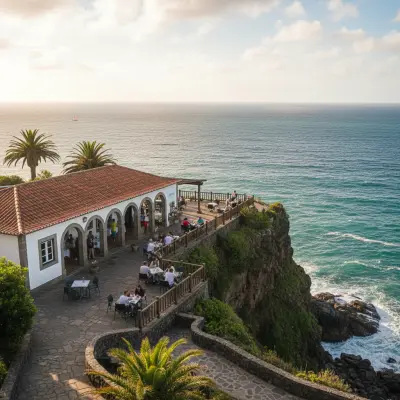
Vila do Porto: A Festival Calendar Worth Decoding
Santa Maria keeps a festival calendar stretching from free Holy Spirit soup in May to the Maré de Agosto music festival on Praia Formosa. This guide decodes what no official poster explains: when to go, what to expect, and why an island of five thousand people celebrates like a capital city.
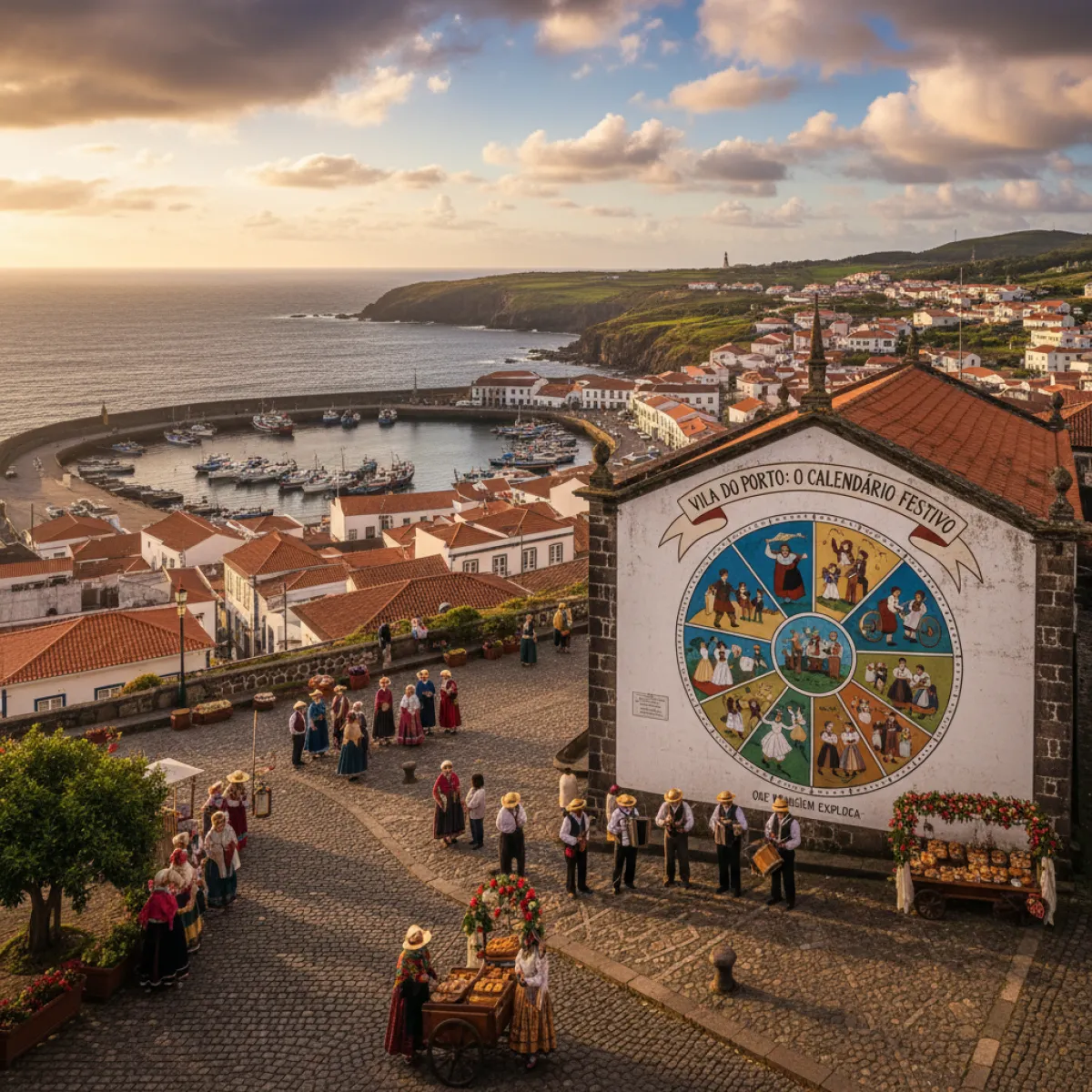
If there's one thing Santa Maria doesn't do halfway, it's festivals. The southernmost island in the Azores, home to barely five thousand people, keeps a calendar of celebrations that would put cities ten times its size to shame. But here's the catch: nobody explains it properly. Ask a local when the festivals are and you'll get a shrug followed by "depends on the year." Half the calendar hinges on Easter, the other half on weather, and the rest on the collective will of a community that takes its celebrations seriously while keeping everything else remarkably informal.
I'm going to try to decode this calendar. Not because it's simple, but because if you're planning a trip to Vila do Porto, the difference between the right week and the wrong week could be the difference between witnessing one of Portugal's most authentic celebrations or walking through empty streets with nothing but the smell of salt air.
Spring: The Holy Spirit Festivals
Let's start with what really matters. The Festas do Espírito Santo are, without exaggeration, the backbone of community life on Santa Maria. Forget what you've seen on São Miguel or Terceira: here, the tradition stays closer to its sixteenth-century origins, and you can feel it.
The cycle begins on Pentecost Sunday, seven weeks after Easter, meaning the date shifts every year. In 2026, Pentecost falls on May 24th. But in practice, celebrations stretch across the weeks before and after, with each parish organizing its own "Império" on different dates.
The format is always the same, and always beautiful: a child is crowned "Emperor" with a silver crown symbolizing the Holy Spirit, then parades through the parish with scepter and cape. Afterwards, the sopas do Espírito Santo are distributed to everyone, no exceptions. It's a communal outdoor meal of beef slow-cooked with bread, mint, and spices, served in clay bowls. It costs nothing. You show up, sit down, eat.
My recommendation: go to the festivals in smaller parishes like Santa Bárbara or São Pedro. In Vila do Porto, the celebration is more formal and crowded. In the villages, you end up at a table made of planks with farmers and fishermen who insist on refilling your plate three times over. It's one of the most genuine food experiences you can have in the Azores, and it won't cost you a cent.
Senhor Santo Cristo: The Festival Vila do Porto Borrowed from São Miguel
"Borrowed" is a provocation, obviously. But there's something delightfully rebellious about Vila do Porto celebrating Senhor Santo Cristo dos Milagres exactly one week after Ponta Delgada. As if the island were saying: "Yes, we have the right too."
This festival falls on the sixth Sunday after Easter, one week before Pentecost. In Vila do Porto, the procession winds through the historic centre with the image of Cristo dos Milagres, accompanied by brass bands, flowers, and that respectful silence you only find in small communities where everyone knows each other.
If the religious intensity of Ponta Delgada intimidates you (and it can: we're talking tens of thousands of people), Vila do Porto offers the same devotion at a human scale. You can see the entire procession from any corner. And afterwards, as with everything in the Azores, you eat. If you want to explore what Azorean cuisine offers on the neighbouring island, have a look at our guide to a gastronomic trek through Ponta Delgada.
August 15th: Nossa Senhora da Assunção
Now we arrive at the big day. August 15th is a national holiday across Portugal, but on Santa Maria it carries extra weight: Nossa Senhora da Assunção is the island's patron saint. Vila do Porto transforms.
The solemn mass is typically celebrated at 5pm, followed by a procession that ranks among the most beautiful in the Azores. At its centre is the image of the Virgin, a sixteenth-century Flemish sculpture from Malines, adorned with her gold crown and rosary. Legend has it these pieces were gifts from pirates. Whether it's true or not, nobody can confirm, but the story is too good to fact-check.
The streets are decorated with flowers and coloured salt carpets, food stalls appear everywhere, and at night there are concerts and fireworks over the harbour. This is the day emigrants come home, restaurants sell out, and SATA flights arrive full. Book accommodation months in advance if you want to be here.
After the procession, head up to Miradouro da Macela for sunset. With the island still celebrating below and the Atlantic stretching endlessly to the west, it's one of those moments when you understand why the people of Santa Maria always come back.
Maré de Agosto: The Festival Born from a Jam Session
And then, just when you think August has given everything, along comes Maré de Agosto. In the last week of August, Praia Formosa, arguably the best beach in the Azores (yes, it's an opinion, and I'm standing by it), turns into a music festival with a stage twenty metres from the water.
The origin story is worth telling: in 1984, a group of local musicians got together for a jam session on the beach. It went so well that by 1987 they had formally established the Associação Cultural Maré de Agosto. Since then, more than thirty editions have featured national and international acts spanning reggae, folk, rock, hip-hop, and a proudly "world music" identity.
Maré de Agosto isn't Primavera Sound and doesn't try to be. The stage is modest, the audience camps on the beach, ticket prices are accessible (check locally as they vary year to year), and the energy is that of a community festival with international reach. People come from across Europe, the United States, Brazil, Africa. Many sleep in tents on the sand. The name, "August Tide," comes from the strong tides that typically hit the island at this time of year, and sometimes the sea makes itself heard.
To explore the island before or after the festival, I strongly recommend the Santa Maria trails and beaches with SMATUR. It's the best way to understand the island's geography, from the red cliffs of Barreiro da Faneca to the natural pools of São Lourenço.
June: Santo António and the Summer Kick-off
Before August steals all the attention, June brings the Festas de Santo António, particularly lively in the parish of Santo Espírito on the east coast. There's an arraial (street party), live music, grilled sardines, and that early-summer atmosphere when the days are long and everyone seems to be in a good mood.
Santo Espírito, by the way, deserves a visit regardless of the festivals. The parish church, with its whitewashed facade and gilded interior woodwork, is one of the most beautiful on the island. And the sea views from the road connecting Santo Espírito to São Pedro justify the detour on their own.
Off the Official Calendar: What Won't Be on Any Poster
There's a layer of festive life on Santa Maria that doesn't appear in any official programme. The filarmónica dances, for instance. Brass bands are an institution across the Azores, and on Santa Maria they perform at parish festivals, weddings, and religious celebrations with a regularity that surprises visitors. If you hear music in the distance on a Saturday night, follow the sound.
Then there are the matanças do porco (pig slaughters) in winter, which aren't exactly an "event" in the tourist sense but remain a living tradition in some rural parishes. And the grape harvest in September and October: Santa Maria is one of the few Azorean islands with a winemaking tradition, and while production is small, the local vinho de cheiro has its devoted followers.
Practical Information: How to Plan
Vila do Porto is Santa Maria's only municipality and only port of entry, whether you arrive by air (the airport has regular SATA flights from Ponta Delgada) or by sea (seasonal ferry, also from Ponta Delgada). In August, flights fill up fast, especially during the week of August 15th and Maré de Agosto.
Accommodation on the island is limited. Don't expect large hotels: what you'll find are small local guesthouses, rural tourism properties, and private rentals. Book as early as possible for August. For the Holy Spirit Festivals in May/June, there's less pressure and lower prices too.
On the island, a rental car is almost essential. Taxis exist but are few, and public transport is practically non-existent for tourist purposes. The roads are good and you can drive from one end of the island to the other in under half an hour.
If you're thinking of combining Santa Maria with other islands, Horta on Faial is a worthwhile stop. Check out our guide to 24 hours in Horta or discover the finest rooftops and panoramic views in Horta for a different perspective on the archipelago.
The Verdict
Santa Maria doesn't have the tourist scale of São Miguel or the international fame of Terceira. And that's exactly what makes it special when it comes to festivals. Here, celebrations aren't performances staged for visitors. They're the real life of a small, proud community deeply connected to its traditions.
If I had to pick one single week to visit, I'd choose the week of August 15th. You catch the patron saint festival and, with luck, the start of Maré de Agosto. It's Vila do Porto at its peak, literally and figuratively. But if you'd rather avoid crowds (relative crowds, mind you, we're talking about five thousand people), go in May for the Holy Spirit Festivals. Fewer people, same generosity, and free soup. Hard to beat.