Valença Hiking Trails: Ranked by Difficulty and Views
From a two-hour loop along the fortress ramparts to a serious 14 km trail to Vila Nova de Cerveira: six Valença hikes ranked by difficulty and by what you'll actually see. With honest timings, real costs, and where to have a proper lunch at the end.
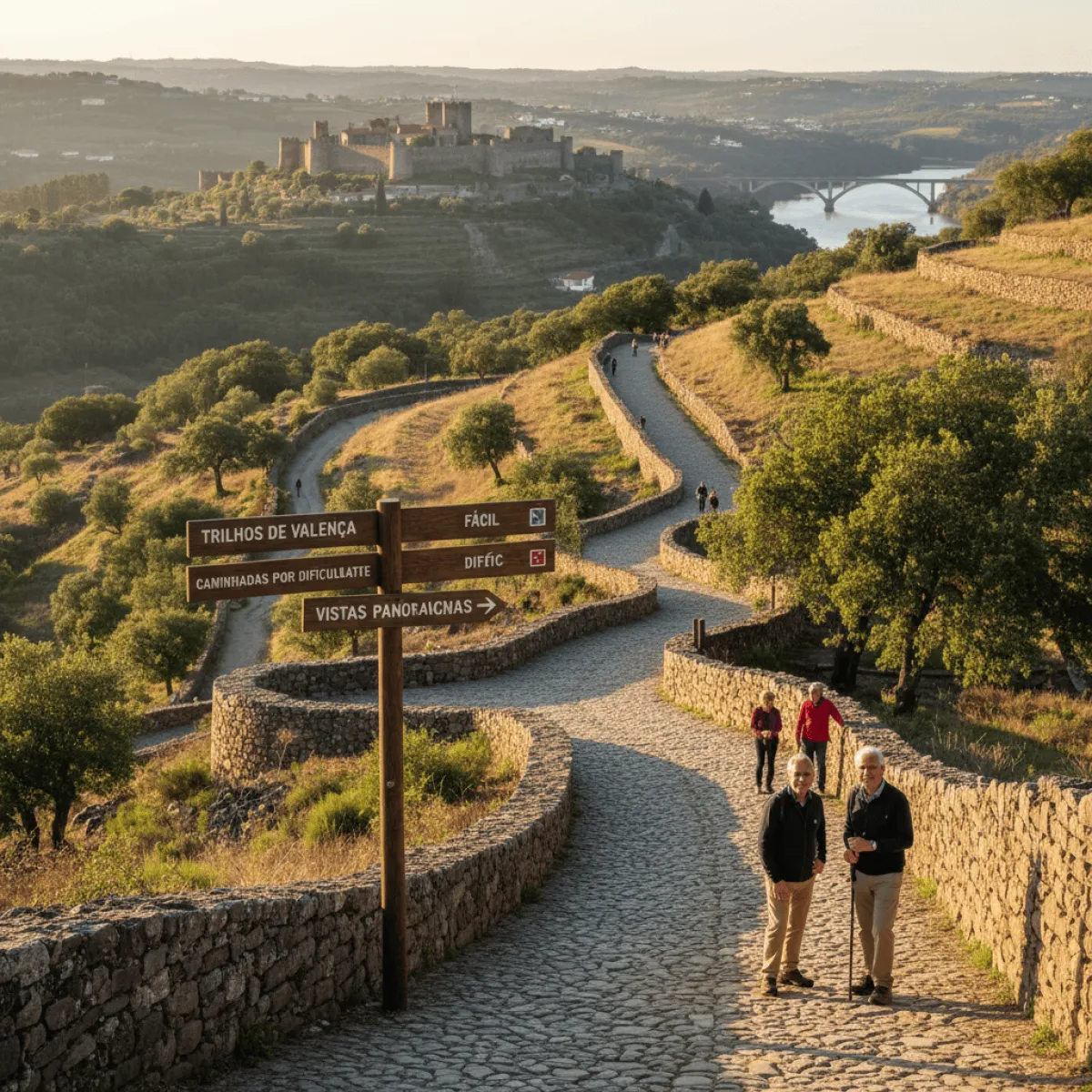
Here's something nobody tells you about hiking in Valença: the best trail starts when you walk through the Porta do Sol of the fortress at 7:30 in the morning, before the buses from Vigo unload the first wave of linen-towel shoppers. At that hour you can hear your own footsteps on the granite paving, swifts shrieking against the bastions, and far below, the Minho river moving slowly, as if still deciding whether reaching the sea is really worth the trouble.
Valença is not Gerês. There are no 1,400-metre peaks, no wolves, no dramatic alpine ridgelines. What there is, instead, is a strange and underrated network of short trails, flat greenways, fortress ramparts, and rural village paths that, taken together, give you a full week of hiking without repeating a single view. This guide is an honest ranking: from the easiest (sneakers, ice cream in hand) to the most serious (boots, water, and proper respect for the July heat).
Before you start: what you actually need to know
Valença sits at the northern edge of the Minho region, a few metres from Galicia, on a granite hill squeezed between the river and the Spanish border. The climate is friendly to walking almost all year, but with caveats: November to March is properly wet (the kind of fine, persistent drizzle that looks like nothing and soaks you in twenty minutes); June to August, the sun hammers the pale fortress stones without mercy, especially between 1pm and 4pm.
For any trail beyond the historic centre, bring sneakers with decent grip. Dirt paths get slippery after rain, and riverside trails have treacherous roots. Water: always bring some. There are public fountains inside the fortress, but very little outside it.
Getting there: regional train from Porto Campanhã (about 1h45, usually with a change at Nine or Viana), tickets between 8 and 10 euros depending on the time. By car, A3 motorway directly, around 6 euros in tolls from Porto. Free parking near the municipal sports centre, a 5-minute walk from the fortress.
Level 1: Easy. For walking without breaking a sweat
1. Loop around the fortress ramparts
Distance: about 2.5 km. Elevation: practically none. Time: 1 hour if you don't stop, 2.5 hours if you do (and you will).
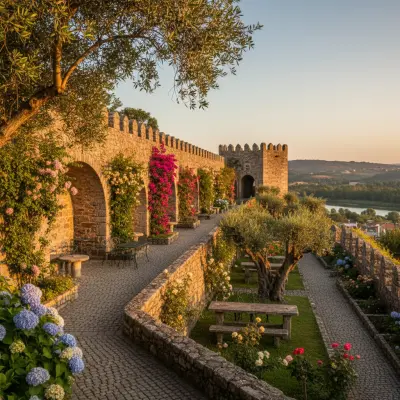
This is the most obvious trail and, somehow, still the most underrated. Many visitors enter the fortress, photograph the main arch, and go straight to the towel shops. Mistake. The walk along the rampart path is a masterclass in 17th-century Vauban-style military engineering, with alternating views of the Minho, Tui across the river in Spain, and the houses of Valença at your feet. Walk it counter-clockwise to catch the best light on the Baluarte do Socorro in late afternoon.
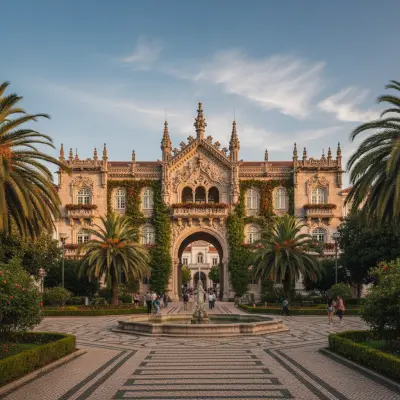
Along the way, take a break at the Jardins da Fortaleza de Valença, a small but well-kept space between bastions where you can sit in the shade and disconnect from the market noise. If you'd rather have a more classic urban corner, with wrought-iron benches and a bandstand, the Jardim Municipal de Valença is right below, next to the cafés.
To actually understand what you're looking at, do the guided fortress walk at least once. Yes, it costs money. But the difference between walking on the ramparts staring at stones and walking on the ramparts understanding why a particular ravelin points in one direction and not another is, literally and ridiculously, enormous.
2. Minho Greenway (Valença stretch, towards Monção)
Distance: as much as you want. It's 13 km all the way to Monção, but you can turn back anywhere. Elevation: zero, this is an old railway line. Time: 1.5 hours one way (walking pace) to the first decent viewpoint.
No big mystery here: you walk along the disused bed of the Minho railway, with the river on your right and farms with kiwi vines and grapevines on your left. It's flat, well shaded by trees in long stretches, and you can also do it by rented bike (there's rental near the main fortress entrance, around 12 euros for half a day). I'd recommend walking until you hit the first village café, drinking a cold beer, and turning around.
Level 2: Moderate. For getting your legs going
3. Climb to Monte do Faro (Galician side, crossing the border)
Distance: 8 km round trip. Elevation: about 350 metres. Time: 3 to 3.5 hours with a stop at the top.
Yes, this trail starts in Valença and ends in Galicia. You walk across the International Bridge (free crossing, this is Schengen territory, just bring an ID by habit), enter Tui on the Spanish side, and follow the signs to Monte Aloia/Monte do Faro. The views from the top are, without exaggeration, among the best in the lower Minho: you see the river snaking, the Valença plain, and on clear days the Atlantic in the distance.
The Portuguese stretch is short and flat. The serious part starts in Tui, with a steady climb on packed dirt and some sections of old paving. It's not difficult, but it's continuous, and in full summer it's not advisable after 11am. Go early, bring 1.5 litres of water per person.
Useful warning: the border closes vehicle traffic on a few specific dates (events, pilgrimages), but pedestrian crossing never closes. Your phone may switch to a Spanish carrier in the middle of the bridge. Turn off mobile data if you don't have European roaming, it can give you a nasty surprise on your bill.
4. Senhora da Cabeça picnic park trail
Distance: 6 km loop. Elevation: 180 metres. Time: 2 to 2.5 hours.
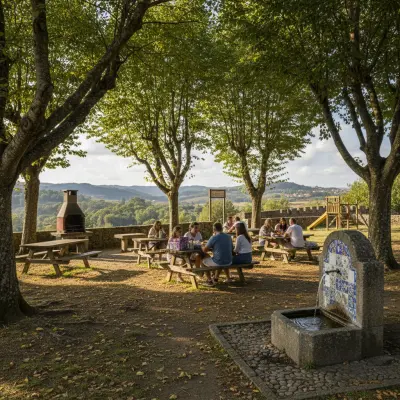
This is my favourite in the moderate category, and yet it's the one fewest people walk. It starts at the Parque de Merendas Senhora da Cabeça, a space with stone tables under pines and oaks where, on Sundays, local families set up grills that smell of bísaro pork chops half a kilometre away.
You leave the park on a yellow-marked trail (pay attention to the marks, in some spots vegetation grows over the arrows) that climbs gently through mixed woodland to an unofficial viewpoint over the valley. It descends on the opposite side, passes a small aqueduct that still carries water to a few farms, and returns via an old rural path.
The trick: do this trail mid-morning, return to the park, and have a picnic lunch. Buy bread, regional cheese, a chouriço, and a bottle of red vinho verde (yes, red, never forget the white one is for tourists on terraces with views) at a local supermarket before leaving, and you have lunch for two for under 15 euros.
Level 3: Serious. For people who own boots and know what they're doing
5. Valença to Vila Nova de Cerveira along the Minho
Distance: 14 km, point to point. Elevation: variable, with several short but steep climbs. Time: 4 to 5 hours, depending on stops.
This is the trail that separates the occasional walker from the proper hiker. Not because of technical difficulty (it's easy to follow), but because of duration and exposure in some sections. You walk parallel to the Minho the whole time, alternating between greenway, rural paths, and wilder trail sections where you have to step over roots and dodge brambles.
Logistics: take the train to Vila Nova de Cerveira in the morning (15 minutes from Valença, 2 euros), and walk back. It's psychologically easier knowing you're heading home than the other way around. Trains run roughly every hour, but check the schedule on the day.
Along the way you won't find many cafés, so bring lunch. Halfway through there's an area of flat rocks by the river that's perfect for stopping, eating a sandwich, and dipping your feet (in summer the water is cold but bearable).
6. Senhora da Cabeça via the old pilgrim route
Distance: 11 km loop. Elevation: 420 metres cumulative. Time: 4 hours.
The long, serious version of the Senhora da Cabeça trail. It climbs the old pilgrim route, with sections of medieval paving still preserved, passes the chapel at the top, follows a ridge with views over the valley and Galicia, and descends through a shaded glen with a stream that runs all year.
It's the trail where you're most likely to get lost, so download the route to your GPS before leaving (Wikiloc has several variants, pick one with at least 50 recent reviews). The climb on the old paving is brutal on the knees coming down, consider doing it in reverse if you have joint problems.
Where to eat and rest after walking
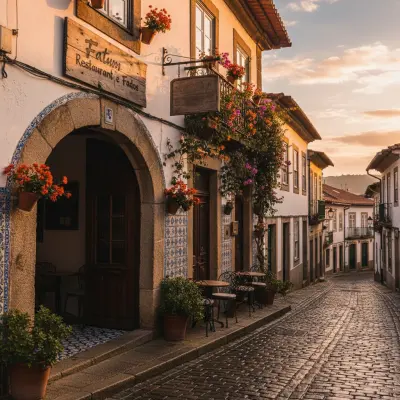
After six hours of trail, you're not in the mood for risky culinary experiments. You want to eat well, drink better, and not pay a fortune. My recommendation for dinner is Fatum Restaurante e Fados, inside the fortress. Order the salt cod, resist the temptation to over-order starters (the house bread and cured meats are enough to open the appetite of three people), and stay for the fado set if it's a Thursday-to-Saturday night.
For a more casual post-hike lunch, any tasca on Avenida de Espanha serves an honest daily menu between 9 and 12 euros. Don't expect a printed menu. Expect to be asked if you want soup, and to be brought whatever the dish of the day happens to be.
Combining Valença with the rest of Minho
If you're staying a few days in the region, it's worth combining Valença with Barcelos, 50 minutes by car. If you happen to be around in May, take a look at our guide to the Festa das Cruzes, one of the most authentic festivals in the north (and it has pedestrian zones perfect for resting tired legs). If you're travelling with kids, our Barcelos with Kids guide has ideas for easy stops. And for anyone who needs a slow morning with decent coffee before lacing up boots, it's worth reading Barcelos by the Cup.
What NOT to do
Don't try the Monte do Faro climb in the middle of the day in July or August. You'll regret it. Don't skip water just because it's only a two-hour walk, the Minho humidity is deceptive. Don't leave marked trails in dense woodland sections, the local water snake is harmless but ticks are a real plague from April onwards. And, for the love of every honest hiker's reputation: don't leave litter. Pack it in, pack it out.
Valença is a small town with a disproportionately large fortress and a network of trails nobody expects. Walk early, eat slowly, and stay for the late afternoon light on the ramparts. It's free, it's glorious, and it's yours, if you show up before nine in the morning.