Tomar's Best Cafés: What to Order at Each
In Tomar, proper breakfast happens at the counter, elbow on marble, galão for a euro. This is the opinionated guide to the cafés worth your time, and exactly what to order at each, without clichés or cocoa-dusted cappuccinos.
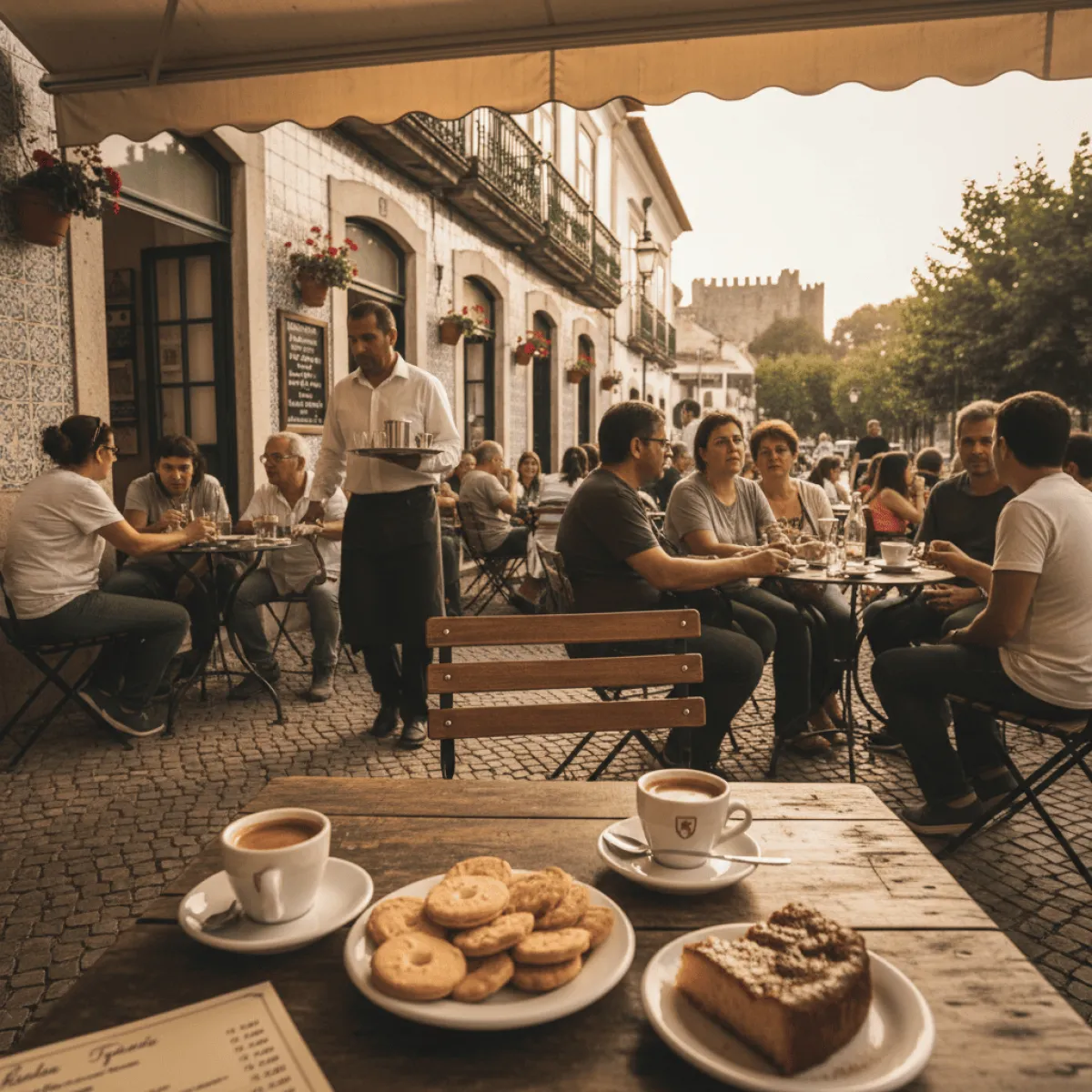
Tomar wakes up slowly. At 7:30am, Rua Serpa Pinto still has more pigeons than people, and the sound you hear is not the river Nabão but a spoon stirring a galão. That is how you get to know a Portuguese town: not by its castle (though the Miradouro do Castelo de Tomar is a non-negotiable late-afternoon stop), but by the cafés where locals start their day. And Tomar has serious cafés, the kind where the waiter knows your order before you sit down.
This is not an exhaustive list. It is opinionated. There are cafés in Tomar that serve coffee. And there are cafés in Tomar that serve coffee properly, with a decent slice of cake and a terrace where you can sit for two hours reading a book without anyone pushing you to leave. The difference is everything. What follows is the second group, and what to order in each one so you do not walk away feeling you paid two euros for dark water.
First, the golden rule
In Tomar, as anywhere in central Portugal, do not just order "a coffee" and expect something memorable. Ask for a "café cheio" if you want it with more water, "curto" if you want it concentrated, and "pingo" if you want a drop of milk. A galão comes in a tall glass with more milk than coffee. A bica is the classic espresso. And never, under any pretext, order a "latte". You are in Portugal. Order a galão and move on.
Another rule: proper breakfast in Tomar happens at the counter. Sit down and you pay more. Standing, with your elbow propped against the marble, you get the best toast of your week for around a euro. It is a democratic ritual that survives because nobody wants to change it.
Café Paraíso: the institution no one told you to visit
I start with Café Paraíso because if there is one place in Tomar that deserves the title of "a café of Tomar", this is it. It sits on Rua Serpa Pinto and is around ninety years old. The marbles are real, the mirrors have that yellowed tone that only time provides, and the waiters still wear white shirts. It is not a fake old-tavern cliché: it is an old tavern, kept almost intact, still serving the best breakfast in town.
What to order: a dark galão and a toasted slice of bread with butter. Do not overthink it. The toast is made with house tin loaf, sliced tall, with butter in a quantity that borders on indecent. If you want to expand, order the bolo de bolacha, which is homemade and where the biscuit is still detectable between the layers. Avoid the industrial croissants that occasionally appear in the display, they are not worthy of the room.
Best time: 8am to 9:30am, when the regulars are there and there is newspaper chatter. After 11am it turns into a tourist transit café and loses half its charm.
Estrelas de Tomar: for the serious sweets
If you want to taste the traditional sweet of this region, Pastelaria Estrelas de Tomar is almost mandatory. The pastry chefs here still make the fatias de Tomar, the egg-yolk convent sweet that the Templars, or rather the nuns who inherited the convents, turned into a small piece of sugared architecture.
What to order: a fatia de Tomar with a short bica. The fatia is cooked in a bain-marie in a special seven-hole copper pan, and the result resembles a honeycomb when sliced. Sweet, yes, but with the airy texture that distinguishes a well-made convent sweet from a fake one. Pair it with a short espresso to cut the sweetness, or a lemon tea if the sugar scares you.
Do not order a cappuccino here. Not the place. Order a bica and you will be fine.
Café Central: for watching the world go by
Café Central has the best terrace on Praça da República, facing the Igreja de São João Baptista. Yes, it is touristy, but it is honestly touristy: it knows what it is, which frees it from pretending to be anything else. On Saturday late mornings it is hard to find a table, but if you can, stay.
What to order: a fresh orange juice and a sandes mista (ham and cheese) on Tomar bread. The bread is the secret: thick crust, dense crumb, holds the ham and cheese without collapsing. For late afternoon, order a cold Sagres draft beer and watch the local kids cycle through the square. It is free theatre.
Skip: the pre-made toasties that appear at lunch. They go straight from freezer to toaster and you can taste it. If you are properly hungry, walk across the square and find a restaurant.
The café no one mentions: the Municipal Market counter
This is my counter-current recommendation. Inside Tomar's Municipal Market, next to the fish stalls, there is a small unnamed cafeteria. It serves coffee for under a euro, has three formica tables, and the clientele is the market sellers themselves on break. No menu in English. No decoration. There is a smell of fresh fish, coffee, and ghost cigarettes.
What to order: a bica and a pastel de bacalhau (codfish fritter). Yes, for breakfast. Trust me. The fritter is fried right there, comes warm, and for two and a half euros you eat better than at any brunch place in Lisbon. Best time: between 9am and 10:30am, on a Tuesday or Thursday, the strong market days.
Pastelaria Flor de Lis: the master cake-maker
Flor de Lis is on the way to the train station, and it is where locals go to pick up birthday cakes. It has that classic Portuguese provincial pastry-shop display, with twenty-plus varieties of cream-filled cakes, all with names nobody outside the region recognises. It is honest. Everything is made on site, and you can tell.
What to order: the walnut queque, the jesuíta (sugar-glazed puff pastry), and if it is lunchtime, a freshly fried shrimp rissole. The coffee here is correct, not memorable. You come for the pastries and leave thinking about jesuítas.
Practical tip: if you are catching a train back to Lisbon, buy a small box of fatias de Tomar to take with you. They hold up well during travel and are the best souvenir that leaves Tomar (after a photo from the castle viewpoint, of course).
Where to have your mid-afternoon coffee
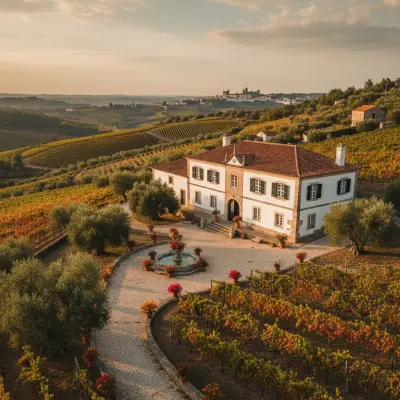
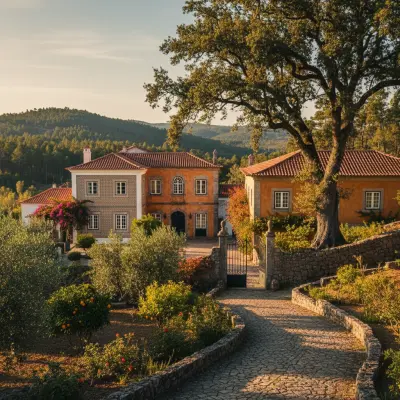
If you are staying in one of the country quintas around Tomar, like the Quinta do Troviscal or the more intimate Quinta São José dos Montes, breakfast is probably included and that is sorted. But 4pm is the sacred Portuguese coffee-with-cake hour, and that means you will want to come back into town.
For afternoon coffee, I recommend Café Paraíso again, because at 4pm it has the afternoon batch of pão com chouriço (sausage bread), or Tertúlia, in the newer part of town, which serves a dense homemade chocolate cake and a decent galão. It is not as photogenic, but if you are working on a laptop, this is the spot with the best wi-fi. Locals know it, and there is always at least one student with their books open.
If you prefer the kind of country house where breakfast is brought to a garden table in pyjamas-and-no-questions style, the Quinta da Ti Júlia is a good bet. Small, family-run, no electric buzz at breakfast (in the good sense).
Coffee before an active morning
Tomar has become, in recent years, a base for outdoor activities. If you are planning to go paragliding above the heart of Ribatejo, the briefing is usually early, and you will want a breakfast that is solid but not heavy. The answer is Café Paraíso: a toast, a galão, a pastel de nata for the road. Avoid the cream-filled cakes before launching yourself into the air, for obvious reasons.
For those who arrive in Tomar as part of a wider cycling route through central Portugal, including stops like cycling the Ecopista do Dão from Viseu to Santa Comba, the right pre-pedal order is a double bica and a slice of dark bread with cheese. Slow carbs, mild fat, enough caffeine. Others will recommend energy bars: ignore them. Bread and cheese has fuelled generations.
Sunday afternoon: coffee as ritual
Sunday in Tomar is a long-coffee day. The town gets half-empty, two or three cafés open in Várzea Pequena, and the right way to spend it is with a galão, a book, and the terrace of Café Central. Eventually someone walks in with a dog. Eventually someone asks where you are from. Eventually you stay two hours longer than planned. That is how Tomar gets you.
If you like this kind of slow morning, you will probably like other proposals around the country with the same rhythm. It is worth reading our honest guide to April walks around Caldas da Rainha, which has much of the same spirit: cafés, short walks, the desire to do nothing too ambitious.
What NOT to order in Tomar (and where)
- Cappuccino with chocolate dust at any traditional pastry shop. It will arrive badly made and reluctantly served.
- Iced coffee outside summer. From September onward, they will look at you as if you ordered soup in August.
- Chocolate croissants anywhere that does not have a visible oven. If it was not baked there, skip it.
- Teabag tea trying to pass as real tea. Ask for an infusion if you really want tea, but in Portugal coffee always wins.
Practical notes for visitors
Tomar is easy to reach by train from Lisbon (around two hours, about 11 euros on an intercity service) or from Coimbra (just over an hour). The station is a ten-minute walk from the historic centre, and almost every café mentioned here sits inside the square between Praça da República and the Municipal Market. Check hours locally because some traditional cafés still close on Mondays or pause for lunch between noon and 2pm.
Average price for a galão and a pastel de nata is between two and three euros, depending on the café. Central terraces charge 20-30 cents more for the location. Standing is cheaper. Sitting outside high season, nobody will rush you out.
If you plan to visit Tomar during a festivity, like the Festa dos Tabuleiros (every four years, check the next edition locally), the cafés fill up well into the pavement. Reserve a terrace table the day before with the waiter, with a smile and a good morning, and you will almost certainly get sorted. For other Portuguese festivities with strong traditions, see our honest guide to Coimbra's Queima das Fitas or the honest pilgrimage guide to Fátima on May 13th, both nearby, both with cafés worth the detour.
The real secret
The real secret of Tomar's cafés is not in any single one of them. It is in picking one, returning three days in a row, ordering the same thing every time, and seeing what happens. By day three, the waiter starts making your coffee before you sit. By day five, they ask how yesterday's walk went. By day seven, you are no longer a tourist, you are a regular. That is the best coffee Tomar can serve you.