Tomar with Kids: An Honest Family Guide
The Convent of Christ is enormous and they'll want ice cream by 11am. But Tomar works with kids, on its own terms: stale bread for the Nabão's carp, shade in the Sete Montes forest, and rural quintas 15 minutes from the center where the silence is actually silent.
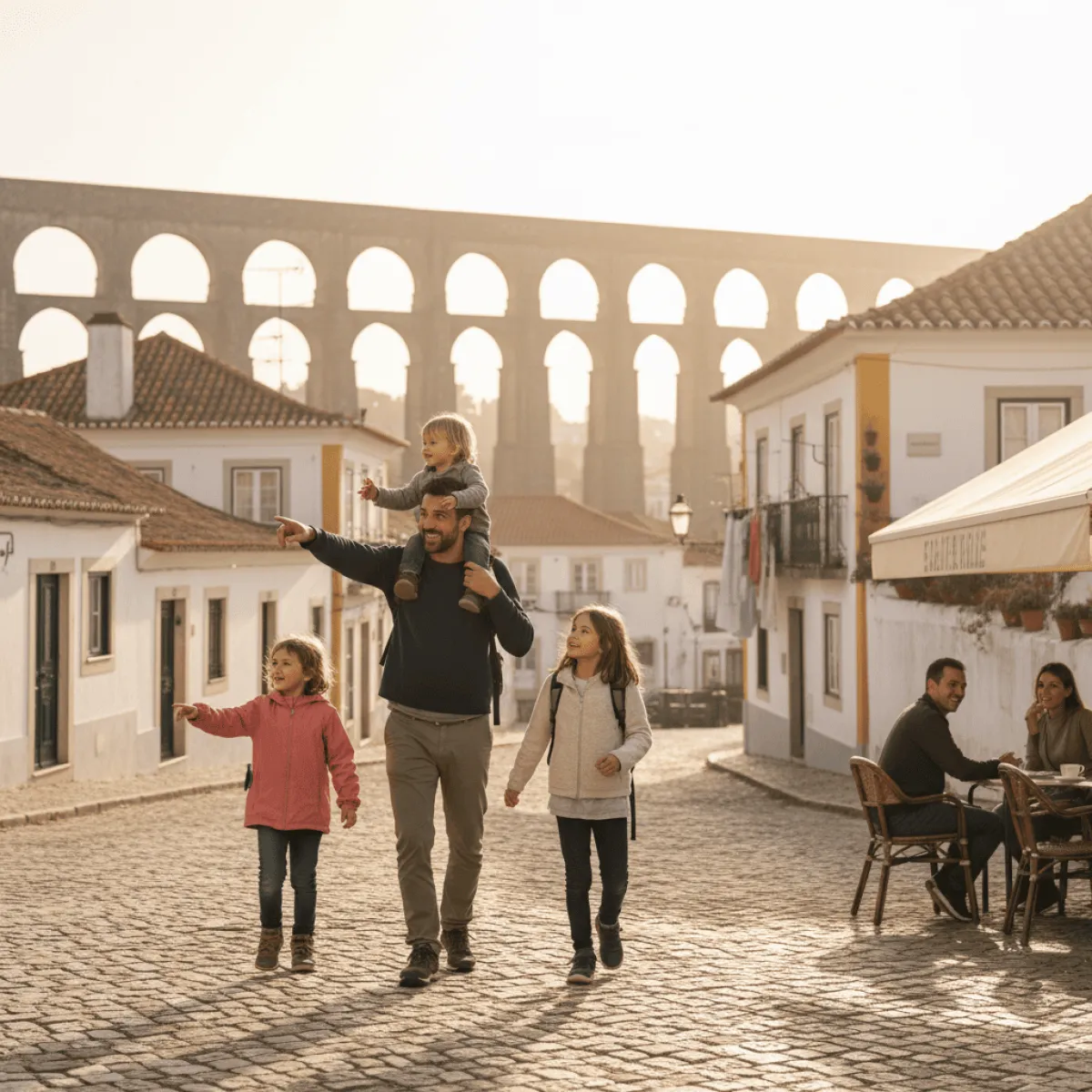
There's an uncomfortable truth about traveling to Tomar with children: the Convent of Christ, that Templar marvel carved out of limestone, is vast, quiet, and full of corridors where the echoes amplify a child's "I'm bored" into something resembling a medieval accusation. And yet, this is exactly where we start. Because Tomar works with kids. But it works on its own terms, not on the brochure's.
This isn't the guide that tells you children will adore the Manueline window. They won't. They'll want to throw stones at the Nabão river and buy ice cream at 11 in the morning. The good news is that Tomar, unlike Lisbon or Porto, lets you do exactly that without judgment, without crowds shoving past your stroller, and at prices that still allow you to eat out without remortgaging the house.
Start at the river, not the castle
I'll say it again because it matters: start at the river. The Mouchão, that green island in the middle of the Nabão with the water wheel and the gardens, is the best possible introduction to Tomar for a five-year-old. There are ducks, there's shade, there's space to run, and the constant sound of water falling over the weir hypnotizes tired parents.
Cross the old bridge and you're in the historic center in three minutes. Rua Serpa Pinto is narrow, paved in calçada stone, with that gentle incline that tires adults but kids never notice. There's a pastry shop, Estrelas de Tomar on Praça da República, that makes the local star-shaped sweet of egg yolk and almond, and serves a decent espresso in a big glass for whoever needs caffeine before the next ice cream negotiation.
Real advice: don't try to do the Convent of Christ on day one. Wait for a cooler day or an early morning. Kids and sun-baked limestone don't mix.
The Convent, the version that works with kids
When you do go up, go slowly and through the forest. There's a dirt trail that climbs through the Mata dos Sete Montes, cool, with stone torches, Manueline fountains, and the shade that the urban cluster doesn't have. Kids stop to look at lizards. You stop to look at the hills. Everyone wins.
At the top, tickets are around 6 euros for adults, and under-12s enter free, which is half the battle won. The Charola, the round Templar oratory, impresses even those who can't yet read. It's dark, golden, and smells of ancient stone. Resist the urge to explain Templar history. Let them look. If they ask, answer. If they don't ask, stay quiet. That's the golden rule of museums with children.
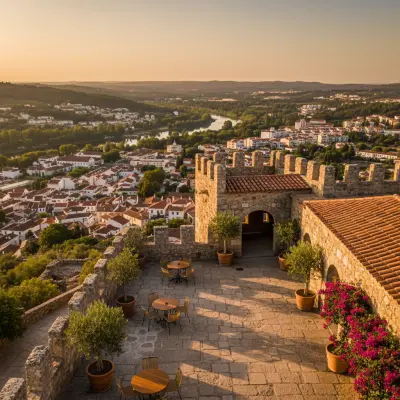
After the visit, and before hunger strikes, walk up a little farther to the Miradouro do Castelo de Tomar. The kids, who were sick of Manueline windows, recover their enthusiasm instantly when they see the town below like a scale model. It's free, it's the best place for the mandatory family photograph, and there's always a shaded bench for someone to sit while the rest run around.
Where to eat lunch without drama
Tomar has that kind of family restaurant where nobody looks sideways if a child drops a glass. Look for places serving black pork cheeks, duck rice with chouriço, or a properly cooked bacalhau à Brás, all dishes children accept relatively well. Avoid Rua dos Arcos on Saturday lunches: always packed, always rushed.
The trick: ask to split one adult portion between two kids. In Tomar the portions actually are portions, unlike in Lisbon where "portion" is a euphemism. You'll save 8 to 10 euros per meal and the kids will eat more varied food.
Dessert: ice cream is mandatory. I won't tell you where, because the good ice cream shop in Tomar changes hands often. Follow the local queue. If there's a line of grandparents with grandkids, it's good.
Slow afternoon, by the river
Here's something Tomar offers that few Portuguese towns do: the center has a clean, flat river that you can walk along. The banks of the Nabão, between the Mouchão and the Levada, are flat, shaded by plane trees, and full of big carp that rise to the surface when you throw a piece of bread. Take a quarter of stale bread from breakfast and have an entire afternoon of free entertainment.
If you're traveling with teenagers (that particular species that pretends to find everything boring) try something more radical the next day. Paragliding above the heart of Ribatejo is one of the rare things that makes teenagers put their phones away for 20 minutes. It isn't cheap, around 70 to 90 euros per tandem flight, but it's worth every cent. Teenagers from 14 upwards can fly accompanied. Confirm the minimum weight with the operator.
Where to stay, and why it matters
This is where the honest guide kicks in. Tomar has town-center hotels that look great on Booking until you discover that the window faces a street where moped echoes carry on until 1am. For families, the rule is to leave the town center.
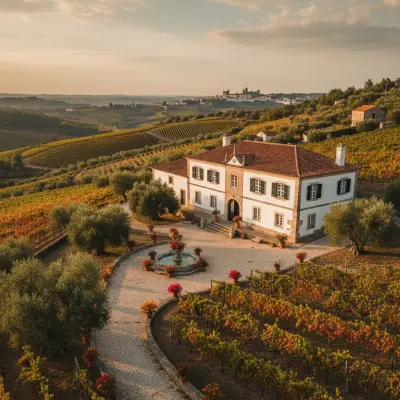
The Quinta do Troviscal, set against the Castelo de Bode reservoir, is the most sophisticated option. The rooms are large, there's a pool, there's pine forest all around, and there's a private dock for gentle canoeing with kids. At night, guests can dine at a shared table if they wish, and in Tomar that's rare. Parents drink wine, children run in the garden, nobody has to drive.
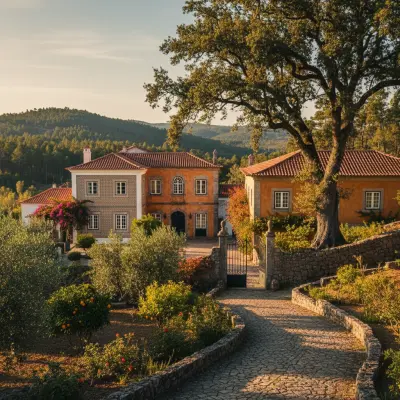
If you prefer something more rustic without losing quality, Quinta São José dos Montes has recovered stone cottages, a fireplace for winter evenings (yes, Tomar gets cold, this isn't the Algarve), and fully equipped kitchens for when you want to picnic midday without returning to town.
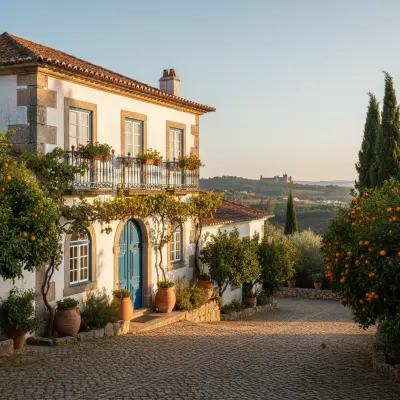
For larger families or trips with grandparents on board, Quinta da Ti Júlia rents whole houses, which changes everything. There's a dinner table for 10, there's a garden, there are the local lemon trees, and there's that rare thing: silence at night. Book ahead for May and September, the best months to visit.
A day at Castelo de Bode
Set aside a full day for the Castelo de Bode reservoir. It's 15 minutes by car from Tomar and it's the closest thing to an alpine lake that central Portugal has. There are signposted river beaches, places to rent pedal boats, and Aldeia do Mato, where you can have a decent lunch with water views.
Local trick: the Aldeia do Mato river beach gets packed on weekends in July and August. Go midweek, or in June, or in September. The water stays warm until mid-October. Bring rubber sandals because the bottom has stones, and SPF 50 sunscreen because the reflection off the water burns fast.
If you want to combine the reservoir with something more active, consider a cycling excursion. Although the Ecopista do Dão is farther north, near Viseu, it's the kind of program worth a weekend detour if you're spending more than three days in the region. Flat, paved, safe for kids from age 7. Bike rentals at the start, with child seats and trailers for the smallest ones.
When to go
Avoid July. Heat in Tomar can pass 38 degrees, and the limestone of the Convent radiates that heat back like an oven. May, early June, and the first half of September are perfect. There's also the Festa dos Tabuleiros, which happens once every four years (the next is in 2027), and fills the town with color and people. For families with small children, beware: the crowds can be intense. For families with kids 8 and up, it's an unforgettable experience.
If you're in central Portugal in May, there are other detours that might fit. Travelers with children 10 and up might consider a morning in Fátima on May 13th, and our honest pilgrimage guide helps you decide whether it's for you. It isn't for everyone. For others, a stop in Coimbra in May means catching Queima das Fitas, but careful: for very small children the night is too much, but the daytime parade is fun and colorful.
And if it rains?
Tomar has the Matchbox Museum, a serious candidate for the most unexpectedly delightful museum in Portugal. It sits inside the Convento de São Francisco and is free. It holds more than 60 thousand matchbox covers from all over the world, and children spend an hour searching for the one from their favorite country without a single complaint. It's the kind of eccentric collection that only exists because someone once fell in love with it, their child inherited it, and now it's in a display case for the rest of us to see. Go.
For other nature options with uncertain weather, our guide to walks around Caldas da Rainha has good alternatives an hour and a half from Tomar if you want to extend the trip.
What to bring, what to forget
Bring: reusable water bottles (there are public drinking fountains in the center), a large scarf for improvised shade, pencils and paper for the Convent (drawing is the most civilized way for a child to "visit" a monument), and closed-toe shoes, because Portuguese calçada doesn't forgive thin sandals.
Forget: the overstuffed itinerary. Tomar asks for two and a half days to be done properly with children. Trying to do Tomar, Fátima, Batalha, Alcobaça and Nazaré in a single weekend is the guaranteed recipe for that moment when your five-year-old lies down on the floor and gives up on life in the middle of Coimbra Cathedral.
The real budget
For a family of four, two adults and two kids, on a weekend in Tomar outside high season: 250 to 320 euros for two nights in a rural quinta, 120 to 160 euros on meals, 12 to 20 euros on entrance fees (the Convent is the biggest expense, the rest is free or symbolic), 30 to 50 euros on petrol from Lisbon. Total: 400 to 550 euros for a weekend the children will remember more vividly than three days at an Algarve resort.
That's Tomar: discreet, generous with those who arrive slowly, demanding of those who try to cross it in four hours. Bring the kids. Give them time. Throw bread to the fish. Climb to the viewpoint at sunset. Get back to the farm in time for the light fading on the pine trees. It's the kind of trip that, twenty years from now, your children will remember with a strange precision: the sound of the water at the Mouchão, the smell of cool stone in the Charola, the taste of a Tomar star sticking to their fingers.
And you, exhausted but happy, will know it was worth it.