Tomar Beyond the Templars: The Side Nobody Visits
Everyone climbs up to the Convent of Christ and leaves before dinner. But Tomar only starts after five in the afternoon, when the buses pull out and the town goes back to its locals. Three days, three quintas, and the industrial Tomar nobody bothers to see.
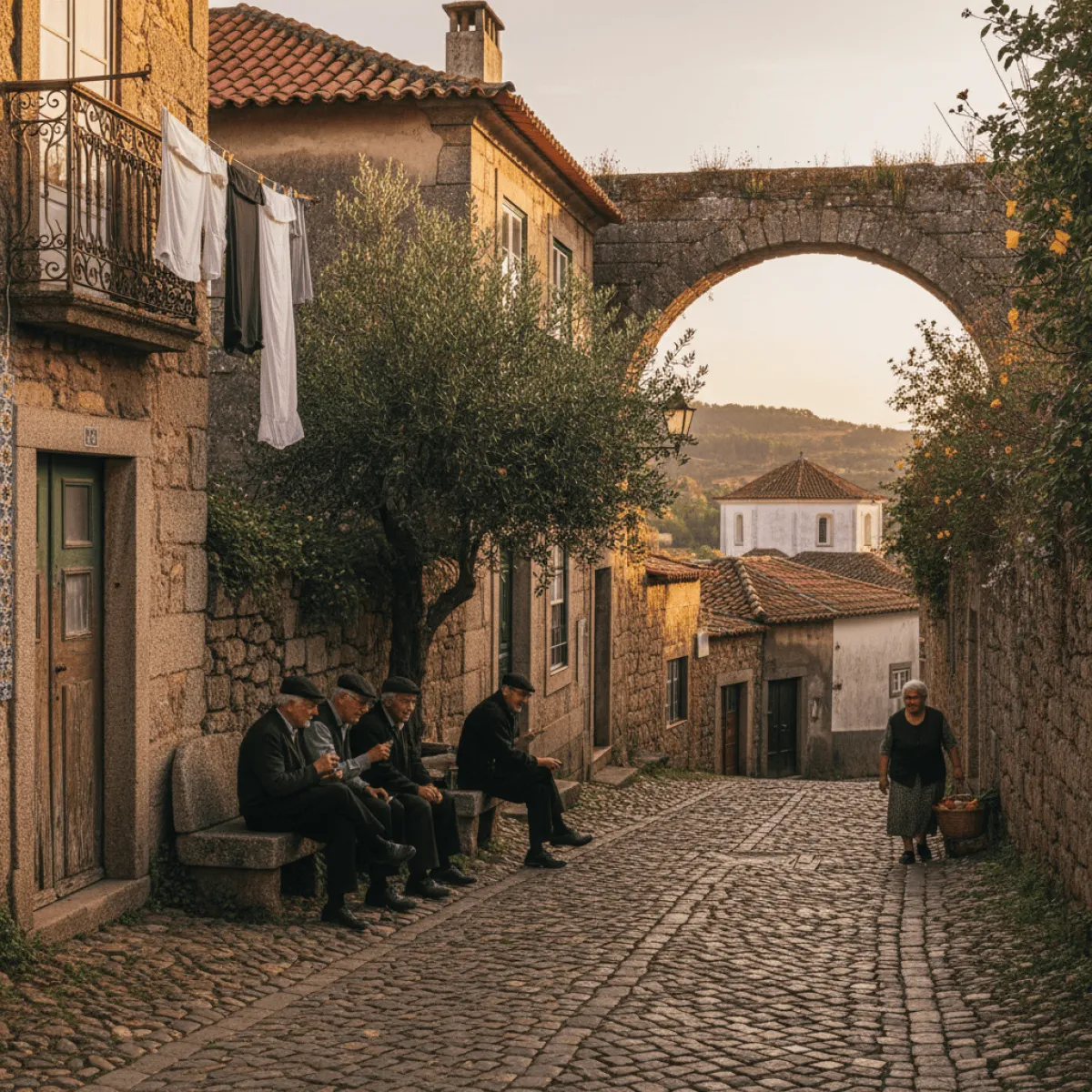
Everyone goes to Tomar for the Convent of Christ. They climb the hill, photograph the Charola, buy a fridge magnet with the Cross of Christ, and head back to the coach. Four hours later, they're back in Lisbon convinced they've seen Tomar. They've seen maybe twenty percent of the town, and not even the most interesting part.
I've been coming here for years for another reason: Tomar is one of the few Portuguese towns where you can spend three days without seeing another tourist after five in the afternoon. When the buses leave, the town goes back to belonging to the tomarenses, and the tomarenses have a charming habit of doing things slowly. Coffee takes its time. Conversation takes its time. Dinner starts at eight and ends at eleven. For anyone used to a city where lunch happens in twenty minutes, this is a deeper culture shock than any Gothic monument.
The town that lives below the convent
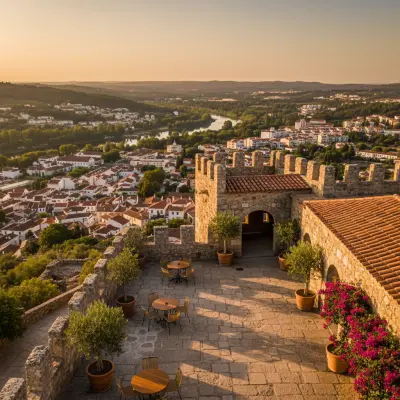
Start by flipping the itinerary. Instead of going up to the convent first thing in the morning, climb to the Miradouro do Castelo de Tomar at the end of the day, around seven in summer, five-thirty in winter. The light is completely different, the buses have already gone, and the Nabão down below glows the colour of milky tea. There's a stone bench under a twisted pine, just left of the outer wall, where two or three older locals usually sit chatting. Sit at a respectful distance. After ten minutes, someone will comment on the weather. This is the traditional way to start a conversation in Tomar.
Walking down from the castle by Rua Dr. Joaquim Jacinto, instead of the tourist route, takes you past a string of early twentieth-century houses with tiled façades, half of them with a cat asleep on the windowsill. It's a perfectly ordinary street for the people who live there, and perfectly extraordinary for anyone passing through. No plaque, no audio guide, not in any guidebook. That's exactly why it matters.
Várzea Pequena, where the locals actually eat
Most restaurants in the historic centre live off tourists who never come back. The food isn't bad, but it isn't the reason you should have driven across half a country. Where you eat well in Tomar is in the Várzea Pequena area and the neighbourhood tascas east of the river. Ask any local where they have lunch on a Tuesday. I promise it isn't in the centre.
What to order: fataças from the Nabão, when they have them, grilled with coarse salt and drizzled with local olive oil. Açorda à pescador, which here sometimes uses river eel instead of cod. Migas ribatejanas, fat and unapologetic, made with stale bread, garlic, spinach and pork fat. And above all, ask for fatia de Tomar, the local convent sweet, and order it at the end. They'll probably tell you they don't have it, because the real fatia de Tomar uses 24 egg yolks and three hours in a bain-marie. If they do have it, try it. If they don't, ask for pampilho ribatejano, which is easier to find.
Average lunch at a neighbourhood tasca: sixteen to twenty-two euros with house wine. À la carte dinner at a decent restaurant: up to thirty-five. Anything above that, in Tomar, you're paying for the decor, not the cooking.
Sleep outside the walls
Classic mistake of the rushed visitor: book a hotel in the historic centre, sleep badly because of the bars on Rua Serpa Pinto, wake up grumpy. The best decision you can make in Tomar is to sleep on the outskirts, in one of the quintas that orbit the town within a fifteen-kilometre radius. The gap between waking up to a distant tractor and waking up to an English stag-do closing the bar downstairs is considerable.
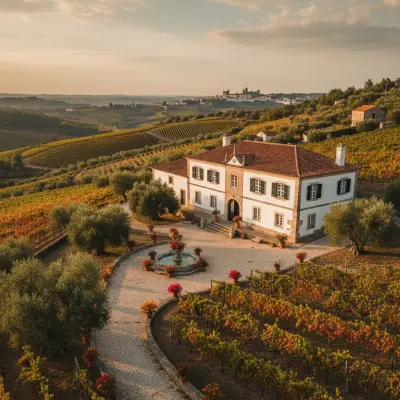
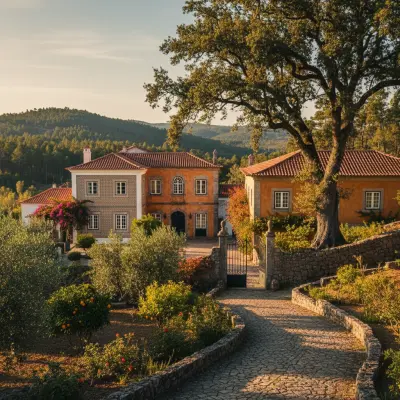
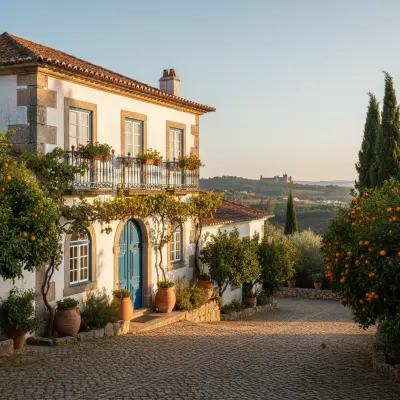
There are three places I recommend without hesitation, for different reasons. Quinta do Troviscal sits on the edge of the Castelo do Bode reservoir, with breakfast served on a terrace facing the water. Go there if you want to swim before coffee and like houses with history but no pretension. Quinta São José dos Montes is more isolated, has a vineyard, and offers that genuine rural silence that turns your phone into an annoying object. Quinta da Ti Júlia is the most informal of the three, the cheapest, run by people who treat guests like godchildren. If you're travelling solo or as a couple in the region for the first time, start here.
At any of the three, expect 90 to 140 euros per night in low season, more in July and August. Book directly whenever possible. The platforms take twenty percent, which comes out of the owners' pockets, not yours.
The Nabão is the industrial secret
Everyone photographs the Nabão from the old bridge. Almost nobody walks along it. Which is a shame, because the north bank of the river, from the Parque do Mouchão onwards, is a green corridor where you cross paths with track-suited fishermen, women walking enormous dogs, and teenagers with portable speakers trying to look older. In May, with the butterflies, it's the best spot for a picnic. Buy cheese, bread and fruit at the Municipal Market in the morning. Twelve euros feeds two and it's better than half the lunches in the historic centre.
The Mouchão water-wheel still turns and still lifts water, even if only ornamentally. It's one of those details no guidebook mentions but that defines the town. Tomar was an industrial town before it became a tourist town. The Prado paper mill, the wool factory, the match factory. There are traces of that industrial Tomar everywhere, if you know where to look: brick chimneys hidden behind newer apartment blocks, rows of worker housing, street names that remember old trades. This is the Tomar that interests me, more than the Templar knights, frankly.
What to do with a full day of sun
If you have 48 hours and the weather is good, split them like this: one morning for the convent, fine, you pay your pilgrimage and get it over with early, with a ticket booked online for nine to skip the queue. One afternoon for the castle and the miradouro. And one full day out of town.
That full day can be, and I strongly suggest, in the air. The experience of paragliding over the heart of Ribatejo isn't for everyone, but if you've never flown paraglider in Portugal, this is one of the more beautiful places to start. You see the convent from above, you see the Nabão wind through the fields, and you see how much green there still is around here that you'd never guess from ground level. Price runs from 70 to 90 euros for a tandem flight with an instructor. Book ahead and wear trainers.
If you prefer to stay on the ground but away from traffic, this region is generous with cycle paths. I usually recommend a side trip north, cycling the Ecopista do Dão from Viseu to Santa Comba, which you can do in a weekend and which pairs well with Tomar as either a starting point or a return base. It's a different Beira, higher up, more granite, but within a reasonable drive if you're road-tripping through central Portugal.
Festa dos Tabuleiros: go or skip
Inevitable question. The Tabuleiros, held every four years, is Tomar's most famous event. Worth it? Honestly: if it happens to be on while you're there, yes, it's unique in Europe, women balancing trays of bread as tall as they are, streets covered in paper flowers, vast crowds. But it's a tourist madhouse and the town triples in population. Anyone who comes to get to know Tomar shouldn't come during the Tabuleiros. Anyone who comes for the Tabuleiros isn't getting to know Tomar, they're attending a festival. Two different trips.
If you like Portuguese festas but want to avoid the artificiality, there are others around the country that hold up better under close inspection. I've written an honest guide to Coimbra's Queima das Fitas that might be useful if you're after something more visceral. And for Portuguese religiosity on an epic scale, with no illusions, I recommend the guide to the Fátima pilgrimage on May 13th. Fátima is half an hour from Tomar, so you can combine a morning of pilgrimage with a Tomar afternoon, if the dates work out.
Walking to clear your head
There are trails in the hills around Tomar, particularly to the northwest, in the direction of the limestone villages. They aren't waymarked the way Sintra or Gerês are, and you're better off with a GPS or a local guide. If you need an idea for a more organised walking weekend, I've written about April walks around Caldas da Rainha, which you can pair with Tomar in a four-day central-west road trip.
Logistics without the romance
Tomar has a direct train from Lisbon, leaving from Santa Apolónia or Oriente, around two hours of travel, costing between 10 and 14 euros. The station is a ten-minute walk from the centre. You don't need a car for the town. You do need a car for the surrounding area, and without one the quintas mentioned above become complicated. Either rent at the airport and drive straight here, or take the train and rent locally, more expensive but doable.
Best time to visit: May and June, before the real heat, with poppies still in the Ribatejo fields. September and October are also excellent, golden light and fewer people. July and August: avoid, too hot, too full. Winter: it rains, but it has its charm, and the central restaurants are more authentic when there are twenty customers instead of two hundred.
What's left after everything
The town you find behind the Templars is smaller, quieter, and more lived-in. It has cafés where, by your third morning, the waiter brings you your pingo without asking. It has a river with fishermen who know the names of the fish. It has the oldest surviving synagogue in Portugal, which is anything but spectacular, and is moving for exactly that reason. It has houses with canaries by the door. It has, in an alley I'm not going to name because that would spoil the pleasure, a cobbler who still talks about Salazar as if it were yesterday.
The buses come back every morning, drop off fresh visitors, take them away before dinner. Tomar carries on, indifferent and friendly, waiting for anyone who'll give it more than four hours. Give it three days. You'll leave with the feeling, rare these days, of having met a town instead of having visited one.