The Twin Fortresses: Navigating the Bastions of Valença do Minho
Explore the imposing bastioned fortress of Valença do Minho, where Vauban's military engineering meets the finest gastronomic traditions of the Luso-Spanish border.
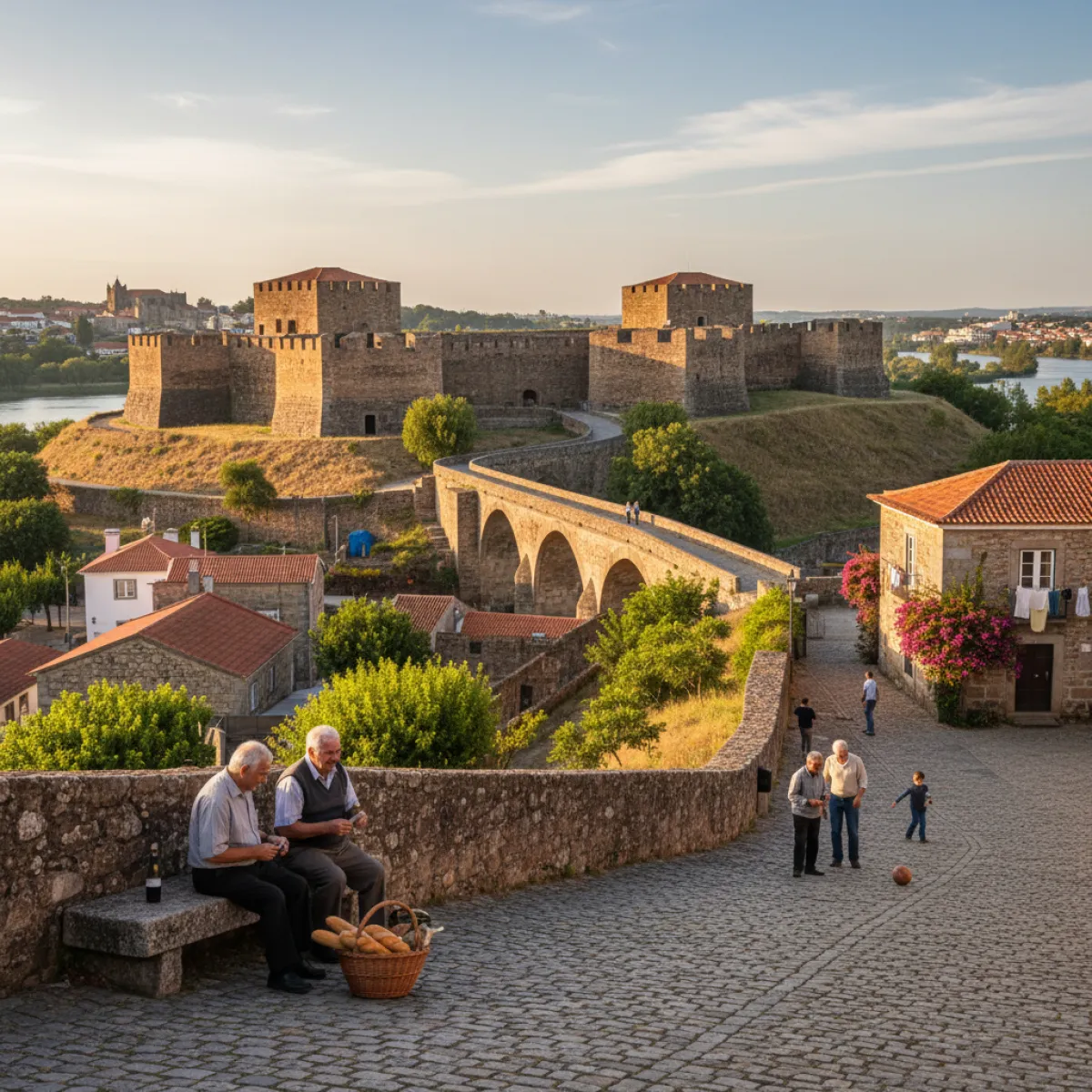
The Stone Sentinel Over the Minho River
Approaching Valença do Minho requires an eye that can distinguish utility from aesthetics. From the opposite bank in Tui, the towers of the Galician cathedral observe the border with religious severity, but it is Valença that holds the geometric authority of the landscape. This is not a town that grew organically around a square; it is a military organism of precise engineering, a bastioned system that uses rock and angle as the language of survival. The fortress, divided into two great polygons, the Recinto Magistral and the Coroada, is one of the most intact examples of Vauban architecture in Europe, where every ravelin and every ditch served a purpose that history, fortunately, has rendered obsolete.
Walking the ramparts of Valença is an exercise in perspective. While the interior of the fortress bustles with the textile trade and the hum of Spanish visitors crossing the border in search of cod, the perimeter of the walls offers an almost monastic silence. It is here that one realizes the scale of the project: five kilometers of walls embracing the town, drawing a stone star that seems to float over the valley. The structure is so dense that the transition between the two parts of the fortress, made through the Portas do Meio (Middle Gates), feels like a passage into a different era, where security was measured by the thickness of the granite.
The Minho Contrast: From Stone to Clay
There is a military rigidity in Valença that defines its identity, but it does not exist in isolation. To understand the soul of this region, one must look beyond the artillery defenses. While Valença defended itself with cannons, other parts of Minho shaped their culture through more malleable elements. If the stone of Valença commands respect, The Living Craft of Minho: A Deep Dive into the Pottery of Barcelos reminds us that Minho's identity is also made of earth and hands that create, offering a necessary counterpoint to the austerity of the fortifications. This duality between the defensive and the artistic is what makes northern Portugal a stratified layer of experiences.
Inside the walls, daily life is dictated by Rua da Oliveira and the squares housing shops of high-quality linens. Forget the stacks of generic towels at the door; look for establishments that still work with natural fibers and traditional embroidery. The quality of Portuguese cotton and the durability of linens remain the town's major economic engine, attracting families who, for generations, have crossed the international bridge to compose their dowries. The price for a superior quality bed set can range between €80 and €200, but the durability is measured in decades, not seasons.
Frontier Gastronomy: The Ritual of Cod
Valença claims the title of cod capital in the north, and it does so with good reason. The town's relationship with the "faithful friend" is pragmatic and generous. The most emblematic dish in the area is Bacalhau à São Teotónio, a recipe that favors a thick, well-desalted loin, fried and then topped with a crust of corn bread and a rich onion base. In restaurants like Fortaleza or Baluarte, the ritual is sacred: clay platters arrive at the table steaming, often accompanied by smashed potatoes and turnip greens from the garden.
The budget for a serious meal in Valença falls between €25 and €40 per person, including wine. Being a borderland between the Vinho Verde sub-regions, Alvarinho from Monção and Melgaço dominates the wine lists. It is a wine with enough structure to face the richness of the cod and the necessary acidity to cleanse the palate. If weather permits, ask for a table with a view of the fortress ditch; there is something deeply satisfying about eating such a robust meal while observing the architecture that once prevented any unauthorized entry.
Rhythms and Seasons: When to Go
The experience of Valença changes drastically with the seasons. In summer, the streets are kinetic, occupied by those seeking the Wednesday market, an event of epic scale occupying the fairgrounds where everything from livestock to furniture is sold. However, for the traveler who prefers introspection and the soft light of the north, winter offers an incomparable mystique. The fog that rises from the Minho River and curls around the stone watchtowers creates an atmosphere that invites retreat.
Many travelers combine a visit to Valença with other iconic Minho destinations. If the Valença fortress represents rigor, The Slow Rhythm of Ponte de Lima: A Family Guide to Portugal’s Oldest Village offers a different softness, where the Lima River flows under a Roman bridge and time seems to have another cadence, less focused on defense and more on the enjoyment of the gardens and the village. This transition between Valença and Ponte de Lima is one of the shortest and most rewarding journeys one can take in the Alto Minho.
For those who appreciate the productive melancholy of winter, the region reveals itself in a special way. When the rain begins to fall and fireplaces are lit, the gastronomy becomes even heavier and more comforting. The Fog and the Feast: Why Ponte de Lima is Portugal’s Most Evocative Winter Escape aptly describes that feeling of thermal luxury and culinary satisfaction that extends throughout the Minho and Lima valleys, transforming what could be a gray season into a celebration of the senses.
Practical Guide to Valença
- How to get there: The Celta train (Porto-Vigo) is the most romantic way to arrive, crossing the Eiffel metallic bridge. By car, the A28 or A3 are the fast routes, but the N13 offers a more scenic trip along the river.
- Parking: There are large parking lots outside the walls. Avoid trying to enter the historical enclosure by car; the streets are narrow and parking is almost non-existent for non-residents.
- The Crossing: Allow 20 minutes to walk across the International Bridge. The view of the two fortresses (Valença and Tui) from the center of the metallic structure is one of the best photographic spots in the region.
- Hours: The fortress is open 24 hours a day, but shops and museums (like the Municipal Museum Center) usually close at 6:00 PM or 7:00 PM.
Valença do Minho is not just a shopping destination or a waypoint on the Way of Saint James. It is a stone testament to the complexity of peace. Its walls, designed to keep the other out, are today the setting where two nations meet with the greatest naturality. Between the rigor of military engineering and the hospitality of a cod dish, Valença remains a sentinel that, having ceased to watch for the enemy, has begun to guard time itself.
