The Other Side of Tomar: Beyond the Templars
Most visitors arrive in Tomar for the Convent of Christ and leave at sundown convinced they've seen the city. They haven't. The real Tomar starts at 6pm, when the buses leave, and this is the honest guide to finding it.
Everyone goes to Tomar for the Convent of Christ. They climb the hill, photograph the Charola, buy a magnet with the Templar cross, rush through a thin tourist-trap stone soup somewhere off Praça da República, and by 4pm they're back on the motorway. They leave convinced they have seen Tomar. They haven't. They saw the cover of the book.
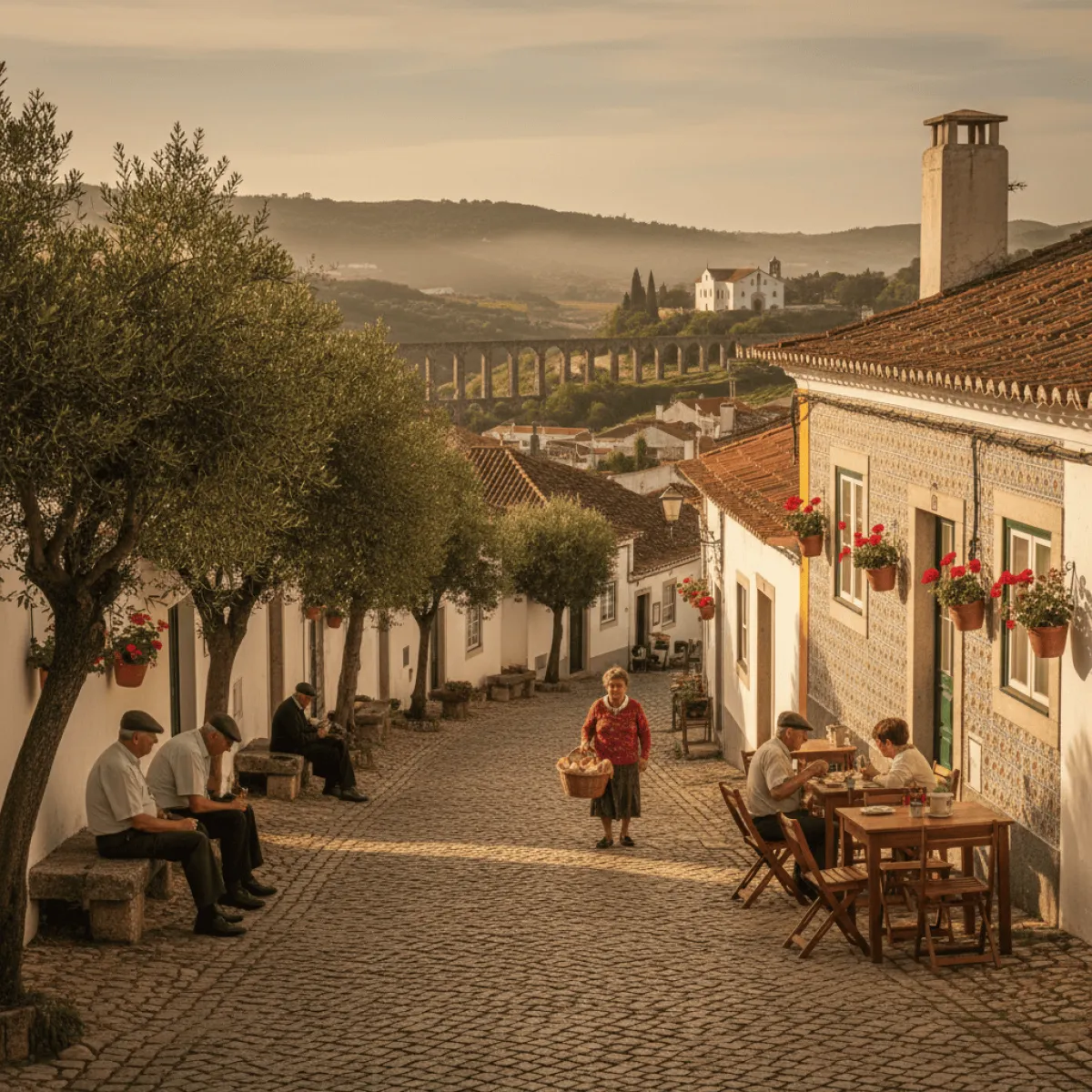
The real city, the one that keeps functioning when the tour buses leave, lives on the edges. It's the Nabão river slipping under the Ponte Velha at seven in the morning, when mist still covers the Mata dos Sete Montes. It's the little tascas off Rua dos Moinhos where lunch costs less than ten euros and no one hands you a menu in four languages. It's the Levada district by the river, the one most visitors don't even know exists, with its old industrial sheds being slowly turned into studios and the smell of yeast drifting from small bakeries.
This is an honest guide to the other Tomar. I'm not going to tell you to skip the Convent of Christ, that would be absurd. But I will tell you what to do after, and where to sleep, so that the city belongs to you a little more than it does to the people who book a downtown hotel and leave at sundown.
The mistake of arriving and leaving the same day
Tomar is not a day-trip, no matter what the Lisbon tour operators want you to believe. The city changes entirely after 6pm, when the last tourist coach pulls out and the riverside terraces fill with locals. That's the Tomar worth travelling for.
The trick is to sleep out of town. Not in some noisy downtown hotel on Avenida Cândido Madureira. Sleep properly out, on a quinta, with countryside views and no traffic, and treat the city as a daily incursion rather than a marathon.
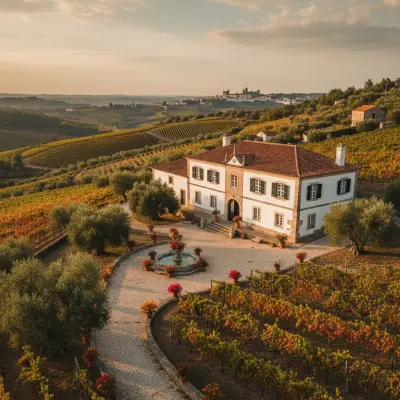
My first choice is always Quinta do Troviscal, on the shores of the Castelo do Bode reservoir. It's a family house turned small rural guesthouse, with an orchard, a pool facing the lake, and the kind of quiet you only get twenty minutes from Tomar's first streetlights. Breakfasts are made with fruit from the property and bread from a local bakery. For anyone wanting to combine the city with the reservoir, especially in summer, it's the right base.
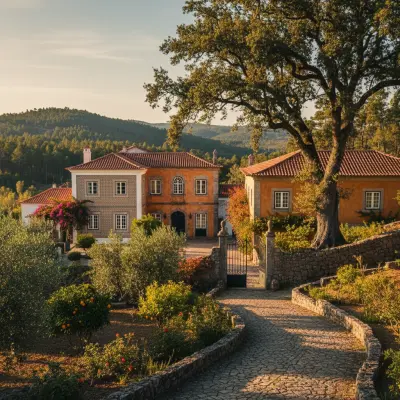
If you'd rather stay on the other side, in the pine forests north of the city, Quinta São José dos Montes is the kind of place where you arrive for two nights and end up staying four. Discreet, well kept, with the sort of rural hospitality that isn't staged for Instagram. Good for families and dog owners.
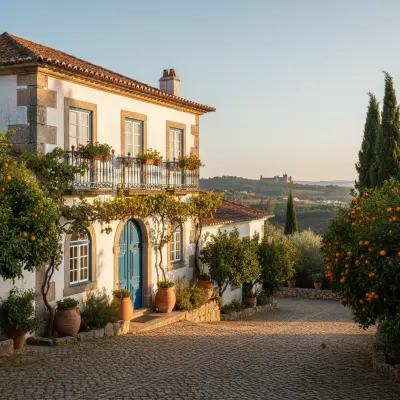
And then there's Quinta da Ti Júlia, the smallest and most intimate of the three. Small independent cottages, a garden, and a genuine warmth that makes the difference on a short stay. Book early, especially around the Festa dos Tabuleiros months, or don't bother.
The viewpoint nobody tells you about
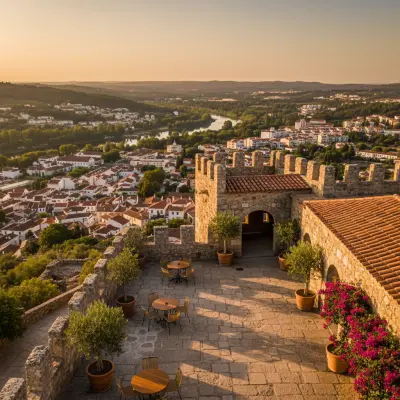
Everyone photographs the Convent from outside. Few people climb up to the Miradouro do Castelo de Tomar in the late afternoon, when the sun drops behind the hill above the Nabão and the whole town turns the colour of old roof tile. It's a short walk, ten minutes on foot from Praça da República, and the best place to understand the geography of the city: the woods below, the river drawing a perfect S, the Convent above like a beached ship.
Go in the late afternoon, around 6.30pm from May to September, earlier in winter. Take a bottle of water, sit on one of the low walls, and stay until the castle lights come on. Don't photograph too much. This is one of those views that gets better the longer you look.
Where to eat (and where not to)
Let me be honest: most restaurants in Tomar's historic centre live off passing tourism, and it shows. Menus in four languages, glossy photos of dishes, seven-euro stone soup tasting suspiciously like a stock cube. There are exceptions, but you need to know how to find them.
Simple rule: stay away from Rua Serpa Pinto and the main square at lunchtime. Walk over to the Várzea Pequena area, the riverside on the north bank, or the neighbourhoods climbing up towards Santa Iria. That's where you'll find places where locals have the prato do dia for seven or eight euros, soup, espresso and a glass of red wine included.
What to order, no hesitation:
- Sopa de pedra: yes, it's a cliché, but it belongs to the region (Almeirim is nearby and the tradition spread). Only order it where you see locals eating it. If the menu has photos, run.
- Bacalhau à Tomar: less famous than à Brás or Gomes de Sá, the local version comes with potato and egg, slow-baked. In the right house, it's memorable.
- Fatias de Tomar: the local dessert, made from egg yolks only, steamed in a specific pan. Don't confuse it with French toast, it's something else entirely. Best with cinnamon syrup.
For breakfast, forget hotel buffets. Find any neighbourhood pastelaria where bread comes from the oven next door and coffee costs less than a euro. That's where you hear the city wake up.
The Mata dos Sete Montes at dawn
It's Tomar's green lung and almost no outsider knows it exists. Thirty-nine hectares of forest inside the city, behind the Convent, with shaded paths, a Renaissance fountain (the Fonte da Charola, which few people visit because it's hidden in the woods), and a quiet that feels louder for being so central.
Practical tip: go early in the morning, before 9am. In summer it's the only civilised hour, when the temperature is still bearable. In winter that's when the sun filters through pines and oaks in a way that justifies the walk. Entry is free, and there are several signposted routes lasting one to two hours.
Bring comfortable shoes and, in summer, mosquito repellent. There are no cafés inside the woods, so have coffee before or bring water.
The river nobody crosses
The Nabão splits Tomar in two and most visitors only set foot on the western side, the one with the Convent and the square. The eastern side, from the Ponte Velha down towards the southern riverside, is where some of the most authentic Tomar still lives.
Walk along Avenida Marquês de Tomar in the late afternoon, when locals come out for a stroll down to the weirs. Cross the pedestrian bridge by the municipal market and wander up a little towards the Várzea Pequena district. Low houses, gardens with orange trees, small butchers and grocers: this is where you realise Tomar isn't just a Templar postcard, it's a working interior town with a life of its own.
The municipal market, by the way, is best on Friday morning. Get there early. Buy seasonal fruit, goat cheese from the Aire and Candeeiros range, and bulk olive oil if you bring a bottle. Half the supermarket price and twice the flavour.
When to go (and when to absolutely avoid)
The big question. The Festa dos Tabuleiros, the four-yearly festival in July, is spectacular, but going then is like going to Porto during São João: either you go for that, with everything it implies in terms of crowds and prices, or you choose another time. The next edition is in 2027.
My preferences, in order:
- May: green fields all around, perfect walking temperatures, long days, few tourists. The best month, without much doubt.
- October: autumn light in central Portugal has something Italian about it, and the Tomar region is beautiful in it. The wine harvest is over, but some restaurants are starting their game dishes.
- Late January/February: cold, yes, but the Convent practically empty and rural guesthouses at half price. If you can handle a fireplace at the end of the day, it's one of the best ways to see the city.
Avoid: August from the 10th onwards, especially weekends. It's not Tomar's fault, it's everyone's holiday calendar.
Escaping the city without leaving the region
Tomar is also a base. The region offers two or three things worth doing that few visitors fold into their visit.
The first is going up, literally. Paragliding above the heart of Ribatejo is one of the most memorable experiences in the area, and the panoramic view over the Tagus, the olive groves and the Ribatejo plains gives a perspective no photograph captures. Tandem flights with an instructor are available for beginners, but they depend on weather conditions, so confirm in advance and have a plan B.
For a more grounded day, and if you have the car, one of the best escapes is to drive up to Viseu and ride a stretch of the Ecopista do Dão by bike, between Viseu and Santa Comba. Not Tomar, of course, but at an hour and a half by car, with one night in between, it makes for an interesting pairing if you're touring central Portugal.
For fans of honest guides
If this article spoke to you, there are other guides in the same editorial line worth reading before plotting your central Portugal route. The honest guide to April walks around Caldas da Rainha is useful for anyone combining Tomar with a west coast escape without falling into tourist traps. The honest take on Coimbra's Queima das Fitas is essential reading if you're in central Portugal during May and thinking of detouring to Coimbra. And for those who want to understand the Fátima pilgrimage without the official brochure, the honest guide to the May 13th pilgrimage to Fátima provides the context most websites leave out.
One last thing
Tomar doesn't need to be dramatised. It's not a city of mystery or ancient secrets waiting to be revealed. It's a provincial city in central Portugal with a spectacular convent, a pretty river, and a very particular unhurried way of living that gets lost if you visit it in four hours as part of a circuit.
The difference is staying a night. Sitting by the Nabão at the end of the afternoon. Walking into a tasca where they don't expect tourists and asking for the prato do dia without checking what it is. Waking up on a quinta half an hour from the city and taking breakfast into the garden. That's what nobody tells you and it's exactly what separates having been to Tomar from actually knowing Tomar.