The Last Frontier: Deciphering the Celtic Roots and Superstitions of Barroso
On the high plateau of Montalegre, life follows the rhythm of cattle and tides of mist. Discover how Barroso has preserved a unique communalism and pagan rites that defy time.
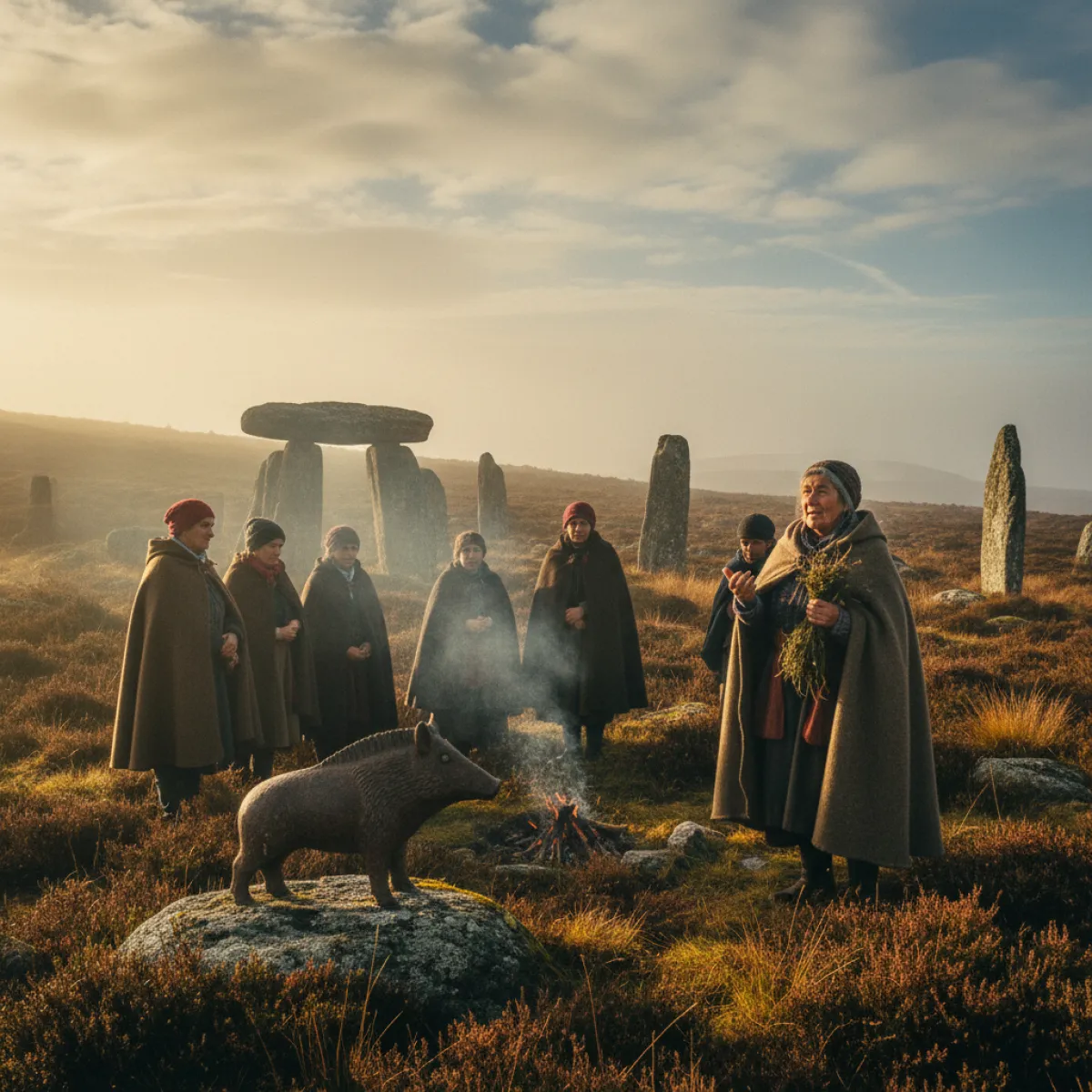
A Labyrinth of Granite and Mist
Ascending to Barroso is more than a change in altitude; it is an exercise in shedding the superfluous. As the road snakes north from Montalegre, the vibrant green of Minho gives way to a palette of greys and ochres, a wind-swept plateau where granite seems to sprout from the earth as naturally as the gorse. Here, on the eastern edge of the Peneda-Gerês National Park, geography has dictated character. For centuries, isolation was not a burden, but a shield. It protected a communal way of life that the rest of Europe has long forgotten, and kept alive beliefs that predate the Christian cross by millennia.
Barroso is one of the few places on the continent where the term "archaic" is not an insult, but a state of grace. In this region, Barrosã cattle, with their lyre-shaped horns that look as though they were sculpted by Celtic hands, still dictate the rhythm of the villages. This is not folklore for tourists; it is the economy of survival. Much like in the neighboring territories where one seeks The Silence of Montesinho: A Winter Retreat in the Last Frontier of Portugal, winter here is the dominant season, a period of introspection where stories carry more weight around the hearth.
The Iron Heritage: Castros and Living Stones
To understand Montalegre, one must look at the foundations. The region is peppered with *castros*, fortified Iron Age settlements that reveal a sophisticated social organization. The Castro of Carvalhelhos is perhaps the most eloquent example of this architecture of resistance. Walking along its walls, one understands that the people of Barroso have always known how to defend their autonomy. These Celtic roots manifest in the toponymy, the music of the bagpipes, and, above all, an almost animistic relationship with nature.
Unlike the Mediterranean influence that shaped the south, Barroso looks toward the Atlantic and the mists of Galicia. The border with Spain here is a thin line, often ignored by culture and blood. While the Tâmega valley showcases The Roman Legions' Legacy: Exploring the Ancient Thermal Springs of Chaves with its Roman order and classical thermalism, Barroso remains rebellious, preferring the organized chaos of its mountains and the icy waters that run free from the Larouco peaks.
Syncretism and the Exorcism
No figure personifies the duality of Barroso better than Father Fontes. In Vilar de Perdizes, this priest of Renaissance spirit achieved the impossible: marrying Catholic liturgy with folk medicine and pagan rites. The Congress of Popular Medicine, which draws thousands every year, is the stage where home remedies, herbs, and the "evil eye" are discussed with the same seriousness as a theological treaty. It is in this context that the famous *Queimada* was born, a ritual where aguardente, sugar, and coffee beans burn in a clay pot while an exorcism (*esconjuro*) is recited. It is an act of purification, a cry against envy and the ailments of both body and soul.
The Friday the 13th celebration in Montalegre is the apotheosis of this mysticism. When the calendar dictates the date, the town transforms. This is not an Americanized Halloween party; it is a celebration of the shadow. Montalegre Castle serves as a backdrop for fire and smoke choreographies, where the devil and witches are invited to the table, not to be feared, but to be integrated into the natural order of things. In Barroso, superstition is pragmatic: they know the world is vast and that not everything that exists can be seen.
The Communal Soul: The Oven and the Bull
Communalism is the backbone of this society. In villages like Pitões das Júnias, the communal oven is still an institution. It is not just the place where dark, dense rye bread is baked; it is the village parliament. Here, dates for sowing, the management of pastures, and support for the poorest families were decided. The "People's Bull" (*Boi do Povo*) is another fascinating example: a breeding bull maintained by the entire community, whose vigor is a source of collective pride.
This social cohesion is reflected in the gastronomy. The *Cozido à Barrosã* is not a dish for those in a hurry. It requires meats cured in oak smoke, local potatoes that actually taste of the earth, and cabbages that have survived the frosts. The robustness of this cuisine is a direct response to the harshness of the climate. It is a culinary of substance that shares the ethical rigor found when exploring Beyond the Alheira: Mirandela’s Culinary Resilience. In both cases, the pig is king, but in Barroso, the *Vitela Barrosã* (beef), with its tender and certified meat, is the ultimate symbol of the purity of the breed and the pasture.
A Practical Guide for the Conscious Traveler
When to Go and How to Get There
Barroso demands time. Autumn is visually arresting, as the oak forests turn to copper, but winter offers the most authentic experience, with snow dusting the Larouco peaks and smoke curling from stone chimneys. If you seek the celebration, Friday the 13th is a must, but book accommodation months in advance. The journey must be made by car; there is no other way to reach the most remote villages. Put the GPS aside occasionally and follow the signs for Sirvo or Tourém.
Where to Eat and What to Order
In Montalegre, look for taverns where the *Cozido* is served without flourish. Restaurants like O Tasco or Taberna do Jaca are solid choices. Order the grilled *Vitela Barrosã* with just a touch of sea salt. In winter, the *caldo de farinha* (flour broth) is a necessary comfort. For dessert, Barroso heather honey and local goat cheese close the meal with the elegant austerity that defines the region.
Budgeting
Barroso is surprisingly affordable. A full, high-quality meal rarely exceeds 25-30 euros per person. Rural tourism accommodation ranges from 80-120 euros per night. Budget approximately 150 euros per day for a couple, including fuel, to explore the region comfortably.
The Frontier Within
Visiting Montalegre and Barroso is to confront our own modernity. In an era of hyper-connectivity and ephemerality, these granite lands remind us that identity is built on continuity. The superstitions, the rites, and the communal management of the land are not vestiges of an ignorant past, but tools of a collective intelligence that knew how to thrive in a hostile environment. As we descend the mountain back to the plains, we carry with us the smell of woodsmoke and the silence of the highlands, and the certainty that, on this last frontier, time still belongs to us.
