Montalegre After Dark: The Witches' Friday the 13th
Once a year, when the calendar drops a Friday onto the 13th, Montalegre fills with black cloaks and burning spirits beside the castle. Here is how to do the Witches' Night right, without freezing or losing your bed.
Here is the thing nobody tells you about Montalegre: on a normal night, it shuts early. By ten on an ordinary February evening, Rua Direita is empty, the wind off the Barroso plateau finds its way down your collar, and the only signs of life are the lit windows of people eating cabbage and bean soup. This is a town sitting at over 900 metres that takes its cold seriously and makes no apologies for it.
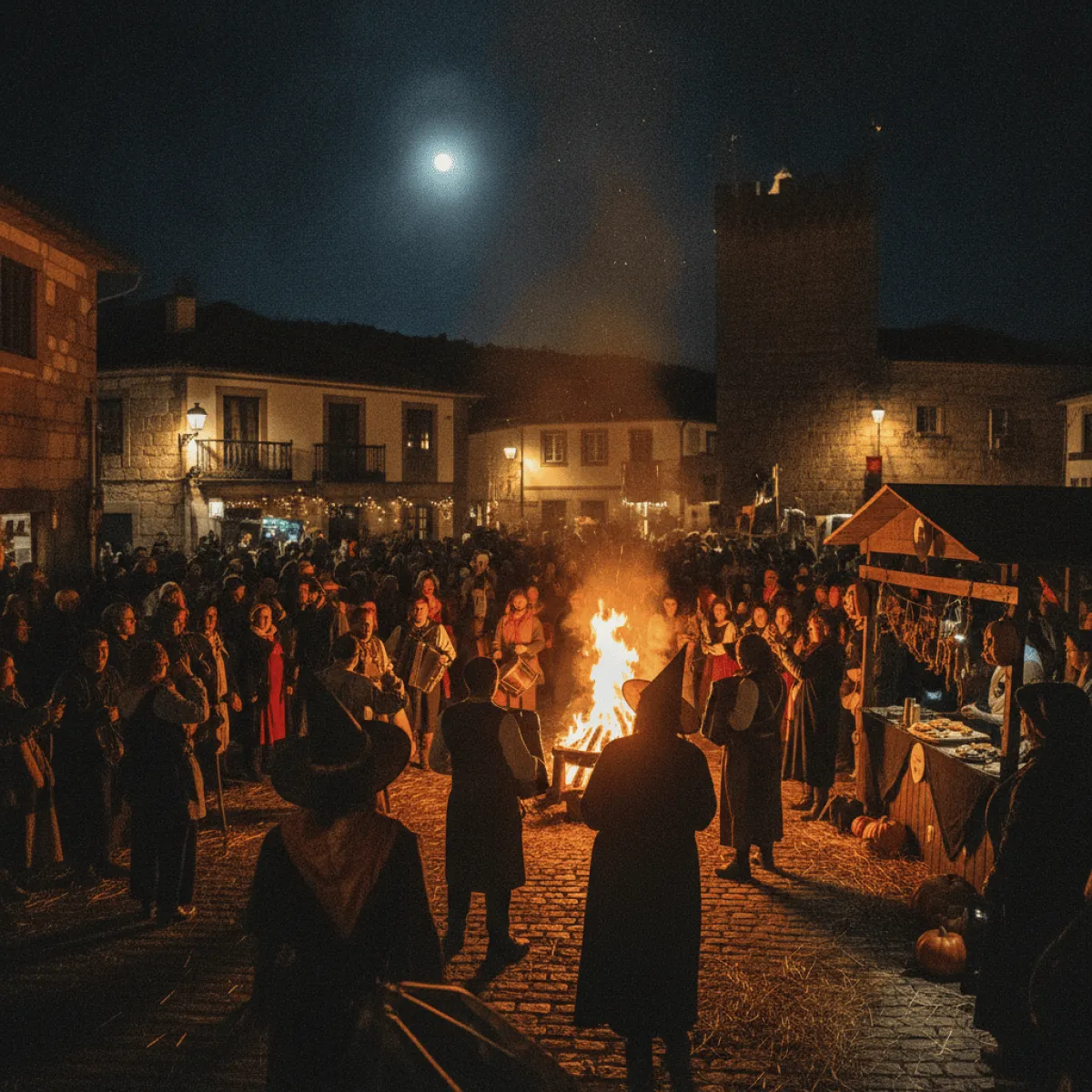
And then there is that one night. Once a year, sometimes twice, whenever the calendar drops a Friday onto the 13th, Montalegre becomes the witchcraft capital of Portugal. This is not tourist-brochure language. It is thousands of people in black cloaks and pointed hats filling a town that, on the other 360 days of the year, would fit comfortably into one square. If you want to understand what makes the interior of Trás-os-Montes different from everywhere else in the country, this is where you need to be.
Why Montalegre does this
The tradition is not medieval-old in the way you might imagine. Friday the 13th as an organised event was born in the 1990s, and it has a culprit with a name and an address: the local pharmacist who started selling herbs, folk remedies and witches' liqueurs in a place where popular medicine was never a museum curiosity but a living practice. What began as a village joke grew into the event that now fills hotels in Chaves and Braga on nights when it is five degrees outside.
What helps is that nature and history had already built the set. Montalegre has a 13th-century castle on the highest point of the town, with a keep visible for miles. At night, floodlit on its granite outcrop, with the Larouco range behind it and mist climbing the valley, it needs no special effects. Barroso is one of the most isolated regions in the country, recognised by the FAO as a Globally Important Agricultural Heritage System, and it has that quality of a place where stories of werewolves and women who healed with herbs were never entirely a joke. Here the witches have a postcode.
What actually happens
This is not a craft fair with plastic witches. There is a programme, and it pays to arrive on time. The high point is the open-air burning, beside the castle, with the reading of the conjuro and the preparation of the queimada: aguardente set alight in a cauldron with lemon peel, sugar and coffee, to the sound of words that promise to drive off evil spirits. It is handed out in small cups to whoever is near, and you drink it hot. The ritual has Galician roots and took hold here for a good reason: on a Trás-os-Montes winter night, burning spirits is the most sensible thing anyone is going to offer you.
There is a procession, there are fireworks, there is music, and above all there are people who take it seriously, in carefully made costumes, without that imported-Halloween-party look. To understand the shape of the night, the timings and how the ritual part works without feeling like a lost tourist, it is worth reading the guide to the Witches' Night festival in Barroso first, which explains what to expect from each moment.
When to go, and the important warning
The dates depend on the calendar: there is only a Friday the 13th when there is one, meaning one to three times a year, and the winter edition is the most intense. Confirm the programme locally before you book, because it changes from year to year. The practical warning is simple and I will keep repeating it: the town fills up. Parking is a battle, streets close, and anyone who turns up at nine looking for dinner will eat badly and late. Arrive in the afternoon, eat early, and prepare for serious cold. Coat, hat, gloves. This is not a styling suggestion.
Where to sleep, and why you should not drive again that night
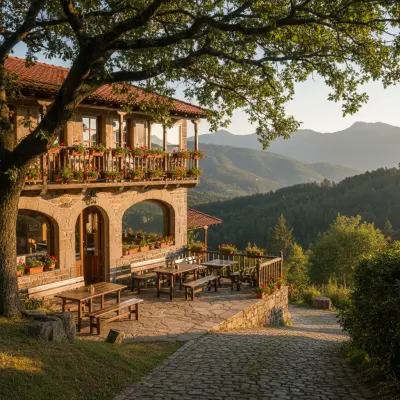
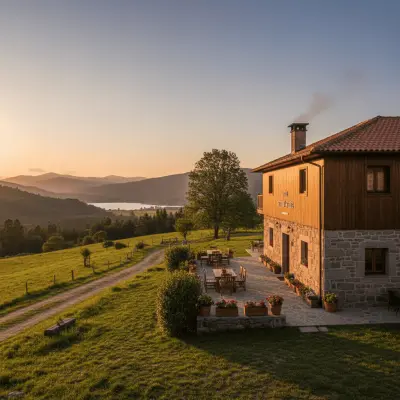
This is the part that separates the planners from the improvisers. After the queimada, with the plateau roads going dark and a real chance of fog or ice, this is not a night to drive an hour home. Stay nearby. Beds sell out early on Friday the 13th, so book weeks ahead. Options like the Hostel Retiro do Gerês work well for anyone wanting a cheap base close by, especially if you are pairing Montalegre with the edge of Gerês. If the first is full, try the second unit of the same hostel, which often has space when the other one closes out.
The advantage of staying is twofold: you drink the queimada properly, with no designated driver checking the clock, and you wake up on the plateau. And the plateau in the morning, with frost steaming off the meadows and the castle cut against a washed sky, is as good as the night. Anyone carrying a camera should build the trip around that light: the winter photography itinerary across the plateau marks the spots and the right hours to catch the range before the fog closes in.
What to eat (and what you cannot miss)
Before it is about witches, Montalegre is one of the best places in Portugal to eat meat. Barrosã beef, a native breed with Protected Designation of Origin status, is among the country's finest, and a well-grilled posta with coarse salt and little else is a lesson in not overcomplicating things. Order it rare in the middle; anyone who grills it well-done has not earned your trust.
Then there is the fumeiro, smoked meat so serious in Barroso that it has its own winter fair. Alheiras, salpicões, chouriças, presunto: all slowly smoked in village smokehouses, with woodsmoke and time. If you are in Montalegre in the cold season, start with a fumeiro board and share it, because it is generous. With the meat, take boiled potato, grelos, and a robust local red with no pretensions.
- To start: a board of Barroso smoked meats, alheira included.
- Main: grilled Barrosã posta, cooked rare.
- In winter: cabbage and bean soups, cozido when available.
- To close the night: the queimada, and a house herbal liqueur.
I will not invent restaurant names or hours I cannot confirm. What I will say is: ask in the street, avoid anything that looks set up for coach tours, and trust the rooms full of locals talking loudly. In the interior, a dining room packed with locals is the best rating system there is.
Getting there
Montalegre is on the way to nothing, and that is half the charm. From Braga or Porto, you take the A7 and then the interior roads, with the last stretch climbing onto the plateau. From Chaves it is close, about half an hour, and Chaves makes a good fallback base if Montalegre sells out. In winter, take road conditions seriously: ice and fog are common above 800 metres, and night falls early. Decent tyres, a full tank, and no rushing on the way down.
Public transport is hard. There are bus connections, but infrequent and completely incompatible with the nightlife of a Friday the 13th. For this trip a car is effectively mandatory, which is one more reason to sleep nearby and not drive after the queimada.
What if no Friday the 13th lines up
Here is the good news: Montalegre is worth the trip even without witches. The castle is open, the Barroso Ecomuseum tells the story of this singular farming landscape, and the town has a slow rhythm you appreciate after the city. Anyone wanting to understand the region beyond the festival should read the guide to Montalegre beyond Barroso, with the castle, the hillforts and the mountain kitchen, which folds the best of the history and the table into one route.
In summer the landscape changes completely. The Alto Rabagão reservoirs turn the plateau into a network of water mirrors among the granite, and you can spend a morning in a kayak without seeing another soul. The Alto Rabagão kayaking trip is the best way to see the underside of this range, with still water and a silence broken only by the paddle entering it. And if you are building a longer itinerary across the Trás-os-Montes plateau, with the eastern viewpoints in play, the Mogadouro at sunset route shows how the June light works on the other side of the region.
The verdict
Montalegre's Friday the 13th could have been a tourist trap, a plastic party with bargain-bin witches. It is not. It works because it rests on a place that still believes enough in its own stories to tell them with a straight face, and because the setting, the castle, the cold, the granite, the burning spirits, does the rest without having to pretend. Go with calibrated expectations: it will be very cold, it will be very crowded, and you will sleep in a bed booked well in advance. Do that right, and you take home one of the strangest and most memorable nights Portugal has to offer.