The Industrial Edge: A Guide to the Brutalist Architecture of Sines
Discover the raw beauty of Sines, where Brutalist concrete and industrial scale redefine the Alentejo landscape. A guide to Aires Mateus's architecture and the aesthetics of production.
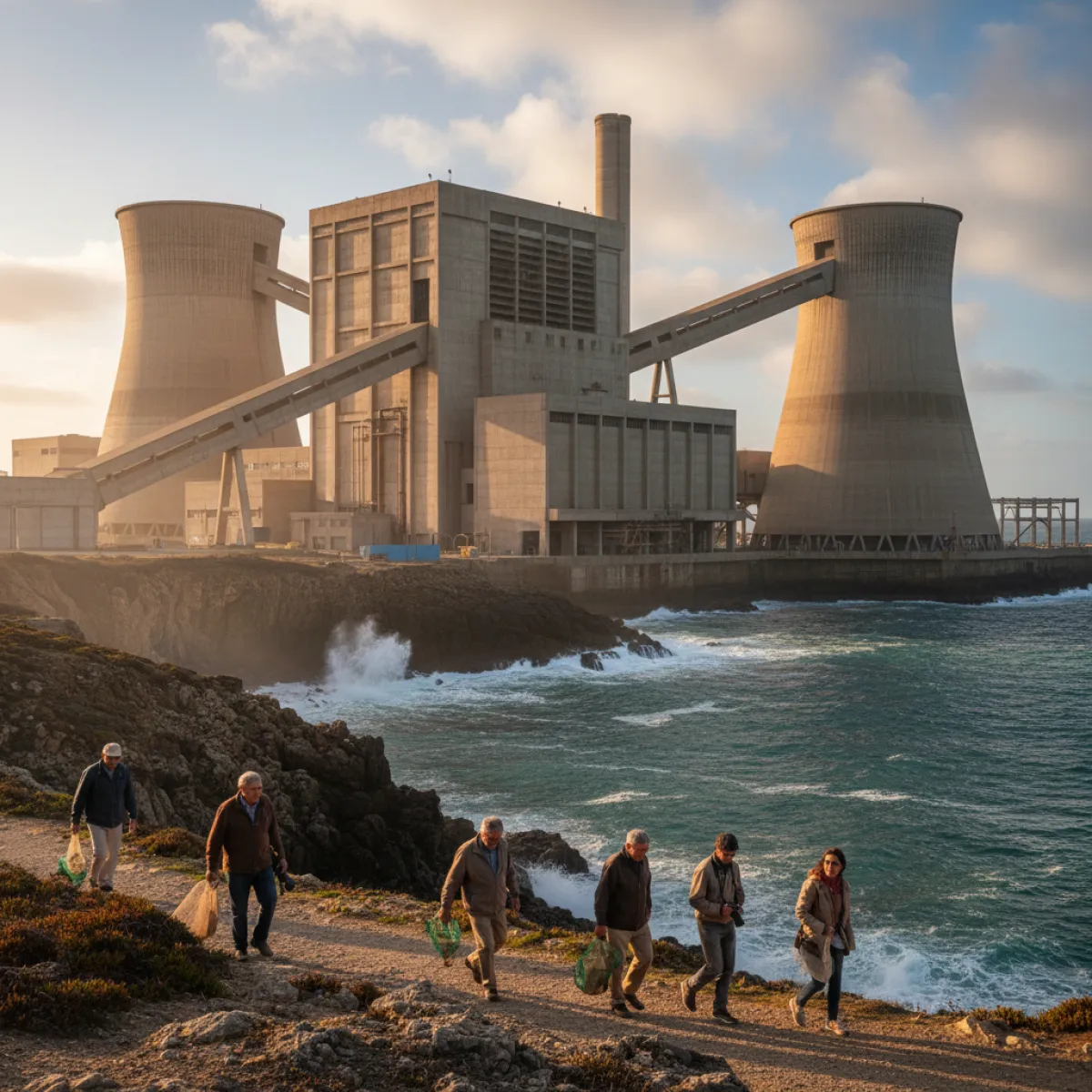
Concrete Geometries on the Alentejo Coast
Sines does not apologize for its existence. Unlike the whitewashed villages that dot the Alentejo coast, this port city defines itself through a superhuman scale, the rigidity of concrete, and the raw functionality of its infrastructure. It is a landscape of logistics and production that, to the observant eye, reveals a fascinating Brutalist aesthetic. Here, the Alentejo sheds its bucolic romanticism to embrace the heavy modernity of the 20th century.
Arriving in Sines is marked by the sight of refinery chimneys and the towering structure of the deep-water port. This is an architecture of necessity, where form follows function with an almost violent honesty. The grain silos, with their perfect cylindrical repetition, and the breakwaters composed of concrete tetrapods, form a visual vocabulary that challenges traditional notions of beauty. For those seeking classical serenity, Évora: The Slow Pulse of the Alentejo offers an absolute contrast, but in Sines, beauty lies in the strength of the material and the audacity of industrial design.
The Sines Arts Centre: An Aires Mateus Monolith
In the heart of the city, the Sines Arts Centre (CAS), designed by the Aires Mateus brothers, functions as a bridge between the historical past and the industrial present. Although technically contemporary, the building inherits the spirit of Brutalism in its massiveness and the expressive use of concrete and light. It is a block of white stone that appears to have been carved from a single volume, creating interior spaces where the void is as significant as the solid.
The CAS is not merely a cultural hub; it is an architectural manifesto. The way the building carves through the urban fabric, creating new perspectives on the medieval castle and the bay, exemplifies how modern architecture can dialogue with heritage without mimicking it. Walking through its minimalist corridors, one is reminded of the sobriety described in Stone and Silence: A Sentimental Guide to Évora, though here the stone is replaced by smooth surfaces and sharp angles that capture the Atlantic light in a dramatic fashion.
Social Housing and Urban Utopia
Exploring Sines requires a visit to the social housing neighborhoods built for Petrogal and port workers during the 1970s. These residential complexes are living examples of modernism's application in Portugal. Modular repetition, exposed concrete balconies, and the functional organization of space reflect an era of technological optimism and centralized planning. It is an architecture that prioritizes the collective, far removed from the individualism of contemporary constructions.
Strolling through these neighborhoods in the late afternoon, when the sunlight hits the concrete facades, is to understand the resilient soul of Sines. There is a dignity in the robustness of these structures that have withstood salt spray and time. For the traveler who prefers rigorous and structured itineraries, this urban exploration offers an intellectual satisfaction similar to what we propose in One Day in Évora: A Precision Itinerary for the Alentejo Capital, but with a soundtrack composed of the sound of cranes and the smell of industrial sea air.
Practical Guide: Navigating Industrial Sines
- What to Order: Forget urban sophistication. In Sines, luxury is the freshness of the fish. Seek out "A Palmeira" or "Cais da Estação" and order the Seafood Rice or the traditional fish migas. A serious lunch budget ranges from 25 to 35 euros per person.
- When to Go: Autumn is the ideal season. The light is softer, which benefits the photography of concrete structures, and temperatures are more clement than the scorching heat of the Alentejo summer.
- Logistics: Sines is a city to be explored on foot in its historical zone and the Arts Centre, but a car is indispensable for visiting the Fishing Port and the peripheral industrial zones, where the true scale of Brutalism reveals itself.
Sines is a destination for those who appreciate rigor, texture, and the history of labor. It is a city that demands a patient gaze, capable of finding poetry in a coal-unloading structure or the symmetry of a fuel reservoir. At the end of the day, the transition from concrete to the sand of Vasco da Gama Beach reminds us that, even on the most industrial edge, the Atlantic remains the absolute master of the landscape.
