The Dão Wine Route Around Viseu: A Beginner's Guide
Viseu has no train, and that tells you everything: the Dão route is done by car, slowly. An honest beginner's guide, from Encruzado to mountain cheese, with the city's best cafés and tables along the way.
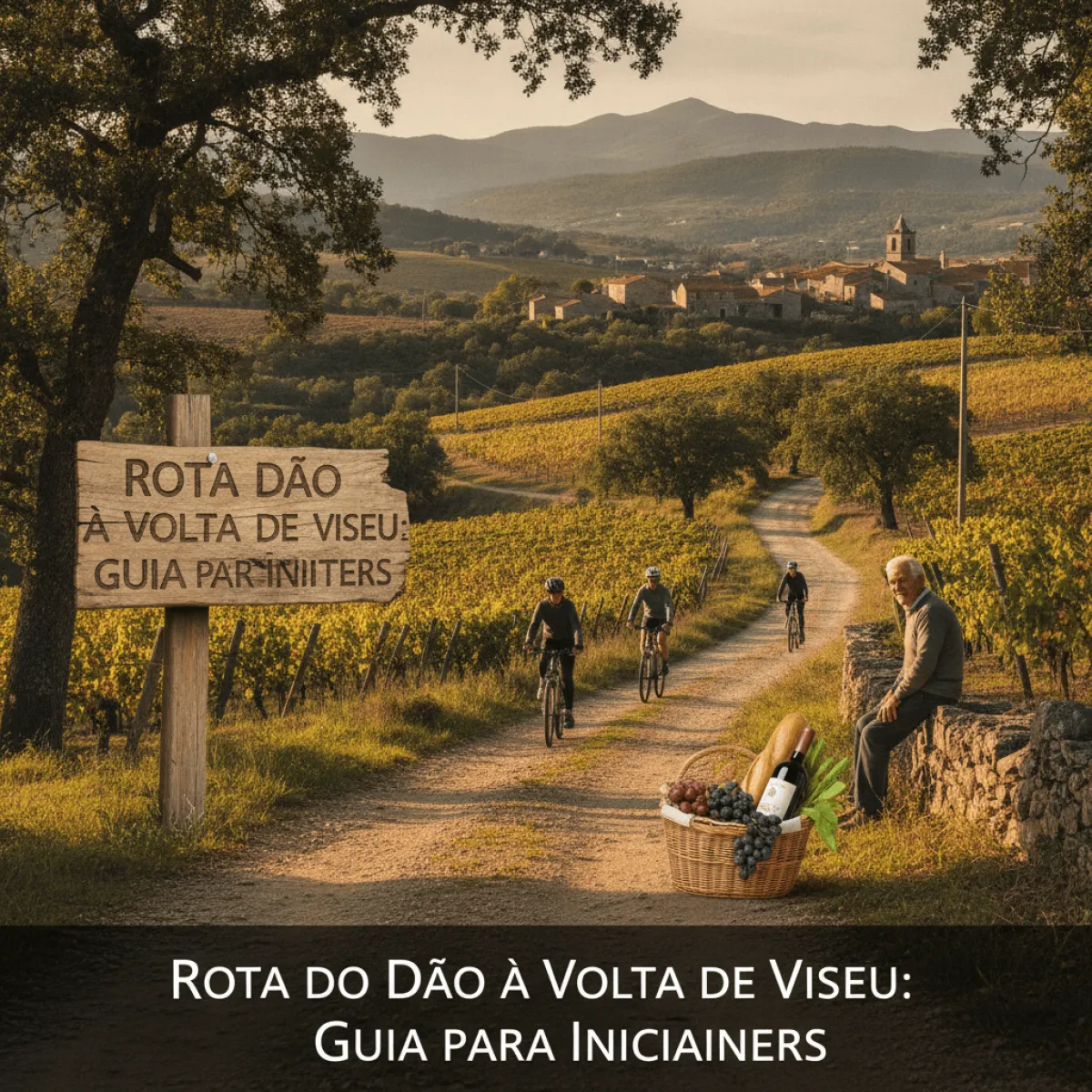
Here is something nobody tells you about Viseu before you arrive: there is no train. It is probably the largest district capital in Portugal without a working railway station, and that single fact tells you everything you need to know about the Dão wine route. You do this by car, slowly, and ideally with a sober person behind the wheel. From Lisbon it is about two and a half hours on the A1 and A25; from Porto, an hour and a half. There is no shortcut. And that is a good thing, because the landscape of pine, granite and low vines around Viseu is exactly what you came to see.
The Dão is, for my money, the most underrated wine region in Portugal. Everyone bangs on about the Douro and the Alentejo, and the Dão sits quietly in between, tucked among the Serra da Estrela, the Caramulo and the Buçaco hills, sheltered from extremes by those mountains like wine in a granite bowl. The soil is genuinely granitic (I am allowed the word here), poor and acidic, and it is precisely that poverty that gives these wines their nervous elegance. Do not expect the dense, sweet-fruited reds of the south. The Dão is leaner, more mineral, more inclined to think than to shout.
First, understand what you are drinking
Before you head out into the countryside, spend a morning getting to grips with the grapes. Touriga Nacional, Portugal's flagship variety, originates here (the Douro can forgive me). It gives the best reds their backbone and that scent of violet and bergamot. Alongside it grow Alfrocheiro, Jaen and Tinta Roriz. But the real secret of the Dão, the thing you should taste first even if you consider yourself a red drinker, is the white Encruzado. It is one of the finest white grapes in the country: structured, with a lemony acidity and the ability to age for years in bottle. A well made Encruzado holds its own against Burgundy at twice or three times the price.
For an honest introduction without leaving town, start at the regional wine commission's shop in Viseu, where you can taste references from several estates and work out the style before committing to a visit. Confirm hours and tasting terms locally, as they shift with the season. The advantage is obvious: you taste ten producers in an hour and learn which ones you like, instead of driving forty minutes to an estate whose wine turns out not to be your thing.
How to plan: three estates, not ten
The beginner's mistake is wanting to see everything. Don't. Two or three visits a day at most, with time to eat and digest. The Dão estates are scattered across municipalities like Mangualde, Nelas, Carregal do Sal, Penalva do Castelo and Tondela, almost all within 20 to 40 minutes of Viseu. Always book ahead: these are not the industrial Douro cellars with coaches parked outside. Many are family houses where the winemaker or owner welcomes you personally, and that takes a phone call or email in advance.
My suggested logic for a first day: a classic estate in the morning to understand the traditional Dão, lunch at a winery with a restaurant, and a more modern or grower-led estate in the afternoon. Save the second day for the part that makes the Dão special, which is not only the wine.
The Dão is not only about wine
Here is my strong opinion: if you come to the Dão only to taste wine, you are wasting half the trip. This is the land of Serra da Estrela cheese, that buttery, thistle-set cheese you eat with a spoon when it is properly ripe. A few kilometres from Viseu, in Penalva do Castelo, Casa da Ínsua is one of those stops that justify the detour, and you can pair it with a workshop where you learn to make Serra da Estrela cheese with your own hands. Tasting an Encruzado next to a mountain cheese you made yourself is the kind of experience you do not forget, and it teaches you more about pairing than any course.
If it rains, or if you simply fancy a different day, Viseu has a tile-making tradition worth getting under the skin of. A tile painting workshop with Mestre António Cruz is the perfect excuse to understand why the city wears those blue and white panels everywhere. You leave with a piece you painted yourself, which beats another fridge magnet.
Where to eat and rest between tastings
Tasting wine on an empty stomach is a recipe for a miserable late afternoon. Happily, Viseu eats well and without fuss. The old centre, around the cathedral and the Adro, is full of options, but I have my favourites.
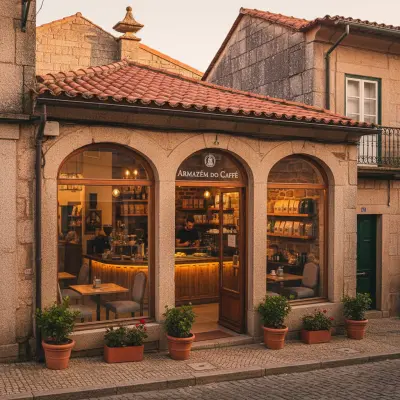
For a proper lunch or dinner, Armazém do Caffè is a safe bet: produce-driven cooking, a relaxed room, and a wine list where you will find good Dão references by the glass, which is ideal when you want to taste without opening a whole bottle. Ask the staff to suggest a local Dão rather than reaching for a familiar brand; that is how you discover the small growers.
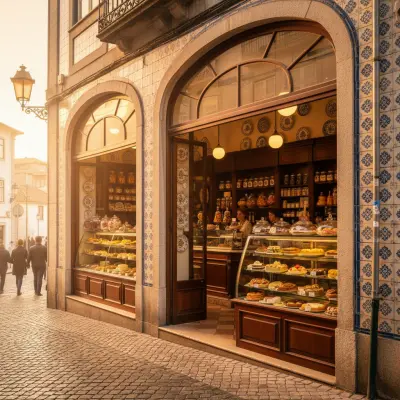
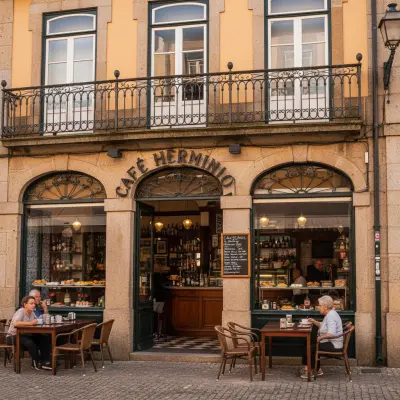
To start the day, skip the hotel breakfast. Café Hermínio is a Viseu institution, one of those neighbourhood cafés where they pull your espresso and the counter is the centre of the universe at eight in the morning. It is the place to take the city's pulse before you pick up the car. And mid afternoon, when your blood sugar dips between one estate and the next, Confeitaria Amaral sorts you out with the region's convent pastries. The Dão has a tradition of egg-rich sweets that pair surprisingly well with an older red or a fortified wine, if the estate has one.
What to buy and what to spend
Good news for your wallet: the Dão remains one of the best value wine regions in the world. A serious red from a respected estate often sits between 8 and 15 euros at the source, and a mid-range Encruzado costs about the same. The top bottles, the single-vineyard wines and old reservas, climb to 25, 40 euros or more, but even those are bargains next to equivalent wines from other regions.
Tastings at the estates vary: some are free if you buy, others charge a token fee that comes off your purchase. Always confirm when you book. My practical tip: bring a cardboard box or a padded cabin bag, because you will buy more than you expect, and shipping out of Portugal is expensive.
- For a red to take home: a classic Dão blend from an estate with history, to understand the regional style.
- For a white: an Encruzado, no question. Keep it two or three years and thank me later.
- To impress someone: a single-variety Touriga Nacional or a single-vineyard wine.
- To drink now: any young rosé or white from the region, perfect for summer.
When to go
Harvest season, in September and early October, is magic: the estates smell of must, baskets of grapes are everywhere and the winemakers are excited (and exhausted). But it is also the busiest time, so book weeks ahead. Spring, from April to June, is my favourite: the vines are green, the days are long and there are fewer people about. Winter is rawer and some small estates close to the public, but the trade-off is tasting reds beside the fire, which is how the Dão has always been drunk.
Set aside at least two days. One for the estates west and south of Viseu, another for the Penalva do Castelo and Mangualde side, with the cheese stop in the middle. And if a morning is left over, get lost in Viseu's old centre, climb up to the cathedral, see the Grão Vasco museum, and realise this city has far more than wine.
Honestly
The Dão will not ambush you with drama. It has no Douro plunging into a river, no crowds queuing for the photograph. It is a region for people who like driving slowly along back roads, stopping at a cellar where the owner tells you the story of each vineyard, and heading back to Viseu at dusk with a full boot. This is part of our series of honest guides, like the one on Coimbra's Queima das Fitas or our walking routes around Caldas da Rainha: we tell you what is worth it and what you can skip.
And what can you skip? Estates that sell the experience more than the wine, with big shops and assembly-line tastings. The real Dão is the opposite of that. It is small, it is stubborn, it is granite and Encruzado. Drink it slowly.