The Art of Azulejo in Viseu: A Tile Painting Workshop with Mestre António Cruz
Learn the ancestral art of majolica with Mestre António Cruz at his historic studio in Viseu. A hands-on workshop where you can paint your own traditional tile using 17th-century techniques and metal oxides.
Ceramic Heritage in the Heart of Viseu
Viseu is often recognized for its imposing Cathedral, Roman walls, and the legacy of the master painter Grão Vasco. However, there is a layer of history lining the city's facades that tells a silent but persistent narrative: the azulejo. Walking through the historic center means coming across panels that narrate biblical episodes, scenes of daily life, and geometric patterns that have survived the centuries. For those who wish to go beyond passive observation, the city offers a rare opportunity to learn the ancestral techniques of tile painting at the Oficina Cerâmica de António Cruz.
Located in one of the city's most authentic corners, just a few steps from the riverside area and the majestic Cathedral, Mestre António Cruz's studio is not just a workplace, but a sanctuary for the preservation of a craft that risks being lost in the era of mass production. Mestre António Cruz, with over three decades of experience, dedicates himself to the manual painting of tiles, conservation, and restoration, keeping alive the majolica tradition that characterizes Portuguese tilework.
The Space and the Master
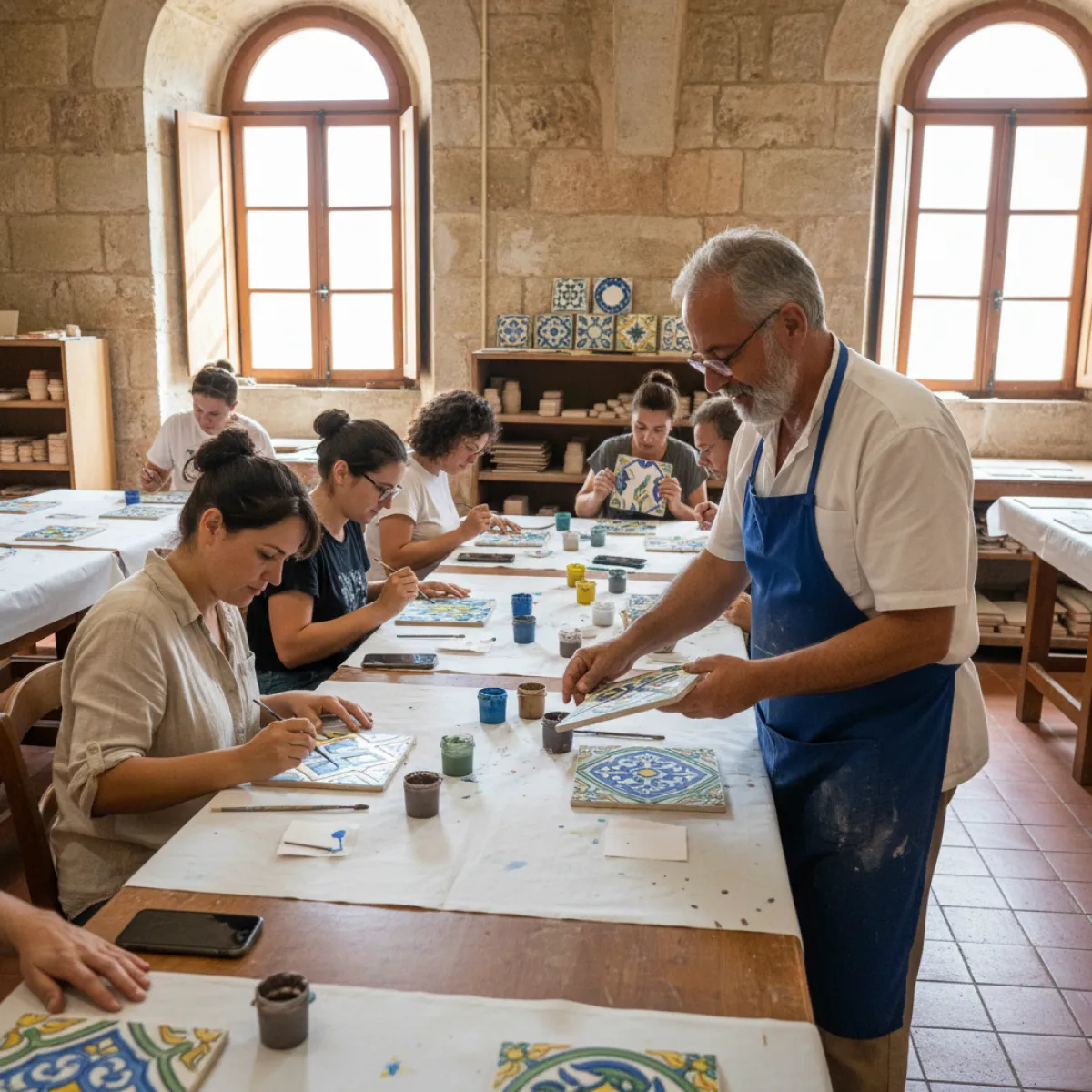
Entering the Ceramic Studio, situated in Largo da Paz, is like stepping back in time. The smell of damp clay and glaze dust mixes with the soft light coming through the windows, illuminating benches filled with fine-bristle brushes, jars of metal oxides, and pieces in various stages of drying. António Cruz is a craftsman of few but precise words, whose knowledge is manifest in the firmness of his stroke and the passion with which he explains the chemistry behind the colors.
Before starting the practical part, the workshop begins with a brief immersion into the history of tiles in Viseu. The master explains how the city became an important center for this art and how techniques evolved from Hispano-Moresque influences to the blue and white Baroque style that dominates the national imagination. This contextualization is essential to understand that every brushstroke is part of a technical lineage dating back to the 17th century.
The Majolica Technique Step by Step
The workshop focuses on the majolica technique, which consists of painting onto raw glaze. Unlike painting on fired ceramics, mistakes here are difficult to correct, requiring focus and a light hand. The process is meticulous and divided into several fundamental stages that participants execute under the direct guidance of the master.
The first stage involves choosing the design. The studio has a vast collection of 'bonecos', stencils made of perforated paper that allow the design's outline to be transferred to the tile. A small bag of charcoal powder is used to 'pounce' the design, leaving a dotted guide on the white, dusty surface of the unfired glaze. It is a moment of precision that sets the stage for the more creative phase.
Next comes the preparation of the paints. In traditional tile painting, common paints are not used, but rather metal oxides diluted in water. Cobalt produces deep blue, copper results in intense grass-green tones, and manganese creates outlines in shades of brown or purple. The participant learns how to load the brush properly, controlling the density of the paint so that the color does not run or appear too pale after firing.
Painting and the Alchemy of Color
Painting on raw glaze is a unique sensory experience. The surface absorbs the water from the paint almost instantly, forcing the painter to be decisive with their strokes. Mestre António Cruz teaches the 'chiaroscuro' technique, fundamental for adding volume and depth to floral motifs or historical figures. It is fascinating to observe how the grayish tones of the oxides, which look dull during application, will transform into bright and translucent blues after passing through the kiln at 980 degrees Celsius.
During the two-hour activity, the silence of the studio is only interrupted by the master's occasional advice and the sound of the brush sliding. This is a pure 'slow travel' experience, where time seems to dictate its own rhythm, far from the rush of conventional tourism. Upon finishing the piece, the tile stays in the workshop for the final firing, a process that takes about 24 hours between heating and the slow cooling necessary to prevent cracks.
Practical Tips for Participants
To make the most of this experience at the Oficina Cerâmica de António Cruz, it is recommended to wear comfortable clothing that you don't mind getting dusty from the glaze or splashed with oxide. Although the master provides aprons, the activity involves handling materials that can stain delicate fabrics. It is essential to book in advance, as sessions are usually private or for small groups, ensuring each student receives individual attention.
Since the piece needs to be fired in the kiln, you will not be able to take it with you on the same day. The workshop offers a worldwide shipping service, properly protected, or you can arrange to pick it up two or three days later if you plan to stay in the Dão region for longer. The best time to schedule the workshop is during the morning, taking advantage of the natural light that bathes the studio and allowing the rest of the day to be dedicated to exploring the surroundings.
Complementing the Experience in Viseu
After spending a morning focused on the minute details of ceramics, there is nothing like walking to the old commercial area to see how these patterns apply to the scale of local architecture. You can take a strategic break at Confeitaria Amaral, famous for its Viriatos, the typical Viseu pastry named after the legendary Lusitanian warrior. It is the ideal place to observe the city's movement while enjoying excellent baking.
If you prefer a more classic and historic setting, Café Hermínio is a mandatory stop. This space maintains the soul of the old gathering cafes, conveniently located near several buildings clad in historic tilework. Sitting here with a coffee and a newspaper is the perfect way to end a day dedicated to culture and traditional Viseu craftsmanship, reflecting on the tile you just painted and its connection to this thousand-year-old city.