Spring Hiking on the Rota Vicentina: A Coastal Guide to Castelo Branco's Heritage
Explore the wild beauty of the Rota Vicentina before discovering the granitic elegance and silk embroideries of Castelo Branco in this spring journey through Portugal.
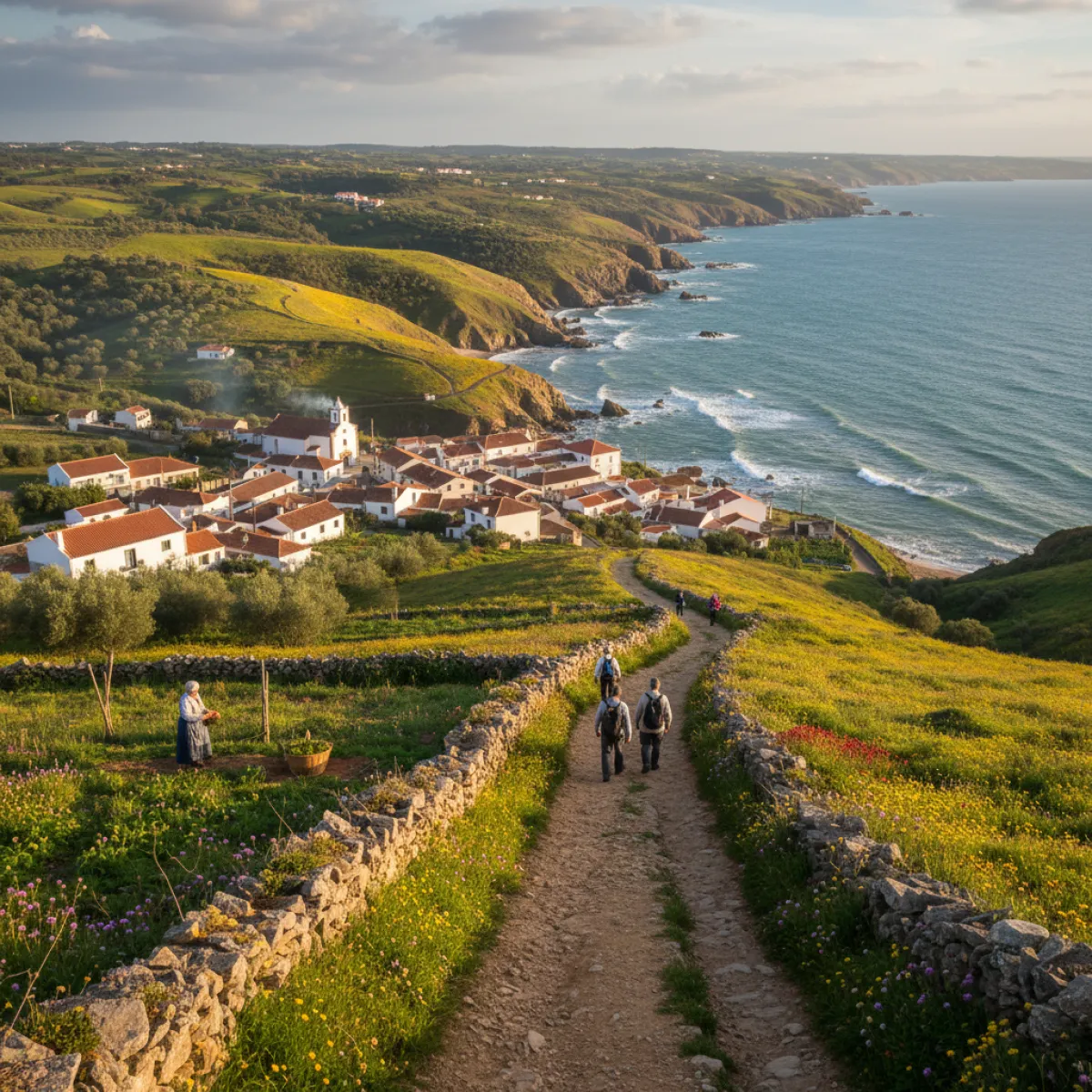
The Scent of Rockrose: Spring as a State of Mind
There is a precise moment in the Portuguese spring when the air ceases to be merely a mixture of oxygen and nitrogen and becomes a dense, perfumed, almost tactile substance. It is the scent of the *esteva* (rockrose), that sticky resin that covers the hills of Alentejo and Beira Baixa, releasing an earthy, sweet aroma under the first warm sun of April. For those seeking the Rota Vicentina, this is the starting gun. However, this year we propose something more ambitious than a simple hike along the Atlantic cliffs. We suggest a dialogue between the untamed sea and the granitic sophistication of the interior, culminating in the elegance of Castelo Branco.
The Rota Vicentina, and specifically the Fishermen’s Trail, is often described as one of the best coastal hikes in the world. There is no brochure-induced exaggeration here; only the brutal and beautiful reality of black schist cliffs rising against an ocean that never learned to be calm. But spring brings a necessary softness. The dunes, which in summer are punitive deserts, are covered with wildflowers, vibrant yellows, deep purples, and the pristine white of sand that seems to glow with its own light.
From the Fishermen's Trail to the Heart of Beira
Hiking the Rota Vicentina in spring requires planning that respects the whimsical weather. The sun can be strong, but the north wind, known as the 'nortada', keeps temperatures ideal for physical exertion. We recommend starting in Vila Nova de Milfontes and heading south toward Almograve. It is a stretch of about 15 kilometers that encapsulates the Vicentine experience: the Mira River meeting the sea, passing through deserted beaches, and the constant company of storks which, uniquely in the world, nest on these sea-battered cliffs.
However, the true soul of Portugal in spring is not exhausted on the coast. To understand the diversity of this land, one must turn one's back on the sea and head inland, where the horizon becomes higher and the air drier. This transition is what defines The Measured Pace: A Seven-Day Passage from Lisbon to Porto via the Ria, an approach that values deceleration and the careful observation of changes in the landscape. As we move northeast, the cork oaks give way to centennial olive groves and, finally, to the granite that characterizes the Beira Baixa region.
Castelo Branco: The City of Roses and Silk
Arriving in Castelo Branco after days of coastal hiking is like entering a noble hall after a storm at sea. The city, often underestimated, holds some of the most exquisite treasures of Portuguese culture. The Jardim do Paço Episcopal (Episcopal Palace Garden) is the highlight, a labyrinth of boxwood and granite statues that, in spring, explodes in colors and fragrances. Here, the concept of a 'hike' transforms into one of contemplation.
But what truly sets Castelo Branco apart is its textile heritage. While on the coast fishermen mend nets, here women embroider feelings into silk bedspreads. Castelo Branco's Silk Embroidery: Decoding the Symbolism of Love and Nature is more than a craft; it is a visual code where each tree of life, each pair of birds, and each lotus flower tells a story of devotion and connection to the natural world. Seeing these pieces up close, with their satiny sheen on linen, is to understand a sophistication that the wild coastline does not allow.
Logistics and the Palate of the Interior
Planning a trip that links the Rota Vicentina to Castelo Branco requires logistics, but the rewards are immense. If you follow our Portugal Itinerary: A Week in the Heart of the Country, you will see that it is possible to integrate these two realities. In coastal Alentejo, your budget should account for small, charming guest houses where a night can cost between €90 and €150. In Castelo Branco, the offering is more classic, with four-star hotels at more competitive prices, allowing for accessible luxury.
Gastronomically, spring is the season of cheese and lamb. In Castelo Branco, you must taste the Queijo de Castelo Branco DOP, a soft-paste sheep's cheese with an intense flavor that rivals the famous Serra da Estrela. Pair it with a red wine from the Beira Interior, known for its minerality and structure. It is the perfect contrast to the fresh fish and goose barnacles you will have enjoyed days earlier on the Vicentine coast.
An Intellectual Detour in Coimbra
If your journey extends north from Castelo Branco, a detour to the city of students is mandatory. Coimbra: The Grammar of Time in Portugal’s Intellectual Capital offers an intellectual pause. Walking up the staircases of the country’s oldest university is a physical exercise as demanding as any coastal trail, but the prize is the view over the Mondego River and the sound of Fado echoing off secular stones.
Practical Advice for the Hiker
For the Rota Vicentina, footwear is your most precious asset. Forget heavy mountain boots; opt for trail running shoes with good traction, as loose sand is your greatest enemy. In Castelo Branco, the tone changes: bring comfortable but elegant shoes, suitable for walking on Portuguese cobblestones while exploring the historic center. Spring in Portugal is an exercise in versatility, where you should be prepared for the radiant sun at noon and the sudden coolness of the Beira night. It is in this oscillation that the true pleasure of traveling through this country resides.
