Castelo Branco: Convent Sweets, Sheep Cheese and Real Flavour
Queijo de Castelo Branco DOP, cured with wild cardoon thistle for at least 45 days, and tigeladas baked in clay pots are two of the best reasons to eat in the Beira Baixa. In a city with no foodie hype, honesty is the main seasoning.
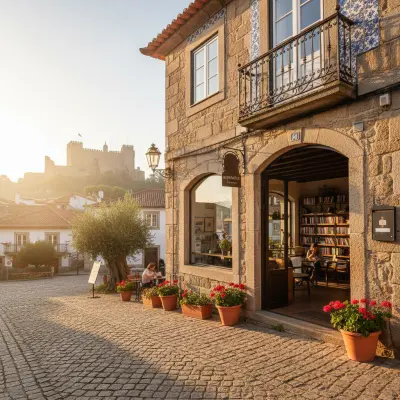
Castelo Branco doesn't photograph well. It lacks the postcard perfection of Óbidos and the foodie buzz of the Alentejo. Which is precisely why it's worth eating there. The cuisine of the Beira Baixa, with its convent-born sweets and sheep's cheese cured with wild thistle, is one of the most honest in Portugal. And honesty, in a country of tourist menus at 15 euros, is worth seeking out.
Queijo de Castelo Branco: Sheep, Thistle and Time
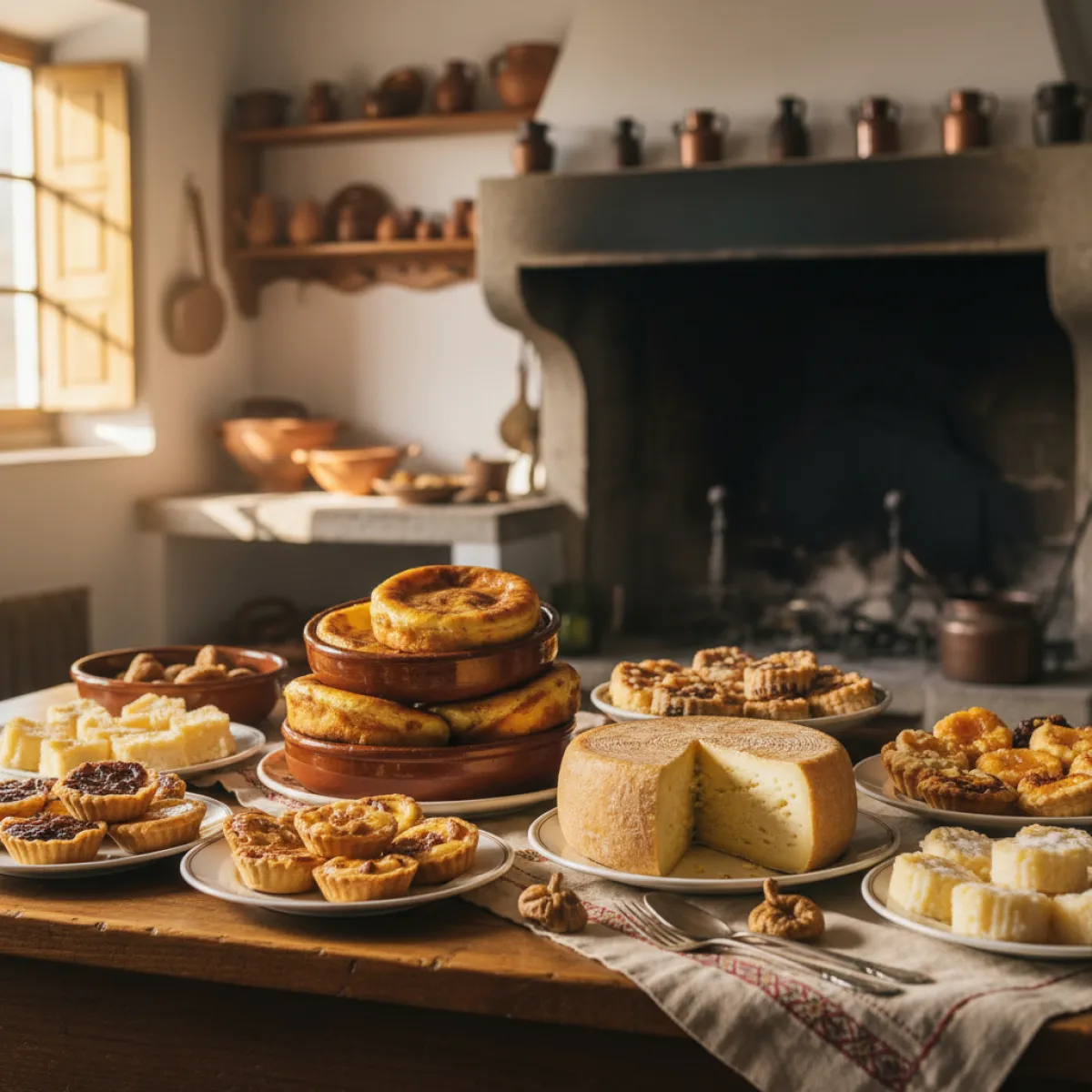
Let's start with the cheese, because in Castelo Branco cheese isn't a side note. It's the main event. Queijo de Castelo Branco DOP is made from raw sheep's milk, coagulated with cardoon thistle (Cynara cardunculus), the same wild plant used in Serra da Estrela. The difference is in the outcome: this is a firmer cheese, semi-hard, with a pronounced flavour that deepens with age. It requires at least 45 days of maturation. The "Velho" (aged) version goes for 90 days or more, developing a slightly spicy edge and a complexity that rivals far more expensive European cheeses.
The sheep that produce this milk graze outdoors year-round on natural and cultivated pastures. You can taste it. The milk has a character that confined sheep's milk simply cannot replicate. When you bite into a piece of aged Queijo de Castelo Branco with a drizzle of rosemary honey, you'll understand why locals don't lose sleep over Brie.
Where to buy? Any decent grocery in the city centre, but seek out small producers over supermarket brands. The gap in quality is vast. Expect to pay roughly 10 to 15 euros for a whole cheese weighing 800g to 1.3kg, depending on the ageing. That's a bargain for what you get.
Tigelada: The Sweet That Defines the Beira Baixa
If one sweet sums up Castelo Branco, it's the tigelada. It's not pretty. It has none of the elegance of a pastel de nata or the photogenic appeal of a layered cake. It's a batter of eggs, milk, sugar, flour, cinnamon and lemon zest, baked slowly in glazed clay pots (caçoilos) inside wood-fired ovens. The top comes out scorched, nearly black. Underneath, a wobbly, creamy texture that dissolves on the tongue.
The most interesting version swaps cow's milk for goat's milk and uses rosemary honey instead of sugar. It's more rustic, less sweet, with a gentle floral note from the honey. If you spot this variation, don't hesitate. It's the version grandmothers made.
The likely origin is conventual, like almost all egg-based sweets in Portugal. Convents had a surplus of eggs (they used the whites to starch habits and clarify wine), so nuns invented ways to use up the yolks. Hundreds of sweets were born across the country. The tigelada is Castelo Branco's contribution to that legacy.
Other Sweets You Shouldn't Skip
The tigelada gets the headline, but the Beira Baixa has a catalogue of sweets worth exploring. Borrachinhos are small cakes soaked in syrup, moist and intense. Broas de mel use local honey and spices, and they're particularly good in winter with a strong coffee. Bolo finto is the traditional wedding cake of the Beira Baixa: a dense, decorated cake given to guests. And esquecidos (literally "the forgotten ones") are rustic meringues supposedly born when someone left beaten egg whites in the oven and forgot about them. The name alone is worth the trip.
Then there are the nogados from Vila Velha de Ródão, made with walnuts and honey, proof that not all conventual sweets need eggs to work. If you're driving through the region, stop in Vila Velha de Ródão just for these.
Beyond the Sweet Stuff: The Beirã Table
Castelo Branco doesn't live on sugar alone. The savoury cooking of the Beira Baixa is sturdy, built for people who work the land. Roast kid (cabrito assado) from a wood-fired oven is the celebration dish. Maranhos, from nearby Sertã, are a kind of sausage made from lamb meat and stomach, slow-cooked until tender. Not for the squeamish, but extraordinary.
Empadas de Castelo Branco, stuffed with meat or fish, make the perfect standing snack in a pastelaria. And papas de carolo, a corn-based dessert, is the sort of thing that never appears on a modern restaurant menu but every grandmother in the region makes with her eyes closed.
For a more relaxed stop, try Repvblica, a good option for eating and drinking in a more contemporary setting. Not everything in Castelo Branco needs to be rustic.
The Context: Why This Matters
Castelo Branco's convent cuisine doesn't exist in isolation. It's part of a broader Beira tradition that connects landscape to plate in very direct ways. The cheese comes from sheep grazing the surrounding fields. The honey comes from rosemary growing on the hillsides. The thistle that curdles the milk grows wild in the region. There's nothing artisanal-chic about it. It's simply how things have always been done.
Castelo Branco is also a city with dimensions beyond food. The tradition of Castelo Branco's silk embroidery and its symbolism is as rich and rooted as the gastronomy, and understanding one helps you understand the other: both are expressions of a culture that prizes patience and detail.
Planning Your Visit
Castelo Branco is roughly 2.5 hours from Lisbon via the A23. If you're planning a week in central Portugal, it's an essential stop, especially if you combine it with Fundão or the Serra da Gardunha.
You don't need more than a day to explore the city's food scene, but two days are better. On day one, walk the historic centre, visit the Jardim do Paço Episcopal, and eat cheese and tigeladas. On day two, widen the radius: head to Vila Velha de Ródão for the nogados and the landscape, or drive up to the Serra da Gardunha.
The best time to visit is between October and May. The long-cured cheese is at its peak in winter, and convent sweets taste better when it's cold outside. In summer, Castelo Branco can top 40°C, and the last thing you'll want is a dense egg cake.
If you have time to explore more of the Centro region, don't miss Coimbra's street art murals, an excellent stop on the way back to Lisbon or Porto.
Practical Tips
- Buy cheese directly from local producers, not supermarkets. Ask to taste before buying: any serious seller will let you.
- Look for tigeladas in traditional pastelarias in the centre, not shopping mall cafés. The clay pot is the sign it's the real thing.
- If you're taking cheese in the car, ask for a more aged version ("velho"). It handles transport and heat better.
- Pace yourself. Beira Baixa cooking is not light, and you'll want to try everything.
- Check locally for opening hours of pastelarias and producers, especially on weekends.
Castelo Branco doesn't need a marketing campaign. It needs someone to sit down, order a cured cheese with honey, a freshly baked tigelada and a strong coffee, and realise that sometimes the best places to eat in Portugal are the ones nobody's trying to sell you.