Castelo Branco's Silk Embroidery: Decoding the Symbolism of Love and Nature
Discover the secrets behind the silk threads at the Castelo Branco Embroidery Interpretation Center. A fascinating journey where flowers and birds reveal messages of love, fertility, and centuries-old tradition.
A Legacy of Silk and Meaning in the Heart of Beira Baixa
In the historic center of Castelo Branco, the stone streets tell stories of a time when silk was the currency of elegance and embroidery was the silent voice of women. Castelo Branco's embroidery is not just a handicraft technique; it is a complex visual code, a narrative woven in silk threads on artisanal linen that has survived centuries of history. Participating in the experience of decoding this symbolism is to enter a world where every flower, every bird, and every knot has a profound meaning linked to the cycles of life, fertility, and, above all, love.
The Starting Point: The Embroidery Interpretation Center
The experience begins at the Castelo Branco Embroidery Interpretation Center (CIB), housed in a meticulously restored historic building in Praça Camões. Upon entry, the visitor is confronted with the scale and beauty of the traditional bedspreads (colchas). However, the true value of this visit lies in the deconstruction of the elements. The exhibition is designed to guide the eye through different rooms, explaining everything from the origin of the raw material, silkworm rearing and spinning, to the complexity of the embroidery stitches.
The journey is a sensory immersion. You can touch the different textures of the linen and see up close the brilliance of the 'seda frouxa' (untwisted silk), which gives the embroidery that satiny and vibrant appearance that characterizes it. The lighting in the rooms is controlled to preserve the centuries-old pieces, creating an atmosphere of reverence and discovery.
Decoding the Code: The Visual Alphabet
The heart of the experience is the 'decoding'. A specialized guide or the center's interactive panels reveal that the designs are not merely ornamental. The Tree of Life, the central motif of many bedspreads, represents the continuity of generations and the connection between the earth and the divine. But it is in the details that the symbolism of love becomes most evident:
- The Carnation and the Rose: They represent man and woman, respectively. When they appear together in a design, they symbolize the union and balance between the genders.
- The Albarrada: The flower vase that holds the entire composition is the symbol of the home and the family. It is the foundation upon which life (the flowers) grows.
- The Pomegranates: With their exposed seeds, they are the ultimate symbol of fertility, abundance, and family solidarity.
- The Two-headed Eagle: Often interpreted as the union of two kingdoms or, on a more personal level, the perfect fusion of two wills in a marriage.
- Chains and Bows: They symbolize the fidelity and unbreakable commitment of matrimony.
Understanding these symbols transforms the observation of a piece of art into a reading of a love letter or a contract of hope for a new family.
The Workshop: Where the Magic Happens
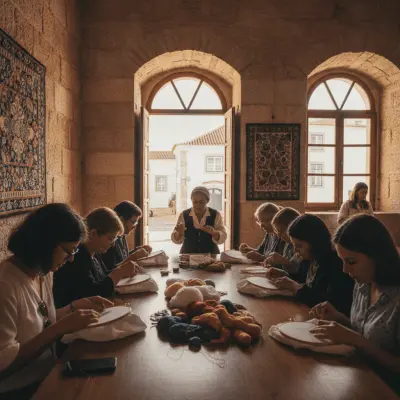
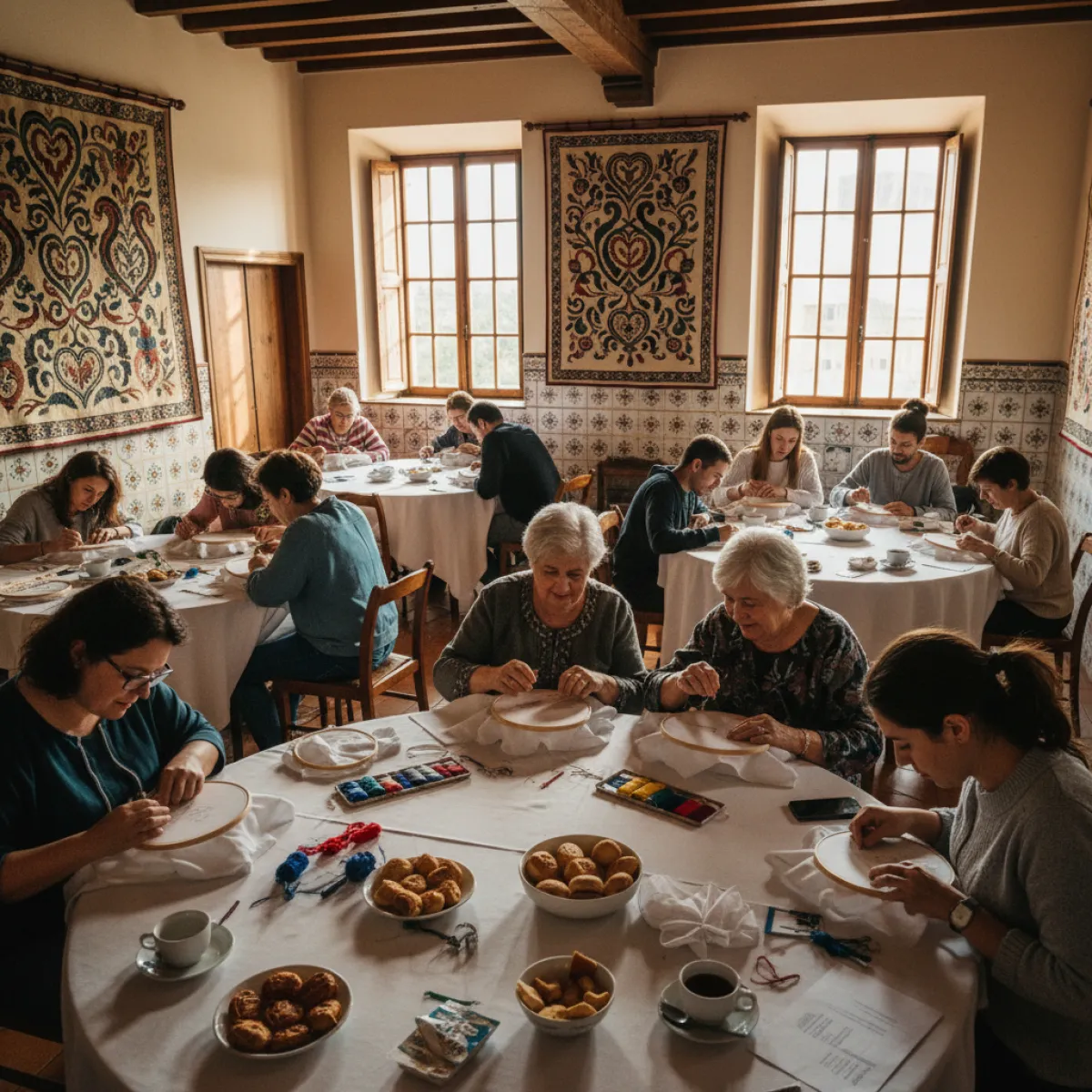
After understanding the theory, the experience takes visitors to the Workshop-School (Oficina-Escola). Here, the silence is only interrupted by the rhythmic sound of needles passing through the linen stretched on large wooden looms. This is a privileged moment to observe the master embroiderers in action. They master over 50 types of stitches, with the 'ponto lançado' being the most emblematic, allowing for the creation of color surfaces that look like paintings.
Visitors can observe the meticulous technique of how the embroiderers follow the designs sketched with charcoal or pencil on the linen. Often, it is possible to exchange a few words with these guardians of knowledge, who share stories about the patience required, a single bedspread can take more than a year to be completed by several hands.
Practical Tips for Your Visit
To make the most of this cultural immersion, it is recommended to start the morning with a visit to the Silk Museum (Museu da Seda), located just a few minutes' walk away, to understand the biological cycle of silk before seeing the final product at the CIB. The best time to visit is during the week, when the workshop is in full operation and the embroiderers are present.
What to bring: Curiosity and, if possible, a magnifying glass to appreciate the perfection of the stitches. No specific clothing is required, but comfortable shoes are essential for walking through the cobblestone streets of the historic center. When planning your trip, try to avoid the hottest hours in summer, although the interior of the center is air-conditioned and offers a cool and inspiring refuge.
Booking Information
The experience can be lived as a self-guided tour or through a pre-booked guided visit, which is highly recommended for those who wish to deepen their decoding of the symbols. The Interpretation Center is managed by the Municipality of Castelo Branco and serves as the primary guardian of this art form, classified as Intangible Cultural Heritage.