Sines: Vasco da Gama's Castle and the Sea That Made Him
The Fortaleza de São Clemente in Sines, where Vasco da Gama was born, holds a free museum covering over two thousand years of maritime history within its walls. From Roman garum to Portugal's largest container port, this is a town that never turned away from the sea.
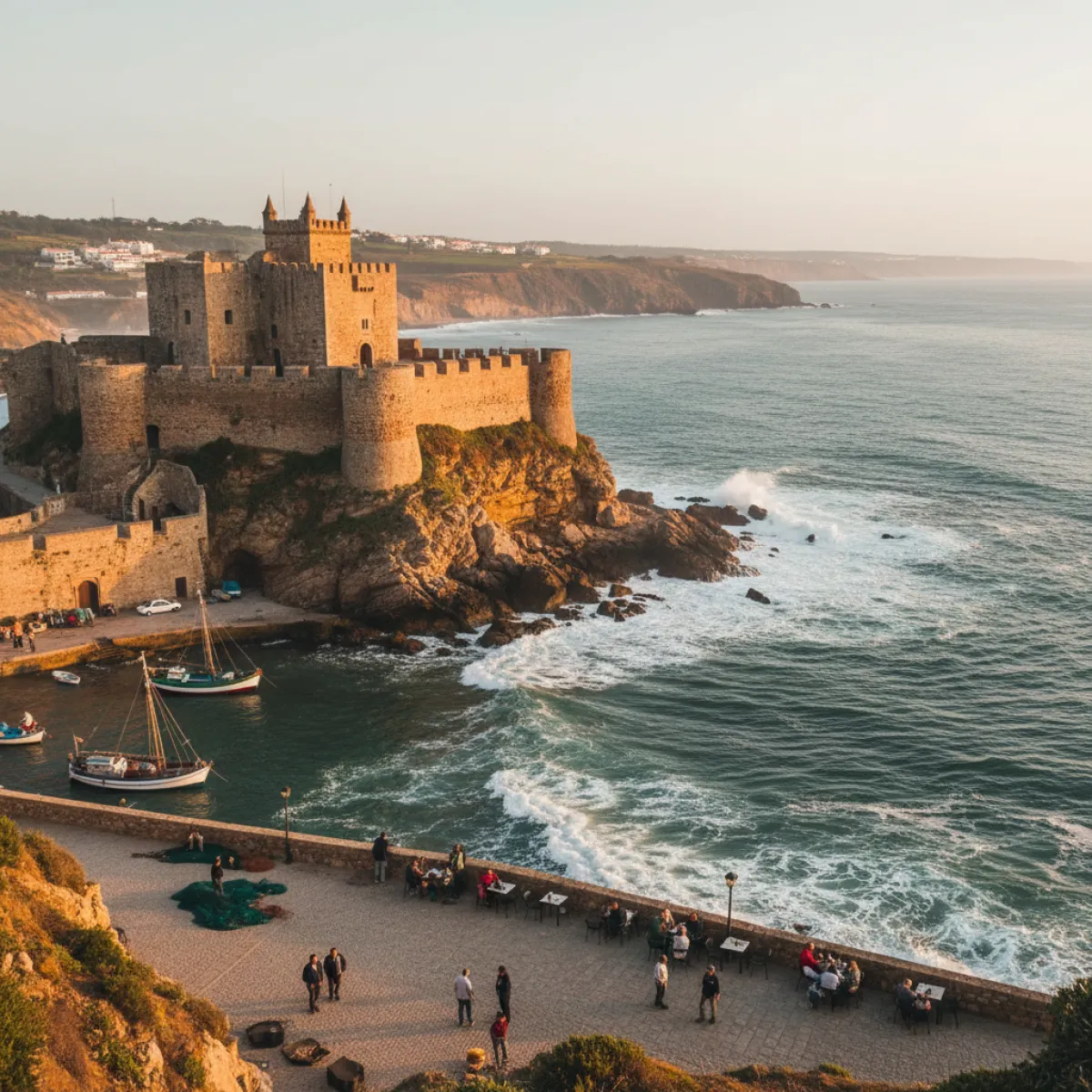
There's a neat irony about Sines. The town that gave the world the man who opened the sea route to India is now Portugal's largest container port. If Vasco da Gama came back, he'd probably recognize the bay, the cliffs, the southwest wind, the smell of salt, but the cargo ships on the horizon might throw him. Or maybe not. Sines has always been about the sea. Always been about trade. The castle where he was born wasn't some aristocratic vanity project; it was a working fortress, built to watch over a coast where everything, fish, salt, ambition, moved by water.
Fortaleza de São Clemente: More Than a Birth Certificate
Let's be honest: most people visit Sines Castle because they read that Vasco da Gama was born there and want the photo. That's fine. But if that's all you do, you're missing the good stuff.
The Fortaleza de São Clemente was built in the first half of the 15th century, at the highest point in town, looking straight down over the bay. Estêvão da Gama, Vasco's father, was the castle's governor, and the navigator is believed to have been born there around 1469. But the castle existed before the Gama family and long outlasted them. What makes the place genuinely interesting is what happened within those walls over the centuries.
Since 2008, the castle has housed the Museu de Sines, installed in the fortress's interior structures, with the Casa de Vasco da Gama occupying the keep. The exhibition is surprisingly good for a town this size. It's not a static museum full of sad replicas, there are interactive multimedia sections covering the region's history from the Paleolithic to the 20th century, with a particular focus on the Age of Discoveries and the routes Vasco da Gama charted.
Admission is free. It's open Tuesday to Sunday, 10am to 1pm and 2pm to 5pm (closed Christmas, New Year, and Easter). If you're in Sines and don't visit the museum, you're literally leaving free history on the table.
The Maritime History Under Your Feet
Before Vasco da Gama, before the medieval knights, the Romans were already using Sines as a port and industrial center. The bay served as the port for the civitas of Miróbriga, whose Roman ruins sit a few kilometers away near Santiago do Cacém, and during the Roman occupation, both Sines and the Ilha do Pessegueiro operated as hubs for an organized fishing industry, complete with fish-salting tanks and production of garum, the fermented fish sauce that Romans couldn't get enough of.
That means when you walk through the historic center of Sines, you're treading ground that has seen more than two thousand years of continuous maritime activity. From Roman garum to salted cod, from India-bound carracks to modern tankers, this town's relationship with the sea has never stopped.
If you want to feel that continuity with your feet on the ground, literally, the Vasco da Gama Trail in Sines is the best starting point. The route connects the castle to the coves around town, giving you a perspective no museum can: the coast as the navigators saw it, with the wind in your face and the whole Atlantic ahead.
Forte do Revelim and the Modern Sea
Walking down from the castle toward the port, you'll find the Forte do Revelim, which now houses the Sines Arts Center. This fort complemented the Fortaleza de São Clemente in coastal defense and today serves as a cultural space worth visiting, especially for its role in FMM Sines, the Festival Músicas do Mundo (World Music Festival), which has run every July since 1999.
If you can time your visit with the festival, do it. It's the biggest world music festival in Portugal, with concerts spread across the castle, the historic center, and the beach. But fair warning: Sines in July is a completely different town from Sines in November. Pick your poison. I prefer March or October, the castle practically to yourself, the low Alentejo light gilding the walls, and restaurant tables without a wait.
What to Eat (and How Not to Get It Wrong)
Sines is a fish town. Seems obvious, but it needs saying: if you come here and order a steak, you're doing it wrong. Fresh grilled fish, sea bass, bream, white seabream, is the safe bet at virtually any restaurant in the center. Fried cuttlefish is a regional specialty along the Alentejo coast, and in Sines it's particularly good.
The area near the fishing port, in the lower part of town, is where you'll find the most honest options. Don't look for magazine-worthy decor, look for paper tablecloths and house wine from jugs. If you see fishermen having lunch, that's your sign.
For something more elaborate, açorda de marisco is a dish you'll find in the region and one worth trying, Alentejo bread soaked in shellfish broth with cilantro and a poached egg. It's not pretty, but it's devastatingly good.
Rough Costs
A grilled fish lunch with sides, house wine, and coffee typically runs €12 to €18 per person at restaurants in the center. More tourist-oriented spots near the beach may charge more, check locally before sitting down.
The Beaches: Vasco da Gama and São Torpes
Praia Vasco da Gama sits right in the heart of town, sheltered from the wind by the bay, with beach facilities and terraces. It's practical and family-friendly, not the most beautiful beach in the Alentejo, but convenient if you're doing a castle-plus-beach day.
For something more interesting, head to São Torpes, a few kilometers south. The beach has an unusual feature: the water is warmer than normal thanks to the nearby thermoelectric power station. Yes, it reads strangely. But the result is that while the rest of the Alentejo coast has you entering the water through gritted teeth, São Torpes is almost pleasant. The beach is also good for surfing.
And if you want to go further, Porto Covo, 13 km south, has some of the most beautiful beaches on this coast, including Praia da Samoqueira, tucked between cliffs with natural rock pools.
Getting There and How Long to Stay
Sines is about an hour and a half from Lisbon via the A2. There's no direct train, the nearest station with regular connections is Santiago do Cacém, and from there you'll need a car or local transport.
One day is enough for the castle, the museum, and a proper lunch. But with two days, you can combine Sines with Porto Covo and the Ilha do Pessegueiro and turn it into a serious Alentejo weekend.
If you're planning a longer exploration of inland Alentejo, consider extending to Portalegre, it's a completely different world from the coast. Our weekend guide to Portalegre is a solid starting point, and if you like walking, the neighborhood walking guide shows a side of the city that conventional guides miss. When hunger strikes, the Portalegre food guide sorts you out without tourist traps.
What Actually Matters
The Fortaleza de São Clemente isn't just the place where Vasco da Gama was born. It's the point from which you can read the entire maritime history of a town that has lived from the sea for over two thousand years. From Roman garum tanks to the interactive museum inside the keep, from 16th-century carracks to the container ships now filling the horizon, Sines is a town where past and present are connected by the same element: the Atlantic.
Come for the castle, stay for the grilled fish, and if the weather cooperates, end your day on the ramparts watching the sun disappear behind the cape. You don't need metaphors for that. You need a cold beer and the right chair.
