Sines Beyond the Refinery: Vasco da Gama's Hometown
Sines is more than refineries and container ships. Vasco da Gama's birthplace hides an Atlantic-facing castle, near-deserted beaches to the south, and fried cuttlefish that rivals the best in Setúbal.
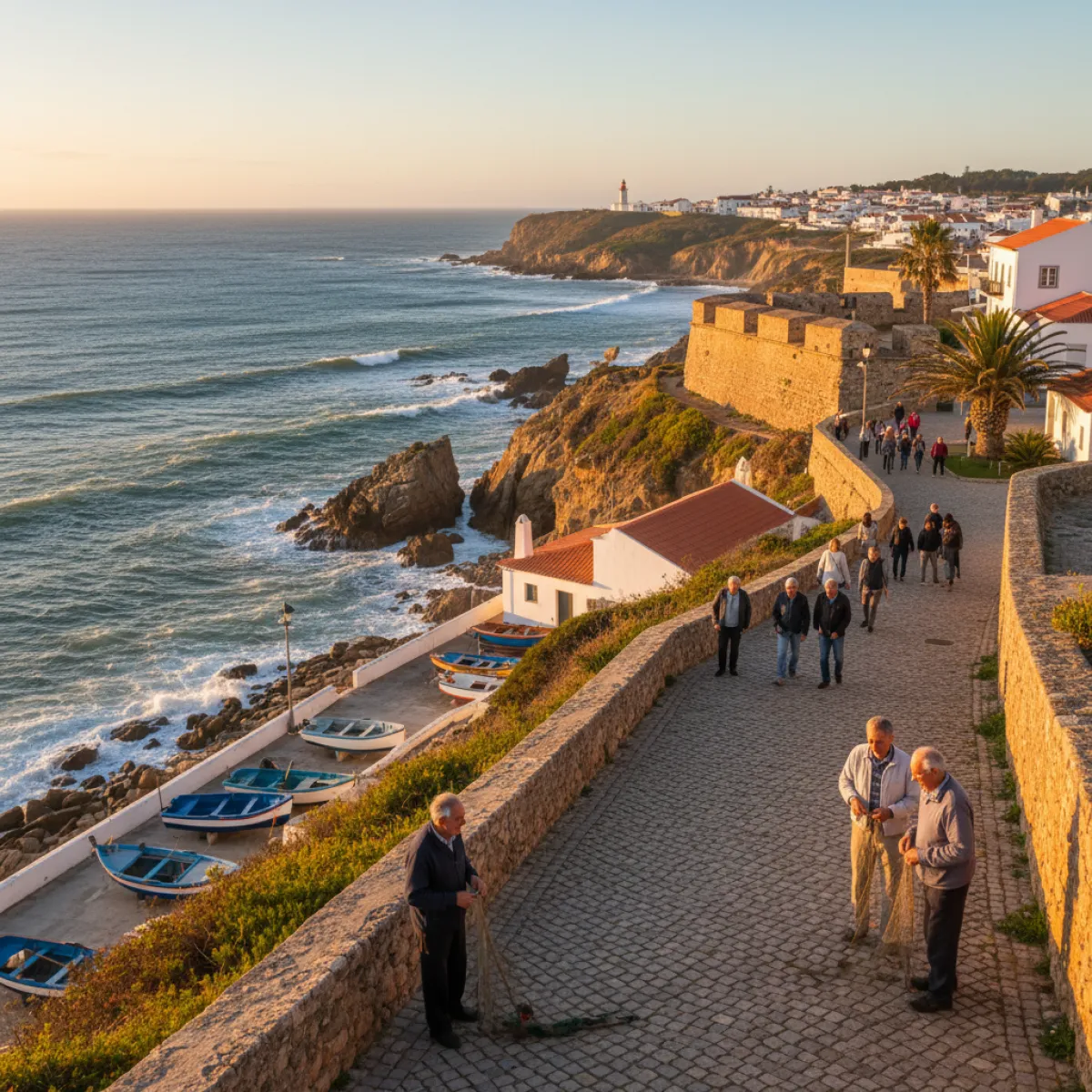
Let's get the elephant out of the room: when most people think of Sines, they think of oil refineries, container ships, and an industrial port that dominates the Alentejo coastline. Fair enough, the industrial complex is hard to miss. But Sines is also the birthplace of Vasco da Gama, the man who sailed to India and changed the course of world history. And the town itself, once you look past the smokestacks on the horizon, has more to offer than most visitors give it credit for.
I'll admit I drove past Sines for years, always heading south to Porto Covo or the Vicentine Coast, dismissing it as an industrial zone with a beach attached. That was a mistake. Sines has a compact old town perched above the Atlantic, a castle with panoramic views, beaches that most tourists never find, and some of the best grilled fish on the Portuguese coast.
The Castle and Old Town: Start Here
Sines Castle is small as Portuguese castles go, but its position is commanding. Built in the 13th century and reinforced over the centuries, it now houses the Museu de Sines. Admission is free or nominal, check locally. The real draw is the view: the fishing port below with its sun-bleached boats, and the open Atlantic stretching to the horizon. According to tradition, Vasco da Gama was born within these walls around 1460. His statue stands in the square just outside, and it's the natural starting point for any visit.
Rua Direita runs downhill from the castle toward the port. Don't expect curated boutiques or artisan coffee shops, this is genuine Alentejo Litoral, with neighbourhood grocery stores, no-frills tascas, and the occasional craft shop surviving on the margins of mass tourism. The Igreja Matriz de Nossa Senhora das Salas, a 16th-century church near the castle, is worth a quick stop for its austere interior and historical context.
For anyone interested in the Vasco da Gama connection, the Vasco da Gama Trail from the Castle to the Coves is the best way to explore it. It's not a demanding hike, more of an accessible coastal walk linking the historic centre to the beaches and coves to the south, with the sea as a constant companion. Bring water and sunscreen; shade is a rare luxury on this coast.
Praia Vasco da Gama and the Fishing Port
Praia Vasco da Gama, directly below the castle, is the town beach. It's not the prettiest in the region, that honour goes to beaches further south, but it has one advantage no other can match: it's a two-minute walk from the centre, with the castle as a backdrop. In summer, it fills with local families. Off-season, it's practically yours.
The fishing port, next to the beach, is where Sines shows its character. Early morning, fishermen unload the catch that will supply the town's restaurants. If you're lucky, and patient, you can watch the auction. The smell of salt and seaweed is strong, the seagulls are relentless, and that's exactly what makes it real. It's not scenic in the Instagram sense. It's functional. And therefore, genuine.
Where to Eat: Fish Rules Everything
Sines is a fish town. Full stop. If you came looking for reinvented cuisine or tasting menus, you're in the wrong place. Here, you eat grilled fish, shellfish when the budget allows, and you eat well.
The dish you cannot skip is choco frito, battered and fried cuttlefish. The Alentejo coast and Setúbal have a long-running rivalry over who does it best, and Sines is one of the strongest contenders. Order it with tomato rice and a simple salad, you don't need anything else. Grilled sardines, when in season (roughly June to October), are another non-negotiable.
I won't name specific restaurants because turnover in Sines is real and quality shifts over the years. But here's a golden rule: avoid the places near the castle with menus translated into five languages. Walk five minutes into the old town or toward the port and look for where the fishermen eat lunch. The difference in price and quality is dramatic.
For petiscos and a drink at sunset, the marina and recreational port area has been gaining options in recent years. Nothing groundbreaking, but a glass of Alentejo white wine with percebes (goose barnacles) or amêijoas à Bulhão Pato, with the sun dropping into the sea, is hard to beat anywhere.
The Beaches South of Town: The Real Prize
If Sines town is the appetiser, the beaches to the south are the main course. Praia de São Torpes, a few kilometres from the centre, is probably the best known. It has an unusual feature: the water is slightly warmer than the Alentejo coast average, thanks to thermal springs in the area. Don't expect tropical temperatures, we're talking one or two degrees above the norm, but in the context of the Portuguese Atlantic, it makes a difference.
São Torpes is also one of the region's best surf spots, particularly for intermediate surfers. There's a local surf school and board rental, prices vary by season, so check locally. The beach has parking, a couple of seasonal beach bars, and plenty of space even in August.
Further south, the beaches get wilder and less accessible, which is precisely the point. Praia da Oliveirinha and Praia do Burrinho require short walks but reward you with near-total isolation outside peak season. Bring everything you need, there are no bars or facilities.
FMM: The Festival That Puts Sines on the Map
If there's one week a year when Sines transforms, it's during FMM, Festival Músicas do Mundo, usually held in July. For four or five days, the castle and old town fill with stages, musicians from every corner of the planet, and a crowd that mixes locals, Lisboetas escaping the city, and foreigners who stumbled onto the festival by chance. The programming is consistently strong, quality world music spanning fado to Afrobeat, electronic music to Middle Eastern traditions. Day tickets are affordable and the full pass is typically a bargain for the quality on offer. Check the festival's official site for dates and prices.
For many people, FMM is the only reason to visit Sines. It's a good reason. But making it the only one means missing the rest of the picture.
Getting There and Where to Stay
Sines is about ninety minutes from Lisbon via the A2 motorway and then the IC33. There's no direct train, the nearest station with regular connections is Santiago do Cacém, about twenty minutes away by car. Rede Expressos runs buses from Lisbon, but frequency is limited outside summer. Having your own car is strongly recommended, especially for exploring the southern beaches.
Accommodation in Sines is limited but adequate. Don't expect large hotels, the offering is mostly local apartments, guest houses, and some rural accommodation in the surroundings. In July and August, especially during FMM, book well ahead. Outside peak season, you'll find options at very reasonable prices.
The Alentejo Interior: The Natural Extension
Sines works particularly well as a coastal base for a broader Alentejo trip. Two hours inland, Évora awaits with its UNESCO-listed historic centre. If you're planning the visit, our guide to Évora and the rhythm of the Alentejo is a solid starting point, with practical suggestions for enjoying the city without falling into tourist traps.
If you only have a single day, the one-day Évora itinerary covers the essentials: the Roman Temple, the Cathedral, the Chapel of Bones, and, just as importantly, where to have lunch without regrets. And if you're after a more contemplative take, the sentimental guide to Évora explores the city from a different angle, less monumental, more intimate.
The combination of Sines and Évora, coast and interior, grilled fish and black pork, Atlantic and open plains, is one of the best ways to experience the Alentejo without the filters of organised tourism.
The Verdict
Sines isn't perfect. The industrial complex is real, visible, and impossible to ignore. The old town is small, two hours on foot and you've seen everything. The restaurant scene can't compete with Lisbon or Porto for variety. And in winter, the Atlantic wind cuts right through you.
But it's precisely because Sines isn't perfect that it works. There are no crowds, no inflated prices, no theme-park-for-tourists feeling. There's a castle overlooking the sea, fresh fish at fair prices, beaches that haven't been discovered by social media, and the memory of a navigator who redrew the map of the world. For a town most people drive past, that's not bad at all.
