Semana Santa in Braga: The High Art of Penance in Portugal's Rome
Experience the cinematic gravity of Semana Santa in Braga, Portugal's theological heart. From the haunting rattles of the Farricocos to Baroque processions, discover how to navigate the city's most iconic traditions.
The Architecture of Devotion
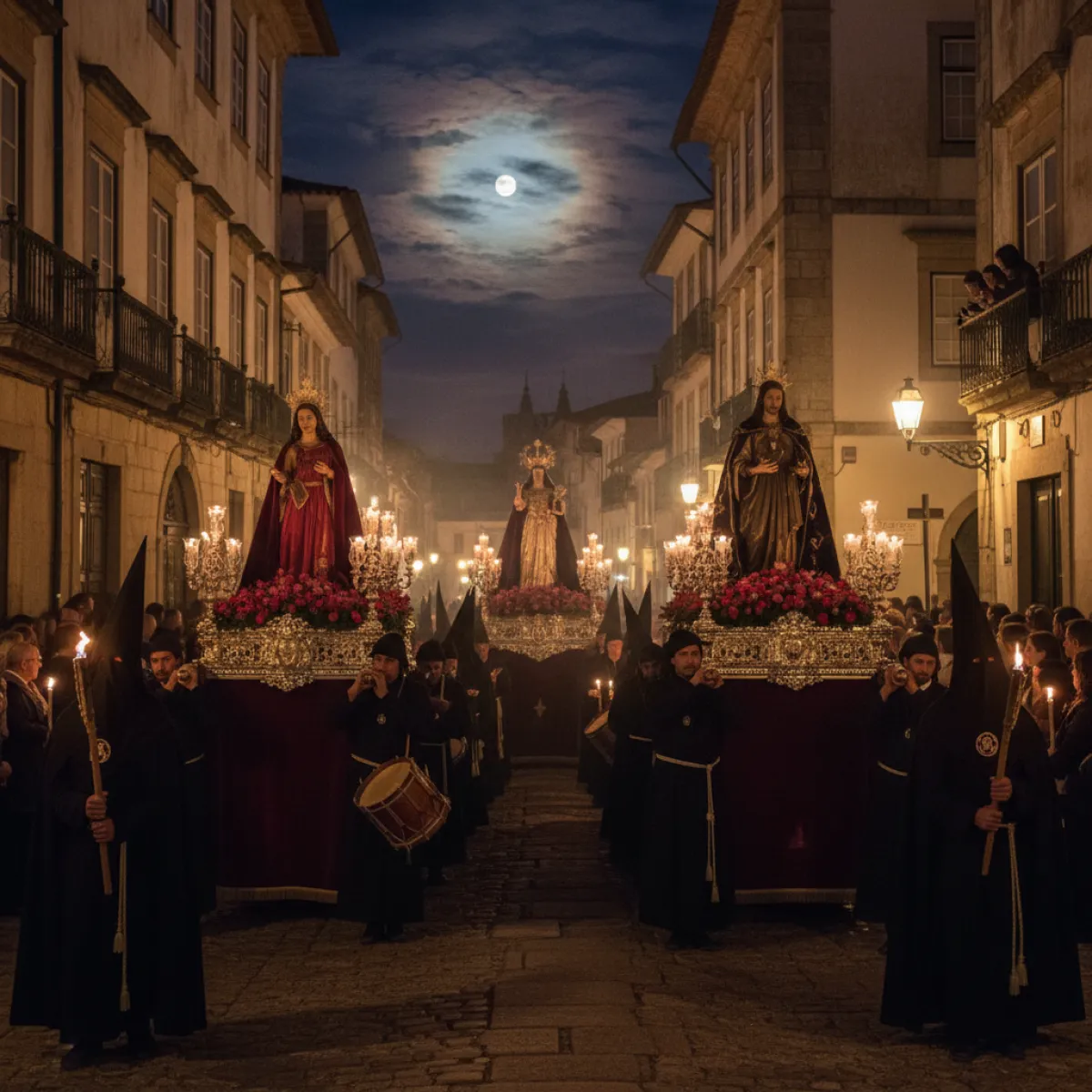
Braga does not do anything by halves, least of all the divine. As Portugal’s oldest city and its theological heart, it carries a weight of history that can feel almost structural. During Semana Santa (Holy Week), this weight manifests in a display of liturgical theatre that has no parallel in the Iberian Peninsula. This is not the flamboyant, sun-drenched Easter of Seville; Braga’s version is granite-hewn, rain-slicked, and profoundly Baroque. It is an exercise in chiaroscuro, where the darkness of the medieval streets is punctuated by the flickering orange of hand-held torches and the stark white of penitential robes.
A City Suspended in Time
To understand the intensity of these days, one must first understand the city itself. Braga is a place that has spent centuries perfecting the art of the ritual. As we explore in A Guide to Braga: Portugal's Quietly Radical Northern City, there is a radicalism in its adherence to tradition. During Holy Week, the modern world is politely but firmly asked to wait. The cafes of Praça da República remain full, but the conversation turns to the timing of the processions and the quality of this year’s flower carpets. It is a period where the city’s many churches, and there are scores of them, become the primary stages for a narrative that is as much about local pride as it is about faith.
The Night of the Farricocos
The most arresting image of Braga’s Easter occurs on Maundy Thursday. Long before the first procession begins, the city is filled with the sound of the *matracas*, wooden rattles that create a jarring, rhythmic clatter. They are carried by the Farricocos: hooded, barefoot penitents in black tunics, a visual throwback to the days of public shaming and secret penance. Watching them move through the crowd under the dim streetlights is a disorienting experience, a Lynchian rupture in the 21st century. The Ecce Homo procession, which they lead, is a masterpiece of atmospheric tension, moving with a funereal pace that forces the observer into a state of involuntary contemplation.
The Logistics of the Sacred
Navigating Braga during this week requires a strategic mind. The city swells with visitors, many of whom treat it as one of the Best Day Trips from Porto, arriving for the evening spectacles and departing by midnight. However, to truly capture the essence of the event, one should stay overnight. The early morning hours, when the scent of incense still lingers in the doorways and the flower-petal streets are yet to be swept, offer a rare intimacy. It is a time to walk the 'Passos', the small street altars that detail the Stations of the Cross, without the push of the crowds. Each altar is a miniature marvel of Baroque woodwork and floral arrangement, a testament to the city’s obsessive attention to detail.
The Minho Perspective
While Braga is the undisputed capital of the Portuguese Easter, it exists within a wider cultural landscape that is equally compelling. A short drive away lies Guimarães, a city that approaches its history with a different kind of reverence. In A Guide to Guimarães: The City Where Portugal Learned to Be Itself, we examine the roots of Portuguese identity. Visiting both cities during this period provides a fascinating contrast: Braga is the soul, concerned with the afterlife and the divine, while Guimarães is the body, focused on the earthly foundations of the nation. Both are essential for anyone wishing to understand the northern Portuguese psyche.
The Taste of the Season
Opinionated locals will tell you that you cannot pray on an empty stomach, and Braga’s culinary offerings during Lent are as specific as its liturgy. The Friday fast is traditionally broken with *Bacalhau à Braga*, thick loins of cod fried with onions and peppers, served with round-cut potatoes. It is heavy, salt-forward, and utterly satisfying. But the true star of the season is the *Folar de Braga*. Unlike the meat-filled versions found further east in Trás-os-Montes, the Bracarense folar is a sweet, egg-rich bread, often topped with hard-boiled eggs as a symbol of rebirth. For a modern take on local sweets, head to the Ferreira Capa bakery for their *Tíbias de Braga*, a choux pastry filled with a custard so light it feels like an ecclesiastical oversight. Order it with a 'cimbalino' (the local term for espresso) at A Brasileira, the city’s most iconic café, and watch the world go by.
A View from Above
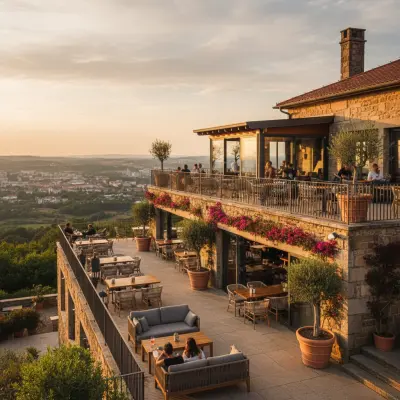
When the density of the religious fervour becomes overwhelming, seek out the Miradouro do Monte do Picoto. Located on a hill overlooking the city, it provides a necessary sense of scale. From here, Braga looks like a scale model of a Baroque dream, its dozens of bell towers rising above the terracotta roofs. You can see the grand staircase of Bom Jesus do Monte in the distance, and the sprawling green of the Minho valley beyond. It is the best place to witness the city's transition from the somber tones of Good Friday to the exuberant bells of Easter Sunday, when the 'Compasso', the tradition of visiting homes to bless them with the cross, turns the entire city into a massive, open-air celebration.
The Practicalities of Penance
- Timing: The processions usually start late, often after 9:00 PM. Dress warmly; the Minho nights can be surprisingly damp and chilly, even in late March or April.
- Budget: While the processions are free to watch, expect to pay a premium for restaurants and hotels. A mid-range dinner for two will cost around €50-€70, including local Vinho Verde.
- Transport: Don't even think about driving into the centre. Park near the stadium or the train station and use the shuttle buses or walk. The train from Porto São Bento is reliable and inexpensive.
- Photography: Be respectful. Use of flash during the night processions is considered poor form and ruins the carefully managed lighting of the event.
Semana Santa in Braga is not a 'festival' in the modern, sanitized sense of the word. It is a survival. It is an unapologetic display of a culture that still believes in the power of the communal ritual. Whether you are there for the faith, the architecture, or the sheer aesthetic drama of the Farricocos, you will leave with the sense that you have witnessed something that hasn't changed its heart in five hundred years. In a world of fleeting trends, that is a rare commodity indeed.