São Pedro in Sabrosa: Sardines, Wine and Bonfires
On the 29th of June, while the rest of the country recovers from São João, Sabrosa lights vine-stump bonfires, grills sardines on the embers and sings until morning. A no-nonsense guide to the best summer festival in the Deep Douro.
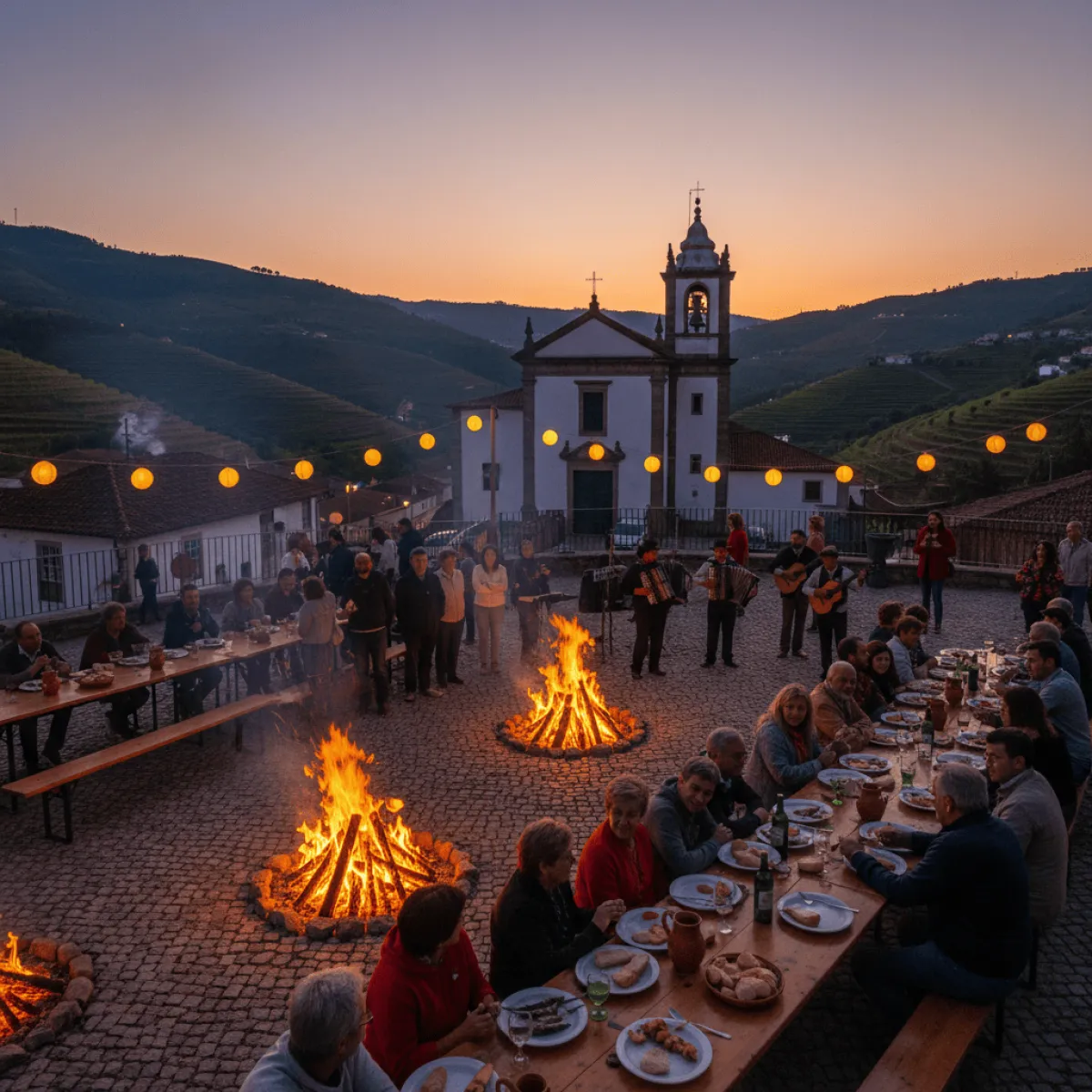
Here is a theory I hold with the stubbornness of someone who has spent too many 28th-of-Junes in Sabrosa: Santo António belongs to the Lisbon crowd, São João belongs to Porto, and São Pedro, that one, was left for us, the people of the interior, the people of the hills, the people who know that the best Portuguese saint is the one nobody has yet turned into a postcard. While half the country is recovering from the São João hangover and Avenida dos Aliados is being swept clean of plastic lettuces, up here in Sabrosa, in the municipality where Fernão de Magalhães was born, the long tables are being set up, the sardines are being marinated, and the wood is being stacked for the bonfire on the 29th of June.
This is the night that matters up here. And if you are coming down into the Deep Douro at this time of year, come with an appetite and the right attitude: São Pedro in Sabrosa has no built stage, no sponsor selling beer in branded plastic cups. It has families cooking for twenty people in the back garden, it has the volunteer firefighters running the village dance, and it has the moment when someone pulls out a cavaquinho and, suddenly, forty people are singing a desgarrada that nobody is quite sure where it started.
Why São Pedro still matters
São Pedro is the patron saint of fishermen, which makes celebrating him 80 kilometres from the sea, in the bend of the river between Pinhão and the Tua, one of the bigger eccentricities of the Portuguese religious calendar. But it makes complete sense if you think of the Douro as an inland sea: rabelo boats, the flat-bottomed wooden vessels that for centuries carried Port wine casks down to Gaia, made the man of the river as tough a worker as the man of the sea.
There is a good explanation of the full calendar of June festivities in our guide to Santos Populares in Sabrosa, covering all three dates: Santo António on the 13th, São João on the 24th, São Pedro on the 29th. But if you can only come once, come for São Pedro. It is the last party before the summer slowdown, it is when the emigrants from Luxembourg and Switzerland have already arrived for their village holidays, and it is when last year's wine is finally drinkable with some honour.
The 28th at night: the real party
Here is something the municipal leaflets will not tell you: the night that matters is not the 29th, it is the eve. On the 28th of June, as the afternoon fades, the parishes of the municipality (Provesende, Celeirós, Gouvães do Douro, São Martinho de Antas) start setting up their own parties. There is no central hub. There are nodes, each with its own band, its own bonfire, and its own manjerico (the little potted basil plant that is the symbol of the saint).
My suggestion is simple: start in the town of Sabrosa, have a draft beer at Lagoa Bar around seven in the evening, and watch the movement start. This is where the men of the area stop before any serious event: a drink, a cigarette, an argument about football that does not concern anyone from outside, and then off they go. It is also the place to hear, without asking, where tonight's best village dance will be. Someone always says "Celeirós is the one this year" or "Provesende has the best band". Trust that information. It is worth more than any municipal schedule.
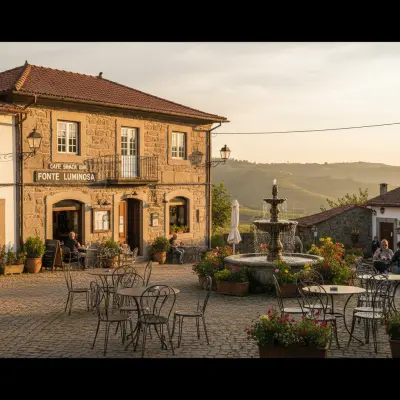
Later, around ten or eleven at night, head to Café Snack Bar Fonte Luminosa. This is where the younger crowd gathers, this is where the groups leave from to head out to the parish parties, and this is also where people come back at dawn for a bifana, a coffee, and a fizzy water before finally going to sleep. Do not try to order a cocktail. Order a beer or a house wine, which will be from some small producer of the municipality, and which will cost less than what you would pay for water in Lisbon.
What to eat (and how)
Sardines. The answer is always sardines. But there are nuances, and this is where many visitors get tripped up. The São Pedro sardine in Sabrosa is not the same as the São João sardine in Porto. Here it is bigger, fattier, and it is almost always grilled over the embers of old vine stumps, not common charcoal. That changes everything. The smell of vine wood, which burns slowly and releases an almost sweet aroma, infuses the sardine with a layer of smoke that cannot be replicated anywhere else.
Standard accompaniments: rye bread in thick slices (the bread goes under the sardine, catching the fat, and then you eat it like that, soaked through), roasted peppers, boiled potato with the skin on, and finely sliced red onion with vinegar. No salad. No separate sauce. No lemon (heresy, in some quarters). There is salt, there is the fat from the sardine itself, and there is the wine.
The wine. That deserves a paragraph of its own. Forget Port wine. Port is drunk at the end, with Serra da Estrela cheese, if you make it that far. To go with the sardines, ask for the regional red, young, served fresh (yes, red wine served at 14 or 15 degrees Celsius), from some small producer. If you want to understand what is happening in Douro wines outside the big names, book a wine tasting at Wine & Soul in Sabrosa for the morning of the 28th, before the madness starts. You will leave with a completely different understanding of what you are about to drink at night.
The bonfire and the jump
At midnight, or thereabouts, the bonfire is lit. In the parishes, the bonfires are large, made of old grapevines and dry branches from the March pruning. Tradition says you should jump the bonfire three times for luck in the coming year. It is a serious matter. People do burn the soles of their trainers (practical recommendation: do not come in new white sneakers, do not come in flip-flops, and do not come in long skirts).
The jump is symbolic, but it is also older than Christianity. The bonfires of São Pedro are, fundamentally, direct heirs of the pagan summer solstice fires, which were lit here long before any saint existed in the calendar. The Romans celebrated the solstice, the Celts did too, and when Christianity arrived in the Douro, instead of banning the party, it did what it always did: put a saint on top of it. São Pedro inherited the bonfire, the sardine and the wine. He could not have done better.
The 29th: the active hangover
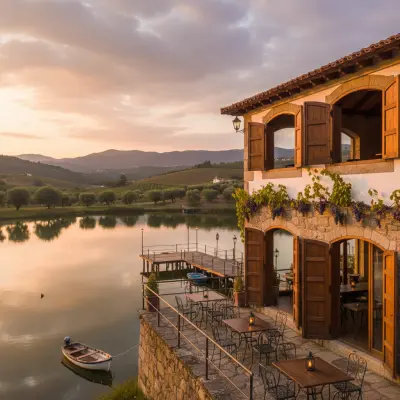
Whoever makes it to the 29th with a head clear enough to do things will be rewarded with one of the best things on the Douro calendar: the river early in the morning, after a hot night full of smoke. The light is different, the slopes are green from the late spring, and the river is flat as a mirror.
My recommendation is simple: sleep until eleven in the morning, have a heavy breakfast (soup, if you can find it; in Sabrosa there are places that serve caldo verde for breakfast to anyone who looks like they need it), and then head down to Pinhão. From the marina there, catch a boat trip from Pinhão to Cais do Ferrão. Two hours, more or less, on a boat that goes up and down a stretch of river that remains among the most spectacular in the world. Bring sunscreen (we are at the end of June, in the Douro, no shade), bring water, and if possible bring a hat.
It is the perfect antidote to the night before. Wind in your face, sun on your arms, and the feeling that the river is doing the digestion work for you. When you get back to land, your head is ready for another night (because yes, there is usually something else happening on the night of the 29th, mainly in restaurants that organise second rounds of sardinhada).
Where to stay (and where not to)
Sabrosa does not have big hotels, and that is part of the charm. It has rural tourism houses scattered around the municipality, it has some quintas with accommodation, and it has the option of sleeping in Pinhão (in the neighbouring municipality of Alijó, on the other side of the river) and coming up to Sabrosa for the festivities.
If you want to understand better the landscape of the estates where you might be staying, read our guide to the Douro estates in Sabrosa before booking. There are huge differences between what is marketed as "quinta accommodation" and what that means in practice. Some have ten rooms and a pool; others are family homes with three rooms where the host leaves with the tractor at six in the morning.
Practical advice: book at least three months in advance if you want to catch the night of the 28th to the 29th. The last weeks of June and the first two of July are when the emigrants come back, when river-cruise tourists fill the hotels in Pinhão, and when locals host family from abroad. There are no last-minute vacancies.
The context: why come now and not in September
There is a narrative out there that the Douro is best seen in September, during the grape harvest. It is a half-truth. The harvest is spectacular, but it is also when the Douro is fullest, most expensive, and most busy with its own work (the estates are harvesting, not receiving visitors).
End of June is the opposite. The vines are green, the slopes have wildflowers, the rivers are full from the late spring, and the mass tourists have not yet arrived. It is the perfect moment to come to the Douro without feeling like you are in a theme park. And São Pedro is as good an excuse as any, with the bonus of being a party that has not yet been captured by tourist circuits.
If you are planning a longer trip across the deep North, and want to combine Sabrosa with other less obvious areas, it is worth looking at Trás-os-Montes proper. Our guide to Torre de Moncorvo in spring gives good ideas for stretching the trip further east, towards the almond groves and olive trees, which at the end of June still hold some of the soft light of late spring.
What to bring (and what to forget)
- Clothes: comfortable, washable, dark colours (sardines stain, smoke clings, and someone always spills wine)
- Footwear: closed trainers or low boots, no flip-flops, no heels
- Manjerico: you can buy one on the night, they are offered to people you care about (and the little square of paper with a poem stuck on top is meant to be read out loud, even if you think it is ridiculous)
- Cash: bring small notes. Many parish parties and stalls do not accept MB Way or card
- Patience: things start late, finish even later, and schedules are indicative
Forget the phone taking photos during the bonfire. Forget the expectation of a minute-by-minute organised event. Forget the idea that you are going to bed early.
Come. Eat sardines until you cannot eat any more. Drink wine until you start finding everything funny. Jump the bonfire three times. And when, at four in the morning, someone pulls out an accordion and starts playing a mazurka nobody asked for, stay. That moment, that exact moment, is São Pedro in Sabrosa. There is no other way to explain it.