São João da Pesqueira: Real Douro Living on a Budget
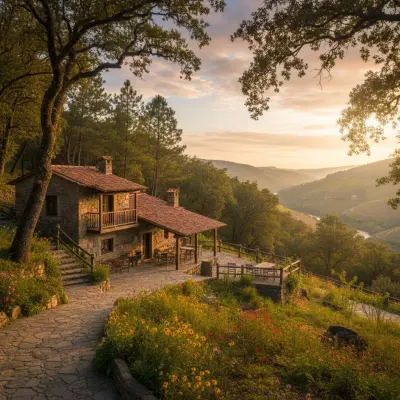
Escape the tourist traps and discover the authentic Douro in São João da Pesqueira. With ten euros in your pocket and a pair of boots, you can have the best views of Vale do Cachão and eat like royalty in granite-walled taverns.
The Myth of Prohibitive Douro
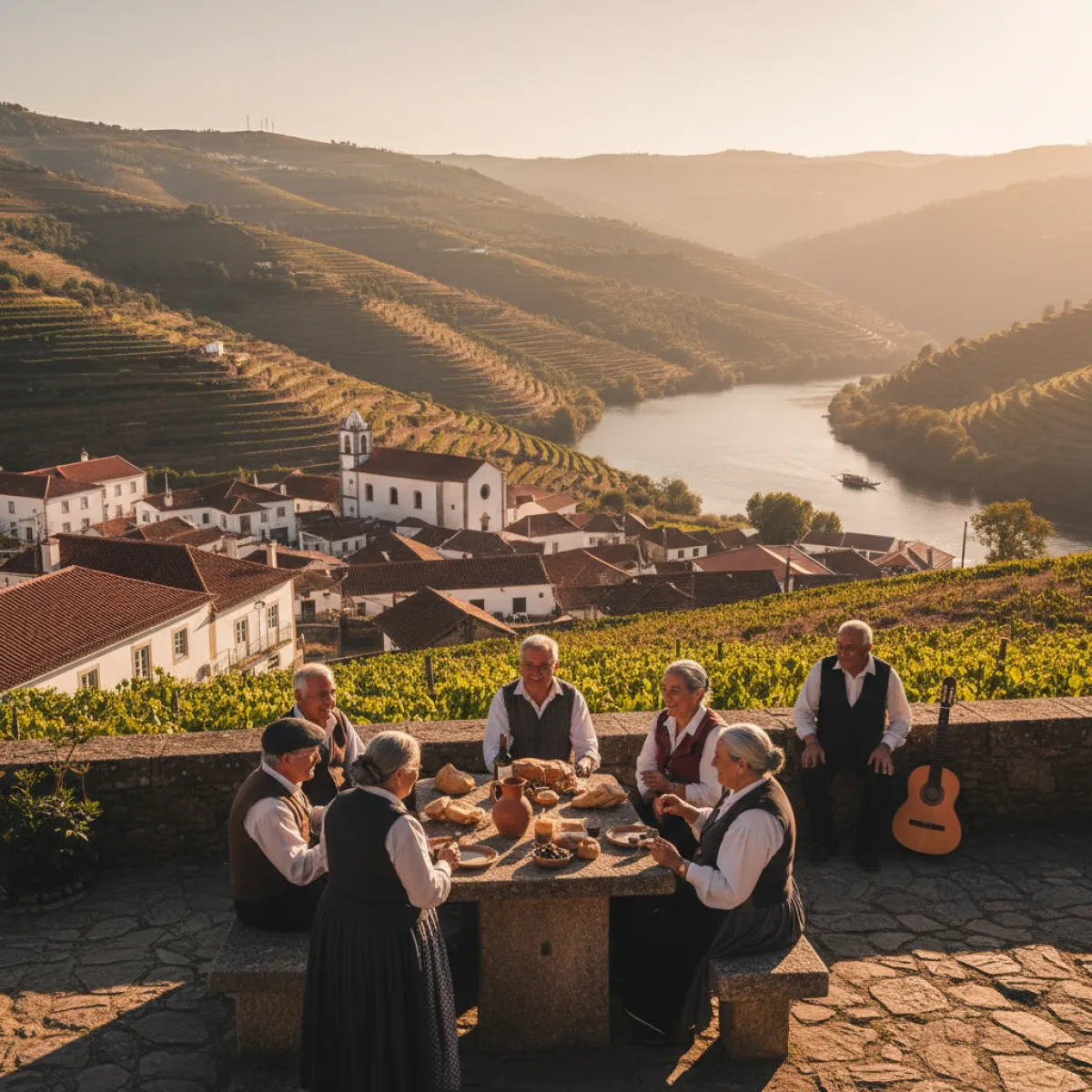
In recent years, the Douro Valley has become a playground for those traveling with leather suitcases and limitless credit cards. Between luxury cruises and estates where a wine tasting costs as much as a full dinner for two in a remote village, it seems the region has closed itself off in a bubble of exclusivity. But there is a crack in this narrative, and that crack is called São João da Pesqueira. Located at the geographic heart of the Demarcated Region, this town ignores the tourist pomp of Pinhão to offer what remains of authenticity in a valley that, elsewhere, is starting to look like a theme park.
Getting here requires both a stomach for heights and a clear intention. If you’re driving from Porto, ignore the highway and wind up the N222 until it stops being the "most beautiful road in the world" for tourists and becomes a serpentine path of granite and schist. Pesqueira doesn’t surrender to those seeking the ease of a resort. This is a land of people who know the cost of digging into the hillside, and that is reflected in the prices and a hospitality stripped of artifice. Here, luxury isn’t found in thread counts, but in the ability to drink a world-class wine for two euros at a zinc counter while listening to a recap of last year's harvest.
The Square That Shames Cities
The starting point is invariably Praça da República. Forget the generic squares of provincial capitals; this is one of the most impressive architectural ensembles in Northern Portugal. Surrounded by granite buildings with imposing arcades, the square houses the old Town Hall and the Jail, now converted into the Wine Museum. This is where your budget starts to stretch. While in other places you’d pay ten euros for a coffee with a view, here you sit at a side terrace, order a 'cimbalino' (espresso), and watch the world go by. The background noise isn't tour buses, but flatbed trucks loaded with farm tools.
For those who want to understand where they are without spending a cent, a walk through the adjacent streets is mandatory. Rua do Arco, with its 16th-century arch, is where the light hits differently at five in the afternoon. There are no plastic souvenir shops. Instead, you'll find groceries that smell of salt cod and olive oil, where you can buy a kilo of bread and a wedge of regional cheese for lunch. This is Pesqueira's first secret: the best picnic in the Douro is made by buying what the locals buy.
A Shady Refuge: Parque da Mata do Cabo
In summer, the Douro is a furnace. Heat rises from the schist stones and parks itself in the valley, making any walk a survival exercise. It’s in these moments that Parque da Mata do Cabo becomes the best investment of your time (at zero cost). Located on the outskirts of town, this green space is the area's lungs. Forget French gardens pruned to the millimeter; here, nature has a heavier, more honest hand. It’s the ideal place to spread a blanket and devour that cheese you bought in the square.
The park offers a coolness you won't find on the riverbanks. It’s a space of silence, only interrupted by the wind in the chestnut trees. If you’re traveling on a tight budget, this is your "VIP lounge." While others pay thirty euros for a sunbed at a five-star hotel, here you have the shade of century-old trees and fresh spring water for free. It’s also an excellent vantage point to see the landscape transition from the town’s granite to the vineyards that start just next door.
São Salvador do Mundo: The Million-Dollar View (For Free)
About five kilometers from the center lies the Sanctuary of São Salvador do Mundo. If there is one place that justifies the trip to São João da Pesqueira, this is it. Forget helicopter rides to see the terraces. Climb up here. From the top of this hill, the Douro reveals itself in its rawest and most majestic form. In front of you lies the Vale do Cachão, where the river runs tight between stone walls before opening up towards Ferradosa.
There are a series of small chapels scattered across the hill, but the focus is the precipice. The wind here rarely rests, and the silence is only broken by the occasional sound of a train passing far below, looking like a tiny toy on the Douro Line. It’s the perfect spot to watch the sunset. Bring a bottle of wine bought at the local Cooperative, for five or six euros you can get something that would cost forty abroad, and watch the show. It’s the best wine tasting you can have, without needing a reservation or a lecture on tannins and French oak barrels.
Eating Like a Local: Ending the Tourist Tax
For lunch, flee the restaurants with menus in five languages. In Pesqueira, the secret lies in the houses that serve local workers. Look for the "diárias" (daily specials). For ten or twelve euros, you’ll get soup, a main dish (usually something substantial like feijoada, roasted veal, or cod), a drink, and coffee. Don’t expect artistic plating with balsamic reductions. Expect a clay tray overflowing and a house wine that, being from this region, is almost guaranteed to be better than the reserve wine in many other parts of the country.
If you have the chance, try the Bola de Carne from Pesqueira. It’s dense, rich with smoked meats, and lasts for days. It’s the perfect fuel for those planning to explore the trails connecting neighboring villages like Soutelo do Silgueiros or Vale de Figueira. In these villages, time seems to have stalled in a productive way. People still greet you in the street, and if you walk into a tavern for a glass, be prepared to be interrogated about where you're from, not out of suspicion, but out of genuine curiosity.
The Connection to Lamego and the Deep Interior
São João da Pesqueira doesn't exist in isolation. It’s part of a network of towns and cities that share an identity forged by difficult terrain and extreme weather. If you decide to continue your exploration through the Southern Douro, Lamego is the logical stop. While Pesqueira represents the austerity of the producer, Lamego represents historical monumentality. To plan that extension, it's worth reading about The Inland Coast: River Escapes and the Luxury of Stillness in Lamego, a guide that helps you understand how the river and the interior merge in this area.
If your visit is during the off-season, the atmosphere changes radically. The Douro in winter is for the brave. Fog settles on the slopes and fireplaces become the center of social life. Regarding this season, the guide Lamego in Winter: The Geometry of Comfort and the Silence of Granite offers an excellent perspective on how to use the cold to your advantage for a sensory and gastronomic experience. The granite of the buildings, omnipresent in both Pesqueira and Lamego, isn't just a material; it’s a cultural foundation. To understand how this material even defines the sound of the region, explore The Resonance of Granite: Fado and the Sonic Identity of Lamego. These resources help contextualize Pesqueira not just as a point on a map, but as part of a vast and resilient cultural ecosystem.
Logistics and Practical Costs
Traveling cheaply in São João da Pesqueira requires strategy. If you don't have a car, you can take the train on the Douro Line to Ferradosa station. From there, you’ll need to take a taxi or pre-arrange a transfer to go up to the town (about 15 minutes). It’s an epic climb that gives you a real sense of the Douro's verticality. If you can, rent a small car; the roads are narrow and an SUV here is more of a hindrance than an advantage.
In terms of costs, a couple can have an excellent day in Pesqueira for about 50 to 60 euros, including hearty meals, tickets to the Wine Museum, and purchases of local products. Compared to the 150 to 200 euros you would easily spend in a day in the more tourist-saturated areas near Régua, the savings are evident. And the return in terms of real experience is immeasurable. At the end of the day, in Pesqueira, you don't feel like a client of a tourism multinational; you feel like a guest of a region that still remembers how to live off the land.
- Where to eat: Look for restaurants near Praça da República with chalkboards outside announcing the "diária".
- What to buy: Wine at the Adega Cooperativa (on the road out towards Viseu) and regional olive oil.
- Best time: September to see the harvest bustle, or May for milder temperatures.
- Expert tip: Always ask for the house wine in a jug. In the Douro Superior, the "common" wine is often exceptional.