São João da Pesqueira: Almonds, Olives and Wine on the Plateau
Everyone passes through São João da Pesqueira on the way somewhere else. Mistake: this plateau town at 500 metres is one of the best Douro bases, with almond blossom in February, honest estates and half the tourists of Pinhão.
Here's something the Douro brochures never tell you: wine is only half the story. The other half is in the almond trees that bloom in February across the slopes of São João da Pesqueira, in the centuries-old olive trees nobody photographs because everyone is busy looking at the river, and in the olive oil pressed here in small family mills that should be in every kitchen in the country. But isn't. Because São João da Pesqueira, despite officially being the municipality with the most planted vineyard in the entire Douro, still gets treated as a quick stop between Pinhão and Vila Nova de Foz Côa.
Mistake. Big mistake.
This plateau town, sitting at 500 metres above sea level, is one of the most interesting places for travellers who have already done the Douro by boat, tasted the classic Vintages, and want to understand what lies under the tourist layer. This is hill country: bread country, goat cheese country, country where people still speak loudly in the square when the coffee price goes up. It is also, and this matters, one of the best bases for exploring the Upper Douro without paying the inflated prices of the better-known estates in the Cima Corgo.
Why come here instead of staying in Pinhão
Let me be direct: Pinhão is pretty but it is expensive and it is always packed. São João da Pesqueira is 20 minutes away by car on the N222 (yes, that road the German magazine voted the best driving road in the world, and for once they weren't exaggerating), has half the tourists and twice the personality.
The town itself is the right size: you can walk it all in one morning. Praça da República, with the Manueline pillory in the middle, is where life happens. Sit at one of the cafés in the morning, please, and just listen. In half an hour you will understand why this region votes the way it votes, eats what it eats and drinks what it drinks. The Trás-os-Montes accent is a serious thing, and here you get it unfiltered.
Best time to come? Late February or early March, when the almond trees are in flower and the plateau turns pale pink. Or September, of course, during the harvest, when the smell of grape must sticks to your clothes and memory. August works too, but bring a hat: temperatures easily push past 38°C and the sun on the plateau does not forgive.
Where to sleep (and the obvious answer is the right one)
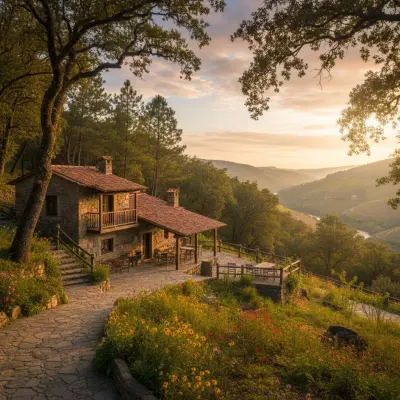
I have stayed at various Douro estates and most of them suffer from the same problem: either too expensive for what they offer, or beautiful but stuck at the bottom of a valley where your phone has no signal and dinner finishes by nine. Quinta de Ventozelo, with its rural hotel halfway between Ervedosa do Douro and the river, gets both right. It is a historic estate, originally part of the Cockburn portfolio, with 400 hectares and farm buildings restored with actual taste. The rooms are split across different houses (Casa do Lavrador, Casa do Forno, Casa do Tanoeiro) and the restaurant, Cardenha, does decent Douro cooking without slipping into wine-snob territory.
The trick here is asking for a south-facing room, drinking the house Reserva at sunset on the terrace, and ordering the roast kid goat on your second night. Confirm at the time of booking whether the kid goat is on the menu, because they rotate the dishes seasonally.
Greens, shade, and where the locals actually go
The Douro has a chronic problem: lots of stone, very little shade. When the July and August heat arrives, tourists start desperately looking for somewhere to hide from the sun between 1pm and 5pm, and end up stuck in air-conditioned cellars tasting wines they can no longer distinguish from each other.
The solution is right on the edge of town. Parque da Mata do Cabo is a green lung that few visitors know about, with mature pines, picnic tables, walking trails and a temperature that stays about five degrees below the rest of the town. Bring a bottle of water, a book, half a wheel of regional goat cheese and some bread from Favaios. Lunch sorted for under ten euros. Whole families spend their summer Sundays there, and nobody minds if you join in. On the contrary: they will probably offer you a glass of Moscatel before you leave.
If you are travelling with dogs, this is one of the best spots in the region for an off-leash walk. If you are with kids, there is space to run and trees to climb. Basic things, but rare in the Douro.
The serious business: wine tastings without the circus
São João da Pesqueira is home to some of the most important estates in the Douro, and the problem is that many of them have turned into oenological theme parks with 80-euro-per-head tickets. There are more honest alternatives.
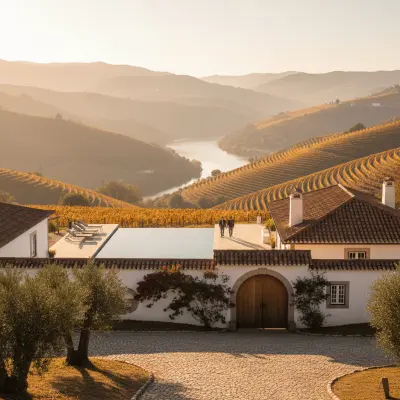
The first is to do a comparative tasting between Quinta do Pessegueiro and Quinta do Crasto, two very different philosophies of making wine in the same municipality. Pessegueiro plays the terroir and elegance card, with fresher, more structured wines; Crasto goes for power and the complexity of its old vines. Tasting them side by side is the best Douro lesson you can have in a single day, and you finally understand what "pre-phylloxera terraces" actually mean beyond the romantic label.
If you are around in September or early October, there is one thing you should not miss, and I will recommend it until I lose my voice: treading grapes in a granite lagar at Quinta da Gricha, the old-fashioned way. Yes, it is touristy. Yes, it is on every itinerary. But there is a reason for that: it is genuinely one of the most enjoyable experiences you can have in the Douro, especially at the end of the day, with music, wine going round and strangers becoming friends with feet stained purple. Bring shorts and footwear that comes off easily. Do not wear white.
Eating: what is local and what is theatre
The town has half a dozen restaurants and taverns. I will not invent names or dishes: I will tell you what to order wherever you go, and you will rarely go wrong.
- Maronesa beef steak: the breed comes from the mountains further north, but it reaches these restaurants and is hard to ruin. Order it rare, with coarse salt and a drizzle of local olive oil.
- Roast kid goat from the wood oven: weekends, especially around Easter and harvest time. Ask the day before, as it is usually pre-booked.
- Bola de carne or folar: cured meats baked inside bread. Perfect snack to take on a hike.
- Trás-os-Montes goat cheese: aged for months, washed rind. Eat with regional honey and walnuts.
- Almond cakes: so you understand why the almond matters so much on this plateau.
To drink: house wine, almost always from the region, almost always good. If you want to play it safe, order a red Reserva from any São João da Pesqueira producer. If you want to be polite to your waiter, ask what they drink with dinner. You will get an honest answer.
Coffee? The one in the square is fine. Do not look for house specials or a flat white. You are in the Douro, not in Lisbon.
Viewpoints worth the detour
The municipality has two viewpoints that everyone in the Douro recommends, and for good reason. São Salvador do Mundo, with its sanctuary on top and the vertiginous view over the bend of the river at the Valeira dam, is one of the most spectacular in the country. Go in the late afternoon, when the sun hits the vines sideways, and bring a jacket because the wind on that cliff is constant.
The other, less known, is Miradouro do Sabordela, more central within the municipality, with views over the agricultural plateau instead of the river. This is where you understand what this land really is: a very high agricultural tableland, more like La Mancha than Tuscany, dotted with almond and olive trees, and only near the edge does it suddenly drop into the vineyards of the Douro. Photographers always go to the first one. Go to both.
Extend the trip: the deep Douro triangle
If you are staying three or four days, and you should, make this town your base and explore the Pesqueira-Sabrosa-Torre de Moncorvo triangle. Each has a different personality and together they give you the full portrait of the real Douro, far from the river cruises and the coach tours.
Sabrosa, on the other side of the river, is the birthplace of Magalhães (yes, that one) and home to some of the best family-run estates in the region. There is a circuit of low-profile estates worth doing slowly and without a confused GPS. If you happen to be there in June, one thing completely changes the experience: the Santos Populares festivities in Sabrosa are some of the best in the northern interior, with bonfires, basil pots, sardines and brass bands in competition mode. None of the city-style cordoned-off streets. This is the deep version of the party.
Torre de Moncorvo, to the south-east, is the absolute kingdom of the almond, with the largest almond orchard area in Portugal and festivals dedicated to the blossom in February and March. For nature lovers, there is a set of gardens and parks that look particularly good in spring and deserve a full day of slow exploration.
How to get there and what it costs
By car, it is the only honest option. From Lisbon it is four hours via the A1 and A24; from Porto, two hours via the A4. The Douro train line goes as far as Pocinho but the service is limited and from there you need transport to climb up to the plateau, which is not practical.
Parking in town is free and easy outside of market days (Mondays). Fuel: fill up in Pinhão or Vila Real, because on the plateau prices tend to run slightly higher.
Average daily budget for two, in normal season: 80 to 120 euros for estate accommodation, 50 to 70 for meals, 30 to 50 for tastings and activities. Reasonable total: around 200 euros a day for a couple eating and drinking well without extravagance. In August, multiply by 1.3.
What NOT to do
Do not come for a day. Seriously, it is not worth it: you will spend more time driving than seeing, and the best part of this region is the slow pace. Minimum two days, ideal three.
Do not come only for the wine. That is everyone's mistake. Come for the whole picture: wine, yes, but also olive oil, almonds, cheese, bread, agricultural landscape and time standing still. If all you want is to taste Vintage Port, stay in Vila Nova de Gaia and save the petrol.
Do not try to do everything. Pick two estates, one viewpoint, one restaurant, one picnic. Leave the rest for next time. The Douro rewards those who come back.