Santos Populares in Lisbon: A Santo António Guide
There is one night in Lisbon when everything smells of basil and sardines, and the city forgets itself. This is the honest guide to Santo António: where to eat, which neighborhood to choose, how to survive the morning after.
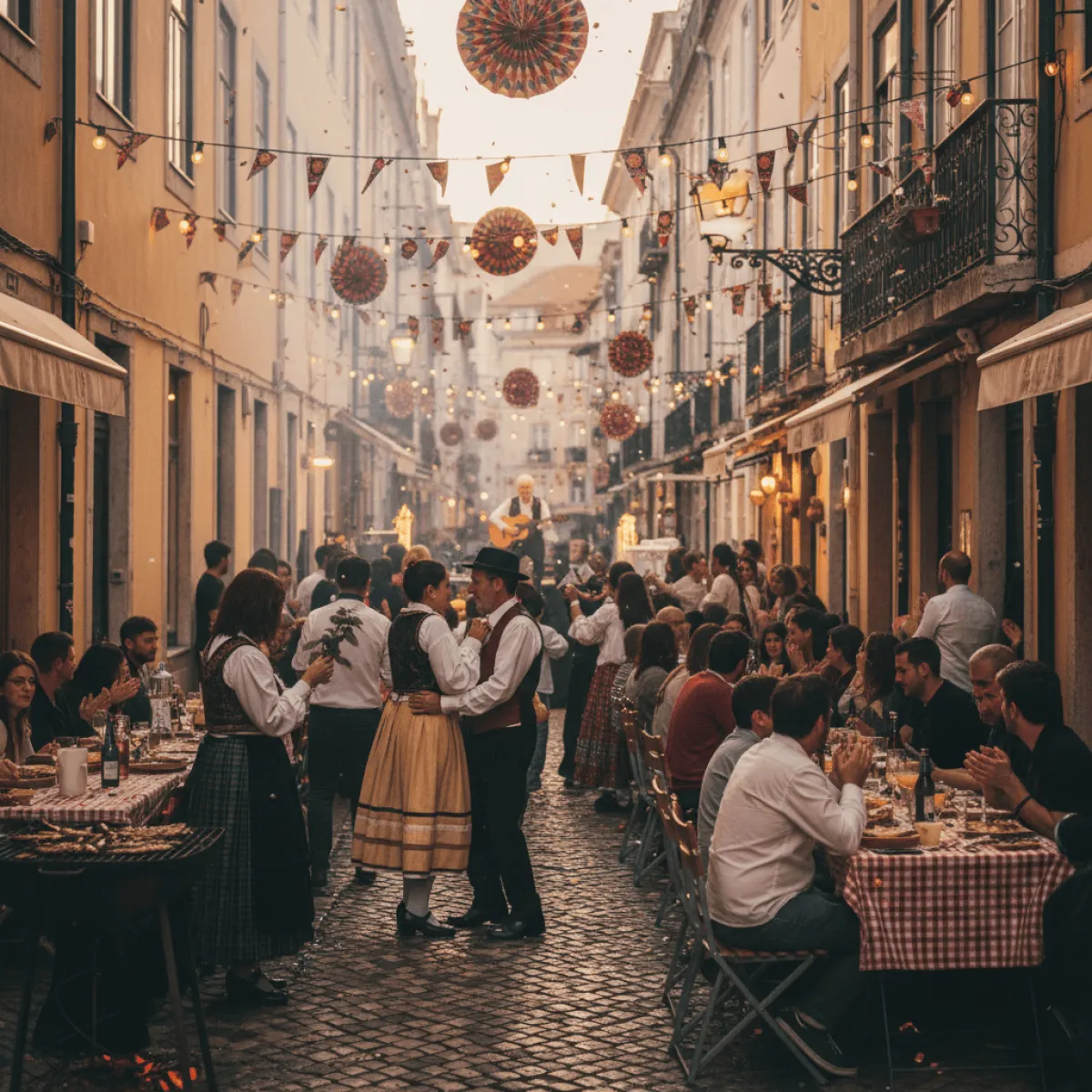
There is one night in Lisbon when the entire city smells of basil, grilled sardines and cheap red wine served in plastic cups. It is the night of June 12 to 13, the eve of Santo António, and for 24 hours the capital forgets itself: architects dance to pimba in the middle of the street, grandmothers come out onto balconies in housecoats, German tourists eat pork sandwiches with mustard, and nobody cares. This is, without question, the best night of the year in Lisbon, and this is the guide I wish I had had the first time I came.
Who Santo António was (and is)
First, a correction Lisboetas will insist on making: Santo António belongs to Lisbon, not Padua. He was born around 1195 in a house right next to the Sé cathedral, traveled to Italy as an adult, and died there in 1231. But Lisboetas claim him as a native son, and nobody can talk them out of it. Patron of marriages, of lost things, and (in Lisbon) of the city itself, he is the saint to whom the biggest popular festival in Portugal is dedicated.
The Santos Populares are actually three consecutive saints in the June calendar: Santo António on the 13th, São João on the 24th (the Porto festival), and São Pedro on the 29th. In Lisbon, António rules, and the festival officially starts on June 1 with the marchas populares parades on Avenida da Liberdade. But the peak, the moment when everything happens, is the night of the 12th to the 13th.
Where to go: neighborhoods, not restaurants
First principle: on the night of Santo António, nobody books a table at a restaurant. You eat on the street, at long plastic tables, with sardines grilled over coals in front of someone's window. The arraiais (street festivals) work by neighborhood, each with its own personality, and the choice of neighborhood defines the night.
Alfama: the postcard and the chaos
This is the neighborhood everyone visits at least once, and for good reason: Santo António was born here, the Sé is here, and the religious procession leaves from here. The steep alleys are draped in colored bunting, basil plants in clay pots line every window, and improvised food stalls appear at every corner. The smell of sardines collides with fado leaking from open doors. Practical tip: arrive early, before 8pm, because after 10pm walking through Alfama becomes nearly impossible. Climb Rua de São Pedro, cross Largo de São Miguel, descend the Escadinhas de São Cristóvão. Do not try to plan. Let yourself drift.
Madragoa and Bica: for locals
If Alfama is the postcard, Madragoa is where actual Lisboetas go. A traditional neighborhood near Santos, with limited tourist presence and arraiais run by neighborhood associations, this is where you see the festival as it has been for decades. The Bica, with its yellow funicular and tilted streets, shares that spirit. Sardines cost roughly the same as in Alfama (around 2 to 3 euros each), but they are served with less hurry.
Graça and Mouraria: the alternative
Mouraria is historically the birthplace of fado and today the most multicultural neighborhood in Lisbon. The arraial here mixes Portuguese sardines with Bangladeshi music. There is a Chinese tasca next to a Cape Verdean one, and the festival spreads down Rua do Benformoso. Graça, at the top of the hill, has two miradouros (viewpoints) that turn into improvised dance floors. If you want to see Lisbon from above, singing pimba in unison, this is where you come.
What to eat (and drink)
The Santos Populares menu is short and non-negotiable. Anyone arriving in search of creative tapas or sushi will be disappointed.
- Grilled sardines: the queen. Served whole, on a slice of bread that catches the juices, with a roasted pepper on the side. Eat with your hands. Costs between 1.50 and 3 euros each on the street, depending on size and neighborhood. June sardines are the best of the year because they are at their fattest before spawning.
- Bifana: the alternative for people who do not like fish. Pork loin marinated in garlic and bay leaf, on a crusty roll, with mustard or piri-piri. For a non-festival version that defines the standard, it is worth visiting As Bifanas do Afonso, a neighborhood institution that teaches how it should be done.
- Caldo verde: a soup of finely shredded kale with a slice of chouriço floating in it. Served in a cup, to drink as you walk.
- Manjericos: these are not eaten, they are given. Small basil plants in clay pots, each topped with a paper flag bearing a love verse. They cost 2 to 5 euros and are the central tradition of the day: you give one to someone you care about. Buy from a street stall, not a souvenir shop.
- Sangria, house wine, Super Bock: do not ask for a wine list. You drink from a plastic cup, cold, standing up, full stop.
The marchas populares: the heart of the festival
If one moment defines Santos Populares in Lisbon, it is the marchas populares on Avenida da Liberdade on the night of June 12. Each historic neighborhood (Alfama, Bica, Madragoa, Mouraria, Bairro Alto, Castelo, Graça, and others) spends months preparing a parade: original music, choreography, costumes, decorated arches. They march down the Avenida in front of a stand where the mayor and a panel of judges sit, and prizes are awarded for the best parade of the year.
It is a deeply Lisbon spectacle: something like a domestic-scale Rio Carnival, with grandmothers marching beside teenagers, neighborhood people in colorful fabrics and hats performing choreographies they have rehearsed since February. It is broadcast live on national television. For paid seats in the stand, you need to buy in advance through EGEAC. To watch standing up for free, just arrive at the Avenida in the early evening, claim a spot (I suggest the area near Marquês de Pombal), and wait.
The Santo António weddings
On June 12, dozens of couples marry in a mass ceremony organized by Lisbon City Hall. These are the famous Casamentos de Santo António, a tradition that brings together couples from modest backgrounds (the city covers the costs) and has become one of the most televised events of the year. They marry at the Sé cathedral, descend Rua da Madalena in a procession of carriages, and the city applauds. If you can be at the Sé in the late morning of the 12th, you will witness one of the most moving traditions of the city. Dress decently: it is a church, not a street party.
The morning of the 13th: hangover and procession
After a night singing pimba, June 13 dawns strangely calm. The streets are carpeted in paper, plastic cups and crushed basil sprigs. Street sweepers have been working since 5am, and by noon the city has returned to normal. In the afternoon, the religious procession of Santo António leaves from the Sé to the Church of Santo António à Sé, carrying the saint's relics. It is a more serious, devotional moment, far from the euphoria of the night before, but worth seeing for the other face of the festival.
What to do with a hangover: culture to calm down
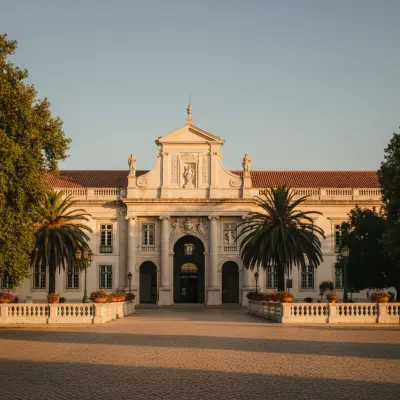
For anyone running at half speed on the 13th, I suggest fleeing the tourist center and sinking into something quiet. The Museu Nacional de Arte Antiga, in Santos, has air conditioning, gardens facing the Tagus, and the country's largest collection of Portuguese art (including the São Vicente Panels by Nuno Gonçalves, which will make you forget how many sardines you ate the night before). The museum café has one of the best hidden terraces in Lisbon.
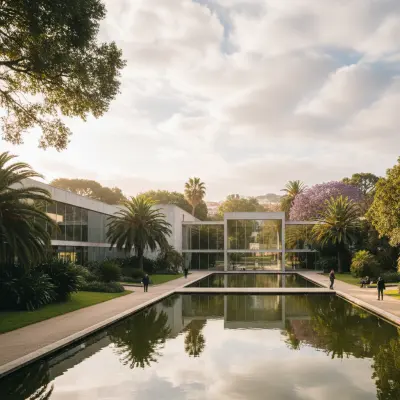
Alternatively, the Museu Calouste Gulbenkian, in Saldanha, combines an exceptional collection (Rembrandt, Lalique, Islamic art) with one of the most beautiful gardens in the city, perfect for staring at the sky for an hour while drinking iced tea. Use the 13th to slow down. You will need it.
Before and after the festival: the other Lisbon
If you are going to be in Lisbon in the days around Santos Populares, there are other experiences that take on a different meaning when crossed by the festive energy of the city. A downhill bike ride from the miradouros to Belém, with views over the river in the late afternoon, is a good way to see the stage that will later host the festival. The waterfront ride along the Tagus shows you the Lisbon of the river, far from the crowded alleys.
For anyone wanting to understand the cultural context before diving into the festival, our guide to local culture in Lisbon explains how the neighborhoods, fado and older traditions work. And if the festival sparks curiosity about other Portuguese traditions, the route of Easter sweets in Mafra shows how every time of year has its own flavor in this small, obsessive country.
Fado after midnight
Around 2am, with sore legs and a stomach full of sardines, some people close the night with fado. Alfama has dozens of houses, many touristy, but O Faia, in Bairro Alto, is one of the most respected houses in the city, with top-tier singers and fadistas who have performed on every important stage in the country. Book ahead (especially in this season), and prepare for a long night: fado typically starts around 9:30pm and stretches until dawn.
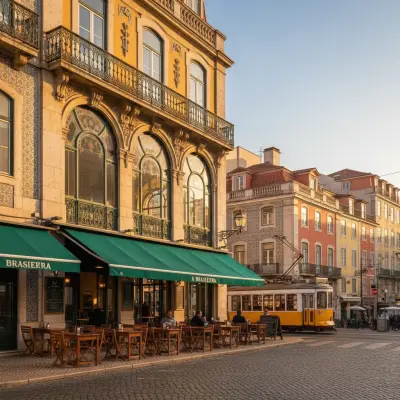
For a daytime, more relaxed version, start the day after the 13th with a coffee at A Brasileira, in Chiado: the espresso is good, the tradition is old (this was Fernando Pessoa's café, and his bronze statue sits at the door), and the terrace lets you watch the city pass while you slowly regain the use of your legs.
Final tips and what not to do
- Do not use a car: much of the center is closed to traffic, and taxis take hours. Use the metro (Baixa-Chiado, Rossio, Martim Moniz, Santa Apolónia are the useful stops), tram 28 outside peak hours, or just walk.
- Do not wear white: sardine grease is merciless. Wear dark clothes, comfortable closed shoes (olive pits and bare feet are a bad combination late at night).
- Do not be in a hurry: Santos Populares is not an event to rush through with a checklist. It is for standing still listening to a band play Quim Barreiros 20 meters away, with a cup in your hand.
- Watch your wallet: with so many people, pickpockets are more common than usual. Use a crossbody bag at the front of your body.
- Learn a verse: tradition says you offer a basil plant with a quadra (a four-line verse). The classics are printed on the paper flags, but writing your own by hand is the most Lisboeta gesture you can make on this night. If you have offered a basil plant with an invented verse, consider yourself an honorary Lisboeta.
In the end, Santos Populares is not a festival you visit: it is a festival you enter. The city opens the doors of its neighborhoods, sets tables in the street, and says: come in. Accept the invitation. Eat too many sardines. Drink sangria that tastes of cheap sugar. Dance pimba without shame. And in the middle of the night, in some random square between the Castelo and the Tagus, you will understand why Lisboetas claim Santo António as their own. Because he really is theirs. And on that night, you are too.
If you have time left after the party, consider an escape to the hills: the Sintra neighborhood guide shows you how to recover from too much festival in the opposite scenery, full of mist, palaces and silence.