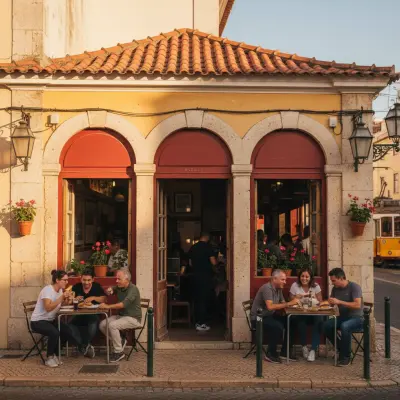
Santos Populares in Lisbon: A Complete Guide to June
In June, Lisbon smells of grilled sardines and basil, with parades, bonfires and balcony fado. A guide to surviving the night of Santo António, eating well for fifteen euros, and still having legs left on the 13th to make it to the museums.
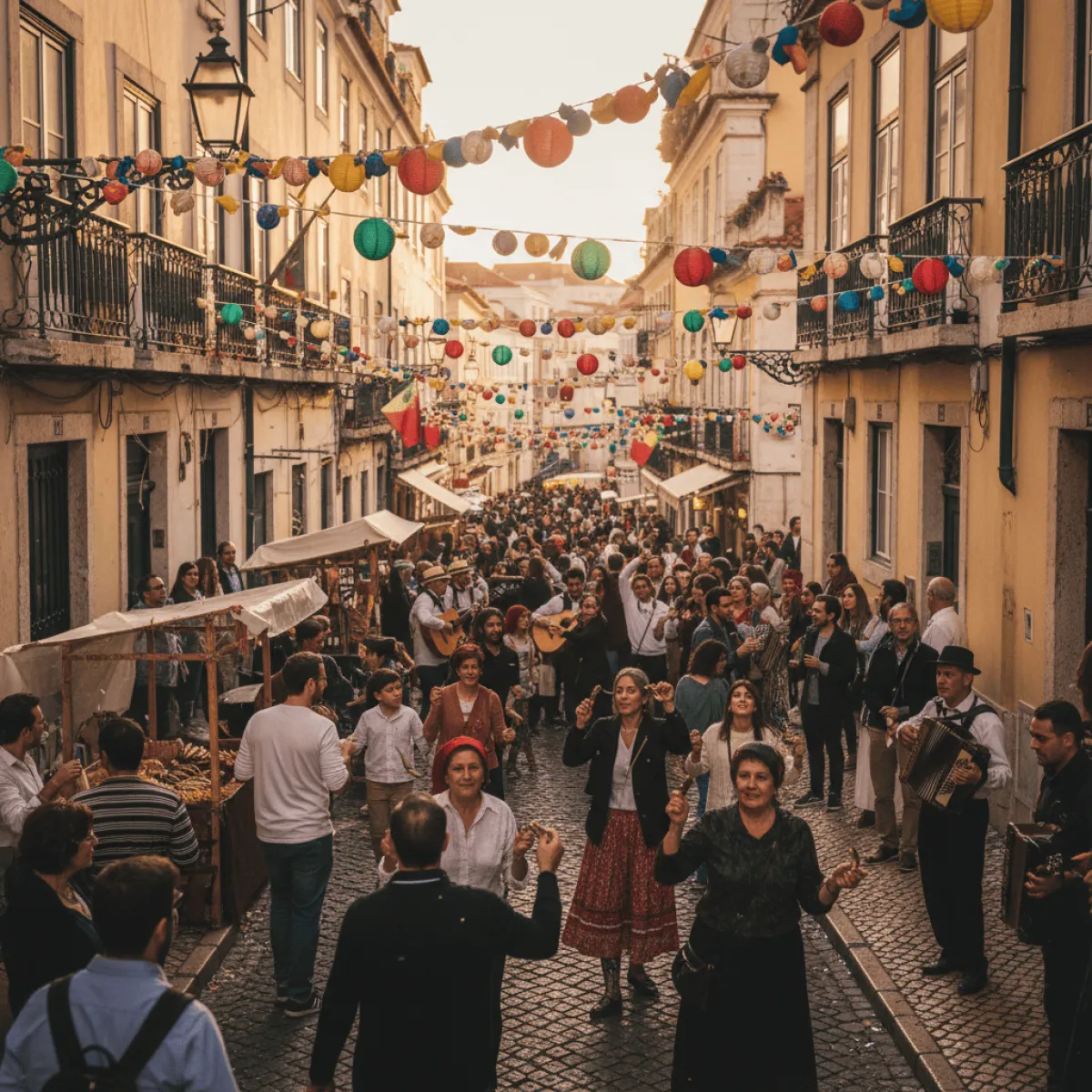
By seven in the evening on the 12th of June, any narrow street in Alfama smells of two things at once: grilling sardines and basil. Smoke rises from improvised grills propped on cinder blocks, speakers dangle from balconies blaring pimba music at a volume that rattles windowpanes, and somebody is always, always shouting up to a neighbour on the fourth floor asking for more beer. This is not a staged spectacle for visitors. It is the most Lisbon night of the year, and if there is one time to actually understand the city, it is not August with 40-degree heat and cruise ships, it is now, with cheap basil plants in terracotta pots and three-euro pork sandwiches.
The Santos Populares technically run all through June, but anyone from here knows there are two dates that matter: the night of the 12th into the 13th, the eve of Santo António, Lisbon's patron saint, and the night of the 23rd into the 24th, São João, which really belongs to Porto but which Lisbon celebrates anyway. In between, São Pedro on the 28th is quieter, more about the villages on the outskirts. Doing all three means an iron liver and tired ears.
What is this, exactly?
Technically, it is Christian. Santo António was born in Lisbon in 1195, near the Sé cathedral, and his feast day marks his death in Padua. In practice, the Catholic calendar mixed long ago with older summer-solstice rituals tied to fire, fertility, and the simple urge to eat outdoors once the rain finally stops. Hence the bonfires, hence the basil (which is given with a little rhymed verse and which you must never sniff with your nose, only brush with a hand), hence the collective Santo António weddings, hence the sardine, June's cheapest, most abundant fish.
If you want to make sense of the web of traditions, neighbourhood codes and quiet rules of the capital before you arrive, take time to read our guide to local culture and Lisbon traditions, which explains why the old man who always sits on the same bench at the tasca matters more than any monument.
Where to go on the night of the 12th
There are four neighbourhoods that matter, and one piece of general advice: arrive early, but not too early. Before nine in the evening, the streets are dead and the festival stalls are still bolting their grills together. After eleven, you cannot move. The golden window is between nine-thirty and midnight, after which you decide whether to push on until four in the morning or retreat to a taxi while there still are any.
Alfama: the postcard version, flaws included
Alfama is Santo António's home turf. It is also where the narrowest lanes, the trickiest staircases, and the densest concentration of tourists converge. Accept this and enjoy it. Walk up Rua de São Pedro from the Campo das Cebolas, pass the cathedral, and descend Rua de São Tomé to Largo de Santa Luzia. Along the way are dozens of pop-up tasquinhas with plastic tables serving sardines on bread (the right way: a grilled sardine pressed onto a slab of corn bread that soaks up the oil), fried cuttlefish, snails if you are early enough in the season, and beer in plastic cups for around one euro fifty.
If you want a proper pork sandwich away from the longest queues, the detour to As Bifanas do Afonso, near Praça da Figueira, is worth it. Mustard, small draft beer, and back to Alfama with your stomach lined, the only honest way to make the night last.
Bica and Bairro Alto: for slope-lovers and fado seekers
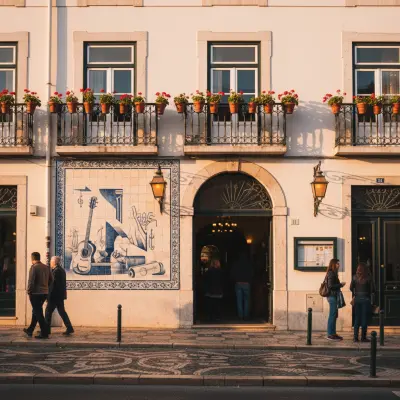
Bica has the best visual setup: the funicular gliding down the middle of the street, tiled balconies, people sitting on steps eating. It is also where you hear bairro fado, the amateur kind, neighbours singing to neighbours, no stage, no tasting menu. For the professional version, with proper salt cod and serious fadistas, book weeks in advance at O Faia in Bairro Alto, and go a different night. Being locked inside a restaurant on the 12th would be a waste of the party.
Bairro Alto itself turns into an obstacle course: a festival in every square, dozens of bars selling shots in test tubes, hen parties in matching t-shirts. It is not the most authentic spot, but it is where everyone ends up anyway, even when they swore they wouldn't.
Madragoa and Madre de Deus: the locals' getaway
This is where most Lisboetas flee when Alfama becomes impossible. Madragoa, to the south, keeps a village scale. Madre de Deus, to the east, has a bigger festival but a crowd that is almost entirely from the neighbourhood. In both, the price of a sardine drops, and so does the volume of American English. If you have been in Lisbon more than three days and already done the monuments, this is where you should go.
The sardine, the cabbage soup, and the economics of the night
Let's do the maths. A grilled sardine on the street costs between two and two-and-a-half euros. A reasonable adult-sized portion: five sardines, plus corn bread, plus grilled pepper, plus a marinated pepper-and-onion salad. Add a caldo verde (around three euros) and two beers. You are at roughly fifteen euros per head, tip included, without setting foot in a restaurant. Watch out for stalls that work on prepaid wristbands, and stalls selling frozen Moroccan sardines (common, but legally required to display a sign). Read before you pay.
If you want to vary, there are bifanas (do not confuse with prego), grilled pork strips, and the classic plastic cup of beer with a fat chunk of chouriço bobbing in it, a fair-ground favourite for at least a century. For something sweet, hunt down farturas (long deep-fried churros), malassadas, and cinnamon rice pudding in cardboard tubs.
The basil, the matchmaker saint, and the small rituals
The manjerico, that low bush of small round leaves smelling faintly of anise, is the visual emblem of the festival. You buy one on the street for three or four euros, always with a folded paper stuck into the middle bearing a popular four-line verse. The verses range from sweetly romantic to outright filthy depending on who printed them. You do not sniff the basil with your nose. You brush it with the back of your hand and smell the hand. It is one of the oldest rituals of the festival, and nobody can quite explain why.
Santo António is also the saint of marriages. On the morning of the 12th, the Sé cathedral hosts the Casamentos de Santo António, twenty-something couples chosen by the city council from among Lisbon's less privileged residents, all married at once, complete with motorcade and public-television broadcast. It is a spectacle that blends solidarity, kitsch and urban sociology in equal measure.
The Marchas Populares: the parade that divides opinion
On the night of the 12th, before the street feast, the Marchas Populares come down Avenida da Liberdade between 9pm and midnight. Each Lisbon neighbourhood presents a march: costumes sewn over months, choreography rehearsed in municipal halls, an original song written for the year. It is urban folklore with all the good and bad that implies: people pouring thousands of hours of love into something, but also unintended kitsch and questionable sponsorships.
Watching from the Avenida is free but tiring. You need to arrive before eight to find a spot behind the railing. There are paid tickets to the final at the Altice Arena, but that is for diehards. Honest advice: watch half an hour, take in the aesthetic, then peel off for dinner.
What if you prefer the day to the night?
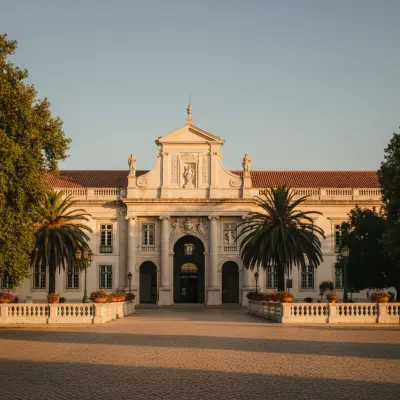
Anyone who cannot face the crowd can use the 13th, a municipal holiday, to do Lisbon with the streets half-empty and the traffic reduced. Museums are open and the breeze is right for outdoor walking. A morning at the Museu Nacional de Arte Antiga, in Santos, with its riverside garden, is the exact antithesis of the night before: quiet rooms, the Nuno Gonçalves panels, and a museum café with a decent pastel de nata.
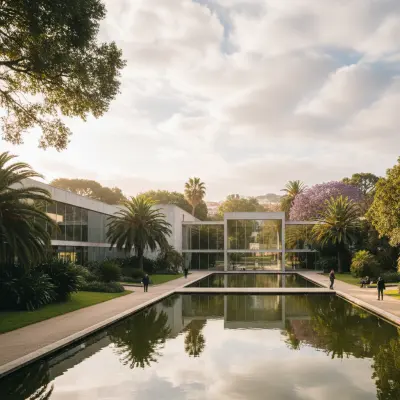
For the afternoon, change your axis. The Museu Calouste Gulbenkian, with its Armenian, Persian and Egyptian collections, plus the garden, is the place where Lisbon briefly feels like a northern European capital. Coffee at the garden kiosk, library open, and time to remember that not everything in this city has to happen in plastic cups.
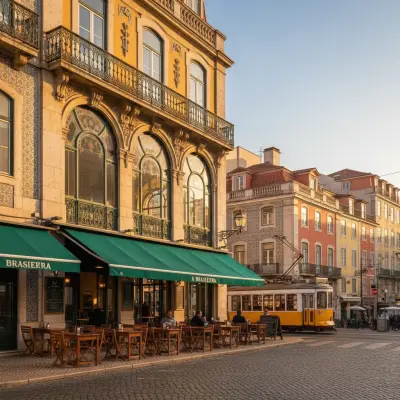
To round off the afternoon, do what pretentious Lisboetas do: drink a coffee at A Brasileira in Chiado, stand at the counter (the terrace is overpriced and overrun by tourists), order a bica and a pastry, and watch the city walk by. It is a cliché, but a cliché that has worked since 1905.
Getting around during the Santos
Forget driving. On the 12th, much of the Baixa, the Castle area, Mouraria, Alfama and Bairro Alto are closed to traffic. Taxis and Ubers only pick up outside the historic neighbourhoods, and surge pricing kicks in after 2am. The metro runs until 1am, and CARRIS adds extra night buses.
A bicycle is a brilliant option for the 13th, when traffic is light and the city is in slow motion. If you have never cycled Lisbon, start with a guided riverside cycling tour with Bike a Wish, electric bikes included, ideal if you do not want to push a regular bicycle up Avenida 24 de Julho. For more adventurous types, the downhill route from the top of the city to Belém is mostly gravity-assisted, with stops at viewpoints.
Where to sleep, where NOT to sleep
If you sleep in Alfama on the 12th, you are not sleeping. You are resting between Portuguese schlager songs. Hotels in the Castle area, Mouraria, Graça and Bairro Alto get music until four in the morning, fireworks, and singing in the street. Charming, but skip it if you are travelling with small children or in serious jet lag.
Quieter alternatives for the 12th: Lapa, Estrela, Campo de Ourique, the Avenidas Novas district. They are a 15-minute taxi from the epicentre but guarantee actual sleep. Or base yourself in Sintra or Cascais and use late trains (CP extends its schedule on the 12th). If you have never been to Sintra, it pays to understand the layout first. Our Sintra neighbourhood guide helps you decide where to stay and what to see before you go up the hill.
The rest of the month: São João and São Pedro
On the 23rd of June, São João night, Lisbon is more discreet than Porto, but there are arraiais in the same neighbourhoods and plastic squeaky hammers on sale on every corner (Lisbon also plays the hammer game, though with less hysteria). It is a good night to repeat the sardine in less crowded spots.
São Pedro, on the 28th, is the fishermen's saint, celebrated harder in Sintra, Sesimbra and Seixal. For a less touristy version of the festival, cross the Tagus by catamaran to Seixal or take a train to Sintra. The festivities run from the weekend before to the weekend after, and each town has its own habits.
Eating sweet the next day
The Santos are savoury, but Portugal never forgets sugar. If you want to keep exploring the geography of traditional sweets after the festival, look just a few kilometres outside Lisbon. Our guide to Easter sweets in Mafra, though tied to another season, points to the bakeries and ovens of the region that keep working through summer, with rich flaky pastries and queijadas for the afternoon snack of the 13th, when nobody wants to look at another sardine.
Five final rules to not ruin your night
- Do not wear white shoes, and do not wear new shoes. The pavement is a thin film of sardine fat, spilled beer and, occasionally, vomit.
- Carry small notes. Many stalls do not take cards, and the nearest cash machine will have a half-hour queue.
- Do not sniff the basil with your nose. Seriously.
- Do not try the staircases of Alfama in heels. The stone has been polished by seven centuries of feet. I have seen ankles snap.
- Do not leave without saying "viva Santo António" at least once, even quietly. It is free, and the saint appreciates the gesture.
In the end, the Santos Populares are not about the saints, the sardines, or the bonfire. They are about the fact that Lisbon, for three nights, stops being an administered city and goes back to being a lived city, where everybody is in the street at the same time, eating more than they should and singing badly the songs they know by heart. If you can see this without cynicism, you have understood the city. If not, there is always the Museum of Ancient Art.