Ribeira Grande: Surf, Black Sand, and Atlantic Swell
On São Miguel's north coast, Ribeira Grande hides the Azores' best waves on beaches of black volcanic sand. From Santa Bárbara to Monte Verde, surfing here is still a crowd-free experience, but the secret is getting out.
There's a reason surfers who discover São Miguel's north coast don't talk about it much. It's not snobbery, it's self-preservation. Ribeira Grande, the Azores' second-largest city but first in wave quality, still flies under mass tourism's radar. And frankly, those who surf there prefer it that way.
But let's be honest: the secret is leaking. The World Surf League has visited Santa Bárbara, surf schools have multiplied, and in summer months you'll spot German-plated vans parked by the beach. Still, compared to Ericeira or Peniche on the mainland, Ribeira Grande is another planet, literally volcanic, with black sand beaches that absorb heat and a landscape that looks like it belongs to a different geological era.
Santa Bárbara: Ground Zero
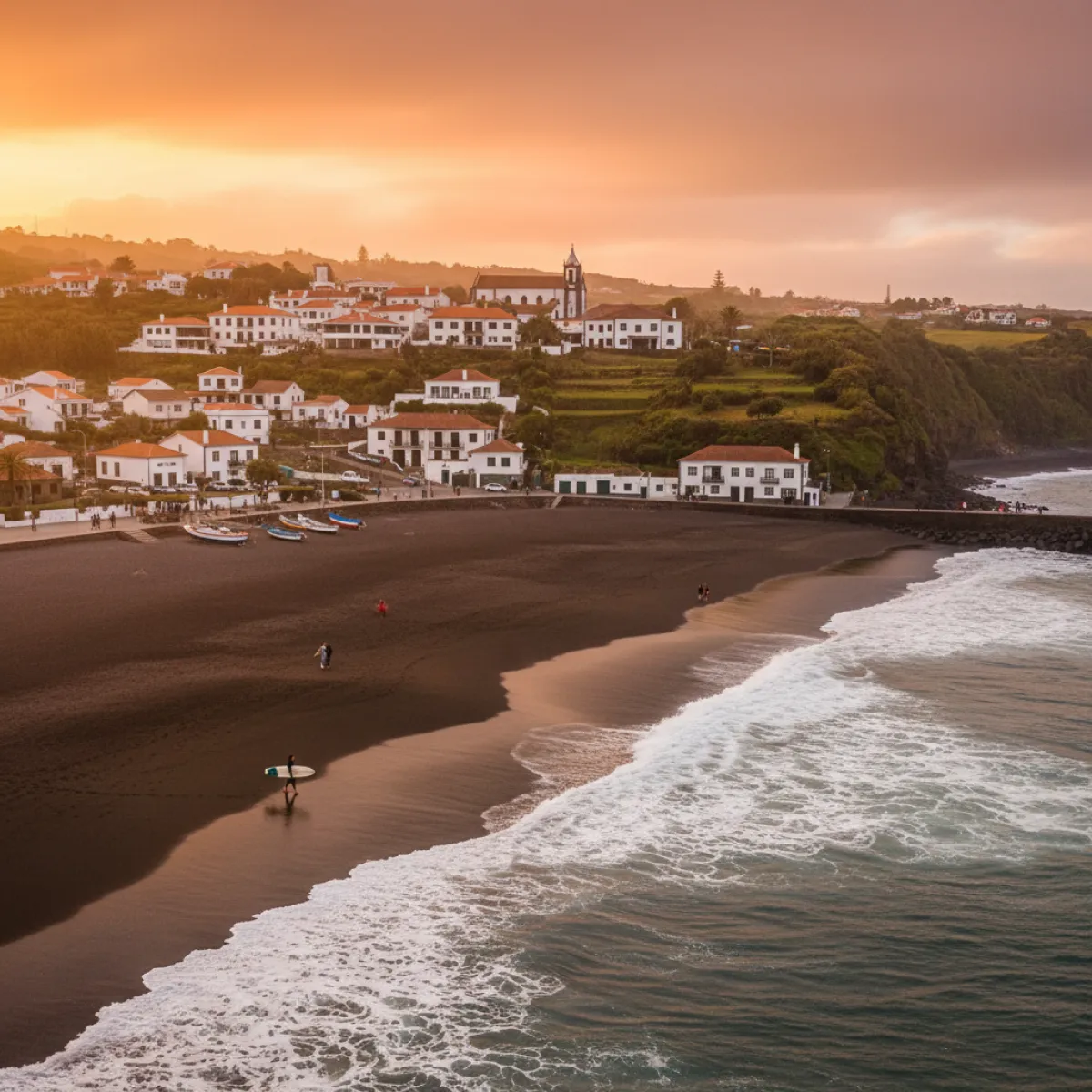
There's no getting around it: Santa Bárbara is the gravitational centre of surfing in Ribeira Grande. The beach stretches nearly a kilometre of black volcanic sand, framed by green cliffs and, on clear days, views toward Pico da Vara in the distance. The beach break is consistent, working well from half a metre to two and a half metres, and, crucially, forgiving enough for beginners without boring intermediates.
If you've never stood on a board, Santa Bárbara is an honest place to start. The black sand might look intimidating in photos, but the sandy bottom is safer than many of mainland Portugal's reef breaks. Local schools run sessions from the beach, with group lessons typically around €35-45 (check locally for current pricing). My advice: book the first lesson of the morning. At 8am, the beach is nearly empty, the wind hasn't woken up yet, and the light hitting black sand is something else entirely.
For those who already know what they're doing, a dawn patrol on Santa Bárbara's black sands is the kind of session that reminds you why you started surfing. No crowds, no wave competition, just you and the Atlantic on one of Europe's most beautiful beaches, even if Europe hasn't figured that out yet.
Beyond Santa Bárbara: The Other Waves
The mistake most visitors make is thinking Ribeira Grande equals Santa Bárbara. It doesn't. São Miguel's north coast has a string of spots worth knowing about, depending on conditions.
Praia do Monte Verde, east of Santa Bárbara, is more sheltered and works particularly well on northwest swells. It's less photogenic than its neighbour, but on big days, when Santa Bárbara gets too gnarly for mere mortals, Monte Verde offers a more manageable alternative. Don't expect infrastructure, no beach bar, no hot showers. Bring water and a towel.
Further west, the Mosteiros area (technically outside Ribeira Grande's municipality, but a short drive) has more powerful waves and a dramatic backdrop of sea stacks. Fair warning: this is experienced surfers only, with currents that demand respect and careful reading of the ocean.
Don't Surf? No Problem
Here's something surf guides rarely admit: one of the best experiences on São Miguel's north coast is simply watching. Surfing is visual spectacle, and Santa Bárbara offers a natural grandstand, the cliff by the car park gives an elevated view over the entire beach, and in late afternoon, when golden light hits black sand and surfers become silhouettes cut against white foam, it's hard to look away.
If you want to combine contemplation with something more active, the coastline between Ribeira Grande and the Gorreana tea plantations offers some of the Azores' best coastal trails. The walk from Praia dos Moinhos to Gorreana covers about 8 kilometres, passes through jaw-dropping scenery, and ends with the civilised reward of freshly picked tea. Visiting the Gorreana and Porto Formoso estates is one of the most singular experiences you can have in Europe, tea grown in the middle of the Atlantic, continuing a tradition dating back to the 19th century.
Then there's bodyboarding, which has a strong culture in the Azores and doesn't require surf's steep learning curve. Many of Ribeira Grande's beaches are excellent for bodyboarding, with waves breaking close to shore that deliver fast, satisfying rides even for beginners. You can rent a bodyboard for modest prices from local surf shops.
When to Go and What to Expect
Surf season in the Azores works the opposite of what many people assume. Summer (June to September) brings smaller, more consistent waves, perfect for learning and mellow sessions. Winter (October to March) is when Atlantic swells arrive with force, and Santa Bárbara can see days with waves at two to three metres or more. If you're a beginner, come in summer. If you want real waves, winter's your window, but bring a 4/3mm wetsuit, because water temperatures hover around 16-17°C.
One important detail: weather in the Azores changes four times an hour. You can start the morning in blazing sunshine and be under horizontal rain twenty minutes later. Don't let it scare you, rain in the Azores is almost always passing, and in the water you won't even notice it. Bring layers and meteorological resignation.
As for access, Ribeira Grande is about 25 minutes from Ponta Delgada via the regional road. Having a car is nearly essential if you want to explore multiple spots, buses exist but are infrequent and don't serve every beach. Rent at the airport and gain the freedom to chase whatever conditions the day offers.
Eating After the Session
Surfing builds a savage appetite, and Ribeira Grande won't let you down. The historic town centre has a food scene that punches above its weight for a city this size.
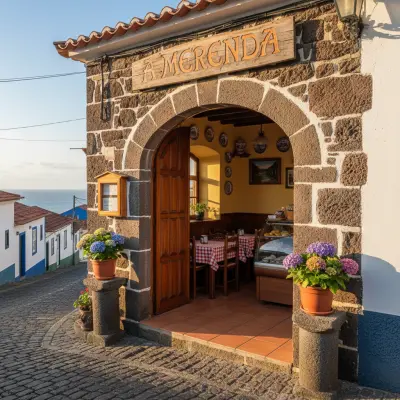
A Merenda is a mandatory stop, the kind of restaurant where the food is honest, prices are fair, and nobody's trying to reinvent the wheel. It's exactly what you want after three hours in the water: a solid meal without pretensions.
More broadly, the Azores are paradise for anyone who likes eating well without spending a fortune. Fish is fresh (you're on an island in the middle of the Atlantic, it would be concerning if it weren't), meat comes from cattle raised on genuinely green pastures, and dairy products are among Portugal's finest. Don't leave São Miguel without trying the local cheese and bolo lêvedo from Furnas, the latter is a slightly flattened sweet bread that works as breakfast, snack, or existential comfort.
If you want to expand your gastronomic horizons beyond Ribeira Grande, the drive to Ponta Delgada is worth it for a proper gastronomic exploration of the island's capital. The restaurant scene there is increasingly interesting, going well beyond the Furnas cozido that everyone already knows about.
Surf and the Rest: Building the Trip
Ribeira Grande works perfectly as a base for a surf trip to São Miguel, but limiting yourself to waves would be a waste. The island has an absurd density of extraordinary things per square metre, and most can be combined with morning surf sessions.
A well-structured day looks something like this: dawn surf at Santa Bárbara, breakfast in Ribeira Grande's centre, visit the tea plantations in the morning, lunch, and an afternoon second session if conditions warrant, or a hike, a visit to Furnas, or simply a nap. The Azores are one of those rare places where doing nothing is a perfectly legitimate activity.
For those wanting to explore more of the Azores beyond São Miguel, Faial island offers an interesting counterpoint. Horta's Atlantic cosmopolitanism and its panoramic viewpoints are worth the inter-island trip. But that's another story and another journey.
The Essentials
- Best time for beginners: June to September, smaller waves, more stable weather
- Best time for experienced surfers: October to March, consistent Atlantic swells
- Water temperature: 16-22°C depending on season (wetsuit essential in winter)
- Main spot: Praia de Santa Bárbara, versatile beach break on black volcanic sand
- Surf lessons: Several schools operate at Santa Bárbara (check locally for prices and schedules)
- Transport: Rental car strongly recommended for exploring multiple spots
- Distance from Ponta Delgada: ~25 minutes by road
Ribeira Grande doesn't need marketing or superlatives. The waves are there, the black sand is there, and most days, you'll have them almost to yourself. In a world where surf spots fill up faster than they're discovered, that's worth more than any magazine ranking.