Ribeira Grande Market Crawl: Buy, Taste, Skip
Ribeira Grande's municipal market doesn't have Ponta Delgada's scale, but it has fresh cheese made that morning and warm bolo lêvedo. An honest guide to what's worth buying, tasting on the spot, and what you can safely skip.
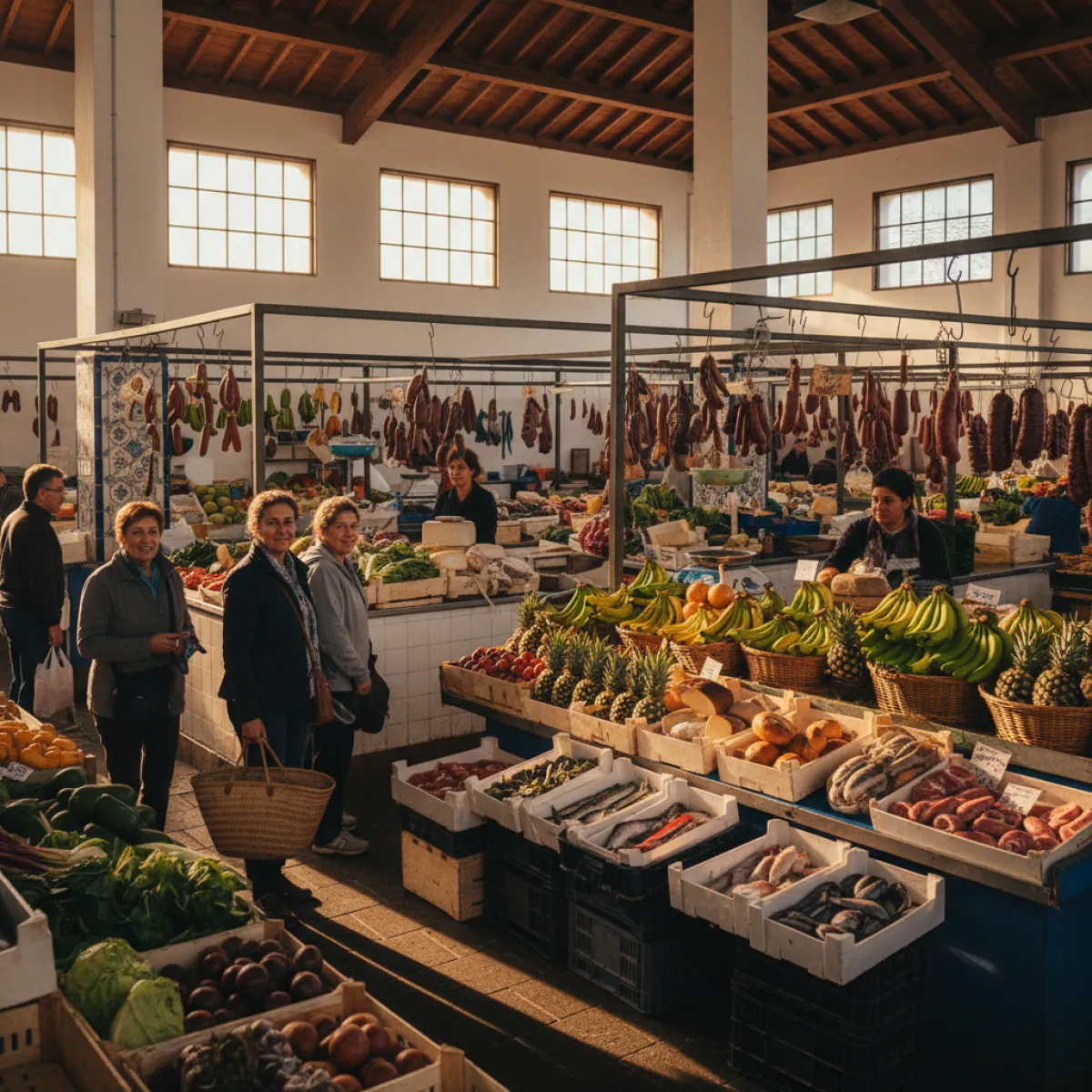
There's a simple rule for markets in the Azores: if the vendor calls you "my friend" before telling you the price, you're in the wrong spot. In Ribeira Grande, the municipal market isn't big, doesn't have the fame of Lisbon's Bolhão revival or Ponta Delgada's scale, but it has something those places don't, a near-certainty that the person selling you cheese made it with their own hands, or at the very least knows the cow by name.
The Municipal Market: Get There Early or Don't Bother
Ribeira Grande's Mercado Municipal runs mornings, and I mean proper mornings. By 7:30am there's already movement. By 10am, the best producers have packed up. Show up at noon and you'll find half a dozen stalls with fruit that's seen better days and a silence that makes you wonder if you imagined the whole thing.
The building itself won't win architecture prizes. It's functional, clean, and carries that particular market smell, fresh herbs mixing with fish mixing with someone's coffee against a pillar. Don't come expecting Instagrammable tile work. Come expecting produce.
What to Actually Buy
Fresh island cheese
Fresh cheese from São Miguel is something else entirely. Not the cured island cheese you can find in any mainland supermarket, the fresh stuff, made that morning or the night before, still weeping whey. Ask to taste before buying. Nobody's offended, and if they are, move to the next stall. Good Micalense fresh cheese has a slightly tart, creamy flavour that needs nothing more than a piece of corn bread alongside it.
Azorean pineapple
Yes, pineapple in the Azores. Greenhouse-grown since the 19th century, and no, it's nothing like the Costa Rican imports at the supermarket. It's smaller, sweeter, with a balanced acidity that makes it perfect on its own. At the market, look for ones sold directly by local growers. It'll cost more than imported pineapple, the difference is worth every cent. If someone tries to sell you "Azorean" pineapple at bargain prices, be suspicious.
Tea
Ribeira Grande is literally the gateway to the Gorreana and Porto Formoso tea estates, Europe's only tea plantations. At the market, you'll sometimes find loose-leaf tea from local production. Gorreana's green tea is the most interesting: it has a different profile from Japanese or Chinese green teas, more herbaceous, less bitter. Buy one box to take home and another to try at your hotel.
Chilli peppers and spices
Azorean chilli doesn't mess around. It's small, red, and delivers a slow heat that settles in and stays. You'll find homemade chilli sauce in recycled bottles, buy one. It's the best edible souvenir you'll take from the Azores, and it keeps for months in the fridge.
Yams and sweet potato
If you have a kitchen where you're staying, São Miguel yams are non-negotiable. Boiled with a bit of butter and salt, they're a side dish that makes you forget potatoes exist. The Azorean sweet potato also deserves attention, smaller and sweeter than mainland varieties.
What to Taste on the Spot
You won't find a food court at Ribeira Grande's market. What you will find, with luck, is someone selling bolo lêvedo, the round, slightly sweet bread that's practically the town's symbol. Ribeira Grande's bolo lêvedo is different from anywhere else's. It's fluffy, gently sweet, and perfect with butter and a slice of that fresh cheese you just bought. Eat it warm. Cold is still good, but warm is another level entirely.
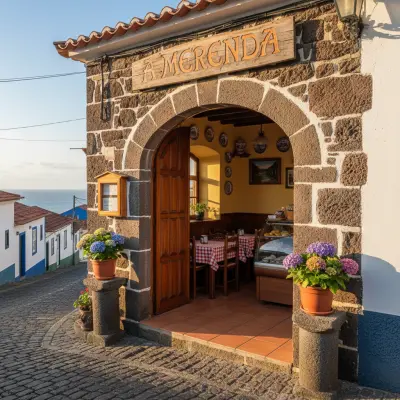
When the market has given you everything it has, the logical next stop is A Merenda for a lunch that works as a natural extension of the market experience. It's the kind of place where food arrives without pretension and with real flavour, exactly what you want after a morning of prowling stalls.
What to Skip
I'll be direct:
- Liqueurs in decorative bottles. Those rooster-shaped or Azorean-house-shaped bottles filled with passion fruit liqueur? The liqueur is mediocre and the bottle ends up in the bin six months later. If you want proper passion fruit liqueur, ask the market vendors who makes the best, they know.
- "Handicrafts" made in China. Fridge magnets with "Açores" slapped over a stock photo? Tablecloths with embroidery that clearly wasn't done by hand? Walk on. If you want real Azorean embroidery, find a specialist shop and be prepared to pay what it's actually worth.
- Tinned goods with unclear provenance. São Miguel has excellent tuna conserves, but unlabelled tins or unknown brands sometimes appear at the market. Stick with brands that clearly state Azorean origin, Santa Catarina is a safe bet.
- Out-of-season fruit sold as "local." If it's March and someone's selling you Azorean strawberries, ask questions. Producer honesty is generally high, but always verify.
After the Market: Keep Going
Ribeira Grande is a town you walk without effort. After the market, stroll through the historic centre to the Estrela church and the ribeira that gives the town its name. The eight-arch bridge over the stream is probably the town's most photographed postcard, deservedly so.
If the morning's market has whetted your appetite for more island gastronomy, our gastronomic guide to Ponta Delgada is the next step, the city is twenty minutes away and has a restaurant scene that perfectly complements what you tasted in Ribeira Grande.
If it's the ocean calling, São Miguel's north coast from Ribeira Grande is spectacular. Santa Bárbara beach is one of the Azores' best surf spots, with black volcanic sand and waves that draw surfers from across Europe. Even if you don't surf, the scenery alone is worth the detour.
And if your trip includes a hop to Faial, the 24-hour Horta guide gives you a tight itinerary to make the most of a stopover.
Practical Notes
The market runs mornings, with the most activity on Saturdays. Check exact hours locally, they can shift with the season. Bring reusable bags; not all vendors supply them, and those who do appreciate you bringing your own. Cash is king: many producers don't take cards. There's an ATM in the town centre that sorts that out.
To reach Ribeira Grande from Ponta Delgada, it's about 20 minutes by car along the EN1-1A. There are buses on São Miguel's public transport network, but schedules are limited and not really compatible with an early-morning market run. If you've rented a car (and you should have rented a car), parking in the centre isn't a problem.
A morning at Ribeira Grande's market won't change your life. But it'll change your temporary pantry, give you a real sense of what this island produces, and feed you, literally and otherwise, better than any tourist restaurant with menus in five languages. That, to me, is worth the 7am alarm.