Ribeira Grande Beyond the Postcard: What Tourists Miss
Most visitors to São Miguel drive through Ribeira Grande on their way somewhere else. That's a mistake. Between Europe's only tea plantations, the black sands of Santa Bárbara, and food without the filters, the north coast holds the most honest side of the Azores.
Ribeira Grande has a visibility problem. It sits on the north coast of São Miguel, less than thirty minutes from Ponta Delgada, and most visitors drive through it on their way to somewhere else, the crater lakes, the hot springs, the capital's old town. If they stop, it's for a quick photo of the bridge over the river before moving on. That's a mistake. Because Ribeira Grande is probably the most honest town in the Azores: it doesn't try to be anything it isn't, and that's precisely why it deserves your time.
A Town That Works
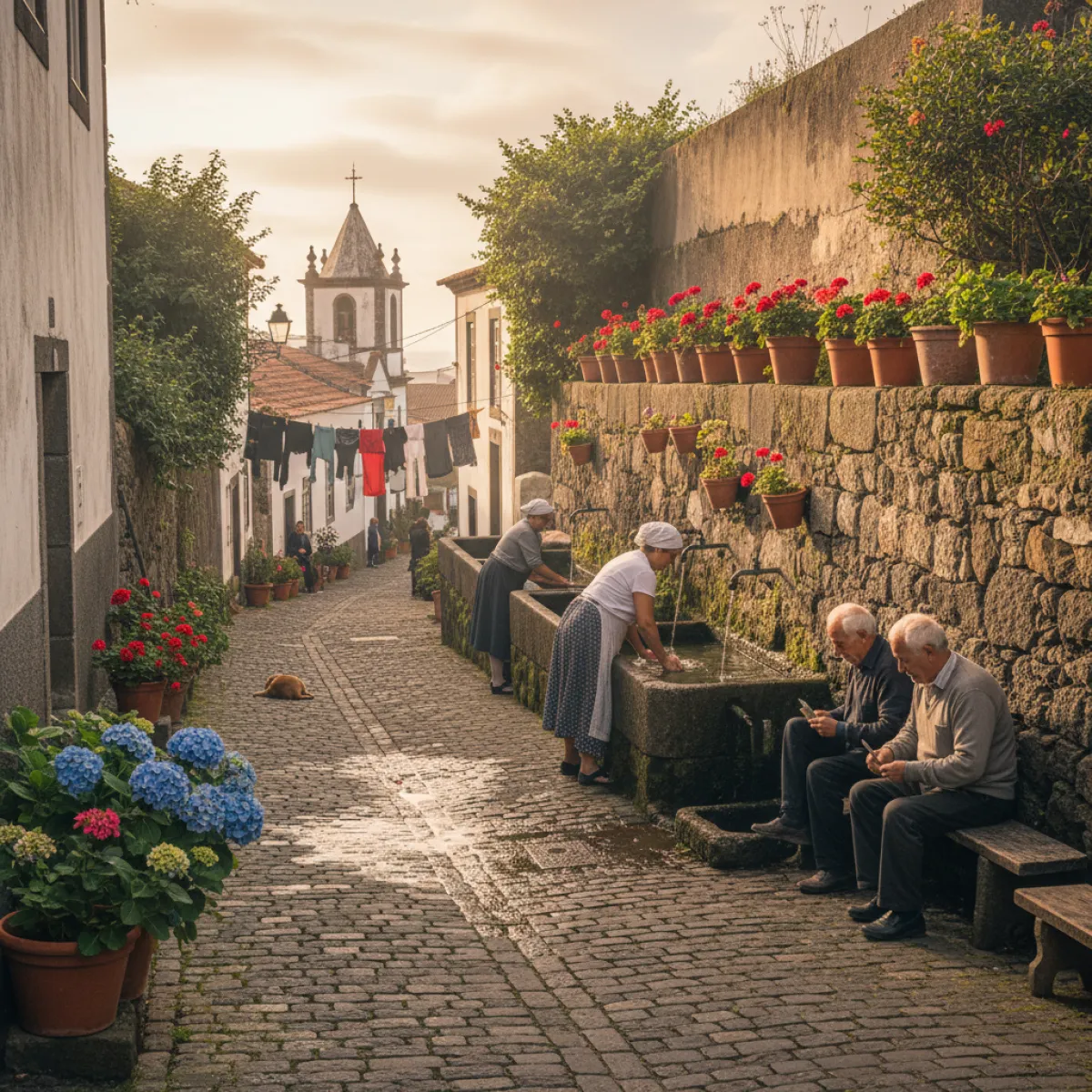
The first thing you notice about Ribeira Grande is that it's not a set piece. It's a working town. There are hardware shops, grocers with tomatoes stacked outside the door, cafés where old men sit from morning until dark without anyone asking them to order something else. The historic centre, built around the Igreja Matriz do Espírito Santo and the river that gives the town its name, is exactly the right size, small enough to walk in half an hour, big enough to hold surprises.
The architecture is that understated Azorean baroque: white façades with black basalt trim that don't need dramatic lighting to impress. The Clock Tower in the centre is the main reference point. It's not monumental, it's useful, which is better. From there, any direction works.
The North Coast Is a Different Film
São Miguel's north coast looks nothing like its south coast. It's rougher, greener, more windswept. The sea here is serious and the beaches aren't for laying out a towel, they're for respecting. And that's exactly what makes them extraordinary.
Santa Bárbara is the perfect example. A beach of black volcanic sand, framed by cliffs draped in vegetation, with a swell that draws surfers from across Europe. If you've never surfed on black sand with the North Atlantic roaring around you, read what we wrote about a dawn patrol session at Santa Bárbara, it's an experience that reframes what the Azores can be. It's not Bali, it doesn't want to be. It's better, because it's real and because the water is cold enough to remind you you're alive.
For non-surfers, the walk along the coast between Ribeira Grande and Santa Bárbara is worth the trip alone. The contrast between the impossibly green pastures and the black basalt coastal formations is something no photograph can fully capture.
The Tea Nobody Expected
Let's be direct: most people don't associate Europe with tea production. And yet, a few kilometres from Ribeira Grande, you'll find the only tea plantations on the continent. Gorreana, operating since 1883, and Porto Formoso, smaller but equally fascinating.
We've written in detail about the Gorreana and Porto Formoso estates, and it's worth reading before you go. But the short version is this: rows of tea bushes stretching to the horizon with the ocean behind them is one of the most unlikely and beautiful images you'll find in Portugal. Gorreana offers free, self-guided visits, you can walk the fields, see the factory (which still uses 19th-century machinery), and taste the different teas at the end. Take the green tea home, it's surprisingly good and costs just a few euros.
Porto Formoso is more intimate and less visited. If you have to choose one, it depends on what you're after: scale and history at Gorreana, quiet at Porto Formoso. My advice: do both, they're ten minutes apart.
Eating in Ribeira Grande
The food in Ribeira Grande is São Miguel's food without the filters. Don't expect tasting menus with Azorean passionfruit foam, expect generous portions of cozido, fresh fish, and São Jorge cheese that arrives by boat.
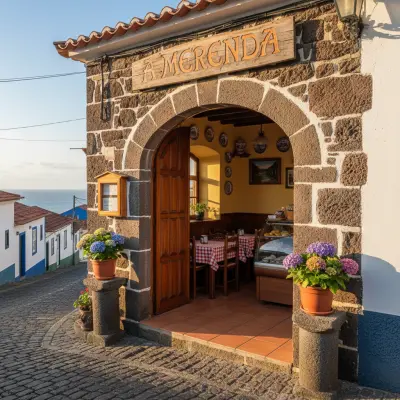
A Merenda is the kind of restaurant that makes Ribeira Grande worth a lunch stop. No pretensions, no décor designed for Instagram, but food that tastes exactly the way it should. It's the kind of place where locals eat, which, in my experience, is always the best indicator.
Beyond that, the golden rule in the Azores applies here: if you see fishermen or farmers eating somewhere, follow them. Avoid the restaurants next to tourist attractions and look for the ones on side streets in the centre. Regional beef steak with local chili pepper sauce, bife com molho de pimenta da terra, is almost always a safe bet at any table on São Miguel.
For those who want to explore the island's food scene in more depth, our guide to a gastronomic trek through Ponta Delgada is a good companion piece, but note that Ponta Delgada and Ribeira Grande are different worlds at the table. Ponta Delgada has more range and more variety. Ribeira Grande has more authenticity.
What to Do With a Day
Ribeira Grande doesn't need a week. It needs one full day, well spent. Here's how I'd do it:
- Early morning: Coffee in the centre, walk the streets before the shops open. That's when the town is most itself.
- Mid-morning: Tea plantations, Gorreana first, Porto Formoso second. Allow two hours total.
- Lunch: Back to the centre for food. A Merenda or any tasca that looks full of locals.
- Afternoon: Santa Bárbara beach. Even if you don't surf, the coastal walk and the scenery are worth the drive.
- Late afternoon: Back to the centre for a last coffee and a walk along the river.
If you have a rental car, and you should, because buses on São Miguel exist but aren't practical for sightseeing, Ribeira Grande is about 25 minutes from Ponta Delgada via the regional road. Parking in the centre is easy and, in most cases, free.
The Bigger Picture
The Azores are changing. Tourism has grown significantly in recent years, and Ponta Delgada is starting to feel the pressure. Ribeira Grande hasn't yet, and that's what makes it so interesting right now. Not in five years, when there are more hostels and more menus in English. Now.
If you're planning an Azores trip and want to go beyond São Miguel, our guide to 24 hours in Horta shows another side of the archipelago, more cosmopolitan, more oriented toward the open sea. And for anyone chasing the best views on Faial, the panoramic views in Horta are hard to beat.
But let's come back to Ribeira Grande. What this town offers isn't spectacle, it's substance. A real town, with real people, that doesn't need your approval but will surprise you if you give it time. This isn't the Azores of drone footage and Instagram reels. It's the real Azores. And it's considerably better.