Ribeira Brava with Kids: The No-Nonsense Guide
Ribeira Brava has no water parks or bouncy castles. It has a beach with free pools, a museum kids won't hate, and black scabbard fish with fried banana. Sometimes, that's all a family needs.
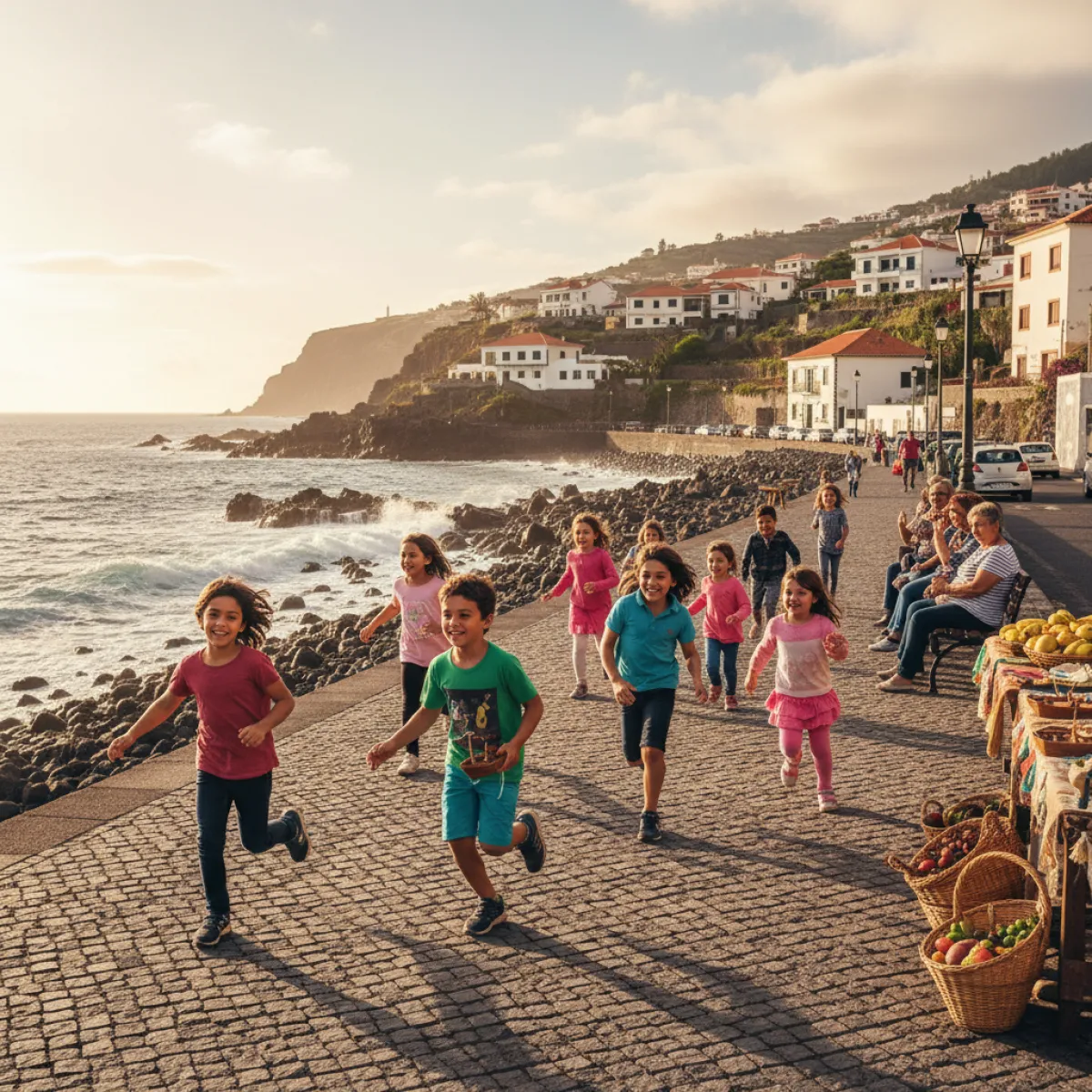
I'll be honest: Madeira is not the most obvious family destination. The cliffs are vertigo-inducing, the levada walks don't always have safety barriers, and half the restaurants involve stone staircases that would make a physiotherapist weep. But Ribeira Brava? Ribeira Brava is the exception that proves the island works, and works well, for families with kids.
It's a compact town, flat in the centre, with a sheltered beach, free-access swimming pools, a museum that kids won't hate, and food that doesn't need a children's menu to succeed. There's no mini-golf, no inflatable castles by the sea. It's a real town, with real people, where children happen to have a genuinely good time.
The Beach and Bathing Complex: Where Everything Starts
Ribeira Brava's beach is pebble, like almost everything in Madeira, but it has something most island beaches don't: two pools right by the ocean, one of them dedicated to children. The bathing complex is free to access, which in Madeira already feels like winning the lottery. There are changing rooms (small fee), sun loungers, and a bar-restaurant right there.
The beach area has relatively calm waters by Madeiran standards, and during summer months there's a lifeguard on duty. For kids under six, the children's pool is frankly better than the sea, which can have unexpected swells. For older kids, there are kayaks and banana boats available on the beach, running around €10 per child.
A practical tip: arrive before 10am if you're visiting in summer. After noon, the sun loungers vanish and shade is scarce. Bring your own beach umbrella if you can.
The Ethnographic Museum: Yes, the Kids Will Like It
I know, "ethnographic museum" doesn't exactly scream fun for children. But the Museu Etnográfico da Madeira, on Rua de São Francisco, works surprisingly well for families. Why? Because it has real things. Old fishing boats, working looms, agricultural tools that look like they belong in an adventure film.
Kids over five tend to be fascinated by the wool section, which shows the entire process from sheep to fabric. It's not interactive in the modern, push-button sense, but it's tangible. And the building itself, a 17th-century manor house, has that old-house feel that makes you want to explore every corner.
Admission is €2.50 for adults and €1 for young people and over-65s. Open Tuesday to Friday 9:30am to 5pm, Saturdays and Sundays 10am to 12:30pm and 1:30pm to 5:30pm. Closed Mondays and public holidays. For a family of two adults and two kids, that's €7 total. An hour and a half is more than enough.
The Church of São Bento: Brief, But Worth the Stop
Taking children to churches is, as a general rule, an exercise in negotiation and bribery. But Igreja Matriz de São Bento deserves ten minutes, even with impatient kids. The interior is rich with gilded woodwork and azulejo tiles, and the painted ceiling tends to captivate even the most restless ones, simply because it's unlike anything they're used to seeing.
The church sits in the town centre, a two-minute walk from the beach. If the kids start getting fidgety, exit through the side door and you're practically at the Forte de São Bento, which now serves as a tourist information office. The fortress is small, built in 1708 to protect the coast from corsairs, and that story, if you tell it right, is worth more than any audio guide.
The Municipal Market: Where You Eat Properly
Ribeira Brava's Mercado Municipal sits on Rua Gago Coutinho e Sacadura Cabral, next to the fort. It's small compared to Funchal's, but that's exactly what makes it better for families. Less noise, less chaos, and the vendors have time to chat with the kids.
There are sections for fish, meat, fruit and vegetables, and a regional crafts area. For children, the highlight is the tropical fruit: Madeiran pineapple, passion fruit, custard apple. Buy two or three different pieces and do a tasting on the terrace. It's more memorable than any ice cream.
If you want lunch, there are restaurants around the market with fresh grilled fish. Espada preta com banana (black scabbard fish with banana) is Madeira's signature dish, and you'd be surprised how many children will try it, especially when they realize there's fried banana on the side. Ask for grilled rather than fried scabbard for the little ones, as it tends to be milder.
Walks with Kids: What Works and What Doesn't
I won't lie: not all of Madeira's levada walks are suitable for families. Many have unprotected drops, narrow passages, and distances that would exhaust an adult, let alone a six-year-old. But there are options that work.
The Levada do Norte, accessible from Ribeira Brava, has relatively flat sections with decent barriers. It's not the most spectacular on the island, but it's safe and short enough to avoid turning the walk into a forced march. If you want something more ambitious and have children over eight or nine with hiking experience, it's worth reading our guide to Funchal's levadas, which details the most accessible trails in the region.
For families who prefer driving, Cabo Girão is about 15 minutes by car from Ribeira Brava. The glass-floored viewpoint over Europe's second-highest sea cliff is an experience older kids love (younger ones might find it terrifying, so gauge your child's temperament before dragging them out there). The view is genuinely impressive, and there's a café on site.
A Sample Day: How to Plan It
Here's what I'd do with children aged 4 to 10 in Ribeira Brava:
- Early morning: beach and pools before the crowds. Arrive at 9am, enjoy the calm water.
- 10:30am: walk up to the centre for the Municipal Market. Buy fresh fruit and snack.
- 11am: quick visit to the Church of São Bento and the Fort.
- 11:30am: Ethnographic Museum. One hour is enough.
- 12:30pm: lunch at one of the restaurants near the market. Grilled fish, sweet potato, salad.
- 2pm: nap or downtime at your accommodation (never underestimate the power of a holiday nap).
- 4pm: back to the beach for the afternoon session, when the sun is gentler.
- 6pm: stroll along the seafront, ice cream, early dinner.
This plan has nothing heroic about it. It doesn't involve three hours in a car or epic levada hikes. That's exactly what makes it work with children.
Want to Explore More of the Island?
Ribeira Brava sits in the middle of the south coast, making it an excellent base for exploring the rest of Madeira. The drive to Santana on the north coast takes about an hour via the Via Expresso and is absolutely worth it. The traditional A-frame thatched houses are a classic attraction, and kids love them. If you're heading that way, check our 24-hour Santana itinerary so you don't miss the essentials.
Santana is also a good place to buy souvenirs with actual meaning. Forget the fridge magnets: local craftsmanship includes wicker and embroidery pieces that are the genuine article. To know what's actually worth the suitcase space, we have a dedicated guide to Santana's crafts.
Practical Tips for Survival
A few things nobody tells you before going to Madeira with children:
- Sunscreen runs out faster than you think. The altitude and the breeze are deceptive, and kids burn in under an hour. Bring factor 50 and reapply religiously.
- Closed-toe shoes for any walk, even short ones. The levadas are slippery and the beach pebbles are tough on bare feet.
- A car is almost mandatory. Public transport exists but isn't practical with tired children. Rent from Funchal airport.
- Book accommodation with a kitchen. Ribeira Brava has good supermarkets and exceptional fruit. Making breakfast at the apartment saves time, money, and patience.
- Restaurants serve large portions. One fish dish is enough for an adult and a child if you order extra sides.
Ribeira Brava doesn't appear in "best family destinations" lists. It has no water parks or organised entertainment. What it has is a town that works the way towns should: compact, with good food, clean water, and people who don't treat children as an inconvenience. Sometimes, that's everything a family needs.