Ribeira Brava at Lunchtime: Market, Espetada, Bolo do Caco
Tour buses give Ribeira Brava five minutes. Stay for lunch and you'll find a church with genuine Manueline detail, a market with no tourist theatre, and espetada on a bay laurel skewer the way it should be done. Three hours, no rush.
By noon in Ribeira Brava, the sun is high over the promenade and most of the tour buses have already pushed on toward Câmara de Lobos or Cabo Girão. The ones who stay are the ones who know: half a dozen Madeirans drinking poncha at the bar, two or three German couples confused by the menu, and the smell of burnt bay leaf drifting out of the restaurants on the main street. This is the right time to arrive. The plates come faster, there are tables without a reservation, and the early afternoon heat makes you want exactly what this southern Madeira town does best: eat slowly, drink something cold, and pretend you have nowhere to be.
Ribeira Brava gets written off as a five-minute stop: photo of the church, coffee on the square, next stop. That's a mistake. The town has one of the best combinations of market, decent espetada restaurants, and fresh bolo do caco on the entire southern coast. And unlike Funchal, you can do it all on foot without hitting a single tour guide holding a numbered flag.
Getting there and where to park (without burning the morning)
By car, it's about 25 minutes from Funchal on the VR1, exit 7. The underground car park near the promenade is the safe bet. Surface parking in summer is a lottery. By bus, Rodoeste runs regular service from Funchal (about an hour, but check schedules locally because they shift by season). If you're on a cruise, there are direct transfers, but be warned: most of them drop you at the church around 11am, which is exactly when the bigger buses arrive. Be deliberately late.
The town is built around two points: the mouth of the river (with the promenade and the small São Bento fort) and the church square, two hundred metres up. Everything worth doing fits inside a ten-minute walking radius. Use that to your advantage.
Start with the church: it's better than you think
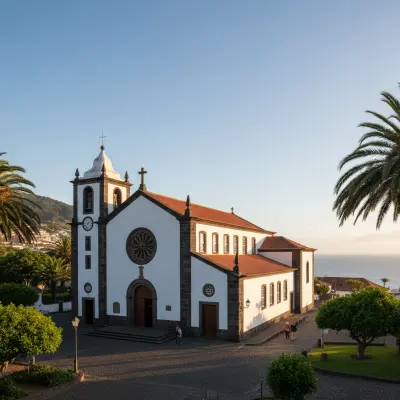
Before eating, spend twenty minutes at Igreja Matriz de São Bento. I know what you're thinking: I've seen five hundred churches in Portugal, this one will be the same. It isn't. The Ribeira Brava parish church is one of the few Madeiran churches with genuine Manueline elements from the early 16th century, and the stone pulpit with the fleur-de-lis is the kind of detail the rushed guides skip but that justifies stepping inside. The main chapel altarpiece is late Gothic, the tiles are 17th-century Sevillian, and the silence at 11:30am with the side door cracked open to the square does more for your patience than any meditation app.
Free entry as of this writing, but there's a donation box near the door. Five euros is fair if you enjoyed it. If you didn't, go anyway: the view from the square out over the bridge and toward the sea frames better from the church door than from anywhere else in town.
The market: what to buy and what to skip
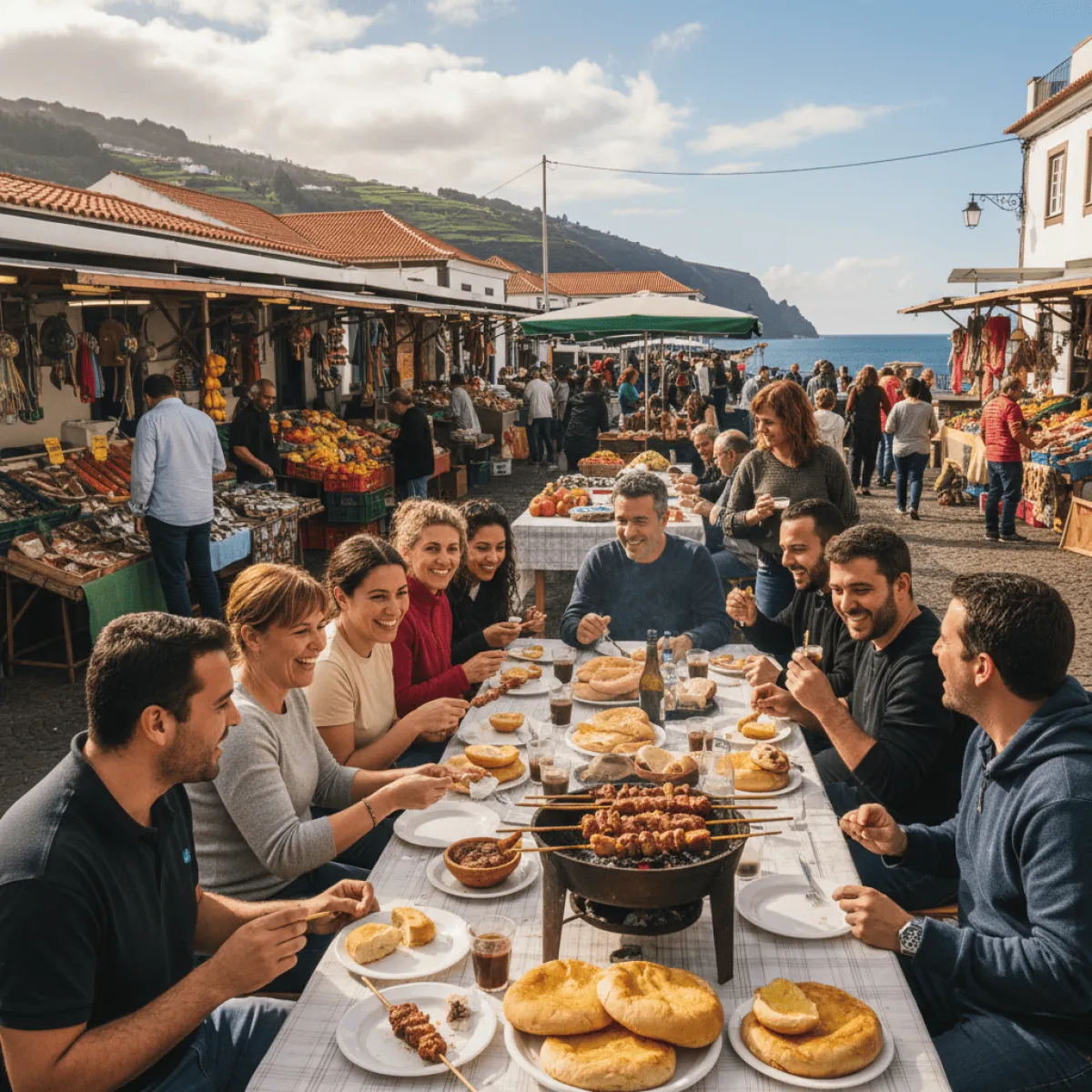
The Ribeira Brava municipal market is small, honest, and sits next to the bus station. It doesn't have the theatre of Funchal's Mercado dos Lavradores, and that's an advantage: nobody here is going to offer you melon slices at three euros each. The prices are the same for people who live in town and for those who just arrived.
- What to buy: cherry tomatoes from the southern coast (almost obscene in summer), Madeiran banana-prata (smaller, firmer, better than the imported kind), banana passionfruit when in season, and fresh cheese if you can keep it cold.
- What to skip: the souvenir stalls with poncha in decorative bottles. Good poncha is sold in bars, ice cold. The room-temperature ones with ribbons are for the shelf, not the throat.
- When to go: Saturday morning, ideally between 8 and 10am. By afternoon, half the stalls have closed.
If you go in June, take loquats home. Madeira has loquats the size of quail eggs, and in season they cost less than two euros a kilo outside Funchal. They don't keep: eat them the same day.
The fundamental question: where to have lunch?
This is the part where I have to be direct. There are a dozen restaurants within half an hour's walk of each other, and most are reasonable. Reasonable doesn't cut it when you're hungry and have two days on the island. The smart choice, especially if you want espetada done properly, is Restaurant & Grill Muralha Terrace.
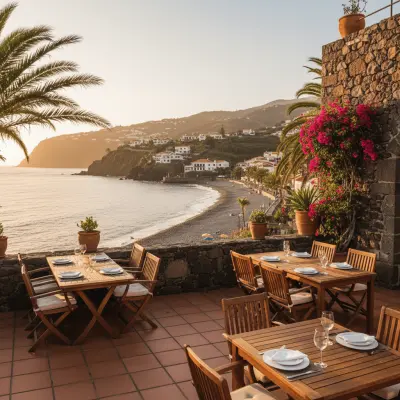
I booked it by accident the first time (it was the only one with a table at 1pm on a Saturday) and went back on the next three trips. The terrace looks out over the river and toward the sea, but that's incidental. What matters: the espetada is on a genuine bay laurel skewer, not a metal one, and that changes everything. The wood chars slightly, perfumes the meat, and when the skewer arrives hanging vertically from its stand, the juices drip onto the bread placed below. It's that bread, soaked in beef fat and coarse salt, that separates a decent espetada from one you remember.
Direct orders: ask for the bay laurel skewer for two (don't hesitate, the portion is generous), milho frito (fried polenta cubes) as the side rather than potatoes, apologies to anyone who disagrees, and a poncha pescador to start. To finish, if there's room, a small glass of aguardente de cana with honey. If you're solo, there's an individual plate with a smaller skewer. Costs land around 18 to 25 euros per person with drinks, which for what it is, is fair.
Detail no one tells you: the bolo do caco arrives hot, with garlic and parsley butter. Don't ask for it plain "to try it pure". Bolo do caco without the butter is just bread. With the garlic butter, it's the reason it exists.
On poncha: the short version
There are three ponchas worth knowing. The classic regional one uses sugar cane spirit, cane honey, and lemon juice, stirred with a wooden muddler called a caralhinho (yes, that's what it's called, and Madeirans will say it out loud without flinching). The pescador adds orange and runs sweeter. The passionfruit version is for tourists, but it's good.
Don't have more than two at lunch. Poncha tastes like juice, but the alcohol is cane-distilled and hits hard when you stand up into the sun. If you're driving back to Funchal in the afternoon, stop at one. Better still, take the bus.
The rest of the afternoon: three honest options
1. Stay put and do nothing
The Ribeira Brava promenade has shaded benches, a decent café kiosk, and an ocean view that gets better every hour as the light drops. If you brought a book, this is the spot. The locals do this on Sundays and there's no shame in copying them.
2. Head to Calheta
Fifteen kilometres west sits Calheta, and if you want sandy beach (imported, but sand) and natural pools, the simplest way to enjoy it without parking misery is the full-day excursion starting right here. There's a driver, no summer parking nightmare, and it includes a stop at the Anjos pools for a cold dip that cures any poncha-related fog.
3. Go home with actual photographs
If travel is easy but coming home with good photos is still hard for most of us, consider the local photo session. It's not what I usually recommend (I'm of the phone-in-pocket school), but for couples or families on a specific trip it earns its keep. The afternoon light along the river is particularly good, with tall shadow falling from the mountains.
When to come: the season matters more than you'd think
Madeira gets marketed as a twelve-month destination, and that's partly true. But Ribeira Brava at lunchtime feels very different depending on the month. January, windy. August, heavy heat that kills your appetite until four in the afternoon. The ideal months are April, May, and June, plus the first half of October.
In April, pair the town with a morning on the levadas. The essential April levada walks catch the vegetation at its peak, before the heat shuts the cicadas up. In June, there's the Tuna Festival and the long Funchal nights: it's worth planning two bases (one night in Ribeira Brava, two in Funchal mid-festival) to get the best of both.
If you stay longer on the island, head north. The contrast is real: the south is dry and bright, the north is green and dramatic. Twenty-four hours in Santana is enough to realise you've crossed into a different island entirely.
What to avoid (politely)
- Restaurants with a laminated menu in four languages at the door: simple rule, works every time. The exception is the ones with photographs, since locals sometimes ask for visual help too.
- Buying souvenirs on the church walk: the same pairs of slippers cost half as much at the Funchal market.
- Frozen bolo do caco: if the bread arrives stiff in the middle, send it back. Fresh bolo do caco is soft throughout.
- Conch mussels: not from here. If you want seafood, wait for Funchal or Câmara de Lobos.
One lunch, three hours, one town
The trick with Ribeira Brava is exactly this: there's no trick. There's a church better than its reputation, an honest market, an espetada restaurant that does the thing properly, and a promenade that forgives anyone who arrived in a rush. Give the town three hours at lunch on a weekday. Not five minutes on the way somewhere else. Three full hours, with a reserved table, no tight afternoon schedule waiting.
It's the difference between having "passed through Madeira" and having "had lunch in Ribeira Brava". The second story is better to tell at the table when you get back. As a rule, the best travel stories are always about a specific meal, in a specific place, on a day when no one was in a hurry. This is one of them, waiting to be made.