Igreja Matriz de São Bento
Discover the Mother Church of Saint Benedict, an architectural jewel in Ribeira Brava housing 16th-century Flemish treasures and a rare Manueline portal. A testament to the sugar era that blends faith, art, and the profound history of Madeira Island.
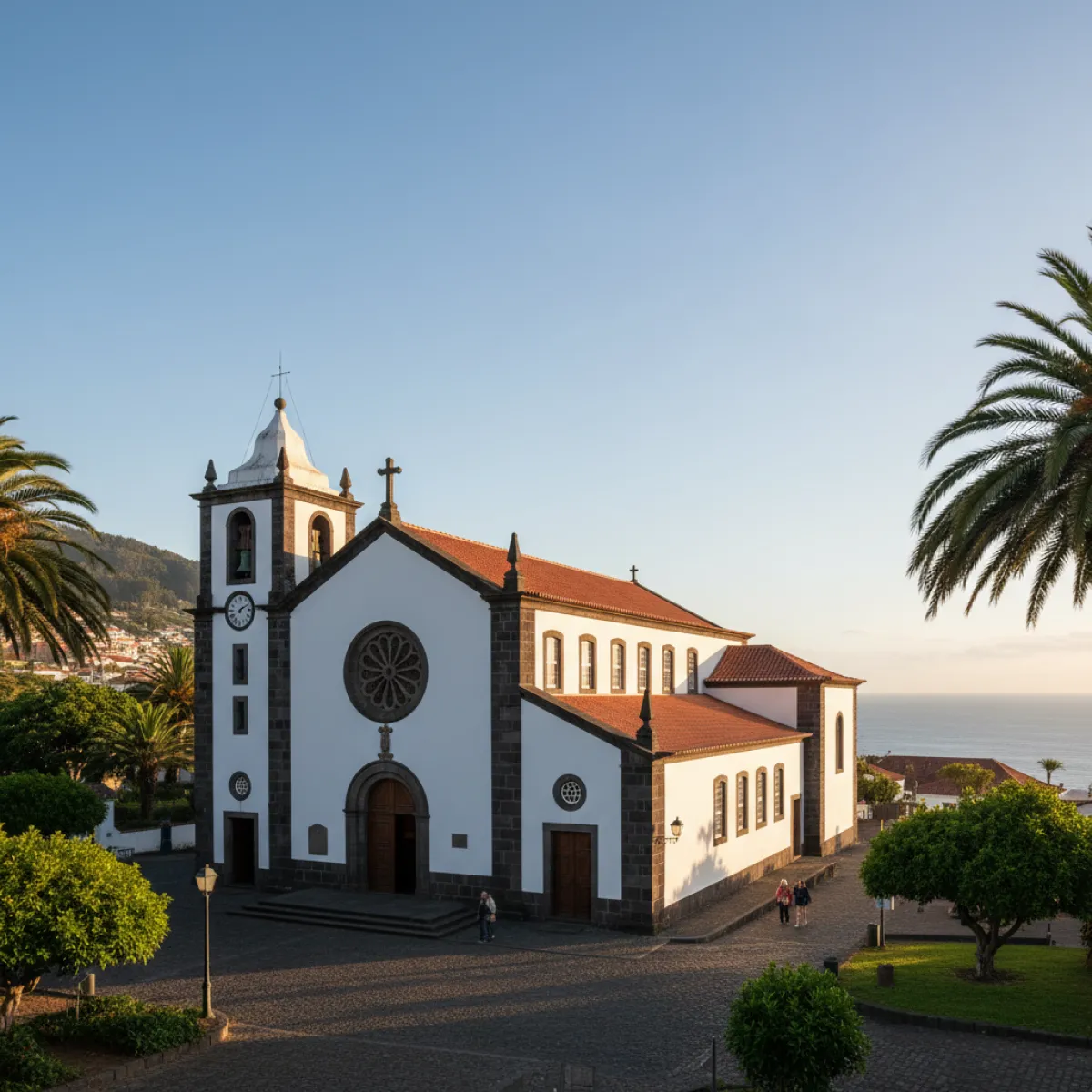
Standing in the heart of the sun-drenched town of Ribeira Brava, the Mother Church of Saint Benedict (Igreja Matriz de São Bento) is far more than a simple place of worship; it is a living archive of Madeira's Golden Age. When the sun hits the whitewashed facade and the grey basalt stonework, the building seems to narrate the story of an island that was once the global epicenter of the sugar trade. Stepping into this space, visitors are immediately transported back to the 16th century, a time when the wealth generated by "white gold" allowed Madeirans to commission some of the finest works of art in Europe, specifically from Flanders.
A Journey Through Time: From 15th-Century Chapel to National Monument
The history of this temple begins in the second quarter of the 15th century, just a few decades after the official discovery of the island. Originally a small chapel dedicated to Saint Benedict, the building was expanded and reconstructed in the 16th century to accommodate the growing population of settlers and merchants who established themselves at the mouth of the river. The architecture seen today is a fascinating palimpsest: a Gothic and Manueline base that has survived centuries of Baroque remodeling and modern interventions.
The main portal is undoubtedly one of the most significant elements. With its three Gothic archivolts and finely carved capitals, it is one of the rare examples of Manueline purity that has withstood the erosion of time and the floods that periodically swept through the valley. Observing the details in the stone, one perceives the mastery of the stonemasons of yore, who transformed hard volcanic rock into organic forms and symbols of royal power.
The Flemish Legacy and the Splendor of Sacred Art
What sets the Church of São Bento apart from many others in Madeira is its astonishing artistic treasure. During the 16th century, Madeira maintained close commercial ties with Antwerp and Bruges. Sugar was traded for paintings, sculptures, and altarpieces of unparalleled technical quality. Inside the church, the monumental image of Our Lady of the Rosary, dating from around 1520, is a standout. Likely originating from an Antwerp workshop, this piece displays the delicacy and realism typical of Flemish masters, with robes that seem to flow despite being made of wood and polychrome.
Another unmissable element is the Manueline baptismal font. Tradition holds that it was a direct gift from King Manuel I, the Fortunate. The font is decorated with nautical motifs and ropes, symbols celebrating Portuguese maritime expansion. It is a physical reminder that this small town in southwest Madeira was intrinsically linked to the great destinations of the empire.
The Interior and the Atmosphere of Devotion
As you walk through the interior, notice the blue and white tile panels (azulejos) lining the walls. These tiles, dating from the 18th century, depict biblical scenes and provide a cool luminosity that contrasts with the warmth of the gilded woodcarvings (talha dourada) of the high altar. The altar, in Baroque and Rococo style, is an explosion of gold that seems to capture the candlelight and transform it into a divine aura. The arrangement of the side aisles, added in the 20th century, was designed to respect the original proportions, creating a space that is simultaneously vast and intimate.
Getting There and What to Expect in Ribeira Brava
Ribeira Brava is located about 20 minutes by car from Funchal, following the VR1 highway. Access is straightforward, and the town offers several parking lots near the historic center. Upon arriving at the church area, you will immediately feel the temperature difference; Ribeira Brava is known for being one of the warmest and sunniest spots on the island, protected by the high mountains surrounding it.
The church is located on Rua dos Camachos, just a few steps from the promenade and the municipal market. The area is flat and easy to explore on foot. Expect to find an atmosphere of serenity within the temple, contrasting with the calm hum of cafes and terraces in the surrounding streets.
Practical Advice for the Traveler
- What to order: After your visit, head to one of the local cafes near the church and order a "poncha à pescador" (fishermen's style) or a "nikita" made with beer, accompanied by a warm piece of "bolo de caco" with garlic butter. It is the perfect ritual to process the historical richness you have just witnessed.
- When to go: The morning is ideal, as the light enters through the windows and illuminates the altarpieces. Try to avoid mass times if your goal is purely artistic observation and photography (always respecting the silence).
- Dress code: As an active place of worship, it is recommended to cover your shoulders and avoid overly short clothing. In summer, bring a light scarf for this purpose.
- Payments: Entry to the church is free, though donations for heritage conservation are welcome. In the surrounding establishments, most accept cards, but having some cash is useful for small purchases at the market.
The Mother Church of Saint Benedict is not just a monument; it is the spiritual and aesthetic heart of a community that has preserved its past while looking out toward the sea. It is a place where European art history meets Madeiran identity in a harmonious and unforgettable way.
