Ribeira Brava Beyond the Beach: Bananas and São Bento
Everyone passes through Ribeira Brava on the way to Ponta do Sol and misses one of Madeira's most underrated towns. The 16th-century church nobody visits, banana terraces climbing nearly vertical slopes, and a fisherman's poncha that demands respect.
Most visitors to Ribeira Brava arrive on a coach from Funchal, photograph the pebble jetty, eat a prego sandwich at the nearest terrace, and leave for Ponta do Sol before three in the afternoon. It is a perfectly valid way to spend two hours. It is also, frankly, a waste. This town on the south coast of Madeira, wedged between the mouth of the river that gives it its name and the banana terraces climbing the slopes behind it, has more to offer than the pebble beach and the Espalmaceiros viewpoint. The problem is that nobody bothers to walk uphill.
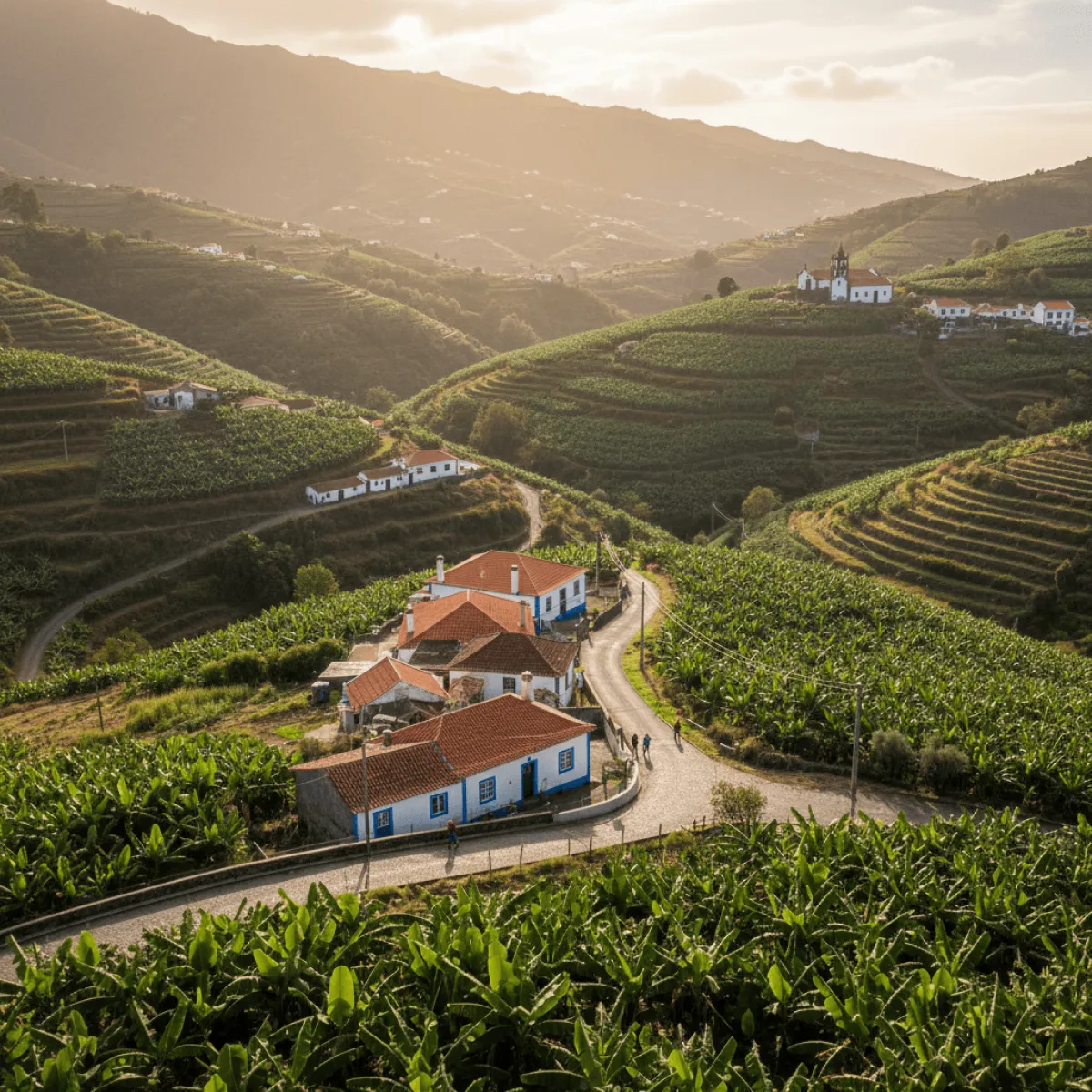
I did, on a late April morning, and came back convinced that Ribeira Brava is one of the most underrated towns on the island. It is not as dramatic as Seixal, not as postcard as Câmara de Lobos, not as touristy as Santa Cruz. It is something else: a working town, still tied to bananas and the sea, with a 16th-century church nobody visits and banana fields that, seen from above, look like a field of small green umbrellas glinting in the sun.
The church that deserves ten minutes of your day
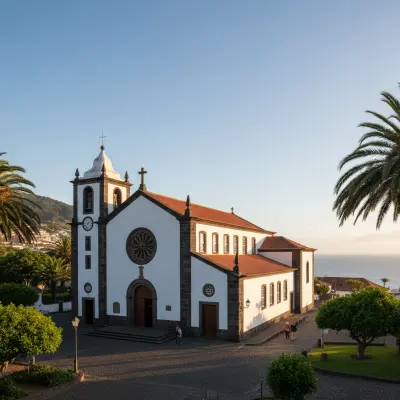
Let us start with the building that gives half the parish its name. The Igreja Matriz de São Bento sits in the centre of town, a few metres from the beach, and is one of the few Madeira churches to have survived more or less intact since the early 1500s. The bell tower, with its checkered tile roof, is the image everyone photographs. The interior is what deserves the detour.
Step in, sit for a minute. Notice the Manueline baptismal font in carved stone, decorated with twisted ropes and stone balls, from the period when late Gothic was still arguing with the Renaissance. The main altarpiece is Mannerist, with painted panels worth a slow look. There is also a wooden carved pulpit that, depending on the light coming through the high windows, seems to float. All of this is free and almost always empty. Twenty minutes here are worth more than an hour queuing for the Jerónimos Monastery.
Practical note: the church is usually open in the morning and late afternoon, with a midday closure. If you find it shut, walk around the square and come back an hour later. Nobody plans their day to the minute in Ribeira Brava, and you should not either.
Why are there so many banana trees?
Leave the church, walk two hundred metres north, and look up. Across the river, the slope rises in green terraces that look as though they were drawn with a ruler. Those are banana plots, the crop that has sustained this southern flank since the late 19th century, when the wine industry collapsed under phylloxera and farmers had to find an alternative.
The Madeiran banana is a small variety, the Dwarf Cavendish, sweeter and more aromatic than the industrial banana you find in mainland European supermarkets. It is also more fragile, which is why almost the entire production stays on the island. Anyone who tastes a banana ripened on the tree, bought from a roadside stand for a euro a kilo, quickly understands why locals get touchy when their fruit is compared to the ones from the Azores or the Canaries.
The terraces are a quiet feat of centuries-old engineering. Each platform is held up by a wall of stacked basalt stone, no mortar, and each terrace has its own irrigation channel branching off a levada. Without this system, nothing would grow on this slope. With it, you get one of the best bananas in Europe.
Where to see the banana fields up close
There are two easy ways. The first is to drive up the ER229 toward Serra de Água, stop at the first viewpoint past the town exit, and look down. The second, more interesting one, is to walk. Leave the church square along Rua do Visconde, cross the bridge over the river, and follow the narrow road climbing on the western side. In fifteen minutes you are among the banana fields, with the sea below and the smell of ripe fruit in the air. If you go in May or June, you will see the huge bunches wrapped in blue plastic bags, the standard technique for protecting the fruit from birds and direct sun.
Eating in Ribeira Brava without falling into the trap
Most restaurants on the seafront live off 15-euro tourist menus with soup, espetada, and a slice of pudding. They are acceptable, no more. To eat properly in Ribeira Brava, walk two hundred metres away from the sea.
Look for dishes typical of southern Madeira: grilled limpets with garlic butter and lemon, gaiado em vinha de alhos (a smaller relative of tuna, cheaper and tastier than most of the white fish on offer), bolo do caco fresh from the griddle with garlic butter. Espetada on a bay laurel skewer is essential at least once. Order it from a restaurant where you can see an actual wooden skewer rather than a stainless-steel one. Bay laurel perfumes the meat in a way metal never can.
To drink: poncha. The Ribeira Brava version is traditionally made with cane spirit, sugarcane honey (not bee honey) and lemon. The pescador version, even stronger, uses just spirit, honey, and lemon, no added sugar. One is enough for the afternoon. Two and you are not driving back to Funchal.
Using Ribeira Brava as a base
Here is the unpopular opinion: staying in Ribeira Brava is better than staying in Funchal if your goal is to explore the island by car. It is 25 minutes from the capital on the expressway, 15 from Calheta, 40 from Porto Moniz, and an hour from Santana. Prices are about half of Funchal, there is free parking almost everywhere, and at night you hear the river instead of nightclubs.
For people who want to combine Ribeira Brava with the west coast, the obvious half-day move is Calheta. Our full-day trip to Calheta and the natural pools from Ribeira Brava is a way to do the route without renting a car, with stops at the viewpoints public buses skip. A good option if you have just landed and are not yet comfortable driving on the island's vertiginous coastal roads.
What to do with the rest of your day
Ribeira Brava itself takes about half a day. Fortunately, Madeira does not. Here are three honest combinations:
Morning in town, afternoon on the levadas
Church, banana fields, a lunch of limpets, and then a levada near Funchal. There are two-hour walks that are perfectly accessible without technical gear. Our picks for April levadas all start from points less than 40 minutes from Ribeira Brava. The Levada do Caldeirão Verde, for instance, is a classic choice for laurel forest scenery without the crowds.
Pairing with Funchal in June
If you are here in June, the cultural action is in the capital: the tuna festival, the music nights on Praça do Município, the start of the diving season. Use Ribeira Brava as your bed and head into Funchal only in the late afternoon, avoiding the cruise ships that dump crowds at noon. Our June Funchal guide has the detailed calendar.
A day in Santana, a night in Ribeira Brava
Cross the island over the Paul da Serra plateau, have a bay-laurel skewer lunch in Santana, return in the late afternoon. About two and a half hours of driving in total, but it is one of the best ways to grasp the difference between northern Madeira (humid, green, sheer) and southern Madeira (dry, agricultural, Mediterranean). For the detailed Santana itinerary, see our 24 hours in Santana route. The thatched houses are still the obligatory cliché, but the best of Santana is what lies outside the theme-park version.
When to go
Ribeira Brava is comfortable year-round, with temperatures between 18 and 26 degrees most months. But there are nuances. January and February are cool and breezy on the south coast, and the town feels half asleep. March and April are excellent: vegetation at its peak, crowds still at bay, decent swell for walking the seafront. May and June are, in my opinion, the best moment, with banana plots in production, long daylight hours, and sea temperatures finally above 20 degrees.
July and August fill up with Portuguese mainland families on holiday and Central European tourists, and accommodation prices climb noticeably. September and October calm down again and stay warm, making them one of the best times to combine beach and levadas. November and December are unpredictable, with possible heavy rain on the south coast, but also bright days perfect for photography.
How to get there
From Madeira airport, it is about 35 minutes on the VR1 expressway, with the toll typically included in the rental car bill. By bus, Rodoeste runs several daily services between Funchal and Ribeira Brava, leaving from the bus station next to the marina. The ticket costs around four euros and the trip takes 50 minutes, with stops in Câmara de Lobos. It is comfortable, reliable, and far cheaper than a taxi.
If you are coming just for the day, the bus is more than enough. If you are sleeping over, or planning to combine Ribeira Brava with trips inland and along the west coast, renting a car is essentially mandatory.
What to take home
Forget cork magnets and Barcelos roosters (which, for the record, are from Minho, not Madeira). From Ribeira Brava, take two things: a bottle of aguardente de cana from a local producer, sold at small grocery shops in the centre at reasonable prices, and a kilo of tree-ripened bananas wrapped in newspaper to survive the flight home. Both will remind you, three days later in your kitchen, that this town deserves a lot more than the quick stop your tour bus had planned.