Ribeira Brava: Bananas, Sugar Cane and Madeira's Sweet Economy
In Ribeira Brava, banana terraces run downhill until they nearly touch the pebble beach, and a former cane spirit distillery now houses the island's best ethnographic museum. A sweet itinerary along Madeira's south coast, from sugar history to bolo de mel.
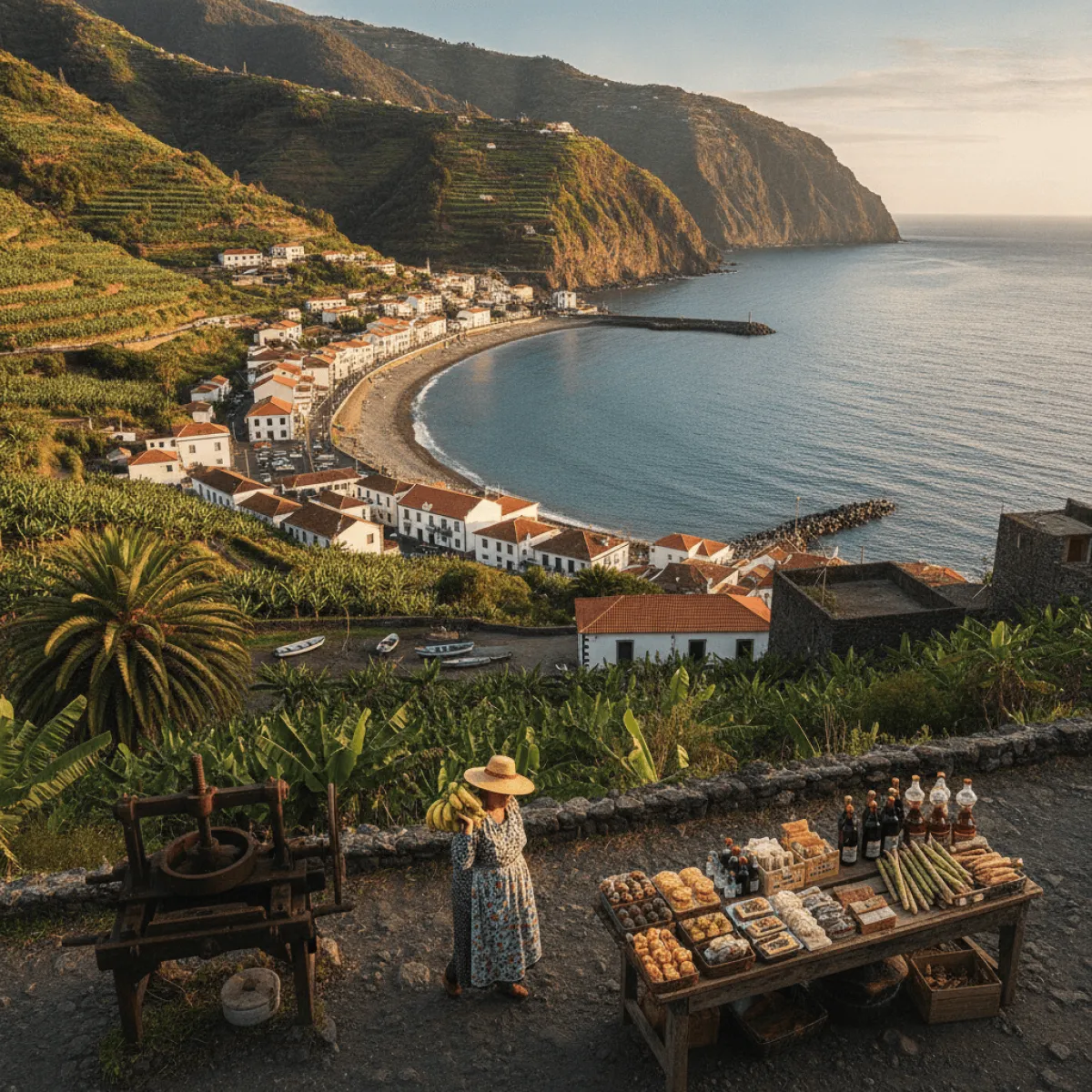
Drive west from Funchal and the expressway swallows you into a series of tunnels. When you pop out at Ribeira Brava, the first thing you see is bananas. Thousands of plants, stacked on stone terraces the locals call poios, running down the hillside until they almost touch the pebble beach. Banana leaves lean over garage walls, bunches ripen inside blue plastic sleeves next to someone's laundry line, and the whole valley smells faintly sweet under the salt air. The town's name means wild river, but what has actually run this place for five centuries is the farming of sweet things. First sugar cane. Then bananas. Follow that thread and you get a far better day out than another hour on a beach towel.
The white gold that paid for the church
Before bananas, Madeira ran on sugar. In the 15th and 16th centuries the island was one of the biggest sugar producers in the world, and the south coast valleys, with mountain water to drive the mills, were ideal for it. The profits from what was called white gold paid for churches, altarpieces and Flemish paintings that still hang across the island. Madeiran merchants traded sugar for art in Flanders, which is why a small Atlantic island holds a collection of Flemish painting that most European cities would envy.
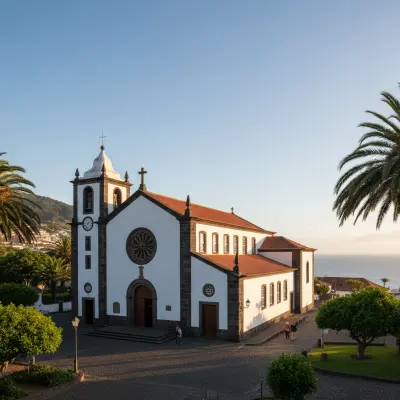
In Ribeira Brava, the most visible monument to that era is the Igreja Matriz de São Bento, a church with 15th-century origins and Manueline details that survived later remodelling. Look up at the tower: its top is clad in glazed tiles and you can spot it from almost anywhere in the lower town. This is a small-town church built with big-city ambition, and that only happened because sugar money was flowing out of this valley. Entry is free, obviously, just avoid mass times if you want to wander at your own pace.
The distillery that became a museum
A few minutes on foot from the church, on Rua de São Francisco, you'll find the Madeira Ethnographic Museum, housed in an old manor that once worked as a sugar cane spirit distillery. It is, plainly, the best introduction to the island's material culture: mills, presses, looms, fishing gear and, above all, the machinery of the sugar cane economy. Admission is cheap, but check opening days locally, as regional museums here tend to close on Mondays. Give it an hour. If you only have time for one room, go straight to the mill section: it explains, better than any book, how levada water powered the entire economy of the south coast.
Here's the detail most visitors miss: the cane spirit, aguardente de cana, that mills like this one produced is the base of poncha, Madeira's defining drink, beaten with honey and lemon. And mel de cana, the dark molasses made by boiling down cane juice, is what gives bolo de mel its character, that dense, dark cake traditionally broken by hand, never cut with a knife, and famous for keeping for months. Buy one and you are quite literally eating the island's sugar heritage.
The banana terraces today
Cane declined once Brazil flooded Europe with cheap sugar, and the south coast reinvented itself. Today, from Ribeira Brava through Madalena do Mar to Ponta do Sol, bananas rule the low ground below roughly 300 metres, where sun and sheltered valleys create a near-tropical microclimate. The Madeiran banana is smaller than anything in a mainland supermarket, and noticeably sweeter and more aromatic. That's not local pride talking, it's chemistry: slower ripening, more concentrated sugars.
My practical advice: buy your bananas from a grocer or local stall in town, never the imported ones. They'll cost very little. Eat one right there on the seafront promenade, looking up at the terraces it came from. It's the most satisfying short supply chain in Madeira. If you're walking the levadas later in your trip, stuff a few in your backpack: no energy bar comes close. And if you're still choosing trails, our guide to Funchal's levadas in April sorts the walks worth your time from the ones you can skip.
It's worth climbing partway up the hillside, on foot or by car, to see the poios from above. The stone walls holding up each terrace were built by hand over generations, and the geometry of the whole thing, seen from height, is one of the strongest images on the south coast. If you want a proper record of it, this is a job for a professional: a photo session in Ribeira Brava with a local photographer solves the problem of trying to frame bananas, sea and mountains on a phone at midday, which is when everyone tries and nobody succeeds.
Where to eat when hunger hits
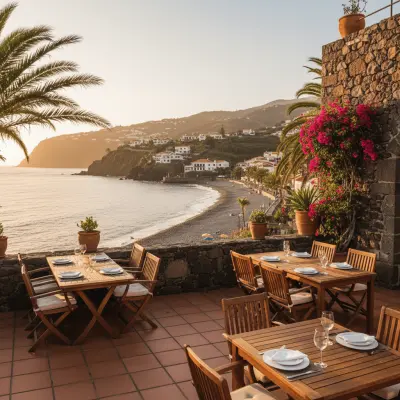
After the museum and the church, lunch sorts itself out without leaving the lower town. Restaurant & Grill Muralha Terrace has the location its name promises and grilled food that justifies the stop. Keep your order simple: fish of the day or espetada, bolo do caco with garlic butter on the side, and finish with banana in whatever form the kitchen offers. Grilled banana, banana with cake, banana on its own: in this town, turning down a banana dessert borders on rude. A poncha before or after closes the historical loop: cane spirit, honey, lemon, all island produce.
The logical excursion: Calheta and a working mill
If the sugar story has hooked you, the next step is obvious. In Calheta, twenty minutes further west, one of the island's last working cane mills still presses cane during harvest season, usually March to May. During those weeks the air around it smells of boiling cane juice, and you can taste aguardente and mel de cana where they're made. The easiest way to do it without a car is the full day to Calheta and the natural pools departing from Ribeira Brava, which pairs the sweet history with a proper swim. Outside harvest season the mill is still worth a visit for the machinery and the shop, but check locally what's running.
Getting there, when to go, what it costs
Logistics are easy. By car, Ribeira Brava is about half an hour from Funchal on the expressway, most of it inside tunnels, with decent parking near the seafront. Without a car, Rodoeste buses link Funchal to the town several times a day; timetables shift with the seasons, so check locally before planning your return.
- Best time: March to May if you want to catch the cane harvest at the mills. Bananas, conveniently, are picked year-round.
- Time needed: half a day for the town; a full day if you add Calheta.
- Budget: the town is cheap. Museum, coffee, a fish lunch and a poncha will likely cost less than a single dinner out in Funchal.
- Bring: a hat and sunscreen. The south coast is the sunniest part of the island and the terraces offer zero shade.
One last argument for your Madeira itinerary: Ribeira Brava works best as a contrast. If you've read our 24 hours in Santana itinerary, you know the north of the island is green, damp and cool. Ribeira Brava is its exact opposite: sun, warm pebbles, banana leaves. Do both on consecutive days and you'll understand the essential fact about Madeira: it isn't one island, it's several. And all of them, one way or another, still live off what grows on the poios.