Pinhão Has No Sea: The River Is the Wave
Came to Pinhao for surf? You are 130 km from the sea, deep in the Douro. Good news: the river beach, the cruise to the Tua and the N222 beat any wave. An honest guide for getting wet, watching, or just driving.
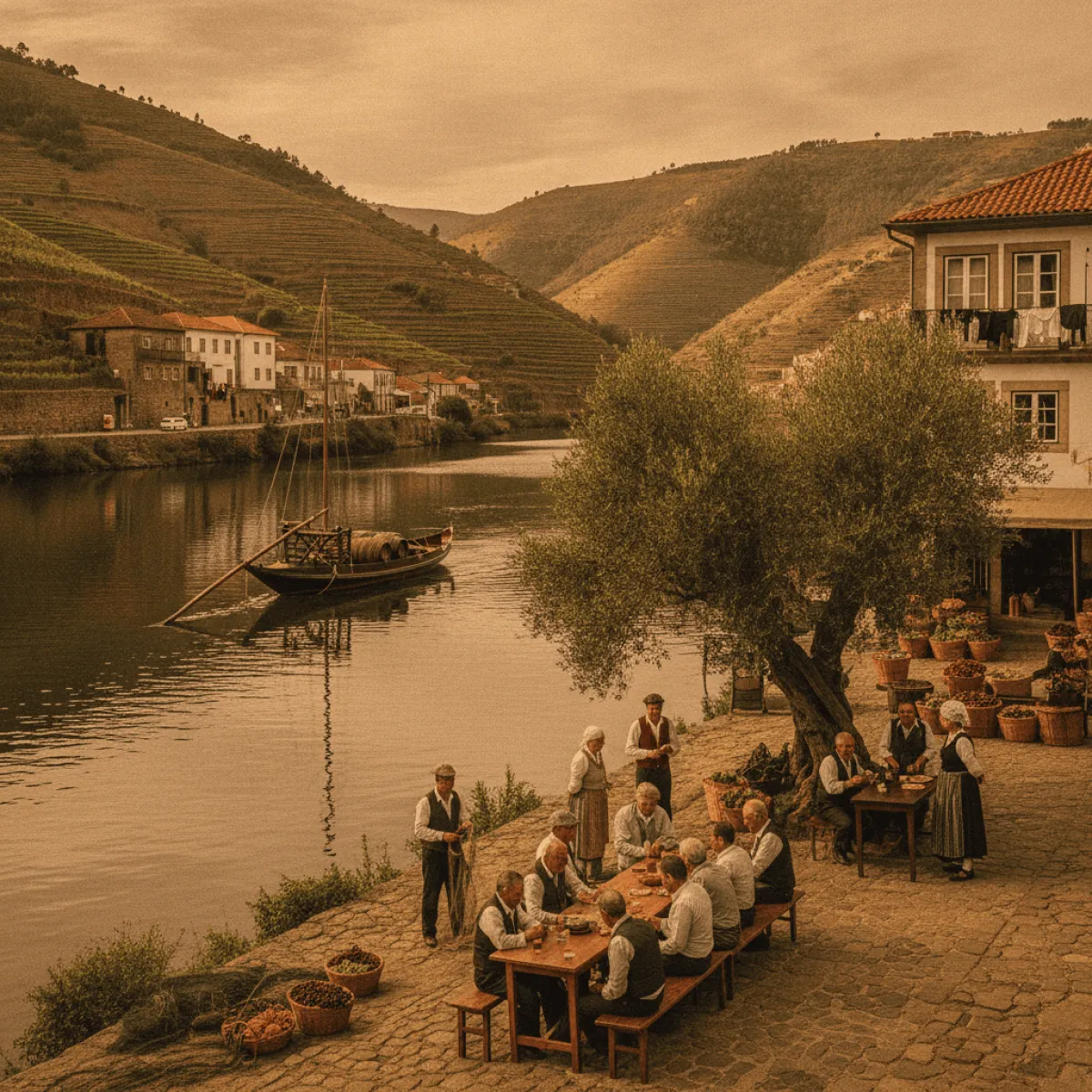
Let me be honest in the very first paragraph, because it feels like the least I owe you: if you came to Pinhao looking for surf, you took a wrong turn somewhere inland. You are a solid 130 kilometres from the ocean, wedged into a bend of the Douro between terraced vineyards, and the closest thing to a surfboard you will see around here is the wooden deck of a rabelo boat. There are no waves. No line-up. No guy from the surf school trying to sell you a five-lesson package with the wetsuit thrown in. What there is, is water, lots of it, and a relationship with that water that has nothing to do with adrenaline and everything to do with patience.
And that is exactly why it is worth staying. Pinhao is the place where you learn that the sea is not the only body of water that deserves a full day of your attention. Here the water moves slowly, dark green, hemmed in by hills that can hit 40 degrees in summer. You do not ride it. You watch it, you cross it, and now and then you dive into it. Let us take this in order.
The beach that does not apologise for having no ocean sand
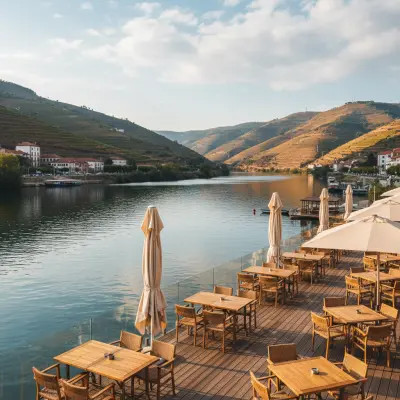
Start with the obvious, which is also the most underrated. The Praia Fluvial do Pinhao river beach is the local answer to the question "where do I get wet". It sits right on the riverbank, with direct access to the Douro, and in the hot months it is where the whole village retreats at the end of the day when the heat turns serious. Do not expect the Algarve. Expect a stretch of calm fresh water, supervised during bathing season, with the rare advantage of no salt sticking to your skin and no waves knocking your toddler over.
My advice: go between mid-June and mid-September, which is when getting in the water makes sense without your teeth chattering. Early morning, before 11am, you get the river almost to yourself and the light is better for photos. From 4pm the locals arrive, and the mood shifts: it stops being a postcard and becomes real life, families, towels on the grass, children shrieking. I prefer the second version, I admit it. Bring water, bring a hat, bring sunscreen, because natural shade is scarce and the Douro sun does not mess around.
Wanting to get wet or wanting to watch: two different trips
Some people come to the river to get into it, and some come to look at it. Both are legitimate, but they call for different plans. If your idea is to see the Douro from the middle of the Douro, there is one obvious way to do it, and happily it is not a tourist trap.
The cruise from Pinhao towards the Tua is, in my opinion, the best use of two hours you will make around here. It leaves from the Pinhao quay, heads upriver, and takes you to the point where the Tua meets the Douro, a confluence you understand far better from the boat than from any roadside viewpoint. The big advantage of this stretch is that you see the terraces on the bank that you would never catch by car, because the road runs too high. Take the morning boat if you can: the water is smoother, there is less glare, and the other boats are still tied up.
A practical note plenty of people ignore: cruise prices and timetables change with the season and the operator, so check locally at the quay itself the day before. Do not book blind online through a middleman who charges you double. In Pinhao, face to face, you almost always do better.
The building that is basically a free museum
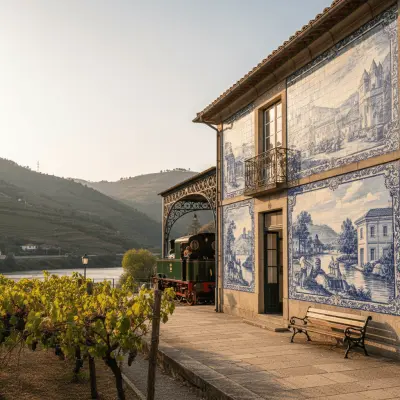
Before or after the water, do me a favour and stop by the Pinhao railway station. I know a railway station does not sound like a beach day, but this is not just any station. The walls are lined with early twentieth-century tile panels that tell, frame by frame, the life of the wine-growing Douro: the harvest, the wine carried downriver in rabelo boats, the people working the slopes. There are around two dozen panels and they are absolutely real, not hotel decoration.
Entry to the tiled area is free and it takes you ten minutes. It is the best free ten minutes in Pinhao. And there is a nice irony here: these tiles show you the exact river you are about to see outside, but as it was when the job of getting wine to Porto was done by boat and not by truck. See the station first, and the cruise will make far more sense.
The real Douro wave is called the N222
If the adrenaline you came for at the sea is not in the water, let me tell you where it is: behind the wheel. Driving the N222 out of Pinhao is the honest substitute for surf in this corner of the country. The stretch between Pinhao and Peso da Regua has been called, by more than one international publication, one of the best driving roads in the world, and that is not brochure hype. It is bend after bend hung over the river, with the vineyards spilling down the terraces on both sides.
Take it slowly. The temptation is to floor it and "win" the corners, but the whole point of the N222 is to stop at the viewpoints, roll down the window and listen to the hot silence of mid-afternoon. If you would rather not drive, there are local operators who will take you, and in that case you can ride along with a glass in hand and taste the estate wine guilt-free. Pair it with the water: road in the morning, river beach in the afternoon, when your body is begging for the cool of the Douro.
Where to sleep, eat and when to come
Pinhao is small, and that is a blessing. You can walk it end to end in fifteen minutes. The village lives on port wine and river tourism, which means there are more estates than cafes. To eat, stay near the waterfront and look for the dish of the day: in the Douro you eat well and cheaply away from the menus translated into four languages. Posta a mirandesa, roast kid, bacalhau a transmontana, all of it is genuine local territory. Wash it down with a house red, because around here bad wine is a statistical rarity.
As for when to come, I have strong opinions. September and early October are the harvest, and the Douro is at its peak: slopes turning colour, the smell of crushed grapes in the air, activity in the estates. It is my favourite season, but also the busiest, so book ahead. June and July are hot but still breathable, and the river water is perfect for swimming. August is an oven: beautiful, but take that seriously and plan your day around the gentler hours of sun.
If you want to escape the crowds on the Pinhao-Regua axis, climb up to the neighbouring municipalities. Sabrosa keeps some of the Douro estates nobody talks about, and it is there, away from the quays, that you grasp the more agricultural, less staged side of the valley. And if you come in June, line your trip up with the Santos Populares in Sabrosa: bonfires, grilled sardines, basil pots and a Douro enjoying itself far from the tour buses.
And if you actually want flowers and gardens instead of waves
For anyone who realises halfway through the plan that they were after neither sea nor river but green and calm, there is another option a drive away. Torre de Moncorvo in spring, with its gardens and parks in bloom, is the perfect counterpoint to the dry, mineral Douro of Pinhao. Different landscape, different rhythm, but still the same stubborn, generous northeast.
So what about the surf?
Back to the opening question, because I owe you a straight answer. Surf, in Pinhao, does not exist. If it is really surf you want, do the maths: you have to head down to the coast, and that is half a day of travel. My sincere suggestion is different: leave the surf for another trip and give Pinhao what it asks for, which is time and a slow eye.
The fresh water of the Douro will not give you adrenaline, it gives you something else. A late-afternoon swim with the vineyards reflected on the surface, a boat climbing slowly towards the Tua, a road that snakes as if drawn by someone who loved to drive. It is not the poster beach, but it is honest, it is cheap if you know where to eat, and it is one of those trips you remember more than the hundredth afternoon on a crowded beach. Come for the wrong idea of surf. Stay for the right reason of the river.