The station worth visiting before any train arrives
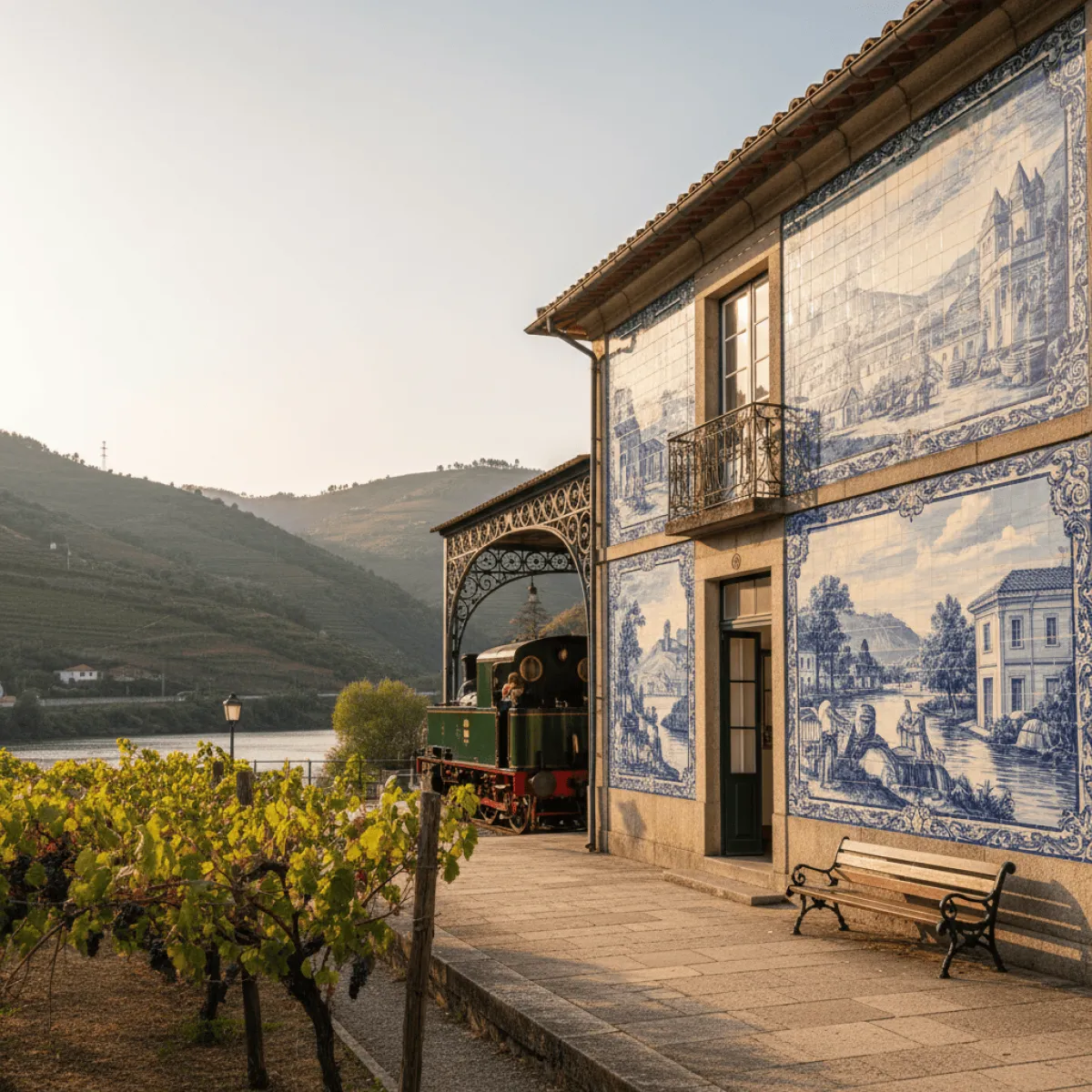
Some railway stations are merely places to pass through. The Estação Ferroviária do Pinhão belongs firmly to the other category: stations that are themselves the destination. Opened in 1880 as part of the Linha do Douro, this small station at Largo da Estação, 5085-037 Pinhão, became, over the course of the twentieth century, one of the most photographed buildings in inland Portugal. The reason is on the walls. Twenty four blue and white tile panels, produced by the Fábrica Aleluia in Aveiro and installed in 1937, narrate the entire cycle of Port wine production. The result is essentially an open air museum that happens to also sell train tickets.
Honest advice: arrive before ten in the morning. Tour buses begin unloading passengers mid morning and the small concourse fills up fast. Early, with the Douro light still slanting in, you can read the panels in peace, one by one, without queuing for someone to finish the obligatory selfie.
The tiles: what you are actually looking at
The 24 panels show scenes from Douro daily life: the harvest on the terraced slopes, the foot pressing of grapes in stone lagares, the transport of wine in flat bottomed rabelo boats down the river to Vila Nova de Gaia, and the broader landscape of the world's oldest demarcated wine region. There are panels with farmers, churches, bridges, and the vertiginous geography of the valley itself. This is not abstract decoration. It is painted ethnography, made by a factory in Aveiro that still exists today.
Look for the dates and the painter signatures along the bottom edges. Notice the detail of the workers' clothing. And then notice that the landscape painted on the tiles is exactly the same landscape you see when you walk to the other side of the platform and look down towards the river. That doubling, the tile reflecting the real view, is what makes the station so unusual. For more on the engineered landscape that surrounds it, our guide to the geometry of schist and the heritage of time in the Douro is the right starting point.
How to get to Pinhão (and to the station)
The correct way to arrive at Pinhão station is, without any irony, by train. The Linha do Douro leaves Porto from São Bento or Campanhã and the journey to Pinhão takes around two and a half hours. It is one of the most scenic rail rides in Europe, with the final stretch hugging the river. Pay the small upgrade for first class if you can, and aim for a window seat on the right hand side coming from Porto.
By car, take the A4 motorway to Vila Real and then the N322 which winds down into the valley. Parking in Pinhão is limited, especially in the high months. There is a paid car park near the station and some metered spaces in the village centre. In July, August and September, bring patience. The station sits in the middle of the village, two minutes on foot from the river quay and the riverside hotels. Everything in Pinhão is walkable.
Hours, contacts and the standard caveat
Station hours follow CP train schedules and shift with the season. There is no fixed "tile viewing window", which confuses some visitors. In practice the concourse with the panels is accessible during normal railway operating hours, and outside those hours much of the exterior tilework is still visible from the street. To confirm trains, check the official CP page for Pinhão station directly, or call +351 707 210 220. Do not trust the schedules quoted in old blog posts, they change frequently.
What to do after the station
You can take in the station properly in about twenty minutes. After that, the obvious move is to walk down to the river. A few metres from the platform is the quay where one and two hour Douro cruises depart, usually on modernised rabelo boats. Prices for the short circuit run roughly 15 to 20 euros, paid at the kiosk on the day. Reservations are not required outside high season.
If the heat bites, and Douro heat does bite, the Praia Fluvial do Pinhão is the logical pre lunch swim. For those who prefer to climb rather than descend, our guide to the Douro's best terraces and vantage points sequences the high viewpoints over the Pinhão and Douro confluence in a sensible order. If your stop is mainly about wine, our selection of where to drink the Douro in Pinhão filters the genuinely good rooms from the tourist traps.
Practical advice, no padding
- Go early. Before ten in the morning, or after five in the afternoon, the light is better and the station is empty.
- Bring cash. Some cafés around the square treat card payments as a polite suggestion rather than a guaranteed service.
- There is no dress code, but comfortable shoes are essential. The streets of Pinhão climb.
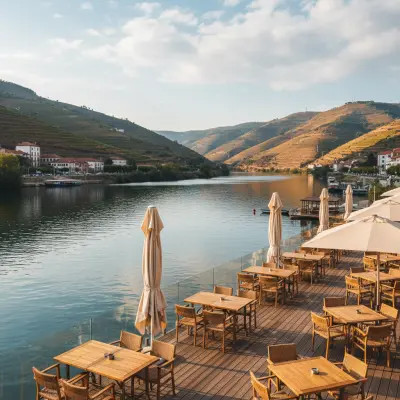
- For dinner on a summer evening, book ahead. The riverside terraces fill quickly between June and September.
- The price symbol next to the station is € for a simple reason: visiting the tiles is free. You only pay if you board a train.
Why this station matters
Pinhão, by Douro standards, is a small place. Fewer than six hundred residents. And yet this single building has become one of the most reproduced images of inland Portugal, alongside the Convent of Christ in Tomar and the Monastery of Batalha. The reason is straightforward. In one modest railway station, three things at which Portugal is genuinely world class are concentrated: tile work, the engineered landscape of the Douro, and the nineteenth century railway heritage that opened the valley to the world. Going to Pinhão and skipping the station is a bit like going to Porto and avoiding the Ribeira. Technically possible. Practically absurd.