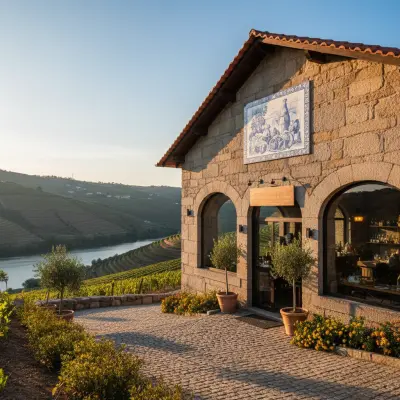
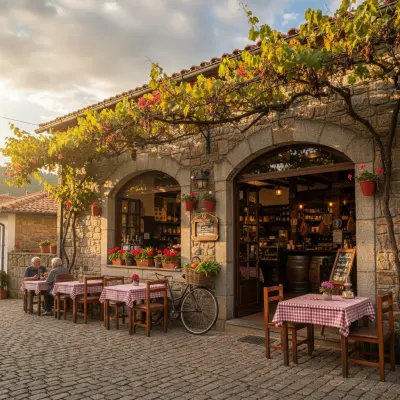
Peso da Régua on a Budget: No Corners Cut
Régua isn't only 90-euro cruises and 300-a-night quintas. There's another side to town: taverns under 15 euros, wine at 2 euros a glass and a regional train to Pocinho that shows you as much river as the steam-powered tourist version.
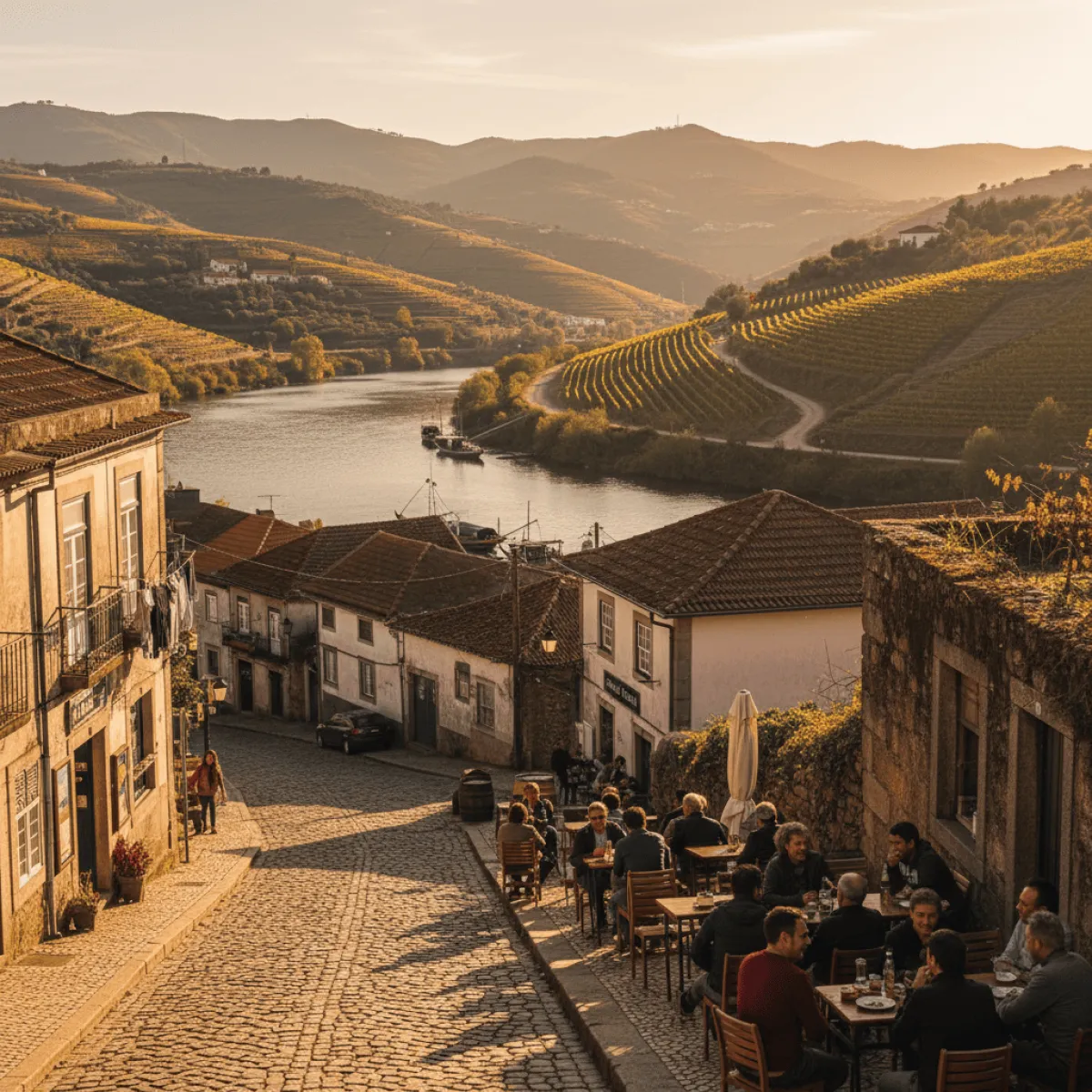
There's a stubborn idea that sticks to the Douro like a label to a bottle: that this place is expensive. That to come to Régua you need to book a 90-euro cruise, sleep in a 300-a-night quinta and pay 12 euros for a glass of Vintage Port with a river view. That's not a lie. But it's not the only truth either. Régua has another life, slower and cheaper, that happens far from the riverfront and that few visitors see because they arrive by train at 11am and head back at 5pm.
This guide is for travellers showing up with 50 or 60 euros a day in their pocket who don't want to go home feeling they saw Régua through the window of a tour bus. You'll eat well, drink real wine, see vineyards and ride a couple of trains. And you'll have enough left over for a galão at the station before heading back.
Getting there without burning money
The first rule of doing the Douro on a budget: come by train. The Douro line from Porto-São Bento to Régua costs between 10 and 14 euros each way depending on the time of day, and takes around two and a half hours. If you're travelling in a group of two or more, ask at the CP counter about family fares, not the website (the site doesn't always show every combination).
Tip from someone who's done this many times: avoid the 9:05 and 9:25 trains on weekends. They're packed with day-trippers, and after Pinhão it's impossible to see the river because people are standing between you and the window. Take one slightly earlier or later, and sit on the right-hand side going Porto-Régua. From Mosteirô onwards, the river appears and never lets go.
By car, the main expense isn't fuel: it's the A4 and Marão tolls. If you're coming from Porto, take the A4 only as far as Amarante, then drop down onto the N15. It adds half an hour, saves around 8 euros each way, and crosses Mesão Frio with one of the most underrated views in the valley.
Where to sleep for under 50 euros
Régua has a schizophrenic hotel scene: luxury quintas at 250 a night and old guesthouses in the centre at 35. The trick is to skip the Cais da Régua and look in the streets behind the train station, especially around Rua dos Camilos and the higher neighbourhoods near the Santo António chapel.
Look for pensões and residenciais (don't confuse them with hostels, which are rare here) and book directly by phone whenever you can. Online platforms inflate prices by 15 to 20 percent. In June, outside weekends, you can easily find a double room with private bathroom for 40 to 55 euros. In July and August it climbs to 60 or 70. In September, during the harvest, forget it: everything spikes and everything's full.
An option few people mention: sleep in Régua but consider the village of Sabrosa on the other side of the river. It's cheaper, more rural, and gives you access to a Douro most tourists never see. If you want to understand why, read our guide on the Douro estates nobody talks about, written for people who are tired of the official itineraries.
Eating well for under 15 euros
This is where Régua surprises you. The town has one of the best value-for-money food scenes in the northern interior, if you know where to look. The trick is simple: have a proper lunch, eat light at dinner. Lunch menus at local restaurants run between 9 and 13 euros and usually include soup, main, dessert and coffee, often with a jug of house wine that won't embarrass anyone.
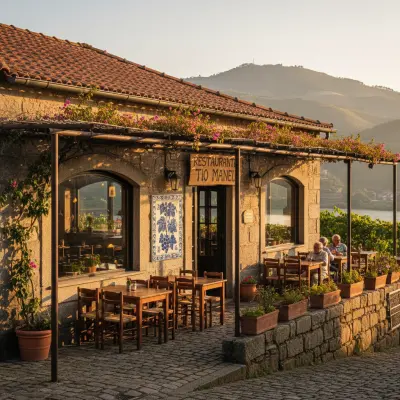
For a weekday lunch, our pick is Restaurante Tio Manel. It's the kind of place that doesn't show up on international lists and never will, because there's no river view and no Instagram-friendly décor. Plastic tables on some days, proper tablecloths on others, and a roast kid that, if it's on, you should order without hesitation. Also ask about rojões à moda do Minho when they're on the menu: Régua sits on the gastronomic border between Minho and Douro and it shows on the plate.
Another budget-lunch favourite is Tasca da Quinta. This is a proper tasca: counter, wine by the glass, three or four daily specials chalked on a board. Go on a Tuesday or Thursday and you might catch bacalhau à transmontana. Fridays usually mean arroz de polvo. The room is loud, someone is always arguing about football or local politics, and dinner for two with wine comes in under 30 euros. They don't always take cards: bring some cash.
For one night, just one, when you want to stretch the budget, go to Castas e Pratos. It's the best-known address in Régua, set inside an old CP railway warehouse, with an absurd wine list and ambitious cooking. It isn't cheap: count on 35 to 50 euros per person with wine. But if you've spent three days eating in taverns and want to see what the Douro can be when it's taken seriously, this is the night. Book ahead. And order the barrosã beef.
Breakfast for one fifty
Forget the hotel buffet. Breakfast in Régua happens standing up, at the counter of some café near the municipal market. A galão and a torrada with butter cost between 2.50 and 3 euros. A sandwich of mountain cheese and ham, plus a juice, comes in under 5. Look for cafés frequented by older men reading Jornal de Notícias: it's a sign the prices are still honest.
What to see without paying for a ticket
First piece of good news: most of what's worth seeing in Régua costs nothing. The Cais da Régua, the riverbank, the train station with its azulejos, the metal bridge, the Largo da Estação. All free, all walkable, all in one morning.
The Museu do Douro charges entry (around 6 euros), but there are reduced fares for students and over-65s, and on certain days of the year entry is free. It's worth the visit if you're trying to understand what separates a Vintage from a Tawny, because the curation is honest and clear, without the usual folklore.
For a walk that costs nothing and gives you one of the best views of the valley, climb up to the Santo António viewpoint in the upper town. It's about 25 minutes uphill, the proper kind of uphill, but the effort pays off: from up there you see the Corgo meeting the Douro and, on clear days, the terraced slopes all the way to Pinhão. Bring water, especially in July and August.
Wine without blowing the budget
Here's Régua's paradox: you're in the heart of Port wine country, where tastings run 35, 50, 80 euros per person, but there are also taverns where you can drink a glass of Douro red for 1.80. Both things are true. The question is when to spend on what.
If you're travelling on a tight budget, do one decent tasting, just one. Our picks for spring wine tasting in Peso da Régua include options between 12 and 25 euros that are worth every cent and that steer you away from the industrial-quinta circuit. Go with prepared questions, ask to try less commercial things (an aged Douro white, for instance), and don't buy a bottle at the end just out of politeness.
For travellers arriving in spring, there's a specific experience that changed how I look at vines: watching the budbreak, the moment when shoots start emerging from dormant vineyards. The budbreak experience at Quinta do Vallado is one of the few I recommend to anyone who wants to see the vine's cycle from the inside instead of through the lens of packaged wine tourism.
The rest of the time, drink in the street. There are taverns in the centre where the house wine, almost always a young Douro red, costs less than 2 euros a glass. Order a posta de chouriço to go with it, share with whoever's with you, and pay under 10 for both.
Catching the historic train (and not overpaying for it)
The Douro's historic train, with its steam locomotive, runs between Régua and Tua and costs about 55 euros per person. It's pretty, it's nostalgic, it makes a good photo. But, let's be honest: the scenery outside is exactly the same as what you see from the regular Régua-Pocinho train, which costs around 5 euros each way and which most people forget exists.
My advice: skip the 55 euros and take the regional Régua-Pocinho train mid-morning. Spend three hours looking out the window with a sandwich made at a café counter and a bottle of water. Stop at Tua or Ferradosa, walk around, have lunch at a local tasca, head back in the afternoon. That cost you 10 euros in train tickets and maybe 12 for lunch. You saw the same valley, without velvet ropes telling you to stay seated.
For the days when the weather turns
The Douro has bad days, usually in February and early March, and occasionally in June with summer rain. For those days, the tight budget needs a plan B that isn't being locked in your room.
One cheap and underused option: take the train to Mesão Frio (3 euros, 10 minutes) and have a long lunch in a local house. Another: head to Lamego, 25 minutes by bus, and visit the Santuário dos Remédios and the Museu de Lamego (entry around 3 euros).
If you're here in June, it's worth planning a day in Sabrosa or Vila Real to catch the Santos Populares, which in the Douro have a very particular feel. Read our guide on Santos Populares in Sabrosa to understand why Santo António here is not the one in Lisbon.
And if you have two or three days and want to stretch the budget even further, consider a day trip to Torre de Moncorvo in spring, when the gardens of the old convent are at their best. Our notes on Torre de Moncorvo in bloom help you plan the day without falling into the tourist traps.
The budget in practice
To close the maths, here's a realistic scenario for two nights and three days in Régua, in June, outside the weekend:
- Porto-Régua return train: 24 euros
- Two nights in a central guesthouse: 90 to 110 euros (per double room, so 45 to 55 per person)
- Three tasca lunches: 36 to 45 euros
- Two light dinners (sandwich, glass of wine, soup): 25 to 30 euros
- One special night at Castas e Pratos: 40 to 50 euros per person
- One decent wine tasting: 15 to 25 euros
- Régua-Pocinho return train: 10 euros
- Coffees, water, unplanned bits: 20 euros
Total per person: between 170 and 220 euros for three days. Which can drop to 130 if you skip Castas e Pratos, or rise to 280 if you add a night at a quinta with a view. Régua lets you decide.
What money can't buy
There's one thing Régua gives you for free that's worth more than any expensive tasting: the hour before sunset on the riverfront, in June, with the boats coming back and the river turning bronze. Sit on a bench, do nothing, pay nothing, post nothing. Stay for half an hour. That's what you'll remember ten years from now, not the label on the Vintage you paid too much for in the middle of the afternoon.