Peso da Régua Market Crawl: Buy, Taste, Skip
The Peso da Régua municipal market is the best masterclass on the Douro, if you know when to show up and what to walk past. An honest guide: what to buy (the olive oil with the homemade label), what to eat standing up (the salt cod cake from the lady with no sign), and what to skip without guilt.
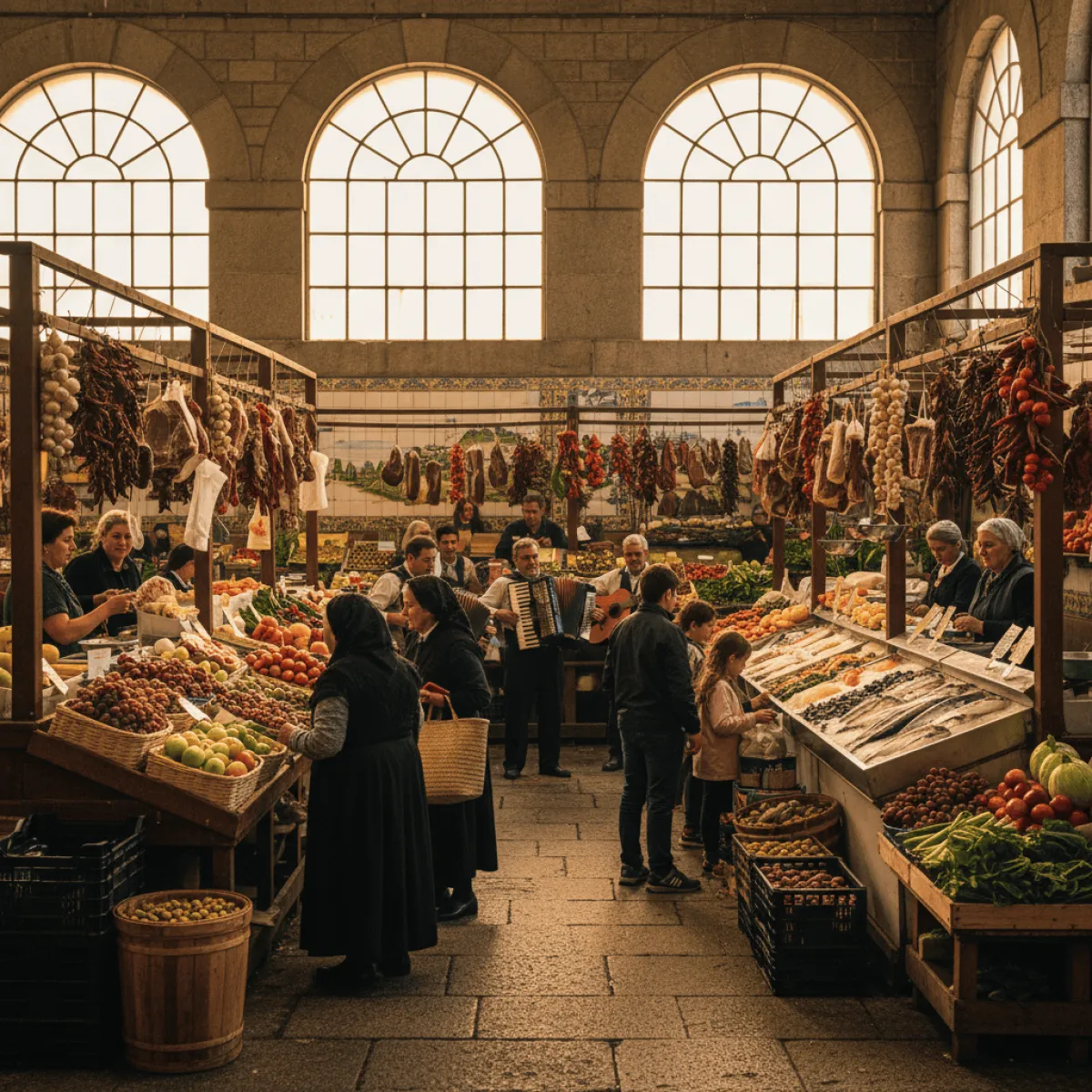
There is a correct hour to arrive at the Peso da Régua municipal market, and it is not the one the guidebooks recommend. Forget nine in the morning: by then, only the ugly tomatoes and the polite small talk are left. Show up at half past seven, when the trolleys are still being unloaded, when the cabbage lady is arguing with her son on the phone about prices, and when the smell of fish just arrived from Porto mingles with the espresso steam from the pastelaria across the street. That is when the market is real. Everything that comes later is the tourist version.
Régua is a small town, wedged between the river and the vineyard slopes, and the market is the administrative heart of its stomach. This is where the estates send their surplus, where the housewives of Godim and Loureiro come for the week's fish, and where, with a little eye and a little patience, you take home things that cost three times as much in Lisbon. It is also where, if you do not know what you are doing, you pay eight euros for a mediocre mountain cheese that costs four at the producer the following week.
This is the crawl. What to buy, what to eat standing up, and what to politely walk past.
First: The Geography of the Place
The Peso da Régua market is not one of those nineteenth-century cast-iron cathedrals like Porto's Bolhão. It is a functional, practical building with no architectural romance whatsoever. Its advantage is that it is not embalmed for Instagram: it works. The stalls split between the permanent ones (fruit, fish, butcher, dry goods) and the producers who show up on Saturday mornings, which is the day you should come if you come only once.
On Saturdays, the farmers from the surrounding villages come down with what they have: eggs from chickens that still run loose, honey from the Serra do Marão, virgin olive oil from small presses, fresh cheese, week's greens, and occasionally a butchered goat if the season is right. On weekdays the market still functions, but more quietly, and the rotating producers are not there.
Getting There Without Stress
The market is five minutes on foot from the train station, which makes Régua accidentally one of the easiest places in the Douro to visit without a car. The train from Porto (Linha do Douro) takes about two hours and costs a little over ten euros round trip. If you drive, there is free parking near the river quay, also five minutes away on foot. Do not try to park near the market itself: the streets are narrow and locals have no patience for German SUVs reversing.
What to Buy (Without Fear)
Olive Oil: The One Without the Shiny Label
The Douro produces excellent olive oil, frequently overshadowed by the fame of its wine. At the Saturday stalls, look for five-litre plastic jugs with a label printed at home. That is where the liquid gold is. Olive oil drinkers carry a piece of bread or ask for a spoon to taste. Do the same. You want oil that burns slightly at the back of the throat, with notes of fresh grass and maybe a touch of bitterness at the end. If it is round and too smooth, it is either too old or has been cut with something else.
Fair producer price: between six and nine euros per litre for small-scale extra virgin. If they ask twelve, walk away. If they ask four, you are buying a blend.
Honey: The Marão Variety Is the One
There are always one or two honey producers selling out of the back of a van, with recycled glass jars and handwritten labels. Rosemary honey from the Marão range is particularly special: dark, dense, slightly bitter, and it crystallises after a few months (which is a sign it is real, not a defect). Pay between eight and twelve euros for a half-kilo jar. Politely but firmly refuse anything that comes with an industrial label and a barcode.
Cheese: Buy Fresh Here, Cured Elsewhere
The fresh cheese that turns up on Saturdays, made the day before, is meant to be eaten with bread and salt right there. It costs around three or four euros for a small wheel and is one of the best things you can put in your mouth before noon. For cured Serra da Estrela cheese, wait until you actually go to Serra da Estrela. What turns up at the Régua market is often good but rarely exceptional, and the prices are touristy.
Wine: Buy at the Source, Use the Market to Learn
The market has a few stalls selling bulk Douro wine in plastic jugs. For domestic use it is a bargain: honest reds between three and five euros per litre. They are not wines to cellar or sip in candlelight, but they are better than a lot of bottled stuff on Lisbon supermarket shelves. For the good wine, visit an estate. To start understanding what you are drinking, we recommend a spring wine-tasting programme in Peso da Régua that organises visits to small and mid-sized producers, with an emphasis on understanding terroir before you spend money.
What to Eat Standing Up
The Bolo de Bacalhau from the Lady with No Sign
I will not tell you which lady (she has no sign and moves around), but whenever I see a woman with a tray of small salt cod cakes wrapped in a napkin, I stop. They cost a euro or one fifty each. They are warm. They are made of real bacalhau, boiled potato, and onion, not the frozen industrial blend. Eat two and keep walking.
The Corn Bread from the Old Baker
There is a baker who sells slices of broa, the rustic corn bread. Still warm, with butter or just with fresh cheese, it is the best way to start a morning. A whole loaf costs a little over two euros and keeps for three days if you store it properly.
Roasted Chestnuts (If It Is Autumn)
From October to December, there is always someone with a brazier roasting chestnuts at the entrance. A euro for a small paper cone. There is no better breakfast for a cold day in the Douro.
What to Skip (Guilt-Free)
The "Artisanal" Tinned Fish with the Pretty Boxes
There are one or two stalls selling small tins of sardines or mackerel with hipster-Lisbon design and boutique prices. Eight euros a tin. They are perfectly edible, of course. But it is exactly the same product you can find for two fifty at the Pingo Doce supermarket. You are paying for the design. If you want to bring home a pretty present, go ahead; if you want to eat sardines, go to the supermarket.
The "Regional" Snacks in Plastic Sleeves
Pumpkin jam, industrial quince paste, cinnamon biscuits in heat-sealed bags. There is a section of the market that looks like an airport souvenir shop. Skip it. None of it is from Régua, none of it is artisanal, and the prices assume you do not know.
Dried Fruit and Nuts "From the Region"
Almonds, walnuts, dried figs: sold as if they came from the local slopes, priced accordingly. The truth is that most of it comes from Morocco, Spain, or wholesale distribution chains. Douro dried figs do exist, but they rarely reach the market: they go straight to artisanal chocolatiers and charcuterie makers.
When to Come: The Market Calendar
Do not come in August. It is hot, full of confused German tourists, and the producers thin out because they are preparing for harvest. September is better (with the harvest itself for those who want to see it), October is when the Douro turns gold and the market fills with chestnuts and quince.
Spring is my favourite season for Régua. The vineyards are budding, the river still runs strong from the snowmelt, and lunches on the terraces finally make sense. For visitors who want to understand the agricultural cycle, this experience on vineyard budbreak at Quinta do Vallado provides context that makes the market visit richer: you start to understand what you are seeing in the baskets.
On Saturdays, arrive early. On Sundays, the market is closed.
Where to Eat Afterwards (and Before)
Do not come to a market and then have lunch at McDonald's. Régua has options, and some are better than they have any right to be in a town this size.
For a Working Lunch
Tasca da Quinta is the place for lunch without ceremony. Straight Portuguese cooking, no inventions, decent house wines. Go hungry, do not go in a hurry. The daily specials are almost always the right call.
For a Lunch with Serious Wine
Castas e Pratos occupies a former railway warehouse and has one of the smartest Douro wine lists in town. It is not cheap. But if you want to lunch well with a bottle of wine that understands what it is doing, this is the address. Book ahead, especially on weekends.
For Dinner You'll Remember
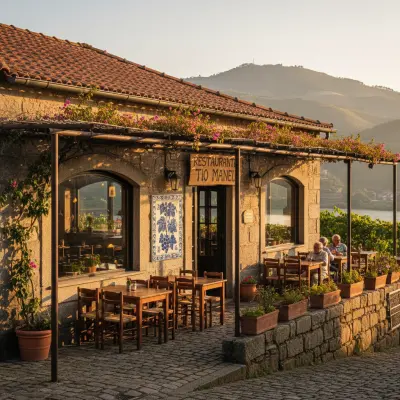
Restaurante Tio Manel is the place for the bacalhau à Brás you remember three days later. No pretensions, no eighty-page wine lists, no waitress reciting the menu like an experimental theatre actress. Food cooked by someone who has cooked for the same clients for thirty years.
After the Market: What to Do with the Rest of the Day
Régua is an excellent base, not just a destination. If you shop well at the market in the morning, the afternoon is free for the rest of the Douro. A few suggestions:
- Take the boat or train to Pinhão and come back at the end of the day. Two hours of landscape that justify every cliché.
- Drive up to Sabrosa, about twenty-five minutes away, and visit the less touristy estates that sit on those hills. To understand this quieter side of the Douro, read our guide to the Sabrosa estates nobody talks about.
- If you are in the area in June, Sabrosa is also the place for the most authentic Santos Populares in the deep Douro, with sardines grilled in the street, sweet basil plants, and not a single tourist trying to photograph everything.
- If you are doing a longer spring itinerary in the Douro, a detour to Torre de Moncorvo is worth it: our guide to Torre de Moncorvo in bloom suggests the gardens and parks few visitors know about.
Three Rules to Avoid Being the Tourist the Locals Laugh About Over Coffee
First: greet people. A clear bom dia at the entrance of the stall opens doors that no extra euro will. Market producers are not employees: they are people, and they treat well those who treat them well.
Second: ask, but listen to the answer. If you ask what they recommend and then ignore them and buy what you had already decided on, you wasted the opportunity. If you are choosing between three figs and the producer tells you the ones from over there are better, take those. They are right.
Third: taste before you buy, whenever possible. Olive oil, honey, cheese, wine: all good producers let you taste. The ones who do not have reasons not to. If a stall refuses a sample, go to the next.
The Market as Synthesis
A well-used market is the best masterclass on a region that exists. In two hours at the Peso da Régua municipal market, with a notebook and some common sense, you learn more about the Douro than you would from five visits to organised tourism estates. You learn what is in season, what grows on the slopes, what local people value, and what they sell to outsiders.
Buy small, lunch slowly, and take home only what fits in your suitcase and in your head. The rest waits for next time. Régua is not going anywhere.