Peso da Régua in August: Boats, Early Harvests, Open Quintas
In the second half of August, there is a real chance of meeting grape-loaded tractors on the N222 and smelling fermenting must in Régua's wineries. Between cruises to Pinhão, veraison in the vineyards and three restaurants worth booking, this is the guide to the month when the Douro actually works.
Everyone will warn you off the Douro in August. Too hot, they say, and they are not wrong: in Peso da Régua the thermometer clears 38 degrees with insulting ease, and the schist terraces store the day's sun and give it back all evening, like a bread oven that nobody quite put out. Here is what the warnings miss: August is the month when the valley stops posing for postcards and gets to work.
While the Algarve bursts at the seams, Régua keeps its own schedule. Early in the morning, the river quay fills with crews hosing down decks and prepping departures; by late afternoon, the wine estates are checking tanks and presses, because the harvest, once a strictly September affair, increasingly comes knocking in the last weeks of August. This guide is about exactly that: how to use the river to your advantage, catch the start of the harvest, and visit quintas without melting in the process.
First, an honest word about the heat
Douro heat in August is not beach heat, it is boxed-in valley heat. The slopes act as reflectors, the air barely moves down by the water, and the humidity is low, which is deceptive: you will always drink less water than you should. The rule is simple and has no exceptions: streets until 11am, shade or river until 5pm, streets again at dusk. Locals in Régua do precisely this, and it is not laziness, it is thermal engineering refined over generations. Copy them and the valley's hardest month becomes its most interesting.
For the dead hours, Régua has one of the best air-conditioned rooms in the region: the Museu do Douro, housed in the old headquarters of the Companhia Geral da Agricultura das Vinhas do Alto Douro on Rua Marquês de Pombal, right on the riverfront. The permanent exhibition takes about an hour and explains why this terraced landscape is a World Heritage Site, and the terrace over the river justifies a cold white wine before you step back into the sun. This is not a fallback plan, it is context: everything you see afterwards, the boats, the schist walls, the estates, carries more weight once you understand the world's oldest demarcated wine region.
The river is the valley's best air conditioning
If you do only one thing in Régua in August, get on a boat. This is not travel-brochure filler: mid-river, the temperature drops several degrees and the breeze of movement does the rest. The serious option is the Régua to Pinhão river cruise, which climbs the most beautiful stretch of the entire wine-growing Douro. It is half a day well spent: terraces rising steeply on both sides, estates with their names painted in white letters on the walls, and on many departures the passage through the lock at the Bagaúste dam, a piece of engineering that impresses even people who swear boats bore them. Book a morning departure: the river is calmer, you dodge the worst of the heat, and you reach Pinhão at a civilised hour.
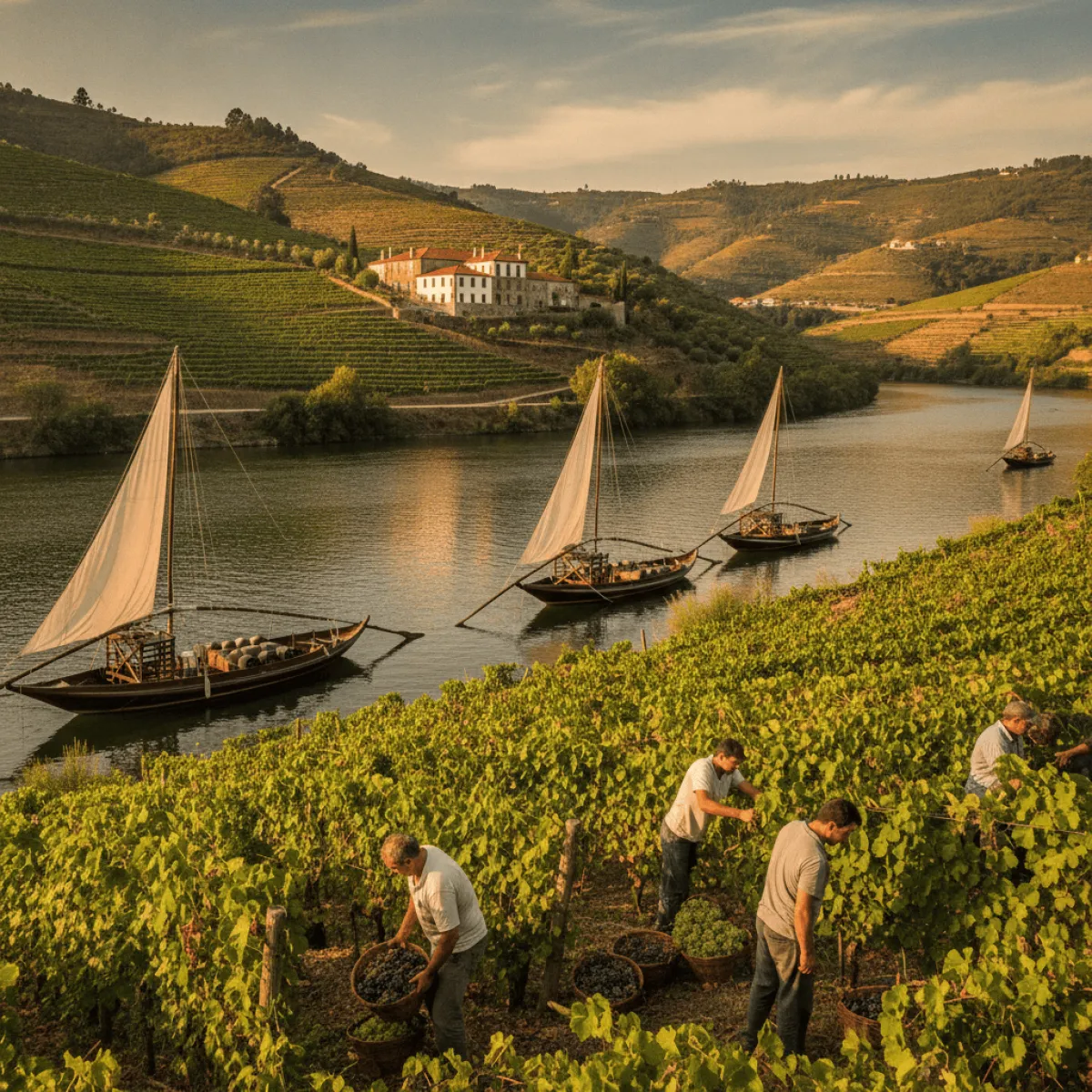
If you are travelling with children, or simply do not want to commit half a day, the shorter rabelo boat cruise through the vineyards is the right call: roughly an hour aboard the type of flat-bottomed boat that carried Port wine barrels downriver for centuries, before the dams tamed the current. The trick is to take the last departure of the afternoon, when the low light sets the terraces glowing and the river turns copper. On cost: the short trips typically sit in the low tens of euros per person, and the Pinhão cruise costs more, especially with lunch on board; confirm prices when you book, because August demand sets the rules and departures sell out.
Early harvests: August is no longer the waiting month
For decades, the Douro harvest was a September liturgy. The climate has scrambled the calendar: in hotter years, white grape varieties start coming off the vines in the last week of August, and some recent harvests have begun even earlier. For a visitor, that means something very concrete: come in the second half of the month and there is a real chance you will meet tractors loaded with grapes on the road and catch the smell of fermenting must drifting from the wineries. This is the valley doing the thing it exists to do, with zero staging.
Even if the harvest has not started, August has its own show: veraison, the moment when red grape varieties turn from green to deep blue-black. The vineyards are speckled with clusters mid-transformation, and any stop beside a terrace earns ten minutes of staring and a better photo than any postcard. The practical advice is this: call the estates before you go and ask directly about harvest programmes. Some welcome visitors for picking and grape treading once the season starts, but no serious quinta takes walk-ins during harvest. Check dates locally, because they shift from year to year and from grape to grape.
Quintas: three safe bets and one famous road
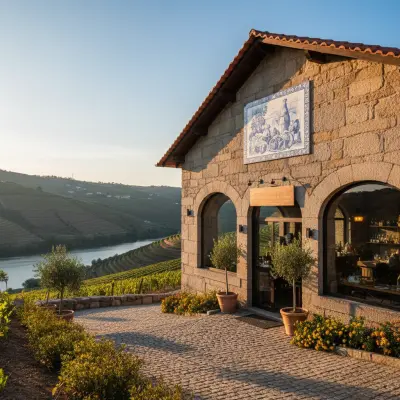
Start close. Quinta do Vallado sits on the banks of the Corgo river, minutes from central Régua, and is one of the oldest houses in the Douro; tastings and tours run on reservation, and in August you should book several days ahead. Across the bridge in Cambres, technically in Lamego, Quinta da Pacheca is the most touristic of the three, and we will say the unfashionable thing: touristic does not mean bad. The tours are well run, there is a restaurant, and during harvest season it organises grape treading sessions open to visitors. Upriver near Pinhão, Quinta do Seixo, home of Sandeman, is worth the trip for its position alone; the tasting at the end, with the whole valley framed in the window, is one of the images you keep.
The road linking Régua and Pinhão is the N222, which Avis named the world's best driving road in 2015. We agree, with one caveat: the driver sees nothing, because the road demands attention and the landscape demands the opposite. The elegant solution is boat one way, car or taxi the other. And then there is the Douro the cruises never touch: climb into the hills to Sabrosa, birthplace of Ferdinand Magellan, and read our guide to the Douro estates nobody talks about, where tastings still happen without tour buses at the gate.
Where to eat in Régua without getting fleeced
The special meal of the trip has a fixed address: Castas e Pratos, set in the old timber railway warehouses next to Régua's train station. This is Douro cooking with ambition, a wine list that does the region justice, and a setting of wooden beams and railway memory that would justify the booking on its own. And yes, book: in August there is no table for anyone playing it by ear.
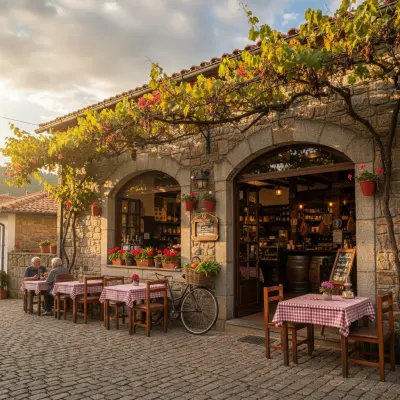
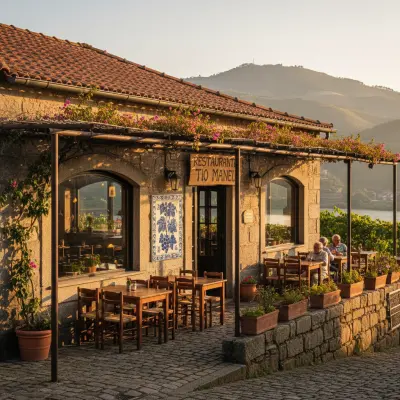
For the opposite register, Tasca da Quinta is small, personal and built around regional produce; the tiny room makes reserving practically mandatory, but that same smallness is what guarantees someone is actually watching your plate. And when you want food with no ceremony and no speech, Restaurante Tio Manel is the local classic: traditional cooking, honest portions, bills that do not ruin the evening. The August strategy is simple: long, late lunches indoors, dinners outside once the heat finally loosens its grip.
Getting there and outsmarting the heat
- By train: the Linha do Douro leaves from Porto São Bento and reaches Régua in about two hours. From a certain point the track hugs the river and the journey becomes a scenic cruise in its own right, for around ten euros. Sit on the right-hand side heading upriver.
- The historical steam train: in summer it runs on Saturdays between Régua and Tua, with a steam locomotive and period carriages. It sells out weeks in advance; confirm dates and tickets before building plans around it.
- By car: from Porto, motorway to Vila Real and then down to Régua, a little over an hour. Park once and walk: the centre is compact.
- The non-negotiable viewpoint: São Leonardo de Galafura, about ten kilometres from Régua, the spot the writer Miguel Torga made famous. Go at the end of the day, when the heat relents and the light does all the work.
And if August does not fit your calendar?
The valley has other seasons and other excuses. In June, the village festivals take over the plateau, which we covered in our guide to the Santos Populares in Sabrosa. In spring, the palette shifts further northeast, as we describe in Torre de Moncorvo in bloom. But if you get to choose, choose August and accept its terms. The August Douro does not perform: it is hot, it is working, it is filling tanks and loading tractors. That is precisely why it is worth it. The postcards look good in any month; the valley actually at work, you only catch with its sleeves rolled up.