Douro River Cruise in Peso da Régua: Rabelo Boats
Cruzeiros Douro's 'Régua à Vista' cruise leaves the Régua quay on a traditional rabelo boat, an hour through the Douro terraces for around 13€, audio guide included. Take the 10am: fewer people and low light on the water.
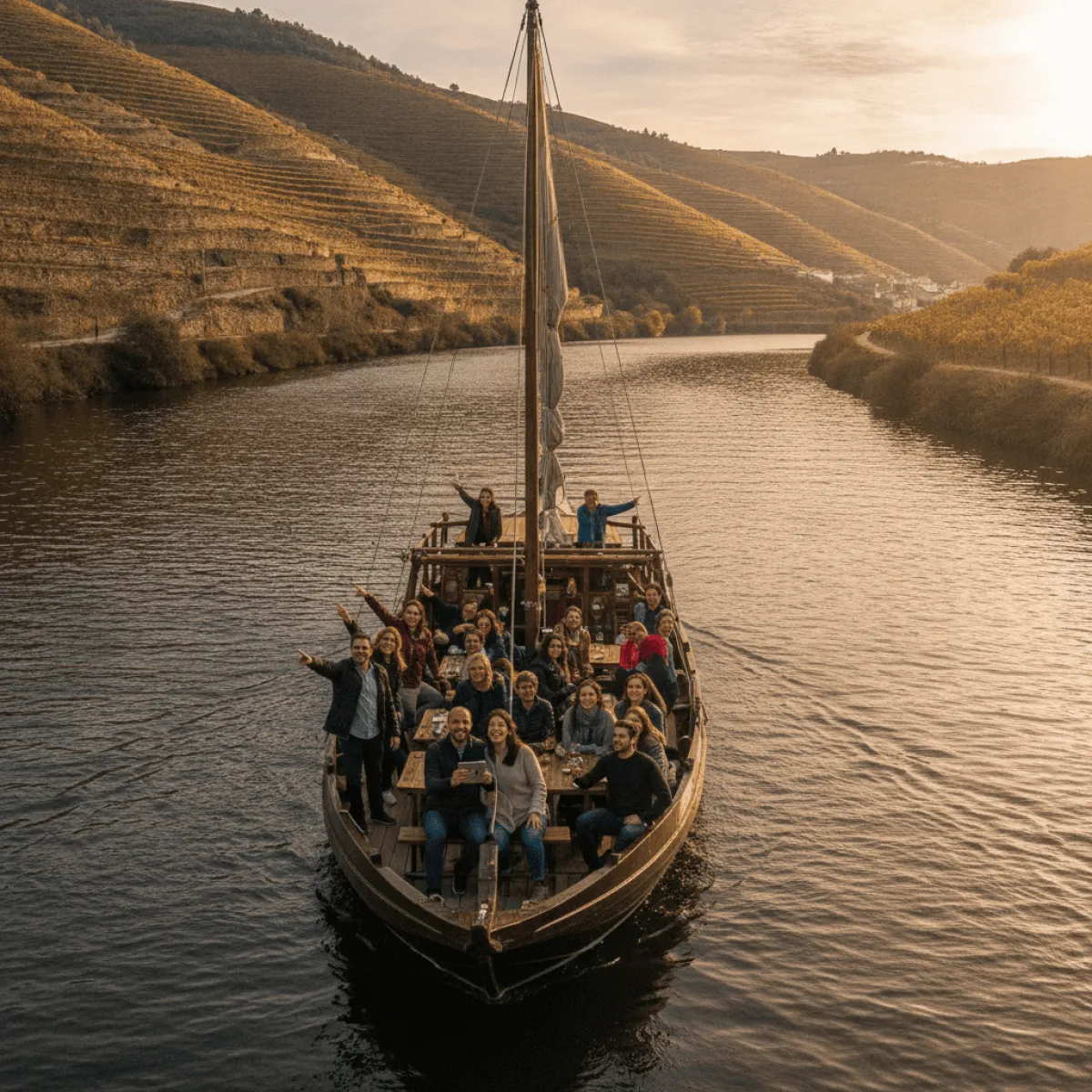
There is a difference between seeing the Douro vineyards from above, off the N222 road, and seeing them from the level of the water. From the road they are a panorama. From the river they are a wall rising in front of you, terrace by terrace, with the sun hitting the schist and bouncing off the dark water. That is why it is worth getting on a boat in Peso da Régua, even if you have already driven the whole region.
Who runs it and what it costs
The easiest operator to book from the Régua quay is Cruzeiros Douro. They run the "Régua à Vista" cruise, a one-hour loop on a traditional rabelo boat that leaves from the dock right in the town centre. The price is around 13€ per adult, with a 50% discount for children aged 4 to 12 and babies under 3 travelling free. Departures run hourly from 10am to 6pm (with no departure at lunchtime), May through October. There is an onboard audio guide in Portuguese, English, Spanish and French, so you understand what you are looking at without relying on anyone.
Booking and contact: cruzeiros-douro.pt, phone +351 226 191 090. You pay online by card, Multibanco reference or MBWay. One important detail: there is a minimum number of passengers for the boat to sail, so on quiet days confirm directly with the provider before you build your plans around it.
The long version, with lunch on board
If an hour feels too short, the same company runs a full-day cruise with lunch served on board and live music, from around 58€, crossing the landscape between Régua and Lamego. It is a different kind of day: slower, more food, more time watching the bank go by. If you want to combine the sailing with a winery visit and wine tasting on the same day, it is worth asking Cruzeiros Douro what packages they have for the season you are travelling in, because the offer changes through the year. I am not quoting a fixed price for those combined options here because they vary: confirm directly with the provider.
What it is actually like, step by step
Boarding is simple. You arrive at the Régua quay, down on the riverfront near Avenida João Franco, show your booking and get on. The rabelo boat is the same hull design that carried Port wine barrels downriver for centuries, now adapted for passengers. You sit down, and a few minutes later you are gliding.
- In the first minutes you pass under the Régua bridges and watch the town pull away. It is the best view you will get of the wine lodges and the riverfront.
- Halfway, the landscape opens into the terraces. This is where the scale lands: vineyards planted on hand-built terraces climbing nearly vertical slopes.
- On the way back, if you catch late afternoon, the light changes completely and the water turns copper.
The audio guide explains the estates visible from the water, the history of moving the wine and the geology of the valley. It is not a heavy lecture, just the right dose of information for an hour.
The best time to go
The morning session, the 10am, is my pick: fewer people, cooler air and low light on the water. In summer, early afternoon on the Douro is genuinely hot, and a boat without full shade under the 2pm sun is less pleasant than it sounds. If afternoon is your only option, take the last or second-to-last departure, once the heat has eased.
If you are coming in peak summer, book a day or two ahead. It is not Venice, but seats sell out on busy days and, with the minimum-numbers rule, leaving it to the last minute can backfire either way.
What to wear and bring
- Hat and sunscreen. On the river the sun reflects off the water and burns faster than you expect.
- Sunglasses and a light layer. Even in summer the breeze on the water cools you down, especially early.
- Closed shoes or secure sandals. The deck can be wet.
- Water. On the short cruises there is no guaranteed bar service.
- Camera or phone with battery. You will want to shoot the terraces, trust me.
Getting there and what to do around it
Régua has a train station on the Douro line, with a direct connection from Porto, and the quay is a few minutes' walk from the station. If you drive, there is parking down by the river, but it fills early on hot days. Arrive with time to spare.
Before or after the boat, make the most of the town. For lunch or dinner with a river view, Castas e Pratos is Régua's best-known bet, and Tasca da Quinta serves honest Douro cooking without the tourist markup. If you want to understand why the riverfront has that elegant industrial look, read our guide to the architecture of the Douro's lodges in Peso da Régua before you board: you will look at the buildings differently from the water.
And if you are counting your money, the one-hour cruise is one of the best-value experiences in the region, something we lay out in our guide to Peso da Régua on a budget. Thirteen euros for an hour on the river, audio guide included, is hard to beat.
Is it worth it?
It is, with one honest caveat: the short cruise is an introduction, not a deep dive. You do not step off at a winery or taste wine in the vineyard during this hour. What you get is the river's perspective, the story of the rabelo boat and the best possible frame for understanding why this valley is a World Heritage site. To add wine tasting and a winery visit, pair the boat with a morning or afternoon at one of the local estates, or ask about the full-day cruise. The best moment? The two or three minutes when the town disappears behind you and all that is left is terraces and water. That is why you come to the Douro.