Peso da Régua Grape Harvest: What Treading Grapes Feels Like
Treading grapes barefoot in a stone lagar near Peso da Régua with Portugal Farm Experiences, for €66. Two hours of harvest, wine tasting, and wine-stained legs guaranteed.
A tradition still done barefoot
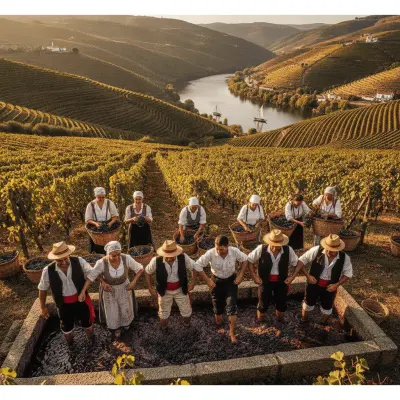
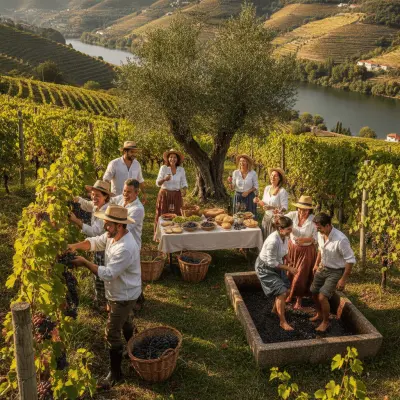
September arrives in the Douro and the terraced slopes around Peso da Régua change color: the green of the leaves gives way to the brown of laden vines and the hum of harvest crews working the rows. It is in this window, usually mid-September through early October, that Portugal Farm Experiences opens the gate to people who want to do more than watch. The experience is called Peso da Régua Grape Stomping & Wine Tasting, and it comes down to something simple: stepping barefoot into a stone lagar and crushing freshly picked grapes the way it was done centuries before mechanical presses existed.
This is not a show staged for tourists. Foot treading is still used in plenty of Douro wineries precisely because the gentle, constant pressure of a human foot pulls color and tannin from the skins without crushing the seeds, which would make the wine bitter. A mechanical press cannot replicate that delicacy. That is why, even in 2026, some well-regarded estates still choose feet over machines for their top wines.
How the experience works
The program runs about two hours and covers three parts:
- A guided tour of the winery, explaining Douro winemaking and the difference between table wine and Port;
- The actual grape treading, inside the lagar, feet washed and sanitized before entry;
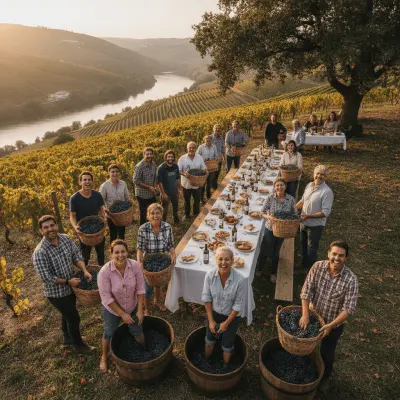
- A tasting of Douro wines at the end, usually paired with local snacks.
The price is €66 per adult (11 and older) and €35 for younger children, with a minimum booking of two people. Reservations go through FareHarbor on the Portugal Farm Experiences website, or via WhatsApp at +351 911 701 055. The exact location of the farm, on the outskirts of Peso da Régua, roughly 90 minutes from Porto, is sent by email after the booking is confirmed. That is normal for experiences tied to working private estates rather than public venues.
What to wear and bring
Skip the white clothes, and anything you actually like. Grape must stains skin and fabric a purplish tone that does not come out in the first wash. Wear shorts or trousers you can roll up, bring a towel for your feet afterward, and accept that your legs will stay wine-colored for a few days. That is part of the experience, not a mishap.
What nobody tells you before you step in
The first sensation is cold, not warmth. Freshly picked grapes and early-stage fermenting must are cool, and the liquid forming underfoot has an odd texture, somewhere between thick and grainy, from the skins and seeds. After a few minutes your feet start to feel exfoliated, almost smooth. The correct movement is not random stomping, it is walking in a line, lifting your knees high, in an almost choreographed rhythm that experienced pickers keep up for hours. Visitors last a lot less time than they expect, and it is completely normal to laugh a lot and slip at least once.
The most surprising part is the smell. It is not the finished, bottled wine aroma, it is sharper, closer to fruit fermenting in the sun, and it stays with you longer than any photo.
Morning or afternoon?
If you get a choice when booking, take the morning slot. Douro temperatures in September climb fast after noon, and spending two hours in the sun before stepping into a lagar is not pleasant, nor is tasting wine on an empty, overheated stomach. The light over the terraces is softer in the morning too, which helps a lot if you are bringing a camera.
After the harvest: where to eat in Peso da Régua
Once the tasting wraps up, you will be hungry. Peso da Régua has solid options for a late lunch or early dinner. Tasca da Quinta is a safe bet for straightforward Douro cooking, while Castas e Pratos leans into more elaborate wine and food pairings. If you prefer a more traditional setting, Restaurante Tio Manel remains a local reference.
Planning the trip around the harvest
Since the experience only takes two hours, it is worth combining it with other stops the same day. Check our guide to the best day trips from Peso da Régua to decide what to do before or after the treading session. Travelers watching their budget should look at Peso da Régua on Pennies, which helps balance spending between the harvest experience, which already has its own cost, and the rest of the day.
Is it worth it?
Yes, with one condition: commit to it instead of treating it as a photo opportunity. Anyone who steps into the lagar just for a quick picture and leaves gets half of what the activity actually offers. The best moment is not the instant you step in, it is about fifteen minutes later, once the group finds a rhythm and someone starts singing or teasing whoever just slipped. That is when the harvest stops being a tourist show and goes back to being what it always was: heavy work turned into a shared celebration.
Because availability depends on the harvest and the weather, book at least two to three weeks ahead if you have fixed travel dates in September, the busiest month. Always confirm final details, including transport and the exact meeting point, directly with Portugal Farm Experiences before you travel.