Olhão's Grilled Sardines: A Guide Without Romance
In Olhão sardines are not poetry, they are mathematics: five to eight euros a kilo at the market, three minutes a side on the charcoal, and absolutely no gas grills. A guide without romance to the Algarve's best grilled sardines, far from marinas and six-language menus.
There is an unwritten rule in Olhão: if you see sardines on the menu before May, be suspicious. The good ones, the fat ones, the ones that drip onto the charcoal and make the neighbour at the next table turn his head, only arrive when the Atlantic warms enough for the fish to develop the layer of fat that justifies the whole ritual. June, July, August. September if you are lucky. Outside of that, eat something else. The hake is always fine.
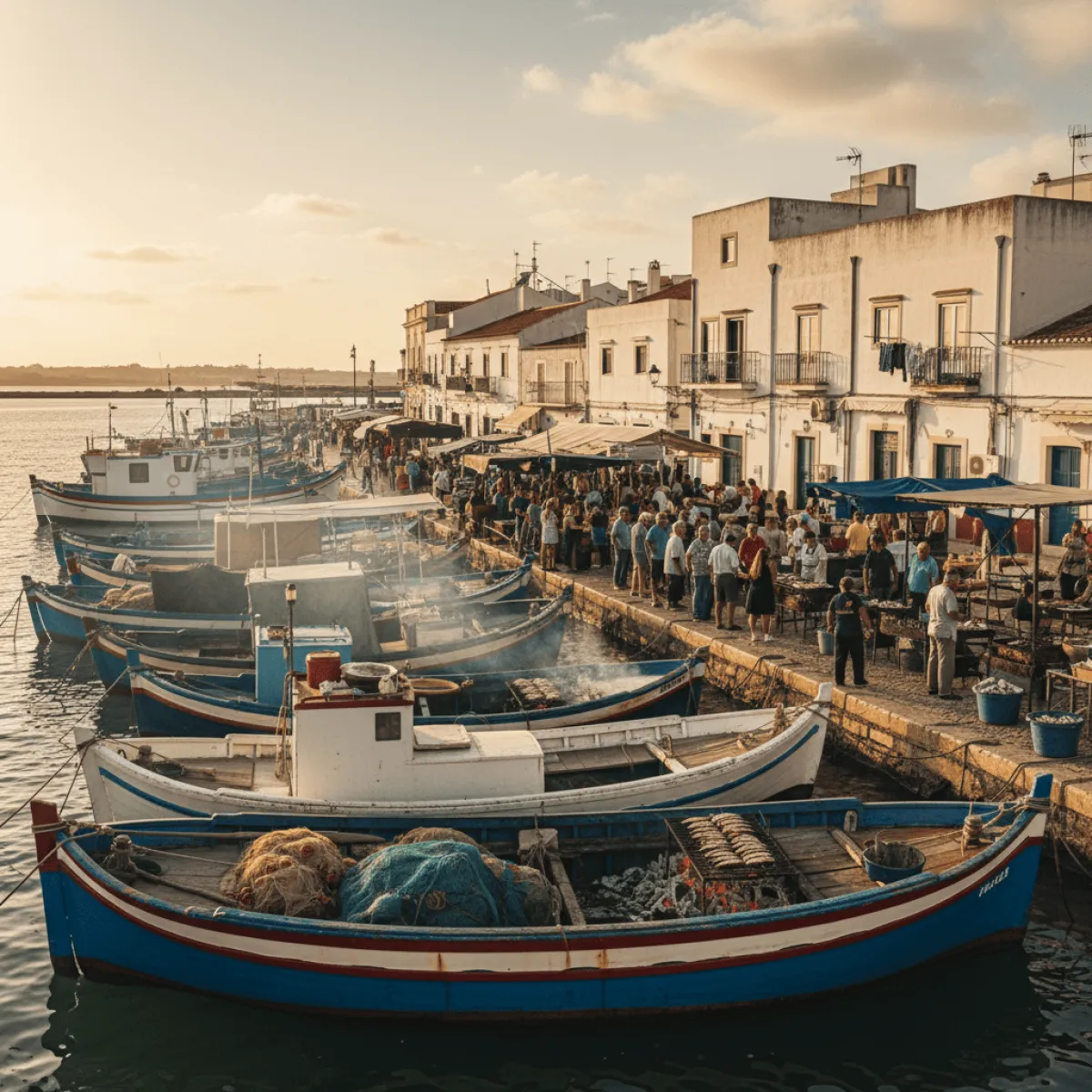
This town is not Tavira and it is not Lagos. It has no carefully restored tourist streets, no yacht marina. Olhão has white cubes glued to white cubes, balconies with laundry out by eight in the morning, and a market, two markets actually, on the waterfront, that still belong to the fishmongers before they belong to visitors. That is why grilled sardines here taste different. Not better by magic. Better because they are closer to the boat.
Why Olhão and Not Portimão
Portimão has the reputation. It has the Sardine Festival in August, it has the restaurants lined up along the riverfront, it has tour buses. Olhão has the most important fishing port in the Algarve. It is where most of the sardines you eat in Portimão are landed, iced, and distributed. The local joke, delivered with that dry Algarve flatness that can be mistaken for indifference, is that in Portimão you eat Olhão sardines with a fifty percent markup.
I am not saying Portimão is a fraud. I am saying that if you are going to drive an hour from Faro, drive the right way. Olhão is ten minutes from the airport, has a direct train from Lisbon, and on July afternoons it smells like fresh charcoal because restaurants grill on the pavement. Literally on the pavement. You almost trip over the grill on your way to the market.
The Market: Where It All Starts
The twin pavilions of the Olhão Municipal Market date to 1916. One for fish, one for fruit and vegetables. They open at seven in the morning and by eleven the good sardines are gone. This is the only rule that matters. If you want to understand why Olhão sardines are what they are, go to the market before nine. They cost five to eight euros a kilo in peak season, depending on size.
Size matters. A proper grilling sardine measures between 17 and 22 centimetres. Smaller is petinga, for frying. Bigger is dumb, tastes oily. The fish women will look at you with the patience of people who have seen enough tourists point at the wrong thing, and if you ask politely, in hesitant but honest Portuguese, they will show you which to choose. Do not weigh first. Choose first.
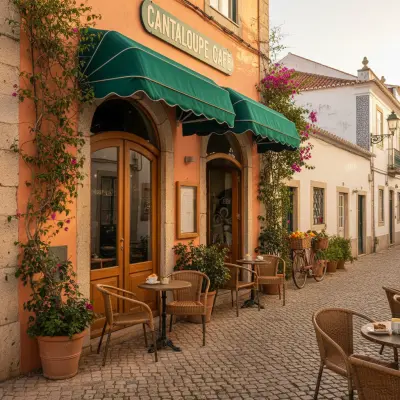
After the market, walk up Avenida 5 de Outubro into the town. If it is still early, stop at Cantaloupe Cafe for a galão and a slice of tray cake. Locals drink coffee standing at the counter. Sitting down with a newspaper is for the retired or the tourist. Decide which one you want to be.
How It Is Actually Done
Grilled sardines have no secret, and that is exactly why they are difficult. Coarse salt, lots of it, rubbed on both sides half an hour before. Pine or holm oak charcoal, never briquettes. Hot fire. Three minutes a side, four at the most. The skin must crack, the fat must drip and produce the small flare that scares tourists. If the restaurant uses a gas grill, leave. Pay for the water and leave. It is not the same and it never will be.
You eat them with country bread, grilled green peppers, boiled potatoes with the skin on, and a salad of tomato and red onion. The bread is for mopping fat from the plate and cushioning the bone when it inevitably escapes. Beer must be cool, not cold. A Sagres draught at eight degrees kills the sardine fat flavour. Nine or ten is the sweet spot.
The hands-on method, no cutlery
Older Algarvians eat sardines with their hands. They grab the head, slide a thumb along the back to separate flesh from spine, open the fish like a book, set the bone aside. Anyone using a knife and fork is making life unnecessarily hard. Anyone asking for sardines without bones is, frankly, in the wrong town.
The Restaurants: Who Does It Well, Who Does Not
I will be direct. Some restaurants in Olhão coast on the town's reputation and serve lukewarm sardines on square black plates. Avoid places with photos of dishes on the menu, avoid places with menus in six languages and tiny flags, avoid the front row of the waterfront with the unobstructed view of the lagoon. I will bet the bill on it: the best sardines never have the best view.
What you want is a tasca or a family grill house. Paper tablecloth, house wine in a thick glass, an owner who knows the fisherman. There are several in Olhão, scattered through the streets of the old town and near the market. Ask at Cantaloupe Cafe in the morning where the fishermen are eating lunch. The answer changes from week to week, depending on who is grilling well that month. There is no permanent ranking. Some places are on good runs and some are not. In Olhão, reputation is mobile.
As a rough guide: a dose of sardines, usually six or seven fish, runs between twelve and sixteen euros at honest places. With bread, olives, salad and two beers, you leave for about twenty five euros a head, no dessert. If you are paying more than thirty euros for the dose, someone is having a laugh at your expense.
What to Do With the Rest of the Day
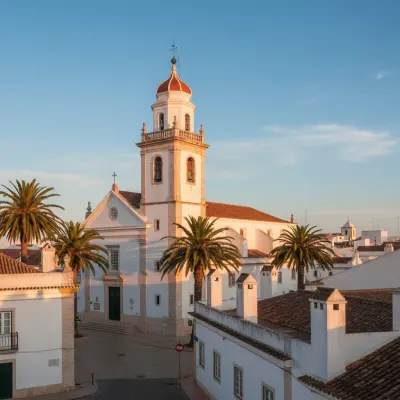
Sardines take time to digest. They have fat, salt, beer. Do not go straight to the car or straight to the beach. The post lunch walk in Olhão is part of the ritual. Climb the Torre da Igreja Matriz de Nossa Senhora do Rosário if you still have the legs for stairs. The entry fee is small, check locally for current pricing, and the view rewards the climb.
If you prefer a view without the steep stairs, drive up to the Miradouro do Cerro de São Miguel. Ten minutes out of town, twenty if you hit beach traffic in August. From here you see the whole Ria Formosa lagoon and you understand why the sardines taste the way they do: because the Atlantic is right there, on the other side of the barrier islands, and the water is cold even in summer. Fat sardines need water that is not tropical.
When the Stomach Has Had Enough Sardine
Five days in a row of sardines and your pancreas begs for mercy. There are other things to do in Olhão that do not involve fish directly. Bird watching in the Ria Formosa is the best excuse to stay an extra day. Flamingos, herons, avocets, and the occasional purple swamphen that looks like it was painted by a children's book illustrator. The best months are October to March, outside sardine season actually, but in any season you see more species than you expect.
If you prefer sweet over savoury, there is a folar workshop in Olhão worth doing for anyone who likes hands in dough. Algarve folar is not the folar of the North. It is wetter, more perfumed with aniseed. Learning to make it instead of just eating it changes the way you look at regional baking.
Side Trips from Olhão
Olhão works well as a base. Tavira is half an hour east, Faro is a quarter of an hour west, Loulé sits a little inland. If you are travelling with kids and are tired of beach days, I recommend the Silves family guide. Silves is a castle town forty minutes by car, with far fewer tourists and a serious castle.
Anyone interested in small cities with living tradition should read the Faro local culture guide before leaving Olhão. Faro is unfairly slandered as the airport town. The historic centre deserves a morning. Further west, if you want to compare Olhão sardines with another Algarve town, there is the Lagos neighbourhood guide. Lagos is more touristy, but there are honest grill houses well away from the marina.
The Seafood Festival: The Elephant in the Room
Every August, Olhão fills up for the Festival do Marisco. Five nights, big stage, thousands of people, and sardines, of course. The question everyone asks: is it worth it? Honest answer: it depends. If you want to see Olhão buzzing, eat fast, hear live music, yes. If you want to eat the best sardine in town, seated, no queue, no noise, definitely not.
The best night to visit Olhão during the festival is the first or the last. Mid festival, the town cannot breathe. Restaurants outside the venue also fill up and quality drops because demand outpaces supply. If you can choose, come in July or in September. Sardine equally good, town breathable.
What Wine Goes With This
Most people order beer, and they are right. But if you want wine, stay white and stay in the Algarve. There are small producers in the region, some organic, and dry whites based on Arinto, Síria, or Crato Branco hold up well against fatty sardines. Avoid reds. Avoid fruity rosés. Avoid vinho verde, which is from the other end of the country and has nothing to do with this.
If the restaurant only has house wine, order it and drink it. It is almost always cool and costs nothing. Pretension over wine at a sardine grill is as out of place as showing up at the fish auction in stiletto heels at six in the morning.
How to Leave Olhão Without Smelling of Fish
You will smell of fish. Accept it. Your clothes will smell of charcoal, your hair will smell of sardine, your fingers will smell of salt and olive oil. Wash your hair twice. Put the clothes in a sealed bag until you are back at the accommodation. Algarvians silently mock tourists who go for sardines in ironed white shirts. Do not be that tourist. Wear something dark, cotton, washable.
And when you go home, you will realise that the sardine you used to eat was not really a sardine. It was a fish with the same name. The real one is called Olhão sardine, comes out of the sea between May and September, costs what a good meal costs, and demands that you be present, attentive, and willing to do this slowly. That may be the best lesson Olhão teaches: good food is not in a hurry, and people in a hurry should not be here.